A Horrible Ethics Alarms Mash-Up! Cross The Wrongly Convicted Chicago Groundskeeper With The Deported Afghanistan War Veteran And What Do You Get?

You get poor Ricardo Rodriguez, who was just freed from 2o years of wrongful imprisonment for a murder he did not commit. Unlike fellow Windy City justice victim Nevest Coleman, also let out of a cage  this month after being wrongly convictedwhat the heck is going on in Chicago, anyway?—Rodriguez wasn’t given his old job back. No, he was immediately taken into custody by ICE following his release.

Oh, I almost forgot…

KABOOM!


This is so bad it made my head explode.

Before he was sent to prison for a 1995 murder, Rodriguez was a lawful permanent resident of the US. His status was revoked when he was convicted of murder, and it is still revoked even though the murder charge was false. Now, finally out of prison after rotting away for a rime he didn’t commit, Rodriguez faces the deportation.

Rodriguez was brought to America as a child and his entire family is here.  “It would be a very big injustice for them to do that to not only my mother, but my family, who have tried so hard to prove his innocence all these years,” his sister said.

I’ll go even further than that. The United States owes Rodriguez. It’s a different kind of debt than what it owes Miguel Perez-Montes, the Army combat veteran we just deported after removing his legal status for a drug conviction, but it is still a debt. Our justice system stole two decades from him. He should be given full citizenship along with a lot of money and an apology.

Morning Ethics Warm-Up, 3/28/18: Ad-block, Rights-block, Deportation-block, and Stupid-block

Good Morning!

1 Different rights, same unethical tactics. Debbie Wasserman Schultz (D-Fla.), whose very existence as a power in the Democratic Party is an indictment of the party’s integrity and trustworthiness, proved it again by proposing a bill that would require background checks for ammunition purchases. “You do not have the right to bear bullets,” she  proclaimed Monday at a news conference at the Pembroke Pines Police Department in Florida.

Progressives, honest observers, and the courts have rightly expressed disgust at various cynical efforts to circumvent other Constitutional rights by similar tactics. In Whole Woman’s Health v. Hellerstedt, for example, decided on June 27, 2016, the Supreme Court held in a 5-3 majority that two provisions of a Texas law, one requiring physicians who perform abortions to have admitting privileges at a nearby hospital and another requiring abortion clinics in the state to have facilities comparable to an ambulatory surgical center,  places a substantial and unconstitutional obstacle in the path of women seeking an abortion, because they constituted an undue burden on abortion access.

I wrote at the time,

“Life would be so much simpler if our elected officials and activists employed an adaptation of the Golden Rule, and looked objectively at issues from the other side’s point of view. This is especially true in the realm of rights.  Second Amendment absolutists insist that virtually any laws regulating who can purchase guns… have the ultimate goal of  eliminating that right entirely, which, in many instances is the case, especially if you listen carefully to the rhetoric of the legislators proposing such measures. There is little difference from this and what anti-abortion advocates are attempting to do with laws like House Bill 2 (H. B. 2).”

In fact there was no difference at all, and now Wasserman-Schultz is using the same unethical tactic. (Imagine: Debbie Wasserman-Schultz using an unethical tactic!)  The ethical principle is the same in both matters: a right isn’t a right if legal obstacles make it difficult to exercise that right. Any regulation imposed on a constitutional right must not create “a substantial obstacle” and must be reasonably related to “a legitimate state interest.” Wasserman-Schultz’s statement—I know she’s an idiot, but she is also a member of Congress and is supposed to know something—directly contradicts settled and core Constitutional principles. There is indeed a “right to bear bullets,” because without ammunition, the right to bear arms is an illusion.
Continue reading

“Melanie Wilkes” Loses Her Defamation Lawsuit…But Was She Right?

A California appellate court yesterday dismissed a defamation lawsuit brought Dame Olivia de Havilland against FX Networks. De Havilland, now 101, is one of the last surviving—and lucid—members of Golden Age Hollywood royalty. Those who are culturally literate know her as Melanie Wilkes, Scarlet’s angelic sister-in-law, in “Gone With The Wind,” Maid Marion in MGM’s definitive “Robin Hood” with Errol Flynn (de Havilland’s most frequent leading man),  my personal favorite, poor Bette Davis’s evil tormentor in “Hush, Hush, Sweet Charlotte,”  and many other roles in an epic career that won her two Academy Awards. (If you don’t know her, get cracking! What’s the matter with you?)

De Havilland had  sued for damages, claiming her portrayal in the Ryan Murphy-produced 2017 docuseries, “Feud: Bette and Joan” about the feud between Davis and Joan Crawford, misappropriated de Havilland carefully nurtured image without her consent, and harmed her reputation by portraying her inaccurately, especially a scene where she is shown referring to her sister, actress Joan Fontaine (“Rebecca,” “Jane Eyre,” “Suspicion”—What is the matter with you?), as a “bitch.”

“When ‘Feud’ was first being publicized, but before it went on the air, I was interested to see how it would portray my dear friend Bette Davis,” de Havilland wrote the New York Times, explaining the suit. “Then friends and family started getting in touch with me, informing me that my identity was actually being represented on the program. No one from Fox had contacted me about this to ask my permission, to request my input, or to see how I felt about it. When I then learned that the Olivia de Havilland character called my sister Joan ‘a bitch’ and gossiped about Bette Davis and Joan Crawford’s personal and private relationship, I was deeply offended.”

“Feud,” she said, represented itself as historically accurate fiction, but falsely portrayed her as a hypocrite “with a public image of being a lady and a private one as a vulgarity-using gossip,” undermining what de Havilland  described as a hard-earned reputation for “honesty, integrity and good manners.” Continue reading

The Brutal Ethics Truth About “7 Brutal Truths That Will Make Your Life Better If You Accept Them”

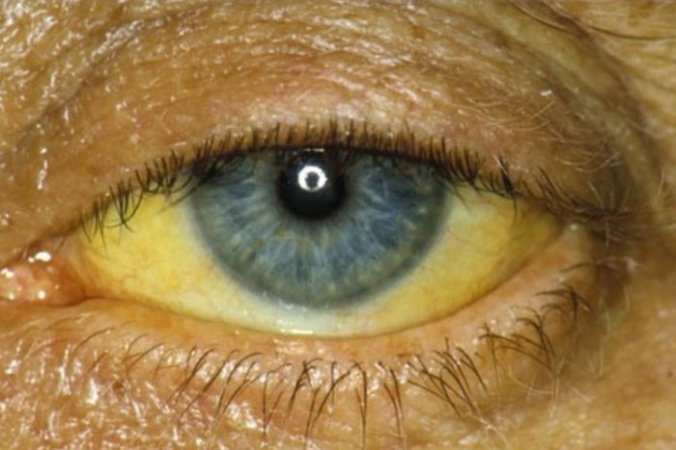
All looks yellow to the jaundiced eye.

Conservative writer John Hawkins published a post called “7 Brutal Truths That Will Make Your Life Better If You Accept Them.”

If I were as cynical as he is, I might say that a better title would be “How to Rationalize Being a Jerk,” but I’m not.

However, his post does demand some ethical perspective. Most, though not all, of his truths are really constructs to justify unethical conduct. Let’s examine them:

1. The average person cares more about what he eats for lunch than whether you live or die.

Maybe, and so what? That doesn’t mean that you should emulate them.  To begin with, there is no “average person.” There are individual people, good, bad and in-between. Hawkins writes,

“You tell the average person that doesn’t know you very well that you have a fatal disease and he’ll say, “I’m so sorry to hear that.” Then he’ll forget about it in five minutes while he debates with his friends whether they’re going to Chili’s or the Mexican restaurant down the street. What that means is that everything you want out of life, you better prepare to earn without getting a lot of favors on the way. If you fall, you have to be the one to pick yourself up off the ground, brush yourself off and get your life back on track. You care. They don’t. So it’s up to you.”

But the a stranger doesn’t always react that way. Sometimes he gives you his kidney. Hawkins is supplying an excuse to be callous based on a Golden Rule Distortion: “Do Unto Others As They Would Do Unto You.” Don’t listen to him.  Care about other people, and don’t hesitate to ask for help. People are better than you think: they will surprise you. In the meantime, it is your job to be as good as you would like them to be.

2. Life is not and will never be fair

I’ve written about this recently: fairness is a vague and broad concept in ethics. Life isn’t “fair” because life is often random, and nobody is tending the fairness meter. Systems either are fair or are not depending on your point of view. The mainstream conservative view about fairness is that one should play the cards one is dealt and stop complaining about it. It’s facile, though not without some truth: it is better to spend time trying to overcome obstacles than to bitch about them. On the other hand, each of us has an obligation to make the world better for those who follow us. Genuine unfairness, in systems, institutions, the culture and society, should be exposed, attacked, and fixed if possible. Hawkins’ approach would have left the U.S. with slavery, second class citizenship for women, Jim Crow, straight-only marriages, age discrimination, brutal monopolies and unchecked consumer fraud. His #2 is a license to be callous.

3. Most people are shallow

What an elitist and ignorant thing to say. If one has spent any time talking to and getting to know a wide range of people, it becomes clear that the opposite is the case. Again, assuming that most people are shallow provides Hawkins with an excuse to ignore them, or treat them with contempt. Most people will tend to behave as if they are shallow because they are rushed, stressed, distracted and focused on short-term exigencies. Give them time to think, a reason to consider a topic carefully, and the respect they deserve, and frequently unexpected depths will reveal themselves. “Most people are shallow” is a crippling bias for anyone to adopt. Expect the best of people: you will often be disappointed, perhaps, but you will also allow validations of your faith in humanity to bloom.

Writes Hawkins:

“So, use the shallowness of other people to your advantage. Learn to dress like a successful person. Pay attention to how you look. Find ways to give off the appearance that you are doing well. Don’t be a phony—be you, but also take advantage of the fact that a superficial appearance will be the reality to most people.”

Let’s see: pretend to be a successful person, but don’t be a phony; be you, but try to fool people by not revealing who you are. What?

People don’t assume that people who dress well,  speak well,  have manners and behave in a civilized fashion are successful because they are shallow. They assume that because they have learned from experience that certain traits both aid success and result from it.  Hawkins is the one revealing shallowness. Continue reading

Baseball’s Intrusive Domestic Abuse Policy

Last year I wrote about Major League Baseball’s domestic abuse policy, which is, pardon the pun, bats. Here is another example.

Red Sox knckcle-baller Steven Wright has been suspended for 15 games under the MLB-MLBPA Joint Domestic Violence, Sexual Assault and Child Abuse Policy. Fifteen games is a lot: that’s three starts for a starting pitcher like Wright, and almost 10% of a player’s salary. Wright’s salary is about a million dollars for the upcoming season, and unlike an established star, he isn’t a multi-millionaire. Losing about a hundred grand will hurt, and not just him, but his whole family.

The suspension relates to a mid-December incident in Tennessee in which Wright was arrested and charged with domestic assault and prevention of a 911 call.  Wright was not charged with physical abuse to his wife or any other household members; this was apparently “verbal abuse”—the pitcher’s conduct was so emotional and threatening that his wife was frightened. A plea deal has the charges on the road to being discharged if Wright does not commit any infractions in the next year. He has told reporters that he and his wife are being counseled.

Never mind: Baseball Commissioner Rob Manfred suspended him anyway, under this policy: Continue reading

Comment Of The Day: “Morning Ethics Warm-Up, 3/22/18: Nanoo Nanoo, And The Oxford Comma”[Item #3]

Observations:

1. I love it when I am out of the office all day and return to find that my desperately rushed post in the morning spawned multiple donnybrooks.

2.  If this were baseball, Mrs. Q would be leading the Ethics Alarms League in batting average. Her Comment of the Day/Comments average leads the pack.

3. This quote…

“If someone were to ask me “what do you want most from our society today?” I’d answer, to have people mind their own business, not assume I’m needing a leg up, and honor those who honor family, faith, and free thought.”

…is as smart, powerful and profound a statement as any that have appeared on Ethics Alarms in nine years.

Here is Mrs. Q’s Comment of the Day on #3 in the post, Morning Ethics Warm-Up, 3/22/18: Nanoo Nanoo, And The Oxford Comma: 

How do we as a society make things more fair for a variety of minorities, based on a history of unnecessary biases?

I don’t think it’s possible to make everything equal for everyone forever and always. It’s a nice idea but I’m called to remember the book “The Lathe of Heaven” where the therapist manipulates his patient into “making the world a better place” with disastrous results. For example in trying to solve overpopulation, millions die. In another, an attempt at solving racism turns everyone grey.

The song by Tears for Fears, “Everybody Wants to Rule the World” highlights another dilemma in attempting to make things as we wish:

“All for freedom and for pleasure
Nothing ever lasts forever”

There is simply no way to obliterate prejudice. There will always be poor folks, enslaved folks, downtrodden folks, and people who get treated like crap for one reason or another. Obviously this doesn’t mean we stop caring or making effort to be kinder people, which includes examining institutional racism, homophobia, etc. However any “peace” we make won’t last in the next generation or the one after that because some other disparity will always present itself. This is the way of life and the evidence of history from the Egyptians to the Jews to women today being trafficked. So how do we balance the scales for minorities here in the US? Continue reading

Morning Ethics Warm-Up, 3/20/18: Life, Death, Fairness, Dissonance And Sanity

1 Let’s see more of such Ethics Heroes, please… In Upper St. Clair, Pennsylvania,  John Orsini, has gone to court to stop his ex-wife from allowing their son, 17-year-old Antonio, from playing high school football in his senior year. Antonio has already suffered at least three concussions. Antonio’s mother and John’s ex-wife, Janice, says that her son understands the risks, and that doctors have OK’d his continued play.

But he doesn’t understand the risks—apparently neither do those doctors—and he is considered a minor under the law because teenagers are prone to poor reasoning and impulsive decisions…especially when they have incipient brain damage.

CNN is eager to hear his position on gun control though. But I digress..

Says the CBS news story: “John contends that after these concussions and sub-concussive hits, medical research shows that Antonio would be in grave danger if he continues to play football.” He contends? There is no contention: that is fact.

“I’m trying to save his future. I’m trying to save his life,” he said of his son.

Janice and her attorney issued a statement, saying in part,

“The mother and her 17-year-old son have reasonably relied upon the input and opinions of his treating physicians and medical providers, and have considered the state mandated safety and concussion protocols followed by the school district, in deciding whether it was appropriate for him to continue to participate in football.”

John believes the court will side with him.  “If you have a significant indication that the child is being placed in harm’s way, and it’s brought to court to protect the child, it’s the court obligation to do so,” he says. I wouldn’t be so sure. This is football country, and football fanatics are in denial. They’ll get thousands of children’s brains injured before they are through.

“I’m hopeful that my son will just go on, get a good education and lead a healthy life. That’s all I want,” said John, whose other two sons no longer speak to him over this conflict.

Good luck.

Let’s hope Anthony is given then chance to grow smarter than his mother.

2. Let’s see, which Trump Derangement news media story should I post today? Every day, every single day, I have literally dozens of biased, vicious, stupid, unprofessional and blatantly partisan mainstream media news reports and pundit excesses to flag as unethical. Here, for example, is a New York Times columnists advocating for Rex Tillerson to betray all professional ethics, confidentiality, trust and responsibility by revealing everything he heard or saw as Secretary of State that could undermine Trump’s administration. It’s called, “Burn it down, Rex.”

Let me repeat: for journalists to set out to intentionally poison public opinion against the elected President of the United States by manipulation and hostile reporting is unethical and dangerous. This conduct has been the single largest ethics breach in the culture for more than a year, and one of the worst in U.S. history. In strenuously condemning journalism’s abdication of its duty to support democratic institutions and to remain objective and responsible, I am not defending Donald Trump. I am attempting to defend the Presidency itself.

Today I pick…this: Continue reading

A Bad Week For Puppies, Students, Human Beings…And Turtles.

“Mmmmm…puppies…”

Robert Crosland, a popular veteran science teacher at Preston Junior High School in Idaho, apparently fed a puppy to a snapping turtle in front of students after school last week. Apparently the puppy was infirm and not expected to live, justifying his conversion into Turtle Chow in the teacher’s view.

Crosland has not been criminally charged or placed on leave—yet—but the school is still investigating and considering its options, as is the Franklin County prosecutor.

Interviewed  students said Crosland is a well-liked, “cool” teacher at the school who kept snakes and other reptiles in tanks in his classroom, and had fed guinea pigs to snakes and snapping turtles in past classes. School officials describe him as a passionate, dedicated, gifted teacher. On the other side, Jill Parrish, an animal activist who filed a police report in connection with the alleged feeding, called Crosland’s actions  “sick” and “disgusting.”

“Allowing children to watch an innocent baby puppy scream because it is being fed to an animal … that is violence,” Parrish said. “That is not okay.”

While trying to sort all this out, officials took action: they killed the snapping turtle. Continue reading

Morning Ethics Warm-Up, 3/19/18: Unethical Wedding Gifts, The Fairness Conundrum, What Really Makes Students Unsafe, And More

Good Morning!

1 A Not Exactly Hypothetical… A family member is getting married, and the social justice warrior spouse has decreed that no gifts should be sent, just contributions in the happy couples’ name to designated charities and causes, all political, partisan, and ideological. Does this obligate guests to give money to causes and organizations they object to or disagree with? One might be tempted to teach a life-lesson in abuse of power, and pointedly give a contribution to, say, The Family Research Counsel, the NRA, or Paul Ryan’s re-election campaign, but that would be wrong. Wouldn’t it?

2. “Progressive fines” poll update. The percentage of readers who regard so-called “progressive fines” as fairer than fining all law violators the same amount regardless of resources is about 6%, in contracts to 40% who think this is less fair. As I suspected, the schism is driven by the long-standing (and resolvable) arguments over what constitutes “fair” government policies, and whether it is the government’s job to try to make life less unfair. Is it “fair” to treat everyone the same, when we know that life doesn’t treat everyone the same? Are those who argue that life’s unfairness should be addressed by individuals, not society, taking that position because they are winners in life’s chaotic lottery? Can society and governments be trusted to address “unfairness” and inequality without being influenced by the conflicts and biases of the human beings making and carrying out laws and policies. I don’t generally care to spend a lot of Ethics Alarms time or space on abstract ethics questions, but some of them can’t be avoided. You can take the poll, if you haven’t already, here.

3. On the topic of fairness, here is a study that will make you bang your head against the wall: Following on the heels of this discouraging study I posted about on March 3 is this report by researchers at Stanford, Harvard and the Census Bureau, as described here by the New York Times. A taste sufficient to ruin your day: Continue reading

Ethics Quiz: Income-Based Legal Penalties

In an op-ed in the Times,  lawyer Alec Schierenbeck argues for “progressive fines”:

“For a justice system committed to treating like offenders alike, scaling fines to income is a matter of basic fairness. Making everyone pay the same sticker price is evenhanded on the surface, but only if you ignore the consequences of a fine on the life of the person paying. The flat fine threatens poor people with financial ruin while letting rich people break the law without meaningful repercussions. Equity requires punishment that is equally felt.”

Your Ethics Alarms Ethics Quiz of the Day is..

Do you agree that “progressive fines” are a more ethical policy than having the same fines for the same violation, regardless of the offender?

Continue reading