Foundation For Individual Rights In Education (The FIRE) Report: America’s Top Universities Deny Students Fair Hearings

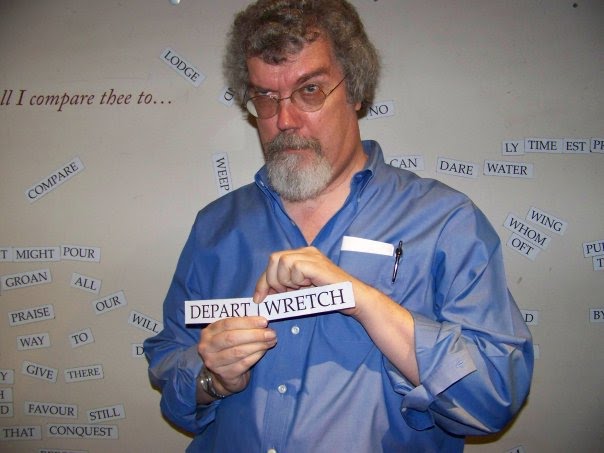
(If you don’t know what this photo has to do with the FIRE report, you haven’t been paying attention…)

The FIRE, the heroic non-partisan non-profit that is dedicated to fighting restrictions on student speech, expression and other civil rights, has issued an important report showing how badly respect for Constitutionally guaranteed rights eroded during the Obama Administration’s embrace of the “war on women” narrative and radical feminist propaganda regarding the “rape culture” at American universities. From the press release:

“Spotlight on Due Process 2017” surveyed 53 of America’s top universities and found that a shocking 85 percent of schools receive a D or F grade for not ensuring due process rights. The schools were judged based on whether they guarantee those accused of campus misconduct 10 core elements of fair procedure, including adequate written notice of the allegations, the presumption of innocence, and the right to cross-examine all witnesses and accusers. FIRE awarded each institutional policy a grade based on how many of those elements it guaranteed.

“Most people will probably be surprised to learn that students are routinely expelled from college without so much as a hearing,” said Samantha Harris, FIRE’s vice president of policy research. “This report should be a huge red flag to students, parents, legislators, and the general public that an accused student’s academic and professional future often hinges on little more than the whim of college administrators.”

FIRE’s report found that 74 percent of top universities do not even guarantee accused students the right to be presumed innocent until proven guilty. Making matters still more unjust, fewer than half of schools reviewed (47 percent) require that fact-finders — the institution’s version of judge and/or jury — be impartial.

Additionally, 68 percent of institutions fail to consistently provide students a meaningful opportunity to cross-examine their accusers or the witnesses against them — despite the fact that the Supreme Court has called cross-examination the “greatest legal engine ever invented for the discovery of truth.”

Most universities try students under one set of procedures for sexual misconduct, and an entirely different set of procedures for all other offenses. Of the 49 institutions in the report that maintain separate policies for sexual and non-sexual misconduct, 57 percent grant students fewer procedural protections in sexual misconduct cases — even when those cases allege criminal behavior. Troublingly, 79 percent of top universities receive a D or F for failing to protect the due process rights of students accused of sexual misconduct….

The report later says that not one institution covered by the study received the top grade. Continue reading

Morning Ethics Warm-Up, 9/3/17: A Troubling MLB Suspension, Anti-Trump Mania Update, And Announcing “US Race Relations Have Finally Reached The Point Where They Make No Sense Whatsoever” Sunday

Good Morning!

1.I dread this, but it is looking like it is going to be “US Race Relations Have Finally Reached The Point Where They Make No Sense Whatsoever” Sunday. I have accumulated three stories that fit under that heading, because each one of them is simultaneously annoying, sensitive,  under-reported, and difficult to process. Procrastination isn’t ethical, however, so today is the day. Ugh.

2. Today’s New York Times Sunday Review is again light on President Trump Hate, after last week’s orgy. I was discussing yesterday’s post about the draft letter excitement with my sister, a not-quite-resistance member who is a better lawyer than I am and intermittently reasonable despite hating and fearing the President worse than she does that Four Horsemen of the Apocalypse. She agreed that the news media’s elevation of the draft letter to front page status was biased journalism and self-evidently silly. “The news media believes that Trump is so incompetent that it is their job to try to help the country get rid of him as quickly as possible,” she said. She also confirmed that this is the attitude of the “resistance,” Democrats and progressives as well, and she hangs out with all of them.

Her candor was welcome. It’s also an admission, in my view, and I told her this, of an anti-democratic and unethical attempt to undermine our institutions. We remove Presidents by elections, not manufactured impeachments or 25th Amendment removals on contrived grounds. What my sister calls fear of dangerous  incompetence is really objections to style, rhetoric and policy, none of which are justifiable reasons to remove a President before an election.

I also pointed out to my sibling that it is not the news media’s job to conspire with partisan opponents to remove a President. In fact, it is unforgivable.

3. What’s the difference between the National Football League and Major League Baseball? Well, one difference is that when a star NFL player is caught on a video cold-cocking his wife-to-be  in a hotel elevator, the NFL’s first response is to do nothing, and when a second string catcher’s ex-fiance says she was abused on social media and then deletes the post, that’s enough for MLB to suspend the player under its domestic abuse policy. Ethically, I’m not sure which is worse. Continue reading

Another Harvey Ethics Quiz On Looting….

The comments on the Ethics Quiz on shooting looters was edifying. Now let’s examine the question of “legal looting,” according to a Yale Law School professor.

In a post for Bloomberg, Stephen L. Carter argues that “Peacefully taking what you need from a supermarket isn’t the same as looting.” he writes in part,

Should we conclude that people taking food from an empty store during an emergency are not committing a crime? That’s exactly what we should conclude — they are not lawbreakers — but it’s important that we understand exactly why.

Let’s start by considering our own instincts. If I were trapped and my family was starving, I would grab the food; I suspect most readers would too. Already our instincts tell us, then, that the moral situation in which we find ourselves is different when a disaster has struck. I believe, very deeply, in the importance of strong property rules. In an emergency, however, we should interpret the rules differently…. A well-known example in the Model Penal Code posits a hiker who, trapped by a blizzard, breaks into a cabin and eats the food to survive. The hiker has taken both food and shelter without the permission of the owner. By choosing to violate a property rule rather than starve to death or die of exposure, the hiker has selected the lesser of two evils. This is one form of the defense known as “necessity,” and is generally considered to mean that there is no crime.

(You need to read the whole post to fairly consider Carter’s argument.)

Your Ethics Alarms Hurricane Harvey Ethics Quiz of the Day is…

Is looting an abandoned supermarket for food still a crime?

Continue reading

Comment Of The Day: Morning Ethics Warm-Up, 9/1/17: …A Sarcastic Cop

The news item involved a Georgia traffic cop being fired for a dash-cam video showing him sarcastically telling  a DUI motorist who was resisting his requests on the grounds that she had seen videos of police shooting unarmed motorists, “But you’re not black! Remember, we only kill black people. Yeah, we only kill black people, right?”

My post took the position that in the current environment for police departments, the officer had to be fired despite hsi obvious intent. Esteemed long-time commenter Charles Green articulated the opposing view, which I must admit is more ethical than mine on its face. I wonder if it is realistic, but I’m thinking, Charlie, I’m thinking.

Here is Charles Green‘s Comment of the Day on the post, Morning Ethics Warm-Up, 9/1/17: Richard Simmons, Stilettos, A Sarcastic Cop:

Regarding the sarcastic cop: as I’ve said many times in this column, I think comments have to be understood in context. This is no different.

As you note, it was obvious from the context what he meant. I’ve made the point numerous times about “black lives matter,” and about how the same words when uttered by black people have different meanings when uttered by white people.

I think this is the same. If it was obvious what he meant, then why should we defend the police department for bowing to perceived PC implications? The department should back him up and make an intelligent, forceful statement about how cops are required to make on-the-spot judgments about the individual in front of them, and not be slaves to the perception outside.

I wouldn’t even have fired him, much less go after him to make an example. By that logic, all the statues should come down (which I don’t agree with either).

Morning Ethics Warm-Up, 9/1/17: Richard Simmons, Stilettos, A Sarcastic Cop, And The Post Sides With Palin

GOOD MORNING SEPTEMBER!

1.Good riddance to August, which had the worst fall-off in traffic here relative to the previous year of any month in Ethics Alarms history. I only have theories, the main one being that last August’s surge was an anomaly fueled by the Presidential campaign and the fact that Ethics Alarms was analyzing the ethics deficits of Hillary, Trump, the news media and both parties in roughly equal measure, since they were misbehaving in roughly equal measure.  Since “the resistance” and their allies in the news media, academia and elsewhere decided to reject democratic institutions like elections and the office of the Presidency in their revulsion, and mount a dangerous perpetual assault on the President with the objective of  undermining his leadership and having him removed extra-Constitutionally, the left-leaning end of the blog-reading pubic has become rigid and unyielding, and unable to tolerate even considering any position but their own. I’m seeing it on Facebook, every day. Their position is indefensible on the facts, so they find any critical analysis of their conduct and attitudes unpleasant. Then again, it could be because Google is burying my posts for being insufficiently politically correct, or because I suck.

2. Here’s a perfect example of the kind of ethics issue that only deserves Warm-Up status: Melania’s shoes as she boarded Air Force One on the way to  Houston.

(She was in sneakers when she landed, and was mocked for that, too.)

The New York Times and other Trump-Hate news sources actually thought this fashion choice by the ex-model was worthy of criticism. In Melania Trump, Off to Texas, Finds Herself on Thin Heels , Vanessa Friedman spend hundreds of words dissecting how the stilettos were “a symbol for what many see as the disconnect between the Trump administration and reality.” Apparently the First Lady broke the “No high heels when leaving a disaster” rule in the First Family Ethics Manual. Letter writer Dennis Donalson correctly chided the Times, writing in part,

The fact that she wore high heels when boarding a plane, regardless of her destination, is not newsworthy. Sometimes a cigar is just a cigar and shoes are just shoes, not “the go-to stand-in for more nuanced, complicated emotions and issues.” Give Melania, and us all, a break.

Dennis notwithstanding, I’ve decided stories like this are wonderful: they are smoking gun evidence for anyone who isn’t similarly deranged that the news media is so consumed with anti-Trump mania that it is literally unable to determine what is or isn’t fair, proportionate and reasonable coverage. If the Times thinks Melania’s shoes are such a big deal, no wonder it goes nuts over what the President says to the Boy Scouts…and no wonder it is no longer reasonable to accord such a paper any credibility or respect at all. Continue reading

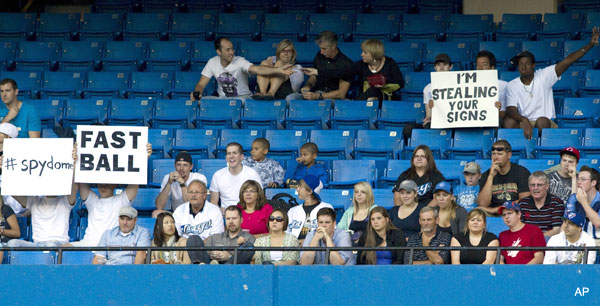
When “Ick!” Strikes Out Ethics: The Intensifying Robo-Umpire Controversy

[I see that I last wrote about this issue in April, and before that, in June of 2016, and in 2012 before that.Well, it’s worth writing about again, and again, until ethics and common sense prevails.]

This weekend Major League Umpires held a silent protest, wearing armbands in support of colleague Angel Hernandez, whose competence was publicly questioned by Detroit Tiger player Ian Kinsler. In fact, Angel Hernandez is a terrible umpire, and terrible, indeed, even mildly fallible umpires have a problem now that they never had to worry about in the good old days: their mistakes are obvious and recorded for all to see.

Yesterday Red Sox color man and former player Jerry Remy was reminiscing during the Red Sox -Yankee game broadcast about one of his few home runs. He said he had struck out, missing with his third swing by almost a foot, and was walking back to the dugout when the umpire called him back, saying he had foul-tipped the ball. “I know that was wrong, but I’m not going to argue I’m out when the ump says I’m not.” Remy said. He went back to the plate, and on the next pitch hit a home run. “Of course, they didn’t have replay them,” Jerry added.

Before every game was televised and before technology could show wear each pitch crossed the plate, balls and strikes were called definitively by umpires, many of whom proudly had their own strike zones. “As long as they are consistent with it ” was the rationalization you heard from players and managers. It was, however, a travesty. The strike zone isn’t a judgment call; it is defined, very specifically, in the rules. A pitch is either within the legal zone or it is not. A strike that is called a ball when it is not, or vice-versa, is simply a wrong call, and any time it happens can affect the outcome of the at-bat and the game. If you watch a lot of baseball, you know that we are not just talking about strikeouts and walks.  The on-base average when a batter is facing a 2 balls, one strike count as opposed to a 1-2 count is significantly higher. The wrongly called third pitch can change the result of the at bat dramatically.

Since the technology is available to call strikes correctly 100% of the time, why isn’t the technology being used? Actually it is being used, in TV broadcasts. The fan can see exactly when the umpire misses a call, and the broadcasters talk about it all the time. “Where was that?” “That was a gift!”  “Wow, the pitcher was squeezed on that one.” Once, a missed call in a game was virtually undetectable, because one could assume that the umpire had a better and closer view than any fan or broadcaster could have. Now, there is no doubt.

Yet the players, sportswriters and broadcasters still overwhelmingly argue against the use of computer technology to call balls and strikes. It’s amazing. They know, and admit, that  mistaken  ball and strike calls warp game results; they complain about it when it happens, point it out, run the graphics repeatedly to show how badly a crucial call was botched, and yet argue that a completely fixable problem with massive implications to the players, the games and the seasons, should be allowed to persist.

These are the rationalizations and desperate  arguments they advance: Continue reading

Accumulated Ethics Notes On The Charlottesville Riots, The Statue-Toppling Orgy and The Confederate Statuary Ethics Train Wreck, Part One

As an introduction, I have to say that this episode, which has quickly turned into an ethics train wreck of sweeping and perhaps catastrophic proportions, frightens me as few issues do. It has become a danger to free speech, to cultural diversity, to liberty, education, historical fairness, cultural cohesion and  common sense. It appears to be the metastasis of all the demonizing rhetoric, self-righteous pandering and virtue-signaling, and totalitarian-minded efforts to remold the past in order to control the future. The level of contempt, hate and intimidation being focused on those who—like me—are attempting to keep the issues in perspective by analyzing complex and emotional ethical components in context is causing the fervor involved to approach  that of unthinking mobs. The damage done by the worst mobs of the past, however, were mostly confined to a restricted region, or, like The Terror in France or the Red Scare here, were immediately repudiated one the fever broke. I’m not sure that this fever will break, at least not before it breaks us. It is the perfect storm of self-righteous fanaticism, as the anti-Trump hysteria collides with Obama era race-baiting and victim-mongering, both of which have run head on into the mania for air-brushing history to remove any mention of events, movements, attitudes or human beings that “trigger” the perpetually outraged of today.

Social media has magnified the intensity of this already deadly storm, by allowing once intelligent people to throttle their brains and judgment into mush by confining their consideration of the issues to partisan echo chambers. Daily, I am embarrassed and horrified by what I read on Facebook by people who I know—I KNOW—are capable of competent critical thought but who have completely abandoned it to be on the “right” side, where facile, half-truths and lazy conclusions are greeted by a myriad “thumbs up” and “hearts.”

And I am angry–contrary to popular opinion, I’m not usually emotionally involved in the issues I write about; like Jessica Rabbit, who isn’t really bad (she’s just drawn that way), I’m not usually as intense as I seem. I just write that way—that I am so tangential and impotent that what see so clearly has little persuasive power at all, because I’ve frittered away my opportunities to be influential in a thousand ways.

I have never allowed futility to stop me, though, because I have spent a lifetime banging my head against walls.

Here are the ethics observations I’ve been accumulating since the first torches were lit in Charlotte:

  • Please watch this video, from Ken Burn’s “The Civil War”:

I was moved when I first saw this, which was in the documentary’s final chapter, and I am moved still. The old Union soldiers moaned when they saw the men who had tried to kill them, and who had killed their friends and comrades, re-enacting their desperate open field march into deadly artillery. Then they dropped their arms and met their former foes, and embraced them.

These men didn’t think of the former Confederates as traitors, or racists, or slavery advocates. They, like the Union veterans, were just men of their times, caught up in a great political and human rights conflict that came too fast and too furiously for any of them to manage. They were caught in the same, violent maelstrom, and knew it even 50 years earlier. Soldiers on both side wrote how they admired the courage of the enemy combatants they were killing, because they knew they were, in all the ways that mattered, just like them. It was the Golden Rule.  After the war, these soldiers who had faced death at the hands of these same generals, officers and troops, did not begrudge them the honor of their statues and memorials, nor their families pride in the bravery of their loved ones.

Yet now,  self-righteous social justice censors who never took up arms for any cause and in many cases never would, employ their pitifully inadequate knowledge of history to proclaim all the Civil War’s combatants on the losing side as racists and traitors, and decree that they should be hidden from future generations in shame. We have honored men and women for the good that they represent, not the mistakes, sins and misconduct that are usually the product of the times and values in which they lived. In doing so, we leave clues, memories, controversies, differing vews, and stories for new generations to consider and better understand their own culture and society, and how it came to be what it is.

Those who want to tear down monuments to the imperfect, whether they know it or not, are impeding knowledge, perspective, wisdom, and understanding. They want only one view of history, because they will only tolerate one that advances their ideology and values—just as the Americans of the past believed in their values. Foolishly, I suppose, they trusted future generations to act on their own ethical enlightenment without corrupting the historical record. Continue reading

From The “Grandstanding Ingratitude” Files…Ethics Dunce: Boston Red Sox Owner John Henry

Ah, Ethics Alarms heaven! The statue-toppling mania issue has collided with the Boston Red Sox, just two days after my pilgrimage to Fenway Park!

ESPN reported yesterday that Red Sox owner John Henry wants Boston to change the name of  the street that borders the legendary park, Yawkey Way, and he is trying to exploit the   current political correctness mania that has cities pulling down statues of war heroes in the dead of night to accomplish his goal.

That’s my characterization, of course, not ESPN’s.

Henry told the Boston Herald that he is “haunted” by the racist legacy of previous owner Tom Yawkey, who led the team from 1933 to 1976. Because he is haunted, he thinks that it is fair and right that the man who beyond question saved the team, ran it as a Boston institution and public utility, and is as responsible as anyone for the fact that Henry owns one of the prestige franchises in all of sports, should be dishonored and shunned because he wasn’t enlightened about civil rights long before Martin Luther King began marching.

Such disgraceful moral grandstanding and self-righteous ingratitude is seldom seen. But I guess if anyone should be able to grandstand, its someone who owns a baseball park.

For those who mock the idea that the desecration of Robert E. Lee’s statues leads directly to George Washington, now hear this; for the Boston Red Sox, Tom Yawkey is George Washington.

The only owner any one remembered before Tom Yawkee bought the team was Harry Frazee, consigned to Beantown Hell for selling Babe Ruth (and many other stars) to the New York Yankees in 1919. From that moment on, the team was a perennial loser, often in last place, while New York won pennant after pennant and sneered at its proud rival on the Bay. In 1933,

Tom Yawkey , a lumber tycoon and baseball enthusiast, bought the team and poured money and love into it, buying other team’s stars (Left Grove, Joe Cronin, Jimmy Foxx) and turning the team into worthy challenger to the Yankees.  From the beginning, Yawkey paid no  attention to the bottom line as he tried to build a champion out of the franchise, or as he put it, “to bring a championship back to the fans of Boston.” This was during a period when teams had permanent control over player contracts, and most owners used that leverage to pay players pathetic wages. Not Tom Yawkee. He was criticized for over-paying players–hilarious now, when we’re talking about his paying a utility infielder $15,000 when others of his ilk were making just $8,000, and current utility players make a couple million dollars a season. Sportswriters in Boston called the Red Sox a country club, and blamed Yawkee for “falling in love with his players.” In 1960, Ted Williams had to ask Yawkey to cut his salary, because he felt embarrassed after a bad year, his only one.

Was Yawkey a racist? He was born in 1903, and grew up during the Wilson Administration, when Jim Crow really took of. Sure he was a racist, along with about 95% of the whites in the nation.  Continue reading

From The “I Told You So Files”: First They Came For General Lee…[UPDATED]

UPDATE: Because the first two news sources I had were in error, I originally posted that the event described occurred this week. It did not: it occurred in October of last year.

Just a few hours ago, I was explaining to a usually wise and rational commenter why her willingness to allow periodic purges of statues and memorials honoring those individuals who past members of our society determined were worthy of continuing honor. The figure in question was Robert E. Lee, not one of my personal favorites, but a generally recognized military genius and easily a man whose life and accomplishments included several justifications for permanent memorials. My favorite: Lee personally vetoed the Confederacy’s fallback plan of taking the war to a guerilla stage, extending the conflict indefinitely. It might well have worked, but Lee refused. I’ll happily grant him some perpetual statuary for that. But the self-righteously intolerant practitioners of presentism want Lee cast as a an irredeemable villain, and his statues toppled.  There are many reasons why this kind of self-imposed cultural amnesia is offensive, harmful and stupid, but in my exchange with that usually wise and rational commenter, I focused on the slippery slope, writing,

You cannot articulate what the stop is on that slippery slope that doesn’t end with blowing up Mount Rushmore.

Imagine my surprise, not to be proven right, for that occurs often, but to be proven right so quickly by a news report I just read concerning a protest  by more than 200 political correctness  maniacs inside the American Museum of Natural History in New York City. Their goal: take down the statue of former of Theodore Roosevelt—historian, author, scholar, orator,  political philosopher, war hero, patriot, cowboy, explorer, public servant, the father of conservationism, the creator of the National Parks system, President and one of progressivism’s founding pioneers—and, of course, one of the Mount Rushmore Four. The protest’s organizers, NYC Stands with Standing Rock and Decolonize This Place, called the statue of the former New York City police commissioner and former New York governor  a “stark embodiment of the white supremacy that Roosevelt himself espoused and promoted,” adding in a statement that “The statue is seen as an affront to all who pass it on entering the museum, but especially to African and Native Americans.” The protesters carried signs that read “BLACK LIVES MATTER,” “DECOLONIZE THIS MUSEUM,” and “ABOLISH WHITE SUPREMACY.”

Of course they did.

Continue reading

Ethics Quiz: The Nicely-Dressed Factor

(NPR says this was an actual passenger.)

When I fly, I always wear a sports jacket. No tie, often a sports shirt. Usually dress shoes, though not since I got mt neato-keen Boston Red Sox canvas deck shoes. Why do I do this? Apparently because I’m old, but also because of that old, archaic value, respect. If I’m in public, and especially if I’m going to be in close quarters with someone, I want the experience for them to be as pleasant as possible.

The airlines exercise very little dominion over what its passengers wear. Bare feet will keep you grounded; a T-shirt  with profanity or a lewd message may get you barred from a flight, but not much else. However, the airlines do notice what you wear, and what you wear may have benefits:

George Hobica, founder of the travel fare advice site Airfare Watchdog, said that “everyone believes no one gets upgraded anymore based on how they look.” But, he added, “It does happen.”… [Hobica] then relayed tales of friends who had been upgraded while wearing clothes they considered nicer than what they might wear to the gym or the grocery store, and a conversation he once had with a gate agent friend at Lufthansa.

“She told me she would upgrade people based on how good-looking they are, how pregnant they are, or how nicely they’re dressed,” he said. “She said: ‘Look, we oversell flights and, of course, we go down the status list first. Absolutely, we look at your miles.’” But if no one on the flight warrants special privileges, the absence of ripped jeans or tattered sneakers can help, Mr. Hobica said.

The Times got uniform denials that attire was rewarded when it contacted various airlines, but a flight attendant vaguely confirmed Hobica’s account.

“I will say that when I see someone come on the plane and they’re dressed nicely and their children are dressed nicely, I do take notice,” said …a United flight attendant since 1978. “When someone is a little dressed up and looking like they made an effort, it’s almost like they’re showing respect for themselves and for everybody else on the plane…My personal opinion is that when you take pride in how you look, you take pride in how you act,” she said.

Hmmmm.

The Ethics Alarms Ethics Quiz of the day is…

It is ethical for polite attire to confer benefits for flyers over passengers who dress in flip-flops, tank-tops and torn jeans?

Continue reading