Morning Ethics Warm-Up: 7/21/17

Good Morning!

1. There was one of those moments in a Major League Baseball game yesterday that teaches life lessons in character, and ethics for anyone who is paying attention.

The Boston Red Sox were playing the Toronto Blue Jays in an afternoon game at Fenway Park. Boston led 3-1 in the second inning, but the Red Sox pitcher,  veteran Doug Fister, was struggling with an uncharacteristic control lapse: he walked his third batter in the inning, and also had given up a couple of hard-hit balls that suggested that a gaggle of runs and a blown lead were inevitable. Then, mirabile dictu, Fister caught a break. The next Toronto batter swung mightily and lofted an easy, lazy pop-up to the infield. If there had been one out rather than two, it would have been called an automatic out under the Infield Fly Rule. Everyone, including Fister, who is fighting to preserve his spot on the Sox roster as well as his flagging career, breathed a sigh of relief. The Toronto batter slammed his bat to the ground. Settling under a pop-up not any more difficult than those he had successfully caught as a Little Leaguer was Red Sox utility man Brock Holt, a second baseman this day. He is much admired for his versatility, energy and reliability. Holt is also trying to revive his career after a frightening, season-long battle with vertigo, as well as to show the team that he can fill a yawning void at third base.

Holt dropped the ball. It bounced off his glove, as the Toronto baserunners were charging around the bases at the crack of the bat, since there were already two outs. Two of them scored, and later two more after Fister surrendered hits in te lengthened inning, making the bounty bestowed by Holt’s muff four runs. Fister was soon out of the game, and was charged with his team’s eventual two-run loss by an 8-6 score. (Today’s headline in Boston: “Doug Fister’s Future As Starter Uncertain After Loss To Jays”).

Yet Fister never shot an angry glance at Holt. He’s played the game; he knows how mistakes and random bad luck can turn everything around in an instant. He probably has dropped a similar ball in a crucial situation: I know I’ve done it, at second base, losing a company soft-ball game. Holt trotted to the dugout, got supportive pats on the back and fanny from his team mates, and played the rest of the game with his head high and his skills on display. There is no doubt that he felt terribly about the play, but Holt  didn’t hide under a rock, rend his garments, or make a big display of anger and frustration to signal to the hometown crowd—which didn’t boo or jeer him at any point in the game.

That’s life, as my father used to say, and this is how ethical people handle life. Disaster strikes out of a confluence of factors (a very bright sun undoubtedly helped Holt miss the ball, but professional ballplayers learn to cope with the sun) and all we can do, if we are competent at life as well as fair, responsible and brave, is to accept responsibility, not make excuses, and not allow such events to diminish or destroy us. Both Fister and Holt displayed the character necessary to do that. Neither blamed the other, and no one blamed them. Tomorrow is another day.

Play Ball!

2. Professional troll Ann Coulter is having a public spat with Delta Airlines that reflects badly on both of them. Continue reading →

From The “Law vs Ethics” Files: PETA Chooses To Harm An Artist On Behalf Of A Monkey Who Couldn’t Care Less, And Judges Think It’s An Amusing Legal Condundrum

“I’m baaaaack!”

When we last heard from  photographer David Slater, the U.S. Copyright Office had rejected his claim that he owned the  copyright for the famous series of selfies presumably taken unintentionally by a Celebes crested macaque.  In 2011,  Slater spent several days following and photographing a troop of macaques in Sulawesi, Indonesia, and the selfies were a lucky bi-product that quickly became a web sensation. Slater had asserted ownership over the photos, and had demanded that various on-line users, such as Wikipedia, either take them down or pay him as the copyright holder. The ruling of the Copyright Office was based on the theory that Slater had not taken the photo, so he was not the creator, and animals couldn’t own copyrights, so the photos were in the public domain.

Pop Ethics Quiz: Would it have been unethical had Slater simply released the photos without revealing that the selfies had been the lucky result of an  accident, snapped by the monkey while it was messing around with his equipment?

About the Copyright Office’s ruling: I’m dubious. Slater owned the equipment, and had the sense to preserve the photos. A decision that if a photo is taken accidentally by a non-human or an act of God, the photographer who owns the equipment gets the copyright would have been fair.  Zapruder owned the film that inadvertently caught President Kennedy having his forehead shot off, and it made him rich. Slater’s claim just goes a step further: Zapruder left the street  to buy a hotdog, put his camera on on a trash can and asked a friend to “watch it,” and a dog turned the camera on, catching the grisly scene. So Zapruder doesn’t own the film anymore? Does that make sense to you?

Well, that was the ruling anyway. Then things got really ridiculous. Slater included the monkey selfies in a book, and People for the Ethical Treatment of Animals (PETA)  brought a law suit against Slater on behalf of the monkey,which PETA claims is named Naruto, and asked that PETA be appointed to administer proceeds from the photos for the benefit of Naruto and other crested macaques in the reserve on Sulawesi. So PETA would suddenly be the de facto copyright holder. Continue reading →

Unethical Quote Of The Week: NYT Columnist David Brooks [UPDATED}

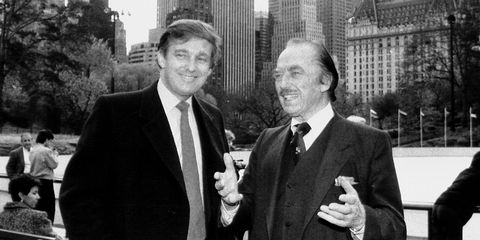
“Biographies describe a man intent on making his fortune and not afraid of skating near the edge to do so. At one point, according to Politico, federal investigators found that Frederick used various accounting measures to collect an extra $15 million in rent (in today’s dollars) from a government housing program, on top of paying himself a large “architect’s fee.” He was hauled before investigating committees on at least two occasions, apparently was arrested at a K.K.K. rally in Queens (though it’s not clear he was a member), got involved in a slush fund scandal with Robert Wagner and faced discrimination allegations.”

—New York Times columnist David Brooks arguing that Donald Trump, Jr.’s conduct in holding the controversial meeting  with some Russians and Russian-Americans to acquire useful negative information about Hillary Clinton for his father’s campaign came about because his family is just no damn good, as shown by the conduct of Fred Trump, the President’s storied father.

Unlike some commentators, I have no ethical problem with Brooks’ basic thesis. Culture molds ethics, children are influenced by the conduct and values modeled by their parents, and I have pointed out too many times to  count that Donald Trump doesn’t know ethics from a merry-go-round, and appears to have no  conventionally functioning ethics alarms at all. It makes perfect sense that Donald Jr. would grow up similarly handicapped.

However, Brooks’ evidence that Trump family patriarch Fred Trump was corrupt and without scruples is all innuendo and supposition, and thus dishonest, incompetent, and unfair. Let’s examine the components of Brooks’ attack:

  • “federal investigators found that Frederick used various accounting measures to collect an extra $15 million in rent (in today’s dollars) from a government housing program, “

Were the accounting measures illegal? Apparently not. Was the  “architect’s fee”? I guess not: Fred wasn’t indicted or prosecuted. Being investigated by the feds does not prove or indicate wrongdoing. Maybe Fred was cheating; I wouldn’t be surprised. But Brooks has no facts to support that assumption, just a pejorative characterizations.

  • “He was hauled before investigating committees on at least two occasions…”

I love the “hauled.” Being asked to testify isn’t evidence of wrongdoing either. Continue reading →

Ethics Quiz: Let The Seller Beware?

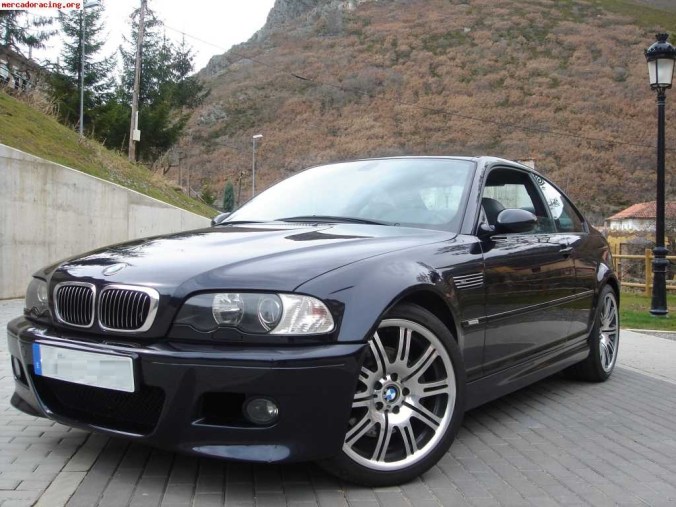
My son, an auto mechanic and an BMW enthusiast. just purchased a used BMW for 300 dollars from a customer who was frustrated with the car and not willing to pay any more to repair it. He regarded the purchase as great deal, but it was even a better deal than he thought. While he was checking out the car last night, be discovered that a spark plug had been misinstalled by the owner. When it was replaced, the engine sang like Beverley Sills.

My son said that he had suggested to the owner that he change the spark plugs, but had been told that this had recently been done. “He was nasty about it, too,” he said. “Would he have sold you the car for such a low price if the car was running the way it is now?” I asked.

“Never,” my son replied.

Your Ethics Quiz of the Day:

Is there an ethical duty to offer the car back to the original owner when it is discovered after the purchase that the vehicle was better and more valuable than the owner thought?

Secondary question: My son says that he might feel badly about the deal if the owner hadn’t been such a jackass throughout the transaction, and not only rejected his advice that would have revealed the car’s problem, but did so abusively.

Is that a valid and relevant ethical consideration?


Morning Ethics Warm-Up: 7/10/17

Morning, All!

(That’s a Flat Earth sunrise! I couldn’t resist...)

1. I’m encountering Ethics Alarms ethics alarms. For example, is it unethical for me to choose not to fix the typos in a comment from an obnoxious commenter? I generally fix mistakes when they turn up in comments from regulars here, or missing words and letters in first posts by newcomers. But the other day an annoying commenter of recent vintage registered a comment that seemed as careless as it was badly reasoned, and had several typos.Yeah, I fixed them. But I didn’t want to.

Then, after a long period without any blog banishments, I banished a commenter yesterday whose first post was really poor, and whose last was insulting in response to my pointing out just how poor it was. As I told him in the exit response, he had triggered The Stupidity Rule. I really don’t allow stupid people to comment here once I determine that they are hopeless. Is that wrong? Elitist? Mean?

I don’t want to keep explaining things to people whose comments indicate that they have preconceived notions, unshakeable biases, inadequate education and training in critical thinking, and are under the impression that an uninformed opinion is worthy of publication because it’s theirs. Yesterday’s exile also made the fatal error of criticizing the blog because it was “judgemental.” Yes, it’s a blog in which we analyze whether conduct is right or wrong, or something else. That demands judgment, and being judgmental. The fact that the matter at issue was a lawsuit—you know, before a judge?—and the commenter still made that observation anyway sealed his fate, even before he wrote that I was bald and presumably “repulsive to women.”

Wait…I’m bald???

2.  The University of Missouri, aka Mizzou, is in crisis as a direct result of its administrators craven capitulation to race-based extortion triggered by general angst and the Ferguson Ethics Train Wreck in 2015. Before the protests (which were based on nothing specific at the University that was ever demonstrated by the protesters, other than the President refusing to bow to demands that he condemn random reported racial incidents that didn’t involve students), Mizzou was thriving, growing, and building new dormitories. Now, in response to the nationally publicized meltdown of common sense and adult supervision (climaxed by a  protester-allied communications professor, Melissa Click, being caught on video calling for “some muscle” to prevent a student reporter from recording an ugly campus confrontation), enrollment is down 30%. The university is  closing seven dormitories and cutting more than 400 positions, including  faculty members.

Good.  But from the comments of students and remaining faculty members, it doesn’t sound as if the right lessons have penetrated the campus culture’s race-addled skull. Continue reading →

From The “Trump-Hate Disabling News Media Ethics Alarms” Files: The Washington Post “Kids Chorus”

For those inexplicably loyal fans of the news media who said to themselves, “Well, CNN is an exception. The other respected news organizations will never let the President push them to completely alienate the public’s trust,” here is the hard, cruel truth: you are dead wrong. Open your eyes.

Witness the Washington Post, which somehow thought that it would enhance its reputation as a fair, independent, responsible and objective news source by recruiting a group of children to mock President Trump by singing his tweets. This was a Washington Post promotion, now. The Post believes that its readers want to get their news from a newspaper that gratuitously ridicules the President of the United States.  Maybe they are right. Such readers, however, are not looking for facts, or objective analysis. Those readers are looking to feed their confirmation bias.

At “The Hill,” reporter Jonathan Easley tweeted: “WaPo getting kids to mockingly sing Trump’s tweets seems needlessly antagonistic and a dumb move right now.” 

Gee, ya think?

I’m trying to imagine the long list of broken ethics alarms that had to malfunction for the Post to let this get all the way through conception, to production, to publication. Nobody in the chain of command said, “Yeah, that’s hilarious, but let’s leave this kind of thing to Jimmy Kimmel, okay? We’re a newspaper.” Nobody. Nobody thought that this would simply confirm what media critics have been saying about toxic anti-Trump bias. Nobody thought about how a graphic demonstration of this mindset at the paper would undercut any claim that the Post is capable of fair reporting on an elected leader it would show such disrespect to just to make a promotional pitch. Nobody. Continue reading →

Whatever Else Can Be Said About President Trump, He Has Caused CNN To Expose Its Abandonment of Ethical Journalism. GOOD. [UPDATED]

“All the news media would have to do to have a shot at beating Trump would be to act in a measured, professional fashion. Trump has revealed that they’re incapable of that; it seems as if that option has never even occurred to them.”

Thus wrote Glenn Reynolds, the Instapundit, yesterday. I almost made it the Ethics Quote of the Day. The poster child for the malady that Reynolds describes is, of course, CNN. What has happened to that once respected news source in the last few weeks, and accelerated in the last few days, should, in a rational world, be reveille for the others who easily could fall into similar self-baited traps, and probably will. As we have seen, however, most of the similarly infected have either defended CNN or tried to bury its disgrace.

During the campaign for the Republican nomination, the assumption was that eventually Donald Trump would snap, engaging in some ugly conduct or rant that would sink his prospects and decimate his support. It never happened. Then in the general campaign, the same assumption reigned. He was a narcissist without ethics alarms. Goad him, frustrate him, and he would eventually crumble like Humphrey Bogart on the witness stand in “The Caine Mutiny.”  That theory worked well. Never mind: since his election, Trump has been subjected to unprecedented hostility from the news media, disrespect from elected officials, journalists and popular culture like no one before him, and a barrage of hate and insults.  Is part of the impetus behind the tactics of “the resistance,” Democrats and the news media the theory that relentless frustration and abuse will finally provoke that elusive “snap!” that results in an impeachable offense? I think it is. So far, as before, this tactic has failed. Ironically,  it is Trump’s most relentless foe, the mainstream media, that is snapping instead, driven to humiliating unprofessional and unenthical conduct by the President’s juvenile trolling. One wag recalled Wilford Brimley’s classic interrogation of Paul Newman’s character in “Absence of Malice” after Newman had maneuvered a district attorney, a federal agent and an unethical reporter into destroying themselves and their careers,

“Mr Gallagher…I seem to want to ask if you set all this up. If I do, you ain’t gonna tell me, are you?

I don’t think Trump’s sophomoric and undignified tweets were brilliant stratagems; he’s not that smart. He does, however, have the immense benefit of loathsome and inept enemies, and moral luck has been on his side. It is very possible that CNN’s over-the-top, thuggish and ugly response to the President re-tweeting a stunt GIF showing an image of him wrestling with a figure symbolizing CNN will prove to be a tipping point for both the network and the news media generally.

The network’s efforts to defend the indefensible, a senior CNN reporter intimidating and threatening to dox the ordinary web troll who made the GIF, has made it clear to anyone paying attention that CNN simply employs too many awful, unprofessional  people, prone to liberal fascism and habitual contempt for fairness and decency.  This, in turn points to a sick and unethical corporate culture, which was hinted at recently by the James O’Keefe sting videos featuring a producer mocking the concept of journalism ethics.

Today on her Twitter feed, CNN political analyst Kirsten Powers argued that Americans “do not have a right to stay anonymous” if they are expressing offensive views, meaning views that she/CNN/ progressives—you know, the good people who are always right?— find offensive.

Powers was responding to the uproar surrounding CNN’s report on the Reddit user believed to be responsible for the famous WWE meme of President Trump body-slamming the network’s logo. The CNN article included a threat to reveal the meme maker’s name if he doesn’t comply with the outlet’s demands.

The CNN commentator took issue with the people from all sides of the political aisle taking the side of the Reddit user, who goes by the pseudonym “HanAssholeSolo,” and argued he didn’t deserve any sympathy due to his past “anti-semitic racist, and anti-gay” posts. “People do not have a ‘right’ to stay anonymous so they can spew their racist, misogynist, homophobic garbage,” she added, noting that she would have published the GIF-maker’s name for all to see.

“Racism and misogyny is not an ‘opinion'” she said.

Bingo. There it is: the watermark of a leftist fascist, an anti-free speech hypocrite, and the rotting, stinking soul of CNN. Continue reading →

The Tangled Ethics Of Men, Women, Sexual Harassment,Sexual Discrimination, Romance, Common Sense, And “Vive La différence!”

Mike Pence would not have a business dinner with Debrahlee Lorenzana. What’s wrong with him?

Many years ago I did a sexual harassment seminar for a New York law firm. Afterwards, the partner responsible for handling the firm’s EEOC and workplace matters told me that my ethics-based approach to the topic wasn’t sufficiently rigorous, since he believed that innocent contact between employees in the firm could spawn lawsuits. “I refuse to travel with female associates,” he told me. “I can’t be sure what they will think is harassment.”

“Wait,” I asked. “So because you’re afraid of being accused unjustly of sexual harassment, you engage in sexual discrimination?”

He sputtered something and left to arrange his sock drawer.

I think of this conversation often. I thought of it when Vice-President Mike Pence was reported as saying in 2002  that he never had a meal with a woman who was not his wife, and was promptly savaged for it by feminists and the news media. Because the new rules and practices of the workplace have developed amid contradictions and rigid doctrine rather than with attention to whether they were workable or not, Pence and that hypocritical lawyer years ago are both victims and victimizers. It is often impossible to know what ethical workplace conduct is.

The New York Times was happy to bash Pence for his candor as part of a requirement of membership in “the resistance,” but then, as is often the case for the schizoid paper, later competently and objectively examined the issue away from politics. A Morning Consult poll conducted for the paper  found that there is widespread fear of one-on-one situations, male-female interactions in the workplace.  About 25% think private work meetings with colleagues of the opposite sex are inappropriate. Almost 2/3  say it is prudent to be especially wary and sensitive around members of the opposite sex at work. A majority of women, and nearly half of men, say it’s unacceptable to have dinner or drinks alone with someone of the opposite sex other than their spouse. Continue reading →

Morning Ethics Round-Up: 7/5/17

Good morning!

1. I’ve always had ethical problems with parole hearings, and thanks to a link sent by Ethics Scout Fred, I really have ethics problems with parole hearings. This story, from New Hampshire public radio, portrays an unprofessional and chaotic process in which parole boards, made up of officials without training or guidelines, insult, bully and deride prisoners to get the answers they want. A sample:

“While they may review cases beforehand, the parole board has only about 15 minutes to speak with people convicted of charges including sex offenses, drug crimes, and domestic violence before deciding if they can live safely outside prison walls. Members receive no training and appointment requires no prerequisite experience. Most of the time, inmates who meet minimum requirements are granted parole.”

Great.

2. Crime naturally makes me think of Chicago, where, it is reported, the wise city managers, led by Mayor Rahm Emanuel (D) are installing a system that requires public high school students to show that they have plans for the future before obtaining their diploma. In order to graduate, students will  have to demonstrate that they’ve secured a job or received a letter of acceptance to college, a trade apprenticeship, a gap year program or the military The Washington Post reports. Emanuel’s plan, approved by the Board of Education in late May, makes Chicago’s the first big-city system to make post-graduation plans a requirement.

“We are going to help kids have a plan, because they’re going to need it to succeed,” Emanuel told the Post. “You cannot have kids think that 12th grade is done.”

Oh, why don’t we just enlist the kids in the Social Justice Youth Corps, give them uniforms and some good progressive indoctrination, and be done with it? This is such an egregious abuse of power and autonomy, as well as parental authority, that the fact that it got a single vote indicates that the culture’s values are coming apart. I’m going to list five things that are unethical about this plan, and invite readers to some up with the doubtlessly large number of others that I missed because its early and the shock of this story fried half of mu brain:

It’s dishonest grandstanding. How are they going to enforce the “plan”? Will Chicago’s Plan Police keep tabs on graduates? Will students who don’t follow the plan be captured and thrown back into high school?

  • It is unfair, coercive. unconscionably narrow. What if a student’s plan is to continue her education by taking a year off and touring the world? What if the student plans on training for the Olympics, or a bodybuilding championship?

What if she wants to go to New York City and audition for shows?

  • The measure demonstrates myopic disregard for the original, the eccentric, the creative, the  bold, the dreamer, the non-conformist and the individualist

But then individualists make poor sheep, right?

  • It is totalitarian. It is none of the government’s business what a student chooses to do after graduation, or when that student decides to it. Here was my plan, fully backed by my parents: spend as much time figuring out what I want to do with my life as it took.

I’m still figuring.

  • It is arrogant. It is disrespectful. It is presumptuous. It is an invasion of parental authority. It is probably unconstitutional. It is wrong.

ARRRRRRRGHHHHHHH!!! Continue reading →

Comment of the Day: “Morning Ethics Warm-Up, 6/30/17.”

As he usually does, when he’s feeling frisky,  reader Extradimensional Cephalopod (above right) has dived into the issue of “health care rights” with gusto and perception. As I often do whether I’m feeling frisky or not, I have some cavils about the assumptions being made at the outset.

A right is a moral or legal entitlement to have or obtain something or to be able to do something. Moral and legal rights are two different things. When someone says, as did my friend on Facebook that started this debate. “I believe health care is a right,” he had to be asserting a moral right to healthcare, since a legal right to health care doesn’t exist. If he said, “I believe health acre should be a right,” then he would have clearly meant a legal right. That’s a policy issue. When someone argues that there is a moral right, then they are making the case for a legal right that doesn’t exist. The law in an ethical society ought to protect and advance moral rights, and society must agree what those rights are. Thus when he says, early on, “Note that a right isn’t something we owe Note that a right isn’t something we owe people just because they exist.,” he signals that he is describing legal rights only.   Moral rights are what we owe  people just because they exist. That’s why the Declaration begins with Jefferson saying that “we are endowed by our Creator” with “unalienable rights.”

Here is Extradimensional Cephalopod‘s Comment of the Day on #5 in the post, “Morning Ethics Warm-Up, 6/30/17.”

Let’s start at the beginning. We need to define the phrase “healthcare is a right”.

A “right” is a protection or entitlement we collectively decide to give to people at the expense of our some of our freedoms because we think that society will be more robust, sustainable, able to advance, or generally pleasant to live in as a result. That’s very similar to the basis for ethics, as far as I can tell. A right is a meta-law, a limitation on what laws can be made. Rights may be conditional. Note that a right isn’t something we owe people just because they exist. It’s something we decide we owe them because we want to live in a world where people have that right–because it’s safer for us, or because it means the world will still be there for our descendants, or because it allows civilization to progress to something better, or because we want others to be happy, or all of the above. This will be important later.

Therefore, when we say, “healthcare is a right”, what we mean is “in order to make society more robust, sustainable, able to advance, or generally pleasant, we choose to sacrifice some of our individual freedoms to provide everyone with healthcare.”

We’re half done. Now, what is “healthcare”?

Let’s actually distinguish it from health insurance, because we’re smarter than Congress. Health insurance, like any insurance, is a gamble, in which people periodically pay a small amount of money to an insurance company, which will pay them back a larger amount of money (whatever is necessary, to the limit of what they are insured for) if the person’s health is in danger in a way that neither of them can predict. The idea is that the insurance company can’t predict who needs the money, but they can predict how many will need money and how much, statistically, so they accept enough money from people that they can afford to pay the people who end up needing more money. Continue reading →