Ethics Quiz: The University Of Washington Cheerleader Do’s and Don’ts


I have to admit that for me, one potential benefit of the viral political correctness malady that makes virtually any communication a potential threat to one’s career, reputation or physical well-being would be the obliteration of the embarrassment known as “cheerleading squads” from athletic events sidelines and the culture forever.

Nevertheless, this episode from earlier this week warrants examination.

The University of Washington cheerleading team posted an infographic on Facebook Monday night, giving out aspiring cheerleader audition tips.  The team said that it created the graphic “in response to a high volume of student questions about cheer and dance team tryouts.” Similar “do’s and don’ts”  had been posted by the squads at Washington State University and Louisiana State University  but this one caused a full social media freakout.

University of Washington cheerleader tryout advert.

“I can’t believe this is real,” exclaimed UW student Jazmine Perez, director of programming for student government. “One of the first things that comes mind is objectification and idealization of Western beauty, which are values I would like to believe the University doesn’t want to perpetuate,” she said. “As a student of color who looks nothing like the student in the poster, this feels very exclusive.” Another UW student complained, “I think it’s really upsetting and kind of disheartening the way it’s basically asking these women who want to try out to perform their femininity — but not too much. Such a message would never go out to men trying out for a sport.”

The graphic was taken down quickly, because university officials deemed that some might find it offensive….a standard that if followed routinely these days would preclude virtually any statement or graphic about anything. I am sure someone is at work on software right now that will devise within seconds a basis for outrage and offense for any form of expression.

Your Ethics Alarms Ethics Quiz today:

Was this an unethical—as in hurtful, irresponsible, incompetent, insulting or unfair—graphic?

Continue reading

Indeed He Deserved All Of It, But Denny Hastert’s Sentencing Hearing Was A Legal And Ethical Travesty

Hastert sentencing

“I am deeply ashamed to be standing here,” former Speaker of the House Dennis Hastert  told a judge yesterday at his sentencing hearing.  “I know why I am here … I mistreated some of the athletes that I coached.”

Wait…what? That’s not why Hastert was in court at all. He was before a judge for one reason: he violated banking laws and lied to the F.B.I.. The fact that he was a sexual predator and molested members of the wrestling team he coached many years ago is not the reason he was in court. It couldn’t be. The statute of limitations on all of those crimes, horrible crimes all, had expired. Hastert couldn’t be charged, tried or convicted of any of them.

I don’t understand why this hasn’t been the focus of the coverage of Hastert’s ordeal yesterday. Why did the judge think it was appropriate to “angrily” lecture him about his crimes that in the eyes of the law he must be considered innocent of by the legal system, because he cannot be found guilty of these crimes any more?

“‘If Denny Hastert could do it, anyone could do it,'” U.S. District Judge Thomas M. Durkin said. “Nothing is more stunning than to have the words ‘serial child molester’ and ‘speaker of the House’ in the same sentence.” Well, that’s very interesting, Judge. If  the late Ted Kennedy had been before you to be sentenced for, say, just a wild hypothetical, a drunk driving charge, would you lecture him about letting Mary Jo Kopechne drown in his car?

I may have missed it, but when O.J. Simpson was sentenced for burglary, I don’t recall the judge asking him to confess to murdering Nicole and Ron…did that happen?

Earlier this month, the judge and prosecutors allowed the trial to become a proxy trial for a crime that wasn’t on the docket, with prosecutors hammering at graphic details about the sex-abuse, describing how Hastert would sit in a recliner in the locker room with a direct view of the showers. The victims, prosecutors said, were boys between 14 and 17. Hastert was in his 20s and 30s. This is relevant to the charges against Hastert how, exactly? Answer: They aren’t. Continue reading

Ethics Dunce: Miami Marlins Manager Don Mattingly

stabbed-in-the-back

When new Miami Marlins manager Don Mattingly chose Barry Bonds as his batting coach, it was considered a bold move. Bonds, after all, is simultaneously baseball’s all-time home run champion, holding both the single season and career records, and its biggest cheat, having achieved both records while being secretly, illegally and unethically assisted by steroids. In addition to knowing how to cheat, Bonds undeniably knows how to hit (he was a great hitter before he decided to mutate himself), so this was a chance at redemption for Barry, as well as an opportunity to soften some of the sports media antipathy toward his conduct and character which has so far kept him out of the MLB Hall of Fame.

Asked this week how Barry Bonds was doing as batting coach, Mattingly replied,

“Him getting used to the coaching part of it is a work in progress from a standpoint of the amount of time and the preparation. You see [assistant hitting coach Frankie Menichino] still doing a lot of the prep work. Barry is still getting into the routine of the ugly side of coaching — being here at 1, and studying video, and studying on the plane and you don’t get a chance to watch movies, and things like that. It just depends how good you want to be as a coach. If you want to be a really good coach, you’ve got to do the work.”

Translation: “So far, Barry’s been lazy and isn’t doing his job. His assistant is doing it for him. The job requires a lot of hard, tedious work, and Barry hasn’t shown that he’s willing to do it. At this point, he not a good coach.”

Ethics foul. Mattingly was a fool to hire Bonds, and MLB is wrong to let this sport-wide ethics corrupter set foot in a clubhouse. Bonds is a living, breathing advertisement for the proposition that cheating pays, and should not be trusted not to promote that proposition to young players. Having hired Bonds, however, Mattingly still is obligated to treat him fairly and professionally.

It is not fair and professional to make a negative job review public by communicating it to the news media. Mattingly gave a critique of Bonds’ performance that should have passed from him to Bonds, and only from him to Bonds, in private. Attacking Bonds—and it was an attack, if a passive aggressive one—in the press is unfair, irresponsible, disrespectful, a betrayal of trust, and also cowardly.

Mattingly’s job is called “manager,” and this is atrocious, unethical management. He owes Bonds an apology, and if I were Marlins management, I would be thinking very hard about whether Don Mattingly is qualified for his job.


A Federal Court Reinstates Tom Brady’s Suspension For Cheating

Good.

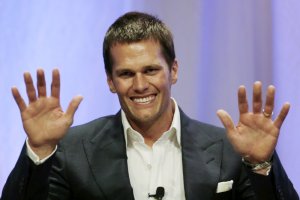
What Brady doesn't get: When people think you cheated, the smirk is does as much damage as the conduct.

What Brady doesn’t get: When people think you cheated, the smirk is does as much damage as the conduct.

The U.S. Court of Appeals for the Second Circuit appeals court reinstated the NFL’s four-game suspension of New England Patriots quarterback Tom Brady yesterday. This overturned last year’s ruling by U.S. District Judge Richard M. Berman, who had nullified the league’s suspension of the superstar quarterback. The three-judge panel of the appeals court wrote…

“We hold that the Commissioner properly exercised his broad discretion under the collective bargaining agreement and that his procedural rulings were properly grounded in that agreement and did not deprive Brady of fundamental fairness.”

It is important to note that the Court only ruled on whether NFL Commissioner Roger Goodell had the power to suspend Brady and did not violate the player’s rights as a players union member by doing so. The NFL’s current deal with the players gives Goodell the kind of power Major League Baseball gave to its first commissioner after the 1919 Black Sox Scandal, when gamblers fixed the World Series. Goodell, like Landis, can use his discretion to punish a player for “conduct detrimental” to the game and the NFL. They did this because a disturbing number of NFL players were getting headlines for doing things that don’t comport with what the public expects of its paid heroes, like sucker-punching women, shooting people, getting in bar fights, and engaging in assorted felonies. The game also has a very successful coach, Brady’s coach, in fact, who has made it very clear that he will cheat whenever he can get away with it..

I’m not going to rehash the “Deflategate” incident: I wrote enough about it when it occurred. Nobody knows for certain if Tom Brady in fact did conspire with Patriots employees to cheat when his team was behind in a crucial play-off game, but we know this: Continue reading

Fairness Quandary In Britain: What To Do With A Dog That Ate His Master?

No photo of Buster is available, but this is a Staffordshire Bull Terrier, and if this image  fills you with fear and revulsion, you're an idiot, at least when it comes to dogs.

No photo of Buster is available, but this is a Staffordshire Bull Terrier, and if this image fills you with fear and revulsion, you’re dangerously ignorant, at least when it comes to dogs.

In Waterloo, England last September, a Staffordshire Bull Terrier named Buster (or Butch…he apparently answered to both names, much in the way I answer to my wife when she calls me “Jack” or “You Idiot”…) found himself in a situation reminiscent of the infamous 1972 Andes plane crash that forced its survivors to resort to cannibalism. His master died suddenly, leaving the dog trapped in the apartment without access to sustenance. After an undetermined amount of time and increasing desperation, Buster  decided “Oh, the hell with it” and ate a sufficient amount of his best friend to stay alive..

I know—“Ick.” Buster may well have felt the same way. Once police had made the grisly discovery, however, Buster found himself in big trouble even though he was was in an emaciated state that suggested that he didn’t do this for fun. The police claimed he was a danger to the community, and the deceased’s family made it clear that it wanted Buster to be put down. Dog lovers and animal rights groups insisted that Buster was a victim of circumstance and that absent evidence that he had plotted to convert his live master into a feast, there was no precedent for blaming the victim in such a case.

After all, those passengers who survived in the Andes by eating the bodies of their less-fortunate companions were not executed. They appeared on talk shows.

Why the different attitude? Well, let’s see: Continue reading

Virginia’s Governor Restores The Vote To Felons

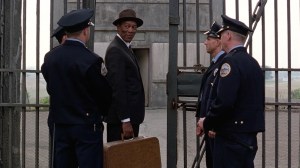
"First thing on my mind, now that I'm finally out of Shawshank, is to register to vote. Then I figure I'll look up Andy..."

“First thing on my mind, now that I’m finally out of Shawshank, is to register to vote. Then I figure I’ll look up Andy…”

Virginia’s Gov. Terry McAuliffe signed an executive order yesterday  that restored the voting rights of 206,000 ex-felons. The order applies to all violent and nonviolent felons who served their sentence. Virginia is one of a minority of states, only ten, that do not automatically restore rights upon completion of a felony sentence and one of only four  that require an application by each individual felon and action by the governor. Because this is an executive order, McAuliffe will have to reissue it every month.

McAuliffe, who is the political equivilent of Prof. Harold Hill in “The Music Man,” issued the predictable triumphal blather, saying from the Virginia Capitol steps after being introduced by a gospel choir,

“We benefit from a more just and accountable government when we put trust in all of our citizens to choose their leaders.It has taken Virginia many centuries, unfortunately, to learn this lesson. But today, we celebrate its truth.”

We get a more just and accountable government when we put trust in those who have proven themselves untrustworthy, eh?

That’s one of McAuliffe’s talents: he can make a measure that isn’t necessarily unethical at all seem like it.

Is it unethical to tell felons that they are banned from voting and running for office for life? It’s a policy choice, that’s all. A state can make lifetime disenfranchisement part of the official price for serious lawbreaking on the theory that felons have shown themselves to be  insufficiently respectful of the laws and society in general, and lowered themselves into the ranks of permanent second class citizens by their own choices and conduct. I won’t say that’s not fair: it depends what one thinks fair is. It’s tough. It signals a high regard for the rights to participate in self-government. Continue reading

The First Thing We Do, Let’s Slime All The Lawyers…

the-blob-88

In election years I tell all my legal ethics seminar classes to start teaching their non-lawyer neighbors and relatives ABA Model Rule 1.2 b, which reads,

(b) A lawyer’s representation of a client, including representation by appointment, does not constitute an endorsement of the client’s political, economic, social or moral views or activities.

This, combined with the principle of zealous representation of one’s client, as expressed, for example, in D.C. Rule of Professional Conduct Rule 1.3…

(a) A lawyer shall represent a client zealously and diligently within the bounds of the law.
(b) A lawyer shall not intentionally:

(1) Fail to seek the lawful objectives of a client through reasonably available means permitted by law and the disciplinary rules; or
(2) Prejudice or damage a client during the course of the professional relationship….

…means that lawyers represent clients, and are bound to seek those clients’ objectives when those objectives are legal whether the lawyer likes or agrees with those objectives or not.

It means that it is ignorant, wrong and dangerous to the rule of law as well as the right of citizens to be the beneficiaries of laws in a democracy and not the servants of them, for unscrupulous political opponents to attack lawyers for the positions, objectives and needs of the clients they represented. It means that it is disgusting for maleducated journalists to misinform the already disturbingly confused public by using a matter that a lawyer-turned-candidate’s client needed legal advocacy for as an excuse to impugn the candidate’s character.

Lawyers do not have to agree with or like their clients’ positions, objectives or character, is that clear? Everybody? Lawyers are not to be held accountable for their client’s motives, conduct or legal objectives. Bill Cosby’s lawyers do not approve of rapists. Johnnie Cochran did not support the hobby of ex-wife knifing.

Yet this happens every election cycle, without fail: cheap shots directed at candidates who are lawyers based on one or more of their unsavory clients.  There are two lawyers left in the current primary competition, and guess what?

You guessed it.

Hillary’s ancient defense of a rapist was used to slime her all the way back in 2014. The unfair attack raised its misshapen and empty head last week on CNN, when a Trump supporter brought it up. What we know about Clinton is that she defended a child rapist she was appointed to represent pro bono in 1975, and did an excellent job. She used all the tactics that she was allowed to use. She attacked the credibility of the twelve-year-old victim, and threw sufficient doubt on the the chain of evidence that Clinton got an advantageous  plea bargain for her client, who served just ten months in prison. Sure, he was guilty, and Hillary knew it.  It was her job to make the prosecution prove its case with sufficient evidence, and they failed. The victim, we are told, has had a hard life because of the experience. That is not in any way Clinton’s fault or responsibility.

Now it’s on to Ted Cruz. Here is Slate’s click-bait, misleading, deceitful headline to further the “Ted Cruz is a some kind of sexually repressed weirdo” trope the left-biased media is peddling: Continue reading

“What Responsibility Does Facebook Have To Help Prevent President Trump in 2017?”

Facebook qThis was one of the questions asked of Facebook employees in advance of a Mark Zuckerberg Q and A session in March; every week, the employees vote in an internal poll on what they want  Facebook CEO Zuckerberg to talk about. This week,  Zuckerberg openly criticized many of  Donald Trump’s various blatherings  during the keynote speech of the company’s annual F8 developer conference:

“I hear fearful voices calling for building walls and distancing people they label as ‘others.” I hear them calling for blocking free expression, for slowing immigration, for reducing trade, and in some cases, even for cutting access to the internet.”

This is his right, as much as any pundit, rock singer or blogger. Zuckerberg’s political positions on anything shouldn’t have any more influence than those of the guy next to you at the sports bar, because nothing about Zuckerberg indicates that he has any more expertise about national policy than Donald Trump.

Ethically,  every American has an individual ethical responsibility to prevent Donald Trump from becoming President, which means that everybody has a responsibility to keep him from being nominated. Do ponder that when you hear some of the worst of the Democrats and progressive biased journalists claiming that Trump cannot be fairly and democratically be denied the Republican nomination. They are either fools who assume that Hillary Clinton, who has proven herself capable of beating herself in any race, will waltz to the White House over Trump no matter what occurs in the chaotic future to come, or despicable Machiavellians who would knowingly roll the dice with the future of the country and the culture just to raise the odds of a Clinton presidency, itself a horrible prospect.

Facebook, however, is a communications medium that facilitates conversation, organization and the distribution of information among users. It does so under the illusion that users are in control of the process, but of course it is Facebook puling the strings. Facebook could definitely manipulate its service to undermine Trump. Gizmodo notes… Continue reading

Comment Of The Day: “Update: This Is The Student’s Controversial Essay Emulating The Satire Of Swift’s ‘A Modest Proposal'”

Grading

The indefatigable Charles Green delivered a tough critique of Connor Poole’s essay fulfilling the requirement of an assignment asking  high school students to emulate the satire in Jonathan Swift’s “A Modest Proposal,” and similarly propose an outrageous solution to a contemporary social problem. There are really two issues here, and Charles only deals with one: I believe Connor’s paper was an excellent attempt at Swiftian satire, especially for a high school student, and this is Charles counterpoint to that position. He does not, as far as I can perceive, try to justify the school, North County High School, turning the essay into a controversy and Connor into a pariah.

Good. That, which is the primary ethics issue, is beyond rational dispute. What the school and community are doing to Connor is the equivalent of ordering a kid to juggle flaming torches, and then attacking him when something gets scorched.

Here is Charles’ Comment of the Day on the post, Update: This Is The Student’s Controversial Essay Emulating The Satire Of Swift’s “A Modest Proposal”.

I’ll be back at the end.

Here is what I think Poole’s teacher should have written to him in response to his essay:

Connor, I’m giving you a grade of C+ on this paper. Here’s why.

Continue reading

Update: This Is The Student’s Controversial Essay Emulating The Satire Of Swift’s “A Modest Proposal”

Now THIS, arguably, is taking satire too far...

Now THIS, arguably, is taking satire too far…

Here, thanks to some links provided to Ethics Alarms by students at North County High School, is the essay that was written in response to a teacher’s directive to write a satirical solution to a current societal problem in the style and spirit of  Jonathan Swift’s famous essay advocating the conversion of excess Irish children to foodstuffs.

Student’s name: Connor Poole

Verdict: Pure satire, bold and for a writer so young, brilliantly executed.

Grade: A+

Here is the paper that  prompted administrators to try to turn Connor into a pariah, so precisely delivering what was assigned that it has exposed mass incompetence and cowardice at North County High School:

Modest proposal

Wow. Continue reading