Sign Language Interpreter Ethics

Let’s see, I haven’t gotten disability advocates angry at me in a while. It might be time.

Jonathan Turley posted the video above in a blog post titled “You Decide: Which Is The Greater Draw – The Singer Or The Signer?” The title, and especially the video, reminded me of a live entertainment phenomenon that has annoyed me for decades. I had forgotten about it, because producers learned long ago that I wouldn’t tolerate it in shows I was involved in. The ethics issue: showboating sign language interpreters for deaf audience members.

I have no objection to having signers at special performances of live stage presentations, as long as those signers understand their purpose and obligation. Their purpose is to communicate the words to hearing-impaired audience members. Their obligation is to do so as unobtrusively as possible, so as not to draw focus from the performance itself, or  interfere with the integrity of the production.

Unfortunately, a large percentage of the sign language interpreters who specialize in signing plays and operas don’t see their job this way. They think they are supposed to be as flamboyant–that is, obtrusive–and demonstrative as possible. Well, they’re not going to do that in one of my shows.

I’m not going to work over a grueling six week rehearsal schedule to perfect audience focus, the arc of the show, the lighting, sound, stage picture and all the other artistic elements that need to be coordinated to fully realize a work of live performance art  only to have someone show up who I have never seen before and improvise his or her own act in competition with the performance on stage. If I thought it would enhance “A Steetcar Named Desire” or “The Music Man” to have Marcel Marceau or Red Skelton jumping around and waving their arms next to the performers, I would have staged the shows that way. Continue reading →

Comment of the Day: “Comment of the Day: ‘Why The Sweet Briar College Fight Matters'”

Sweet BriarThe Sweet Briar closing, which was first raised as an ethics issue in the post, “The Sweet Briar Betrayal, has attracted many new readers and commenters to Ethics Alarms from the all-women Virginia college’s alumnae and supporters. Things are starting to move fast in the situation, with an investigation looming and questions being asked by the state legislature. Enlightening us further on this troubling story is faculty member Marcia Thom Kaley; here is her Comment of the Day on the post Comment of the Day: “Why The Sweet Briar College Fight Matters”: Continue reading →

Should Google Be Trusted To Censor Websites According To What It Determines To Be “True”?

Here's irony for you: when Google says it can develop software to decide who's not telling the truth, it's lying.

Here’s irony for you: when Google says it can develop software to decide who’s not telling the truth, it’s lying.

Google’s motto is “Don’t be evil.” It’s well-debased by now: agreeing to help China censor the internet modeled  a non-existent distinction between “don’t be evil” and “don’t assist evil.” I’m not ready to call Google’s looming truth algorithm “evil,” but it is certainly sinister and dangerous.

Google’s search engine rose to dominate the field by using the number of incoming links to a web page to determine where it appears in search results. Pages that many other sites link to are ranked higher. “The downside is that websites full of misinformation can rise up the rankings, if enough people link to them,” says Newscientist.

Now a Google research team is altering the system to measure the trustworthiness of a page, rather than its web popularity. Instead of counting incoming links, the proposed new system would count the number of “incorrect” facts within a page. “A source that has few false facts is considered to be trustworthy,” says the team. Each page will get its computer-determined Knowledge-Based Trust score, which the software will derive by tapping into Google’s  Knowledge Vault, a repository of what Google’s claims is Absolute Truth based on web consensus.  Web pages that contain contradictory information will be bumped down the rankings, so fewer minds will be warped by non-conforming information.

Naturally, the Left, assuming that its view of the universe is the unassailably correct and virtuous one, loves this idea. That should put that”climate change denialists” in their places–at the bottom of web searches. Says Salon, which never met a conservative argument that wasn’t a lie (NEVER met? Oh, oh. There goes Ethics Alarms down the search results!), “Even though the former program is just in the research stage, some anti-science advocates are upset about the potential development, likely because their websites will become buried under content that is, well, true.” Continue reading →

Transgender Ethics: Epic Trailblazer Malpractice In New Hampshire

Ex-N.H. state legislator, Stacy Laughton, a.k.a Barry Laughton.

Ex-N.H. state legislator Stacie Laughton, a.k.a  felon Barry Laughton.

Trailblazers have an ethical obligation when they presume to break a social or occupational barrier to a marginalized group’s participation and equal treatment. Simply put, their duty is to make the bias that has created the barrier and necessitated the “trail” look ignorant, cruel, foolish and unfair. A trailblazer does not have to be a shining star, though it helps, but must be capable of at least doing a solid, average, generally acceptable job., even in the grudging judgment of bigots.

This is because a trailblazer who does a poor job or displays character traits that are objectively inadequate for a role model, which a trailblazer inevitably becomes, risks adding to the barrier he or she just breached for those who follow behind them. The ethical requirement for trailblazers is the same as the traditional edict for doctors “First do no harm.” Being a trailblazer, however, is not easy, and since failure is catastrophic for the group a trailblazer represents, there is a duty not to attempt such a high-risk, high-profile cultural role unless the trailblazer is first, reasonably convinced that he or she the resources of talent, ability, fortitude, character and courage to succeed, and second, willing to accept and overcome the added stress of relentless attention and criticism.

There have been excellent trailblazers, cultural heroes all. Jackie Robinson, the first black Major League baseball player to break the color barrier is the template, but there are many other successes: Justice Thurgood Marshall, John F. Kennedy, the first Catholic President of the U.S., Amelia Earhart, Diane Crump, the first female jockey, the late Ed Brooke, the first black U.S. Senator since reconstruction, and too many more to mention. There have also been some miserable failures. The worst trailblazer was probably Shannon Faulkner, who fought in the courts for two years to force The Citadel to accept female cadets, then, after she was victorious, showed up fat and unprepared, and washed out in just one week as millions of dubious vets said, “See? What did we tell you?” Then there was Carol Moseley Braun, the charismatic, promising African-American Democrat whon Illinois voters elected as the nation’s first black female Senator, only to turn out to be thoroughly corrupt.

More recently, we have seen other trailblazers fall short, like Michael Sam, the first openly gay player drafted by the NFL.  Is there a celebrity gay marriage that has not ended in a quick divorce? Most have been failures, reinforcing the belief that gays are promiscuous and unsuited for a real marriage. Most vividly of all in the realm of trailblazer malpractice, we are reminded of the disheartening and tragic examples of Barack Obama, and Eric Holder every day.

Still, in the annals of epic trailblazer fiascoes, it would be hard to top the story of Stacie Laughton, New Hampshire’s first openly transgender state legislator, who was elected in 2012 as one of three House members for Ward 4 in Nashua. Continue reading →

Fair vs Fair: Ethics and the “No-Tip” Restaurant

You know, this looks like a place that would believe that dishwashers deserve as much pay as waiters...or as bankers, for that matter.

You know, this looks like a place that would believe that dishwashers deserve as much pay as waiters…or as bankers, for that matter.

William Street Common is a new restaurant in Philadelphia, and is getting publicity for, we are told, experimenting with a different and (maybe?) fairer compensation model. Owner Avram Hornik  pays all of its employees, from the servers to the dishwashers, at least $15 an hour plus paid sick leave and health insurance benefits. There is a 20 percent service charge for drinks, and that goes into a common fund that makes that  $15 an hour wage affordable. Money left over at the end of a pay period is divided up among employees based on a point system related to various factors.

Hornik came up with this structure, he says, to deal with the well-debated problems of tipping. “Some people just tip the same amount, but some people base it on how quickly the food was there, whether we were out of something, whether the server was there when they wanted them to be,” he says. “So much of that is out of the control of the individual server… So why would it be fair for the service employee to be responsible for the poor decisions of management?”

Hornik argues that his model “essentially creates a guaranteed floor. But we’re also capping the ceiling,” he points out, because the tipping gets shared equally with all employees. “We didn’t think it was fair [that] in some places you have dishwashers earning 10 dollars an hour and the bartender earning 30 dollars an hour.” He also is convinced that the customers will benefit.  “That atmosphere among the employees, a sense of community and empowerment and happiness with the job, is going to translate into a better environment for customers,” he said. “By having happy staff customers are going to be happier too.”

Is this system really fairer than the current one? Progressives are cheering it, because it represents a “living wage,” or at least something close to it. OK, but it would be nice not to feel hyped: ThinkProgress, for example, had headlines that the William Street Common “got rid of tipping” and writes “tips aren’t mandatory.”

Inept reporting or lies, take your pick. A 20% “service charge” is a mandatory tip, so tips ARE mandatory. The reports don’t explain how voluntary tipping has been eliminated, or whether a server would be prohibited from keeping a ten-dollar bill that a diner hands him, saying, “You know, the food was lousy, but you were so gracious and accommodating that you single-handedly made the evening bearable. Thank you. If I ever come back, it will be because of you.” If so, is that fair?  I don’t think so. In fact, it’s exactly as unfair as a diner not rewarding excellent service, and tipping a dime. Continue reading →

No Judgment At Planet Fitness

They mean what they say!

They mean what they say!

In Midland, Michigan, a Planet Fitness gym revoked a woman’s membership because she complained that a man—actually a man who identifies as a woman— was in the woman’s locker room.

Company officials explained that she violated its “no judgment zone” policy. Planet Fitness  policy also states members and guests may use all gym facilities based on their self-reported gender identity.

Fine.

It’s their business, and they can make whatever silly and irresponsible rules they want. If they want to make members dress like chickens, wear noodles on their heads and speak only pig latin, that’s their choice. The establishments Planet Fitness wants to run, apparently, are ones where a woman can go into the ladies locker room and run into some hairy, naked guy with his dong hanging out, and she gets dinged because she objects, not knowing that he is really all girl at his creamy nougat center.

Okaaaaay…. Eventually Planet Fitness will have a membership that is all trans, all blind, or all pathologically politically correct, or perhaps have no establishments at all. When the company says “no judgment,” it really means it, because this shows a ludicrous lack of judgment. But ethical! The policies were all communicated to all members, so the woman violated the “don’t react negatively to the showboating trans individual in the ladies locker room who shows no respect or consideration for others who might not be quite ready for a full frontal” policy, and has no defense, except offensive normalcy.

Clearly “Men” and “Ladies” labels on locker rooms and bathrooms are no longer unambiguous or effective.

What do you think about “Penis” and “No Penis” signs? I think that solves the problem, especially in places where there’s no judgment.


Ethics Observations On The Selma Celebration “Gotcha’s!”

Selma redux

1. The big controversy as of this morning involved the New York Times front page photo, which managed to be cropped exactly at the point where former President Bush could have been seen. Given the Times’ proclivities, conservative blogs and Fox News presumed the snub was intentional. If it had been intentional, that would have indeed been disrespectful and unethical photojournalism. The Times explanation, however, seems reasonable. It tells us something, though, that nobody at the Times saw this coming. I think it’s incompetence born of bias. “Where’s Bush?” “He was too far down the line, so the photo looks lousy if he’s included.” “Damn. Well, put a note in explaining that.” Bias makes us stupid, and the fact that no Times editor had this conversation is, in fact, stupid.

2. If the NAACP was setting the place cards, and I assume they were, then Bush should have been second row center, and not an MSNBC demagogue and race-hustler who owes the U.S. back taxes. Talk about biased and stupid. The NAACP claims it wants to be a unifying force in the country, but it doesn’t. It promotes divisiveness,and intentionally. It’s good for business.

3. A graceful, fair, respectful and competent President of the United States would have insisted that his immediate predecessor be in a position of prominence, as part of the message that this event was an important part of the history of America and all Americans. It would have been the right thing to do. Bush would have done the same for him. But we do not have a graceful, fair, respectful and competent President. We have an arrogant, petty, self-absorbed and divisive one.

4. …who can, on occasion, rise to give an excellent speech, which he did. Continue reading →

The Petraeus Deal and Justice In America

broadwell

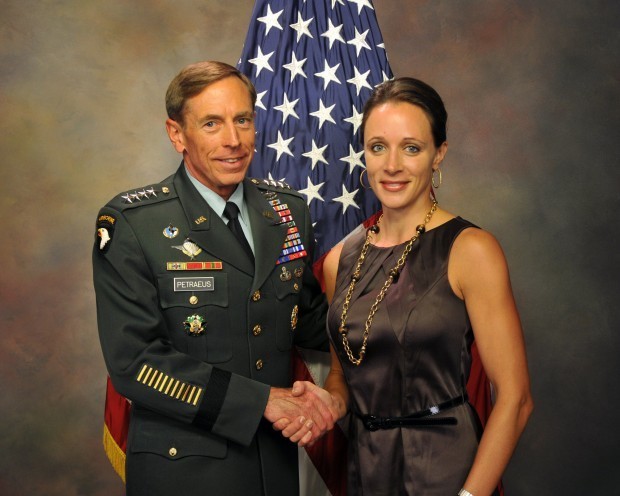
I’m in a rush to get ready for a law firm seminar, so I’m going to mostly let Ken White at Popehat do my work for me, as he is very qualified to do in this case. In his comments on the David Petraeus plea deal, Ken quite appropriately raises questions of why such serious crimes as the acclaimed general and former CIA head engaged in do not warrant prison time, and he answers thusly: Petraeus is rich, famous and has powerful friends.

Ken obvious believes those aren’t good reasons, and I agree with him. Nor are the other rationalizations that the general has suffered enough, that he isn’t really a criminal, that the nation owes him, or that he is a valuable resource for the nation that we are better served by not storing behind bars.

I believe that Petraeus has less excuse for his conduct than the typical defendant, and that as a celebrity, war hero and tole model, his defiance of the law is more serious, and more deserving of punishment, than the majority of non-violent criminals who go to jail. Indeed, Petraeus had styled himself as a moral exemplar. I read yesterday—I don’t have time to find the link—that Edward Snowden’s lawyers sent a cheeky message to prosecutors that Snowden would be happy to accept a similar deal to Petraeus’s.  Exactly.

These incidents do terrible damage to the public’s trust in the justice system’s fairness, and they should. Plea deals like this, bought with lawyer fees, bias and influence, are unequivocally wrong.

Unethical Quote Of The Month: Christiane Amanpour

amanpour

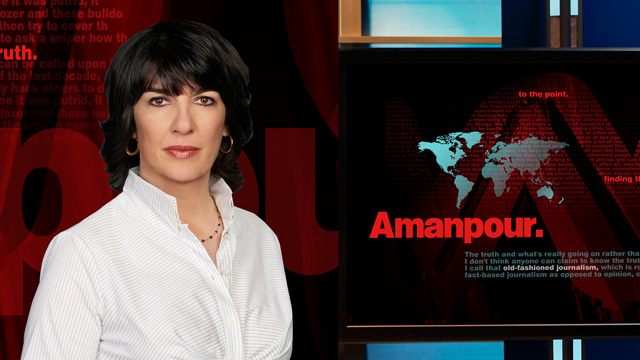
“There are some situations one simply cannot be neutral about, because when you are neutral you are an accomplice. Objectivity doesn’t mean treating all sides equally. It means giving each side a hearing.”

——Christiane Amanpour in 1996, responding to critics who called her reporting on the Bosnian War biased.

Now THIS is an unethical quote, in contrast to the earlier one from Christiane, which I posted yesterday as an “Ethics Quote of the Week.”

I’m posting this one 20 years after it was uttered because…

1. It explains the previous quote from yesterday.

2. It tells us everything we need to know about Christiane, which is to say, she cannot be trusted as a reporter.

3. For some reason I was unaware of it.

4. It appears to have become the motto of all reporters.

5. It is unethical to the core, and

6. A lot of people, including most journalists, don’t know why. Continue reading →

The Tangled Ethics of the Down Syndrome Cheerleader

There’s a lot going on here, and I may lack the ethics dexterity, or perhaps the courage, to figure it out.

I learned about the story on CNN this morning, as the newscasters were getting misty-eyed and “Awwing” all over the place. With a lot of fairly disturbing ethics issues rotting on my plate, I was looking for something uplifting to write about. I’m not sure whether this is it or not.

Here is the most recent on-line story about Kory Mitchell, a sophomore on the varsity cheerleading squad for Manitou Springs (Colorado) High School, who was born with Down Syndrome:

DENVER, Colo. – A Colorado teen with Down syndrome has made her dream of competing in a cheerleading competition come true.

Colorado’s 3-A cheerleading champions hail from Manitou Springs. At the top of their pyramid is a teenager who has overcome serious challenges in her life. The countdown is on as thirteen girls get one last practice in at the Colorado School of Mines. In minutes, the Manitou Springs Mustangs huddle will compete against other top teams.

Cheerleaders take center stage showcasing their spirit and synchronicity. The Manitou Springs Mustangs huddle one last time. And for the first time, joining them in competition is 16-year-old Kory Mitchell.

“She is full of life and full of energy and always wants to be a part of everything,” says her mom, Bonnie King, as she watches with pride.

Her daughter has dreamt about being a cheerleader since elementary school. Her mom is emotional.

But learning these already complicated routines is harder for Kory. “It`s just a tough road when you have a differently-abled child. And to see them have a sense of belonging and acceptance is what she wants, of course, is just so beautiful to see it,” mom says.

Kory’s teammates see what’s under the surface. Things like courage, patience and unconditional acceptance.

“She`s pretty spunky. And she`s got some sass. She loves being out there. It`s nice to see her smile and part of the team,” says one of her teammates. Sometimes competitions aren’t about who wins, but a little hardware doesn’t hurt.

Kory accepted the trophy and a hand from her teammates.

“It`s my dream come true. I love my girls a lot. I`m a big fan of cheerleaders,” Kory said.And Kory’s teammates are big fans of her. This was Kory`s first competition, but she has cheered with the team since last year at football and basketball games.

Observations (some of them reluctant): Continue reading →