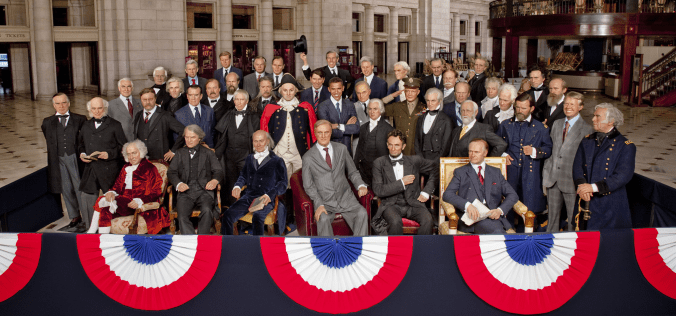
A Presidents Day Celebration (PART 3): When The Going Got Tough

 presidents.

The Presidents really get interesting now, as a political leadership culture in the U.S. matures, the stakes of failure become greater, and technology, labor upheaval, expanding big business and greater influence on world affairs transforms the Presidency into truly the toughest job on earth.

Grover Cleveland

grover

Another one of my favorites, Cleveland was known for telling the truth ( he as called “Grover the Good”), but he participated in one of the most elaborate deceptions in Presidential history.

As explained in historian Matthew Algeo’s 2011 book, “The President Is a Sick Man,”  President Cleveland noticed an odd bump on the roof of his mouth in the summer of 1893, shortly after he took office for the second time. (Cleveland is the only President with split terms, the hapless Republican Benjamin Harrison winning an electoral college victory that gave him four years as the bland filling in a Cleveland sandwich.) The bump was diagnosed as a life-threatening malignant tumor, and the remedy was removal. Cleveland believed that news of his diagnosis would send Wall Street and the country  into a panic at a time when the economy was sliding into a depression anyway, and agreed to an ambitious and dangerous plan to have the surgery done in secret. The plan was for the President to announce he was taking a friend’s yacht on a four-day fishing trip from New York to his summer home in Cape Cod. Unknown to the press and the public was that the yacht had been transformed into a floating operating room, and a team of six surgeons were assembled and waiting.

The 90 minute procedure employed ether as the anesthesia, and the doctors removed the tumor, five teeth and a large part of the President’s upper left jawbone, all at sea. They also managed to extract the tumor through the President’s mouth while leaving no visible scar and without altering Cleveland’s walrus mustache. Talking on NPR in 2011, historian said,

“I talked to a couple of oral surgeons researching the book, and they still marvel at this operation: that they were able to do this on a moving boat; that they did it very quickly. A similar operation today would take several hours; they did it in 90 minutes.”

But the operation was a success. An artificial partial upper jaw made of rubber was installed to replace the missing bone, and Cleveland, who had the constitution of a moose, reappeared after four days looking hardy and most incredible of all, able to speak as clearly as ever. How did he heal so fast? Why wasn’t his speech effected? He endures doctors cutting out a large chuck of his mouth using 19th century surgical techniques and is back on the job in less than a week? No wonder nobody suspected the truth.

Then, two months later, Philadelphia Press reporter E.J. Edwards published a story about the surgery, thanks to one of the doctors anonymously breaching doctor-patient confidentiality. Cleveland, who in his first campaign for the White House had dealt with Republican accusations that he had fathered an illegitimate child by publicly admitting it, flatly denied Edwards’ story, and his aides  launched a campaign to discredit the reporter. Grover the Good never lies, thought the public, so Edwards ended up where Brian Williams is now. His career and credibility were ruined.

Nobody outside of the participants knew about the operation and the President’s fake jaw until twenty-four years later, after all the other principals were dead except three witnesses.  One of the surgeons decided to  publish an article to prove that E.J. Edwards had been telling the truth after all.

This is a great ethics problem. Was it ethical for Cleveland to keep his health issues from the public? In this case, yes, I’d say so. Was it unethical for the doctor to break his ethical duty? Of course. Was Edwards ethical to report the story? Sure.

The tough question is: Was Cleveland ethical to deny the story and undermine the reporter’s credibility? I think it was a valid utilitarian move, and barely ethical: it was better for the nation to distrust one reporter than the President, especially when his secret was one he responsibly withheld, and his doctor unethically revealed. Continue reading

Unethical Quote of the Month: Talking Points Memo Blogger Alana Levinson

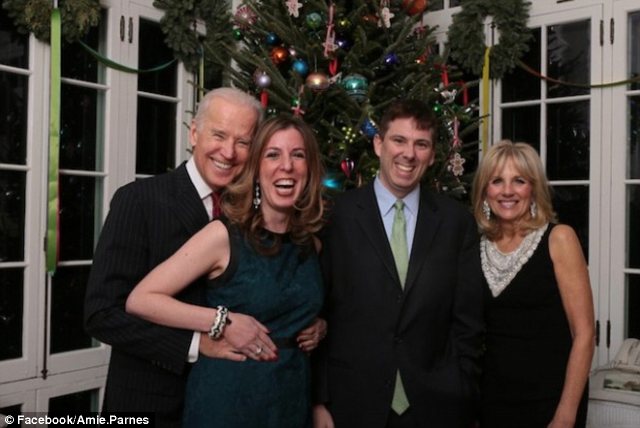
Biden Harassment

Now I’m wondering whether I’m a “bad liberal” to call him out. That means aligning myself with conservatives who love crying “double standard” on issues like this, not because they actually care about feminism, but to push their liberal media bias agenda.

—–Alana Levinson writing at Talking Points Memo about Joe Biden’s blatant “creepy uncle” sexual harassment at public events, and the news media’s failure to condemn it.

Wait, what?

Is this some kind of weird mutation of logic that only liberals and journalists understand, like the unique language identical twins make up for themselves?

Alana makes a strong case–it’s not hard to make, however—that Vice-President Biden routinely, publicly and shamelessly engages in the exact same conduct that gets employees and executives warned, sued and fired all over America as feminists cheer (as well as non-feminists with a brain, because the employees and executives should be warned, sued and fired).  It’s called “abusing power and position to cop a feel.” Then she writes the quote above, which I don’t understand at all:

Sexual harassment is unethical, disrespectful of women, and illegal.

Liberals have been at the forefront, to their credit, of making this recognition a cultural sea change.

The Vice President of the United States regularly undermines this signature liberal and feminist achievement by flaunting his cluelessness and archaic sexism at public events, either because he’s not paying attention to his own party’s rhetoric (scary) or because he knows he can get away with it (disgusting).

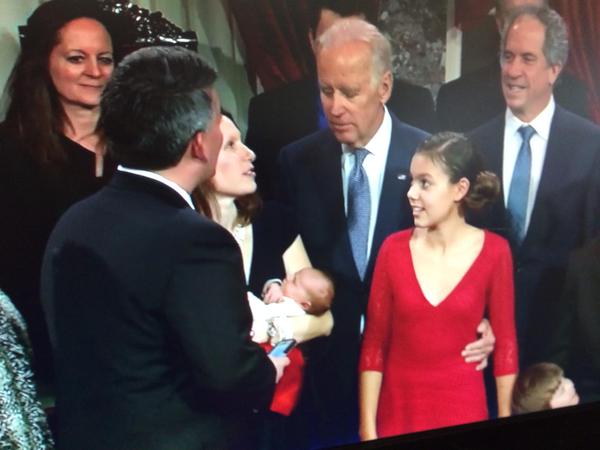
So she’s being a bad liberal if she points out that this is wrong and needs to stop forthwith, and a good liberal to allow it continue, allow the Vice President to act as if women (and, ick, little girls)…

Biden grope2

…are his personal fondle-toys while they silently endure public humiliation and silent discomfort? Continue reading

A Presidents Day Celebration (PART 1): I Love These Guys, I Really Do. Yes, Every One Of Them.

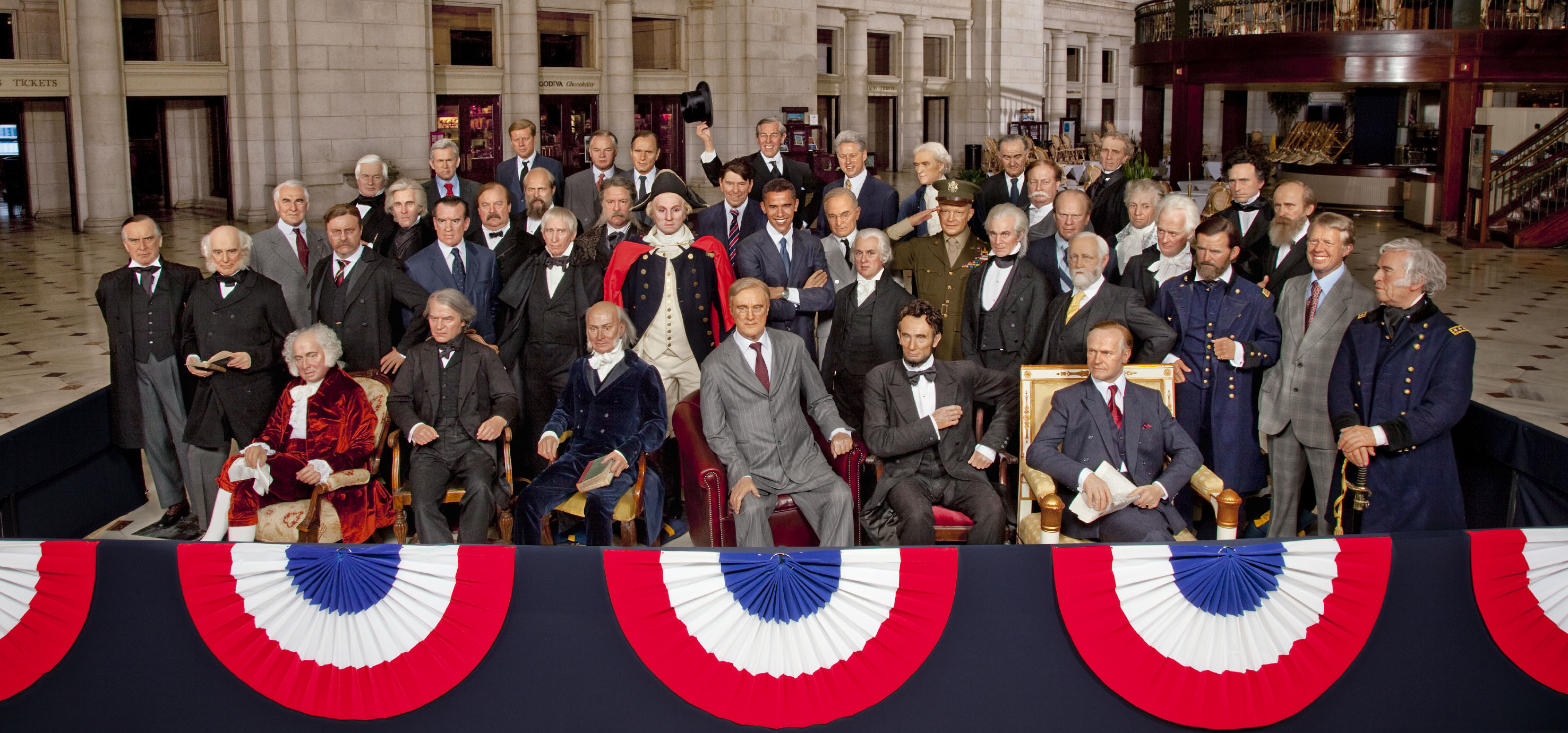
Hall of the Presidents

I have a lifetime love affair with the Presidents of the United States.

I love these guys, every one of them. The best of them are among the most skilled and courageous leaders in world history; the least of them took more risks and sacrificed more for their country than any of us ever can or will, including me. Every one of our Presidents, whatever their blunders, flaws and bad choices, was a remarkable and an accomplished human being, and exemplified the people he led in important ways. Every one of them accepted not only the burden of leadership, but the almost unbearable burden of leading the most dynamic, ambitious, confusing, cantankerous and often unappreciative nation that has ever existed. I respect that and honor it.

I have been a President junkie since I was eight years old. It’s Robert Ripley’s fault. My father bought an old, dog-eared paperback in the “Believe it or Not!” series and gave it to me. It was published in 1948. One of Ripley’s entries was about the “Presidents Curse”: every U.S. President elected in a year ending with a zero since 1840 (William Henry Harrison) had died in office, and only one President who had dies in office, Zachary Taylor, hadn’t been elected in such a year. The cartoon featured a creep chart—I still have it—listing the names of the dead Presidents, the years they were elected, and the year 1960 with ???? next to it. When Jack Kennedy, the youngest President ever elected, won the office in 1960, my Dad, who by that time was sick of me reminding him of the uncanny pattern, said, “Well, son, so much for Ripley’s curse!”

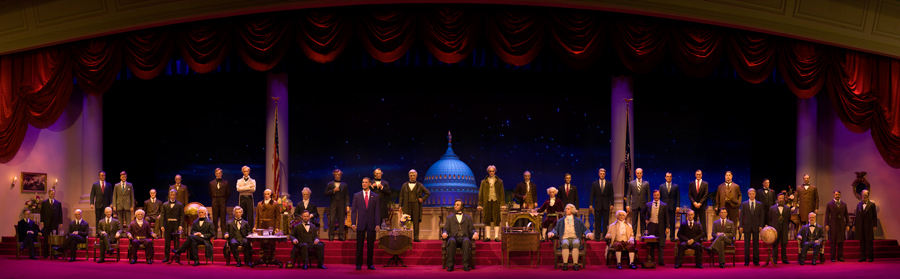
You know what happened. (John Hinckley almost kept the curse going, but Ronald Reagan, elected in 1980, finally broke it.) That year I became obsessed with Presidential history, devising a lecture that gave an overview of the men and their significance in order. My teacher allowed me to inflict it on my classmates.  Much later, Presidential leadership and character was the topic of my honors thesis in college. When I finally got a chance to go to Disneyland, the first place I went was the Hall of Presidents. When the recorded announcer said, “Ladies and Gentlemen, the Presidents of the United States!” and the red curtain parted to show the audio-animatrons of all of them together, it was one of the biggest thrills of my life.

Today I will honor our past Presidents with some of my favorite facts about each of them, trying hard not to get carried away. Is it ethics? It’s leadership, which has always been the dominant sub-topic here, but yes, it’s ethics.  I know I’m hard on our Presidents, as I think we all should be: supportive, loyal, but demanding and critical. I am also, however, cognizant of how much they give to the country and their shared determination to do what they think, rightly or wrongly, is in the country’s best long-term interests. File this post under respect, fairness, gratitude, and especially citizenship. And now…

“Ladies and Gentlemen, the Presidents of the United States!

Continue reading

KABOOM! ARGHHH! How Can This Happen In The United States? How Can Any University Think This Is Legal, Fair, Ethical Or Rational? How Can A UNiversity That Acts This Way Be Trusted To Teach Anyone Anything, Other Than How To Be A Fascist?

Thank-you, University of Tulsa...

Thank-you, University of Tulsa…

I really didn’t need another KABOOM! so soon after the last one.

From The Foundation For Individual Rights in Education, with my brainless reactions in bold and brackets:

TU suspended student George “Trey” Barnett last October for three Facebook posts [ It’s unethical and probably illegal to punish Barnett for his own Facebook posts…] published by his husband that criticized another student and two TU faculty members. […but it is beyond belief for the school to punish him for what someone else, regardless of who, posts to his page.] None of the Facebook posts came from Barnett’s account; the statements were posted by his husband, who either tagged Barnett or posted them directly to Barnett’s Facebook page. Barnett’s husband later submitted a sworn affidavit attesting to his sole authorship of the posts. Nevertheless, shortly after TU professor Susan Barrett filed a complaint against Barnett arguing that Barnett could not “avoid responsibility” because someone else was responsible for the posts. [This is Kafaesque. Do these even people know how Facebook works? ] TU Senior Vice Provost Winona Tanaka imposed eight restrictive interim measures against Barnett. The sanctions included suspending his participation in certain courses and activities and even barring him from speaking about certain individuals. [University administrators can not bar whom a citizen may speak to; only judges can do things like that, and only rarely.]

Without affording him the hearing he was entitled to under TU’s University Student Conduct Policies & Procedures, and despite his husband’s affidavit, Tanaka found Barnett responsible for “harassment.” Tanaka also found Barnett guilty of retaliation and violating confidentiality requirements for speaking about the disciplinary charges with his husband—who was also his exculpatory witness. [ What??? WHAT??? Due Process? Rights of the accused? Procedures? Policies? ]

Less than two months before Barnett was set to graduate, Tanaka not only suspended him until at least 2016 but also permanently banned him from receiving a degree in his major even upon his re-enrollment. Barnett was forced to wait two months for TU to respond to his appeal, which the university summarily denied on January 9 without explanation—leaving Barnett unable to earn his theater degree as planned. [ All of this for what someone else wrote on the student’s Facebook page! My key question in ethics scenarios is “What’s going on here?” What’s going on here? I have no idea. An illicit relationship between the apparently fat faculty member Barrett and Tanaka? Insanity?]

…TU has also threatened … its independent student newspaper, The Collegian, which this week reported on Barnett’s suspension and criticized his treatment. The Collegian reports that after contacting TU administrators for comment, student reporters were told by TU’s director of marketing and communications that if “anything that the university deems to be confidential” is “published or shared, (that) could violate university policies.” The university refused to explain what might constitute “confidential” information and, come press time, the journalists were unsure what action the university might take against them. [ OK, let’s just stipulate that the University of Tulsa doesn’t accept the principles underlying the First Amendment. I will await its next abuse of power being aimed at impending worship requirements and a ban on assembly.]

Continue reading

Now THIS Is An Ad Hominem Attack! or “Boy, Is Howard Dean An Ass, or What?”

“True, Harry didn’t go to college, but he’s a Democrat.”

People commenting on Ethics Alarms constantly accuse me of making ad hominem attacks, when what they mean to say is “You’re name-calling.” I’ll cop to name-calling. It’s can be a bad habit, but it has its uses, best illustrated when President Ronald Reagan referred to the Soviet Union as an “evil empire.” The description was true, and it immediately focused values-based criticism on a government and culture that needed it and deserved it.

Ad hominem, in contrast, is a logical fallacy in which one attempts to counter a substantive argument by attacking the character or other aspects of the advocate that can’t possibly have any bearing on the argument’s validity. For example, “you’re uglier than a pug” does nothing to disprove the substance of your adversary’s position, even if he is. Similarly, Bill Cosby has argued, even before 34 women accused him of raping them, that his advocacy of black community responsibility should not be undermined because of questions about his own rectitude.

There is nothing inherently fallacious, however, about diagnosing the conduct or statements of someone as proof that he or she is a fool, or a liar, or a jerk. It may not be civil, and it may be unfair, but it is not an ad hominem attack. As I have  explained it before, if I say you are an idiot because I think your comments are idiotic, that is a legitimate, if rebuttable assumption. (I may also be using “you are an idiot” as shorthand for “you are talking/sounding/acting like an idiot, and should avoid that.”) If I say you are an idiot, and therefor everything you say must be dismissed and ignored as the rantings of an idiot, that’s an unethical debating technique, ducking the argument by impugning the advocate.

Distinguishing between these very different but similar-appearing phenomenon can be a problem when trying to be fair to someone whose prior statements and conduct have already generated a negative diagnosis, and thus a bias. I have concluded, for example, that Joe Biden is a dolt, that Michele Bachmann is not playing with a full deck; that Sarah Palin is intellectually lazy and irresponsible, that Newt Gingrich is manipulative and untrustworthy, that Bill Maher is a pompous, none-too-bright blowhard and that Howard Dean is a vicious and unscrupulous ideologue. Nonetheless, I have to fight to assess what they say on the basis of merit, not my well-considered assumptions. It’s hard. When an idiot asserts something, is it unreasonable to be more skeptical of the statement than one would if, say, a brilliant, credentialed, unbiased observer said the same thing? (Wow—I can’t think of a single one!) No. And this is why ad hominem attacks, especially coy, subtle, clever ad hominem attacks, work so well in politics.

This brings us to that vicious and unscrupulous ideologue, Howard Dean. Continue reading

Comment of the Day: “The Eternal Ethics Conflict: Drawing Lines, Enforcing Them”

speed traps

The post generating texagg04‘s (latest) Comment of the Day dealt with the tricky and common ethics problem of enforcing reasonable rules strictly in the face of situations where compassion and sympathy pull us toward leniency, because the penalty for non-compliance seem out of proportion to the transgression. He correctly identified this as a problem involving the Ethics Incompleteness Theorem (or Principle), which is an ethics analysis concept used frequently here, and one of my favorites. The Theorem, as stated in the Ethics Alarms Concepts and Special Tools, a.k.a. “the Rule Book,” holds that…

The human language is not sufficiently precise to define a rule that will work in every instance. There are always anomalies on the periphery of every normative system, no matter how sound or well articulated. If one responds to an anomaly by trying to amend the rule or system to accommodate it, the integrity of the rule or system is disturbed, and perhaps ruined. Yet if one stubbornly applies the rule or system without amendment to the anomaly anyway, one may reach an absurd conclusion or an unjust result. The Ethics Incompleteness Principle suggests that when a system or rule doesn’t seem to work well when applied to an unexpected or unusual situation, the wise response is to abandon the system or rule—in that one anomalous case only— and use  basic ethics principles and analysis to find the best solution. Then return to the system and rules as they were, without altering them to make the treatment of the anomalous situation “consistent.”

No system or rule is going to work equally well with every possible scenario, which is why committing to a single ethical system is folly, and why it is important to keep basic ethical values in mind in case a pre-determined formula for determining what is right breaks down.

 Tex expands the discussion into such areas as test scores, speed limits, and rule-making itself.  Here is his masterful Comment of the Day on the post, The Eternal Ethics Conflict: Drawing Lines, Enforcing Them:
Continue reading

The Eternal Ethics Conflict: Drawing Lines, Enforcing Them

cross-the-line

Yesterday traffic caused me to arrive a bit later than usual at my monthly gig as the instructor in the legal ethics portion of the D.C. Bar’s mandatory orientation session for new admittees. It was after 9 AM (my segment starts at 9:20), and as I approached the glass doors to the lecture hall lobby, I saw a distraught women angrily berating one of the D.C. Bar staff. I knew instantly what was going on.

You see, the courts approving the program insist that every attendee be there at the start: the doors close at 9, and anyone arriving late, no matter what the reason, is out of luck. They can’t attend the session, can’t get credit for it, and have to return the following month. That rule is on the website and in all communications with the Bar, along with the warning that there are no exceptions, and no effective excuses. Every month, someone misses the deadline; every month, that person goes ballistic. This women, however, was remarkable.

She had flown to D.C. on the redeye, she said. Her cab was stuck in traffic, and when she arrived in the cavernous Reagan Building where the day-long course takes place, she had ten minutes to spare. Unfortunately, the Reagan Building eats people. I have wandered its halls lost many times. I keep expecting to encounter a bearded, Ben Gunn-like figure who grabs my pant leg and jabbers about how he’s been trapped by the bewildering signage, and has been living off of Cub Scouts since 1992. The woman made it to the right hall in just 12 minutes, which is impressive without a GPS. But she was still two minutes late. Continue reading

The Political Correctness Snake Swallows Its Tale On The Yellow Brick Road

Looks like genocide to me!

Looks like genocide to me!

 The runner-up for the title of this post was “Consistency In Stupidity Is Not A Virtue”

Much as I enjoy seeing political correctness bullies turn on each other, the controversy over the new casino in Chittenango, New York is a nauseating mix of censorious meddling, hindsight bias and ignorance.

Not that the Oneida Indian Nation doesn’t deserve to be a victim of exactly the kind of harassment it is best known for inflicting on others. For this is the tribe that has sought publicity and skin in the victim-mongering power game by claiming that the Washington D.C. pro football team, whose name only means “the Washington D.C. pro-football team”  and that was never intended as a slur—and that nobody who isn’t looking to be offended takes as one—-should be forced to abandon its logo, mascot, team song and identity, at a cost of millions of dollars, as a pointless sacrifice on the altar of political correctness. I am speaking, of course, of the Washington Redskins, a business and sports enterprise which, in a free country, can call itself anything its owner chooses. Since it is a free country, those who are offended by its name, or, as is really the case, have chosen to claim offense for political gain, can address their own hyper-sensitivity by following another team, another sport, or the Yellow Brick Road.

Which reminds me… Continue reading

Ethics Quiz: The Case Of The Fabricating Anchorman

The key question in any ethics problem is usually “What’s going on here?” With Brian Williams’ bizarre admission that he had been telling a false story involving his experience covering the Iraq War for over a decade, it’s impossible to say with confidence what is going on.

We know this: Williams told viewers on his evening news broadcast last week about an incident when he was covering the Iraq war, saying that a helicopter he was flying in was hit and forced down by an RPG. After the broadcast, soldiers began complaining on Facebook:

Screen-Shot-WilliamsScreen-Shot-Williams 2

“Stars and Stripes” noticed, investigated Williams’ account and found it to be false. Williams quickly apologized, both on Facebook and in his Wednesday broadcast. Here is his Facebook recant:

“To Joseph, Lance, Jonathan, Pate, Michael and all those who have posted: You are absolutely right and I was wrong. In fact, I spent much of the weekend thinking I’d gone crazy. I feel terrible about making this mistake, especially since I found my OWN WRITING about the incident from back in ’08, and I was indeed on the Chinook behind the bird that took the RPG in the tail housing just above the ramp. Because I have no desire to fictionalize my experience (we all saw it happened the first time) and no need to dramatize events as they actually happened, I think the constant viewing of the video showing us inspecting the impact area — and the fog of memory over 12 years — made me conflate the two, and I apologize. I certainly remember the armored mech platoon, meeting Capt. Eric Nye and of course Tim Terpak. Shortly after they arrived, so did the Orange Crush sandstorm, making virtually all outdoor functions impossible. I honestly don’t remember which of the three choppers Gen. Downing and I slept in, but we spent two nights on the stowable web bench seats in one of the three birds. Later in the invasion when Gen. Downing and I reached Baghdad, I remember searching the parade grounds for Tim’s Bradley to no avail. My attempt to pay tribute to CSM Terpak was to honor his 23+ years in service to our nation, and it had been 12 years since I saw him. The ultimate irony is: In writing up the synopsis of the 2 nights and 3 days I spent with him in the desert, I managed to switch aircraft. Nobody’s trying to steal anyone’s valor. Quite the contrary: I was and remain a civilian journalist covering the stories of those who volunteered for duty. This was simply an attempt to thank Tim, our military and Veterans everywhere — those who have served while I did not.”

Research has revealed that Williams has been telling various versions of the story for over a decade, sometimes saying he was in a helicopter behind the one hit by fire, sometimes saying, as he did on the David Letterman show last year, that he was actually a passenger on the helicopter forced down. Thus his Facebook apology is misleading, and the one he gave last night even moreso. At Powerline, John Hinderaker explains:

This is the statement that Williams read on-air tonight:

“After a groundfire incident in the desert during the Iraq war invasion, I made a mistake in recalling the events of 12 years ago….”

No: Williams has been telling the false story since shortly after the incident occurred. He told it for the last time, not the first, last week.

“It did not take long to hear from some brave men and women in the air crews who were also in that desert….”

Not since last Friday, but it took a decade or more since Williams first told the false story.

“I want to apologize. I said I was traveling in an aircraft that was hit by [rocket-propelled grenade] fire. I was instead in a following aircraft. . . .”

Again, Williams tries to mislead: his “following aircraft” landed an hour after the one that took the hit from the RPG.

“This was a bungled attempt by me to thank one special veteran and, by extension, our brave military men and women, veterans everywhere, those who have served while I did not…”

A bungled attempt last Friday evening at the Rangers game. Williams implies, once again, that this was the first time he has told the false story. But he is on video telling the same story at least 13 times since 2003.

Williams’s on-air apology, like the Facebook version, was disingenuous. I doubt that it will help him in the long term.

Hinderaker, a prominent conservative political blogger, believes that Williams is certain to be fired as a result of the controversy, the convoluted details of which you can read about here, here, and here in addition to the Washington Post story linked above.

I’m not so sure that he will. Should he?

Your Ethics Alarms Ethics Quiz is…

“Can Brian Williams be trusted after this?”

Continue reading

The Sixth Annual Ethics Alarms Awards: The Best of Ethics 2014

abstract door grand jury room

The Ethics Alarms Awards for the Best in Ethics 2014—sorry for the tardiness— are about 30% of the length of the Worst. Does this mean that the nation and the culture, not to mention the world, are doomed?

Not necessarily. I am well aware that most of the country is ethical, substantially fair and honest, diligent, and embodies ethical values in their every day dealings with you and me, and the world. We primarily hear, and to some extent, take note of, the corrupt, the irresponsible, the manipulative, the untrustworthy and the foolish. The Best Ethics list is smaller in part because only exemplary ethics gets publicity. I also should note that calling attention to unethical conduct and discussing it often does more to advance the mission of Ethics Alarms than confirming that right is right, though I sure wish there was more exemplary ethics to celebrate. Maybe the dearth of award winners here is my fault, and the result of my biases.

Boy, I hope so.

Here are the 2014 Ethics Alarms Awards for the Best in Ethics:

Most Important Ethical Act of the Year:

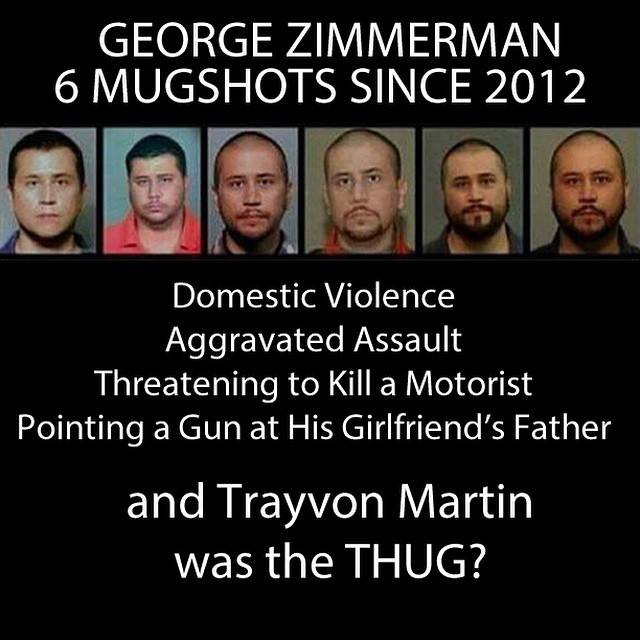
The Ferguson grand jury resisted public and media pressure to deliver a verdict of no indictment against police officer Darren Wilson, upholding the integrity of the justice system despite the injection of emotion, politics and race into a tragic incident where none of these belonged. Though the available evidence could never have supported a guilty verdict, it would have been easy and popular for the grand jury to make Wilson stand trial anyway, just as George Zimmerman did. Their reward has been to be attacked as fools and racists, but they did the right thing, when the wrong thing must have seemed very attractive.

Outstanding Ethical Leadership

The New York Yankees. (Bear with me now.) The Yankees are the most famous team in professional sports in the biggest sports market in the world. They make money without even trying. Yet when the team had a bad year and missed the play-offs in 2013, it committed nearly a billion dollars to re-building the team, a move that only makes sense in the quest to win games, not to maximize profit. Thus they prominently chose loyalty, mission and sportsmanship over greed. (The Yankees still missed the play-offs in 2014, too.) Then all year long the team placed a spotlight on Derek Jeter, their retiring hero, whose career and character single-handedly refutes the cynicism of sports critics fed up with the lack of character displayed by the Armstrongs, the Rices, the ARods, the Belichicks, the Winstons, the Paternos, and so many, many others. Finally, when two New York City police officers were assassinated after Al Sharpton, and the “Hands Up!” protestors, with the city’s own mayor’s support, had vilified the profession as violent, racist and untrustworthy, who will pay for the fallen officers’ children to go to college? The New York Yankees’ Silver Shield Foundation.  Add charity, compassion, civic duty and gratitude to the list of ethics values the New Your baseball club modeled for us. I know it seems odd and even trivial to follow up last year’s winner in this category—the Pope— with a sports franchise, but to paraphrase Babe Ruth’s famous rejoinder when the Yankees balked at his salary demands in 1930, saying he wanted to be paid more than then-President Herbert Hoover (“I had a better year that Hoover!”), the Yankees has a better year than the Pope.

Outstanding Sportsmanship

Jose Altuve, Houston Astros secondbaseman and American League batting champ….the right way. He began the final day of the 2014 season hitting .340, three points ahead of the Tigers’ Victor Martinez. If Altuve didn’t play in Houston’s meaningless last game, Martinez would have to go 3-for-3 to pass him, giving the DH a narrow .3407 average compared with Altuve’s .3399. By playing, Altuve risked lowering his average, providing Martinez with a better chance of winning the batting championship. Many players in the past have sat out their final game or games to “back in” to the prize, rather than give the fans a chance to watch a head to head battle injecting some much-needed drama into the expiring season.  Altuve, however, gave Martinez his shot. He played the whole game, had two hits in his four at-bats, and won the American League batting title on the field, not on the bench, as Martinez went hitless. The conduct, simple as it was, embodied fairness, integrity, courage, respect for an opponent, and most of all, respect for the game.

Best Apology

JESSICA_URBINA

 The Level #1 apology, according to the Ethics Alarms Apology scale, issued by Sacred Heart Cathedral Prep in San Francisco.The school had cruelly and needless embarrassed graduating senior Jessica Urbina (above), rejecting her inclusion in the yearbook because she chose to be photographed in a tuxedo rather than a dress, as the school’s dress code, which had not been previously made clear, demanded. I wrote…

“The rule is sexist, archaic, unthinking, prejudicial, arbitrary, cruel and wrong. The best way to change a rule that is sexist, archaic, unthinking, prejudicial, arbitrary, cruel and wrong is to break it, and see if those in charge have the sense and compassion to do the right thing. The administrators of Sacred Heart Cathedral High School flunked. I doubt that Jessica was even trying to provoke a confrontation: like any normal student, she wanted her image in the most important piece of memorabilia of her high school years to accurately portray her as she was, not as some alien ideal dictated by the Catholic Church. There was nothing to be achieved by banning the photo.”

The school reversed itself with grace and compassion. The apology is long, but a more humble or complete one would be unachievable. It achieved an ethical end to an ugly episode. You can read it here. Runner up: Writer Henry Rollins lovely and wrenching apology for his initial reaction to Robin Williams’ suicide.

Hero of the Year

Michael DeBeyer.  De Beyer has decided to sell his restaurant, which he opened more than 15 years ago and is worth an estimated  $2 million, to pay for whatever medical treatments are necessary to save the life of Brittany Mathis, 19. Brittany works for De Beyer at his Kaiserhof Restaurant and Biergarten in Montgomery, Texas, and  learned, in December 2013, that she has a 1.5 inch brain tumor.  She couldn’t afford the operation to find out whether the tumor was benign or malignant, and didn’t have health insurance. “I couldn’t live with myself; I would never be happy just earning money from my restaurant knowing that she needs help,” Michael told local reporters.

That’s what makes ethics heroes; really, really loud ethics alarms, combined with courage and caring.

Parent of the Year

NBA Star Kevin Durant’s Mom.

Most Ethical Celebrity

Matthew McConaughey. In a field notably sparse on exemplary ethics by celebrities, the 2013 Oscar winner for Best Actor stands out for a speech that was inspirational, thoughtful, and rife with ethics wisdom. It is worth recalling. Here it is:

Thank you. Thank you, thank you, thank you, thank you to the Academy for this—all 6,000 members. Thank you to the other nominees. All these performances were impeccable in my opinion. I didn’t see a false note anywhere. I want to thank Jean-Marc Vallée, our director. Want to thank Jared Leto, Jennifer Garner, who I worked with daily.

There’s a few things, about three things to my account that I need each day. One of them is something to look up to, another is something to look forward to, and another is someone to chase. Now, first off, I want to thank God. ‘Cause that’s who I look up to. He has graced my life with opportunities that I know are not of my hand or any other human hand. He has shown me that it’s a scientific fact that gratitude reciprocates. In the words of the late Charlie Laughton, who said, “When you’ve got God, you got a friend. And that friend is you.”

To my family, that who and what I look forward to. To my father who, I know he’s up there right now with a big pot of gumbo. He’s got a lemon meringue pie over there. He’s probably in his underwear. And he’s got a cold can of Miller Lite and he’s dancing right now. To you, Dad, you taught me what it means to be a man. To my mother who’s here tonight, who taught me and my two older brothers… demanded that we respect ourselves. And what we in turn learned was that we were then better able to respect others. Thank you for that, Mama. To my wife, Camila, and my kids Levi, Vida and Mr. Stone, the courage and significance you give me every day I go out the door is unparalleled. You are the four people in my life that I want to make the most proud of me. Thank you.

And to my hero. That’s who I chase. Now when I was 15 years old, I had a very important person in my life come to me and say “who’s your hero?” And I said, “I don’t know, I gotta think about that. Give me a couple of weeks.” I come back two weeks later, this person comes up and says “who’s your hero?” I said, “I thought about it. You know who it is? It’s me in 10 years.” So I turned 25. Ten years later, that same person comes to me and says, “So, are you a hero?” And I was like, “not even close. No, no, no.” She said, “Why?” I said, “Because my hero’s me at 35.” So you see every day, every week, every month and every year of my life, my hero’s always 10 years away. I’m never gonna be my hero. I’m not gonna attain that. I know I’m not, and that’s just fine with me because that keeps me with somebody to keep on chasing.

So, to any of us, whatever those things are, whatever it is we look up to, whatever it is we look forward to, and whoever it is we’re chasing, to that I say, “Amen.” To that I say, “Alright, alright, alright.” To that I say “just keep living.” Thank you.

Most Principled Politician

Thomas Menino

The late Thomas Menino, Boston’s beloved Democratic mayor for two decades (the longest in tenure in the city’s history), who retired last January and  died of cancer nine months later. Somehow I missed giving him the ethics send-off he deserved. Amazingly, he was the first Italian-American mayor in Boston’s history: the job has always been won by the city’s Irish machine. While mayors around the nation were embroiled in scandals and embarrassments, Menino undeniably improved the city, led it admirably in the aftermath of the Boston Marathon bombing in 2013, and left office with the admiration of conservatives as well as liberals despite being an aggressive agent of progressive policies.  His passion caused him to make some ethical missteps, such as joining other liberal mayors in telling Chick-Fil-A that it “wasn’t welcome” in Boston because of its owner’s anti-gay marriage sentiments. He joined Michael Bloomberg in creating Mayors Against Illegal Guns, and must share responsibility for some of the dubious tactics and misrepresentations of that organization. He also had a scandal or two involving political favors, but in 20 years, by my count, he had fewer than most Boston mayors had every year. In 2012, polls found that he had an approval rating over 80%, and left his position more popular than he entered it.  Boston is liberal, but it isn’t that liberal.

Most Ethical Company

Don’t ever let me do that again.

I just reviewed over a hundred posts about businesses and corporations from last year, and not one of them celebrated ethical conduct. The closest was, believe it or not, the Washington Redskins, for having the guts, orneriness and principles to stand against the forces of censorship and political correctness to refuse to change the name of their team and organization. It has been targeted as a symbolic scalp that race-baiters, grievance-hucksters and progressive bullies are determined to have hanging from their belts; the opponents of the team have recruited the U.S. government, and the pressure is tremendous. It would be so easy to change the name now, when support for the perpetually rotten team is at low ebb in Washington, D.C., but the principle is worth the battle. However, my gag reflex will not allow me to give this award to an NFL team, since by definition it must be engaged in so much else that is wrong.

So for a second straight year I’m going to send you to Ethisphere’s list of the most ethical companies in the world. Their criteria isn’t mine, but there’s got to be a genuinely ethical company of two on there somewhere. Let me know if you find it. Continue reading