Thanking Dick Williams…Finally

The late Dick Williams, doing what great leaders do

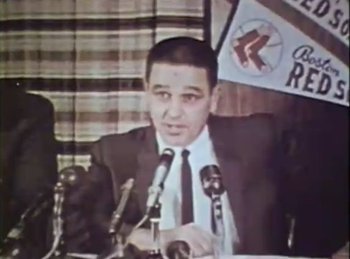
If you are not a baseball fan, or under the age of thirty, you probably never heard of Hall of Fame manager Dick Williams, who died yesterday at the age of 84. I never met Williams myself, but I have been indebted to him for four decades. I never told him the immense difference he made in my life, just by doing his job.

In the winter of 1967, I was a devoted fan of my home town team, the Boston Red Sox, and had been since 1962.  Over that period I had listened to every single baseball game on my transistor radio when a game wasn’t on TV, which was most of the time, or when I wasn’t at the game, which was almost always the case. I was the only person I knew who followed the team, and for good reason: it was torture. The Red Sox were hopelessly mediocre on the way to awful, and hadn’t had a winning season in more than ten years.

It is a great character builder to follow the fortunes of a terrible baseball team. Almost every day, for six months, you are let down, and yet return to the scene of your despair the next, attempting to muster hope while steeling yourself against likely disappointment. You find yourself finding things to appreciate other than winning: the gallant veteran player who “plays the right way” (Eddie Bressoud, shortstop, 1962-1965); the exciting rookie who gives promise of a better future (Tony Conigliaro, right fielder—rest in peace, Tony); the unique talent who is worth watching for his own sake (Dick Radatz, relief pitcher, 1962-1966). These things help, but following a perennial losing team and caring about them is like being punched in the gut four or five days a week without knowing which day you’re getting it.

Since 1965, I had always reserved seats for the first day of the season and one of the last two home games, just in case those last games would be crucial to a (hahahaha!) Red Sox pennant drive. This was especially pathetic, since the team was getting worse. They had finished in a tie for 9th place in 1966, and as the 1967 season loomed, Vegas had them installed as 100-1 underdogs to win the American League pennant. In truth, the odds should have been longer. Nonetheless, I wrote the Red Sox and got my tickets, this time for the next to last day of the season.

The team was full of rookies and near rookies, and appropriately had hired a minor league manager, Dick Williams, to be the new skipper. Williams was something else, however: he was a gifted leader. One day, in the middle of Spring Training, a Boston scribe asked the new manager what the prospects were for the upcoming season. Would the team escape the cellar? Would there be forward progress? Williams’ answer was instant front page news:

“We’ll win more than we lose.” Continue reading

Manny Post Script: The Signature of a Jerk

Manny Ramirez, the now-retired ex-baseball slugger, provoked the predictable responses from the media and fellow players in the wake of his sudden retirement after being notified that he would be the first major league player to face a 100 game suspension for failing a mandated PED test (that’s “performance enhancing drugs” for all of you who don’t know who Barry Bonds is), because no player had ever been caught TWICE before.

Everyone was in agreement that this meant: Continue reading

Manny Ramirez’s Perfect Exit

The most unethical baseball player since the Black Sox

From  Major League Baseball:

“Major League Baseball recently notified Manny Ramirez of an issue under Major League Baseball’s Joint Drug Prevention and Treatment Program. Rather than continue with the process under the Program, Ramirez has informed MLB that he is retiring as an active player. If Ramirez seeks reinstatement in the future, the process under the Drug Program will be completed. MLB will not have any further comment on this matter.”

Perfect. Perfect.

Manny Ramirez was an impressively talented baseball player with discipline of an untrained Irish Setter, and the selfishness of a six-year-old. Throughout his career, he was a textbook example of the management fallacy known as the star principle, in which an extremely talented individual is allowed to break the rules and defy an organization’s culture in direct proportion to his perceived value. Continue reading

Ethics Dunce: Los Angeles Clippers Forward Blake Griffin

Harry gave credit for HIS slam dunks!

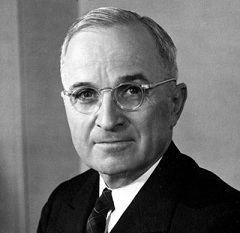
My favorite Harry Truman quote, and one of my favorite quotes generally, is

“It is amazing what you can accomplish if you do not care who gets the credit.”

It is a fair assumption that Los Angeles Clippers forward Blake Griffin has never heard of it, or if he has, he has no idea what Harry was talking about.

The  2011 NBA Slam Dunk Contest over the weekend featured a spectacular  dunk by Griffin, jumping over the hood of a car and slamming the ball through the hoop after it was fed to him, mid-air,  through the sunroof. His contest winning dunk was a sensation, and Griffin can be expected to reap both publicity and dollars from it over and above his contest prize.

But fan Michael Scrivner is calling a foul on Griffin, telling the media that he gave the star the idea for the dunk and deserves some thanks and credit. And he is 100% right. Continue reading

Celebrity Ethics: Rihanna’s “Fuck You” Necklace

Pop star Rihanna is getting media flack for being photographed with a group of young children while wearing a necklace with a design that spells out “Fuck You.” “We know she probably wasn’t anticipating being bombarded by a bunch kids and shit, but damn, she could’ve tucked that joint in before agreeing to take photos with the little crumbsnatchers,” opines the classy gossip site Bossip, for example. Continue reading

Deriliction of Duty at the MLB All-Star Game.

This week’s Major League Baseball All-Star Game got the lowest TV ratings in the history of the so-called “mid-summer classic,” which proves that Lincoln was right: you just can’t fool all the people all of the time—even when they are baseball fans. The All-Star Game was originally devised as a dream competition in which the best players from the American and National League would play a game that was hard-fought and full of the spectacular exploits of the best players alive. For decades it was like that, too, until sky-rocketing salaries and America’s culture of celebrity turned a large proportion of the players into egomaniacal, self-promoting monsters. Continue reading

The Ethics of Booing Manny Ramirez

As it so often does, the world of sport is presenting us with a clear ethical conflict tomorrow night—one of those times when we have to prioritize ethical values, and decide which is more important in our culture, because if we meet one, we violate another.

Manny Ramirez will be returning to Boston’s Fenway Park in a Dodger uniform, as Boston hosts Los Angeles in an inter-league contest. Continue reading