Pre-Unethical Conditions: Surrogate Mother Contracts And Making Babies With Jerks

womb-for-rent2Most surrogate mother arrangements work out exactly as intended by the participants. A couple or a single parent gets the biologically linked baby they bargained for, and the mother gets what she wanted, cash. To many the contracts seem unethical because the idea, only recently beyond the realm of science fiction, of a woman bearing another couple’s child, or allowing a stranger’s seed to impregnate her,  appears strange, unnatural and  icky, which it is. No, it is not unethical, but it is what we call a pre-unethical condition, a situation that lays a foundation for unethical conduct and results if care isn’t taken and one or more participants lack functioning ethics alarms. Three recent episodes demonstrate how icky can turn to unethical, especially when the wrong kind of people are involved.
I. The Unwanted Triplet, continued.

Earlier this year, Ethics Alarms hosted a spirited debate regarding Melissa Cook, a surrogate who fought against the man who owned her three unborn triplets, having rented out her womb to gestate them. He wanted to have one of them aborted, because two babies were all he felt he could support. She refused, and challenged the surrogacy contract in court. I asked… Continue reading

Adam LaRoche Drama Epilogue: A Reflection On Life, Kids, Baseball And Ethics

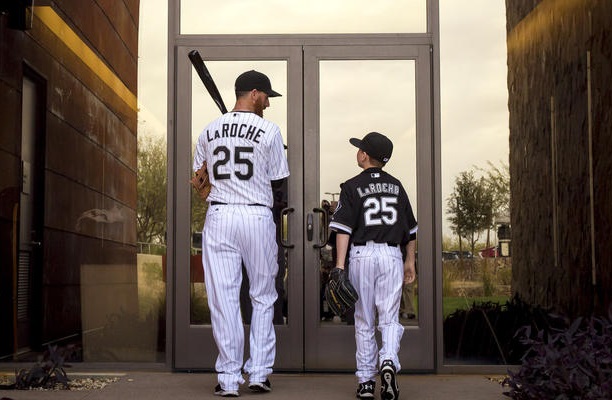
drake-adam-laroche-

Well, I don’t recall anyone leaving baseball like this before.

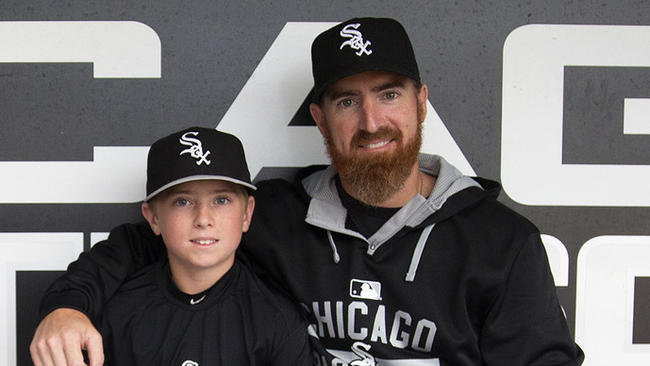
When last we visited Adam LaRoche a couple of days ago, he was retiring from baseball (and abandoning his 13 million dollar 2016 contract  to play for the Chicago White Sox) because team executive Kenny Williams asked that he not have his 14-year-old son Drake living and traveling with the team, as well as being being perpetually in the clubhouse, as he was all last year. Today LaRoche released a remarkable statement explaining his decision.

It is well worth reading. I’ll have some comments at the end about the bolded sections, marked by me with letters. Now, here’s Adam:
Continue reading

Loyalty Drama: The Strange, Sudden, Ethical, Unethical Retirement Of White Sox First Baseman Adam LaRoche

chi-adam-laroche

Yesterday,  baseball’s Spring Training was shaken when Chicago White Sox first baseman Adam LaRoche unexpectedly announced that he was retiring, effectively giving up his guaranteed 13 million dollar salary. LaRoche had suffered a down year in 2015, but he was healthy, and assured of a place in the ChiSox line-up. The reason for the precipitous decision was mysteriously and ominously reported as caused by a “personal matter.”  Was there dire illness in the family? What would make a healthy athlete walk away from his team mates and so much money?

Today, the club revealed the surprisng answer. Last year, LaRoche’s son, Drake, 14, spent most of the season with his father and the team and even had his own locker in the home clubhouse at U.S. Cellular Field. Drake was with also with the team in this year’s spring training. White Sox executive vice president Ken Williams told LaRoche that he would have to limit the amount of time his son spent in the clubhouse this season, and in response, LaRoche announced he was quitting.

Again, the threshold question to so much ethical analysis is crucial: What’s going on here?
Continue reading

1. The NY Times Has A New Author Of “The Ethicist” And 2., Boy, Did He Ever Botch The Dilemma Of The Closeted College Student

"NEXT!!!"

“NEXT!!!”

The New York Times Magazine column “The Ethicist,” long authored competently by non-ethicist Randy Cohen, had lost me due to the biased and often unethical answers to his reader’s queries by his most recent successor, Chuck Klosterman. So repellent was Klosterman’s version of the column that I didn’t even notice when the Times sacked Klosterman late last year after one bizarre response too many.

[The final straw:  An inquirer  went to a Starbuck’s  wanting to buy a regular over-priced cup of coffee, but when the woman in front of the customer  ordered a pumpkin-spice latte  and received a coupon for a free drink because the shop was out of it, “NAME WITHHELD” ordered a pumpkin- spice latte to get the free coupon. Was this ethical, he/she/it asked?” Klosterman’s answer: “No. You’re a liar and a low-rent con artist. And you live in a community where pumpkin-flavored beverages are way too popular.”  Now, “No” is correct, but it’s a great question, and deserving of a serious analysis rather than whatever that was from the ex-Ethicist. The coupon was a nice gesture to someone who had come to the Starbuck’s wanting a specific beverage and was disappointed—a store should not be tantalizing customers with products they don’t have to sell, essentially setting up a bait and switch. The coupon was an ethical “We’re sorry,” but also made the employee vulnerable to anyone who decided to misrepresent his real intent in order to get a free drink later. Yes, taking advantage of this opportunity to the detriment of the store is unethical, because the inquirer took an appropriate gesture clearly intended for a specific situation and exploited it. It was not illegal, however, and was  not a con. I would compare it to the scenario where a computer glitch has resulted in an airline selling tickets online for absurdly small amounts, and travelers rush to take advantage, rationalizing that mistake or not, the opportunity is there and they can legally grab it.]

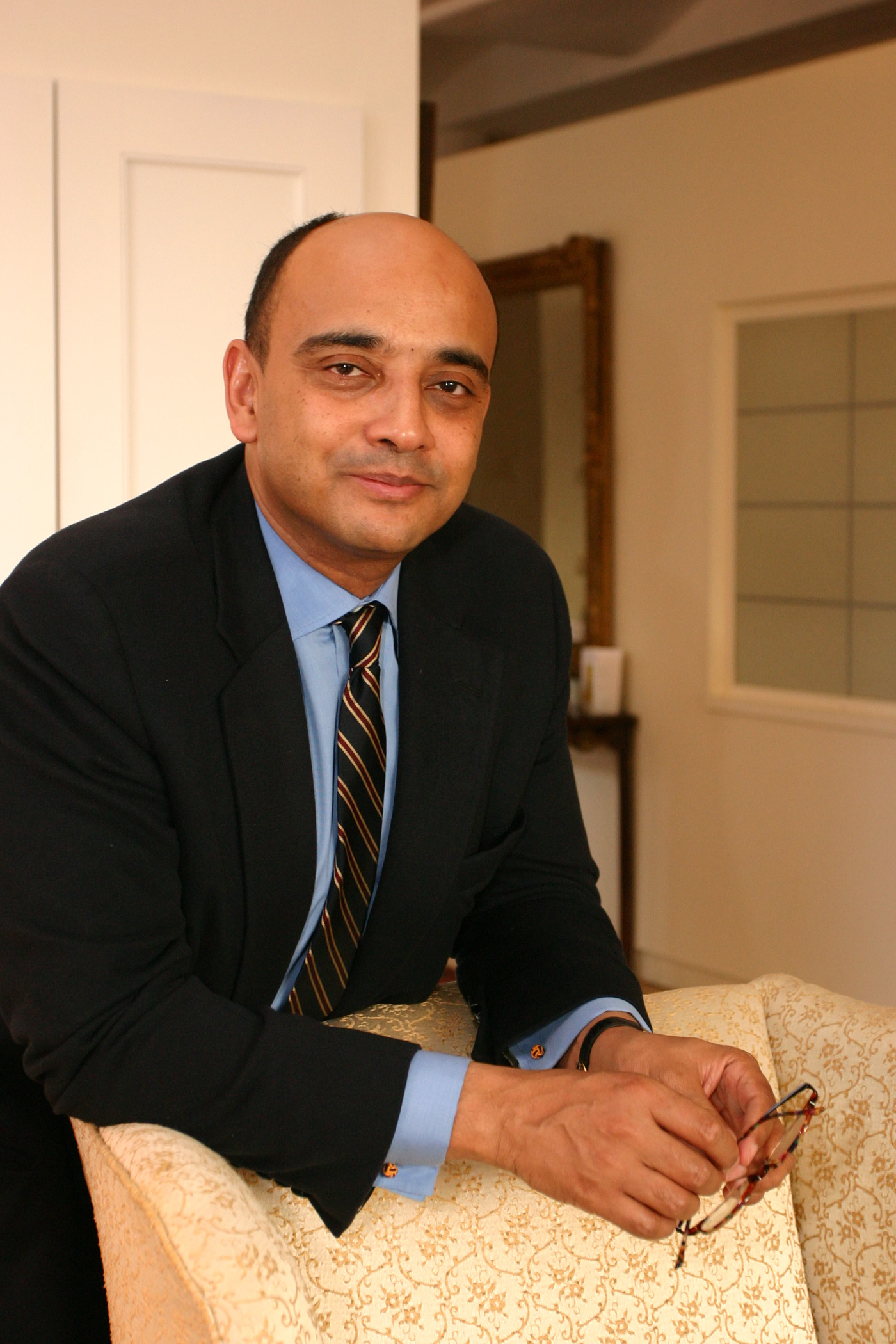
Now the Times has a new author of “The Ethicist,” after experimenting with a new format in which a podcast including him and some other commentators hashed over ethics hypotheticals and then the podcast was transcribed and published in the Sunday Times magazine. He is Kwame Anthony Appiah, who teaches philosophy at N.Y.U.  This week Appiah’s  first solo, so I would normally say that it’s too early for any fair assessment, but boy, did he ever botch the September 2 podcast. He botched it so badly that I can’t see myself paying much attention to anything else he writes. It was an ethics disaster.

A college student asked if he could ethically lie to his anti-gay father about his sexual orientation so Dad would keep paying the student’s tuition. The father is suspicious based on some clues during his son’s high school days, and has made it very clear to his son that if he is gay, he would not only withdraw all financial support but also reject him entirely. “Questions about my sexuality are inevitable whenever I come home,” the inquirer wrote. “My father has demanded I produce archives of all emails and text messages for him to review, although I have successfully refused these requests on the grounds that he has no claim to my adult communications.”

He asks, Is it ethical for me to continue accepting financial support for my education and my career that will come from it? Could I continue to lie to accept the support and one day disclose my sexuality and pay him back to absolve myself of any ethical wrongdoing?”

The correct answer is “Of course not,” and it amazes me that anyone would think otherwise. The second part of the question is an especially easy ethics lay-up: the steal now, pay back later scheme, also known as “the involuntary loan,” or “I meant to pay it back!”, is pure rationalization, and its existence proves that the writer knows damn well that what he’s doing is wrong, and just wants someone to tell him that it’s OK.

Astoundingly, Appiah and his podcast buddies (Amy Bloom, a novelist and psychotherapist, and  Kenji Yoshino, an  N.Y.U. law professor) tell the inquirer that it is OK, because, it is clear, they are advocates for gay rights and don’t appreciate anti-gay bigots. Thus they amass nothing but rationalizations  and outright unethical arguments to justify the student’s ongoing deception. As a philosopher who knows better, Appiah should have been correcting his colleagues. Instead, he enables them, because gay advocacy trumps honesty and ethics. Continue reading

Elle’s Paul Ford: Nominee For Most Unethical Father Of The Year (Non-Criminal Division)

"We're giving one of you most of our money, because we already know the other one won't need it."

“We’re giving one of you most of our money, because we already know the other one won’t need it.”

Bias, as we say here often, makes you stupid, and social justice delusions unmoored from facts, ethics, common sense and reality make you spectacularly stupid.

A nauseatingly self-congratulatory feature by Elle writer Paul Ford was introduced by the women’s magazine this way:

“As Paul Ford’s twins grew, he couldn’t stand the fact that his daughter would always lag behind his son financially. Then he hatched a brilliant plan….”

Here’s the brilliant plan, in Ford’s own words: Continue reading

Comment of the Day #2: Advice From A Father To His Hypothetical College Freshman Son, In Reaction To “Ethics Observations On The Old Dominion University Signa Nu Fraternity Freakout”

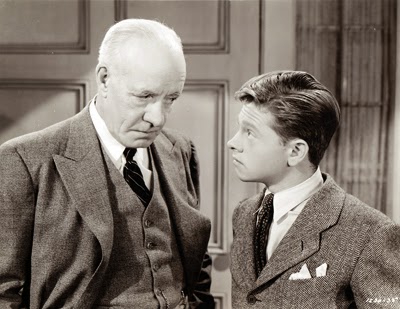
Judge Hardy would have approved.

Judge Hardy would have approved.

As with the first Comment of the Day posted today, Steve-O-in-NJ  takes an Ethics Alarms essay in a new direction, as he uses my post about Old Dominion University’s treating an ill-considered episode of frat boy sexual innuendo as the equivalent of threatened rape and sexual violence. His Comment of the Day is his advice to a college-entering hypothetical son, in light of the dangers inherent in the modern campus culture.

It also begins with an assertion that is vital but that none of the Presidential candidates—or the President— discussing the issues of student loans and the cost of college ever seem to make, which is that the purpose of college is to learn to think, become educated, broaden intellectual horizons and be socialized as a blossoming adult and productive citizen. Instead, we, and they, are told that a degree is essential to get a job and make as much money as possible, regardless of whether or not that piece of paper stands for any increased knowledge and skill. Often it doesn’t. Usually it doesn’t. It was over this issue—promoting education as a work credential rather than as a life enhancement and necessity—that I resigned as president of an education promoting non-profit many years ago. The situation has only gotten worse since. This warping of purpose also warps student ethics: if the piece of paper is without substance, why not cheat to obtain it?

Here is the Comment of the Day by Steve-O-in-NJ on the post Ethics Observations On The Old Dominion University Signa Nu Fraternity Freakout: Continue reading

Tragic, Corrupted, Complicit Camille Cosby

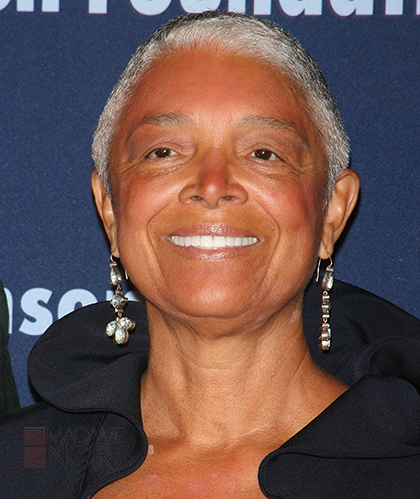
Camile Cosby: author, psychologist, corrupt accomplice to a sexual predator

Camile Cosby: author, psychologist, corrupt accomplice to a sexual predator

Apparently Bill Cosby’s wife Camille is telling confidantes that she believes all the woman drugged by her husband consented to sex, and that he is being unfairly treated by the news media as well as being unfairly accused by…what is it now, 40 women? I haven’t checked in the last few days.

She also admits that she always knew about her husband’s “infidelities,” and accepted them. Translation: she accepted creature comforts, status and money to enable her husband’s wrongdoing.

That this is a very old, ugly tradition that includes mothers who allow their husbands to sexually abuse their children, and even more horrific examples where wives look the other way while husbands kidnap and murder. In Mrs. Cosby’s case, she has made a deal with the devil, accepting the benefits of a spouse’s wealth and celebrity in exchange for placing her conscience in deep freeze. She has been covering up for her husband, lying by her silence, and sometimes lying out loud, as when she said last year , “He is the man you thought you knew.”

Did you think you knew that that the man who played Cliff Huxstable and wrote books about ethics cheated on his wife and had sex with young women under the influence of the drugs that he gave them? Well, actually I did: maybe Camille was referring to me.

Camille Crosby allowed and enabled Bill to engage in these activities, which were wrong no matter how they are interpreted: Continue reading

Ta-Nehisi Coates, The Atlantic, Racist Hate….and The Dick Van Dyke Show

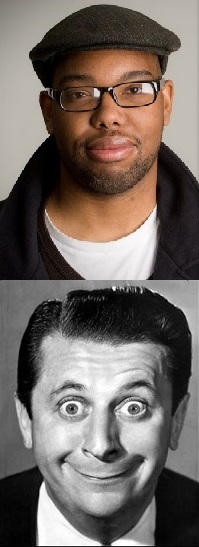
Forget what your dad is telling you, kid: listen to Buddy.

Forget what your dad is telling you, kid: listen to Buddy.

Question: If Ta-Nehisi Coates’ racist and hateful, anti-white, anti-US essay for The Atlantic is respectable public discourse, why isn’t Dylan Roof’s manifesto?

I think it is fair to that we know what the standards, or rather double standards, are in Barack Obama’s America. We have repeatedly been told by progressive activists that “hate speech” either isn’t or shouldn’t be protected by the Constitution, but the essay “Letter to My Son” by a regular Atlantic contributor, published by the magazine as literature, shows that “hate speech” is a narrower category in the progressive universe than its catchy name would suggest. Pompous, pretentious, labored, and smug anti-white, anti-American speech isn’t hate, apparently, but rather wisdom.

I just want to know what the rules are now.

Blogger/law professor Ann Althouse threw a link to the long piece by Coates to her readers without comment, as is often her technique. Actually, she highlighted a comment to the essay by one of the readers of Metafilter, who gushed,

I sat in the parking lot of my gym for 30 minutes reading that amazing, amazing piece. I’m rendered inarticulate by its power, by its purpose, by how fucking important it is and how I wish every person in this country would read it and really hear what he’s saying. And, just, goddamn. It’s so good. It references MLK in the same breath as Wu-Tang, and it’s all woven together so fucking effortlessly, but the references aren’t winky nods to pop culture, they’re buttressing an argument that is already so strong and undeniable and.

Althouse left off the last line, which was…

God. I know this sounds hyperbolic, but fucking hell, I hope this letter is taught in civics classes and literature classes for decades to come.

The Professor is correct: the positive reactions to this monstrosity are at least as fascinating as the essay itself. Read it all the way through, if you can. I found the long article extremely hard to get through. The prose is the sort of over-worked, straining-to-be-poetic slog that black revolutionaries and poets of the Sixties used to excel at, often from prison; Eddie Murphy did some hilarious imitations of them. Style and pretentiousness aside, the essay is tragic, frustrating and deeply sad: if this or anything even close to this is a common state of mind among African Americans, then it is small wonder progress in U.S. race relations is regressing. Continue reading

Ethics Dunce: Keith Hartley, Cubs Fan

The one-handed foul ball catch made by Chicago Cubs fan Keith Hartley was all over the web and cable TV yesterday. If you missed it, here it is:

Nice catch. Of course, it interfered with the ball in play, keeping Dodgers first baseman Adrian Gonzalez from making the catch. In most circumstances, Hartley would have been thrown out of the game.

That’s the least that should have been done to him. He endangered his son—twice.

How quickly people forget that a fan in Boston is still recovering from a near fatal encounter with a shard from a broken bat that sailed into the stands during a game at Fenway Park, causing many baseball-hating pundits to call for netting to protect fans at field level. (This is how the Barn Door Fallacy works, after all.) I hate the idea of the netting, but there is no question that the seats near the action can be perilous. I once had access to season tickets by the visiting team on-deck circle at Baltimore’s old Memorial Stadium, and foul balls were whizzing by my head several times a game. I’m talking about line drives, not pop-ups, like the one Hartley caught.

To be blunt, his baby could have been killed. Continue reading

Carolyn Hax And The Unanswerable Ethics Dilemma

secrets

My favorite advice columnist, innate ethicist Carolyn Hax, courageously and wisely addressed an ethics problem that is the equivalent of squaring the circle or finding the end of pi. The question posed by a commenter:

My mother says she will not tell me who my father is and will take the secret to the grave with her. Is there ever any good reason for not telling someone who their father is?

This is not merely a difficult question but also a portal question leading us to a myriad of specific ethics dilemmas. Hax offers a few, some of which aren’t very good:

  • If she doesn’t know for sure herself.

Well, of course: also if she can’t communicate due to her mouth being sewn shut, her arms amputated, she never learned Morse Code and it lousy at charades.]

  • If he committed crimes so heinous that she fears they would change the way you see yourself.
  • If he was and is still married to her sister, cousin, best friend.

Or if the mother is the father…?

  • If revealing his name would reveal something embarrassing about her or her past choices or the circumstances of your birth.

Nope. Embarrassment about the truth is not a valid reason for withholding it from someone who has a legitimate and justified reason to know it.

  • If she promised him she would take the secret of his identity to her grave.

Too bad: that’s never a good reason. A commitment to the dead does not, can not and must not have priority over obligations to the living. That’s an unethical promise; the daughter cannot be ethically made to suffer for it.

If he’s a sperm donor and she thinks there’s something wrong with admitting that.

  • The mother thinking it’s a good reason isn’t the same as it being a good reason. Come on, Carolyn.

My favorite is if the father is Satan, and the mother wants her daughter to have as normal and happy a life as possible until the inevitable day when Dad calls on her to assume her destiny as the DARK EMPRESS OF THE DAMNED! Continue reading