Flashback: “What Hugo Alfredo Tale-Yax Can Teach America”

The Late Hugo Alfredo Tale-Yax

[Not many people were checking in on Ethics Alarms when I wrote this post in response to yet another example of bystanders choosing to do nothing when a human being was in peril. Some of the comments to the Alameda post, those making excuses for the 75 faint-hearted or apathetic citizens in that city who would rather gawk at a tragedy than try to stop it,  caused me to recall the essay, which explores related issues.  I wrote it, but I had nearly forgotten about the story; when I re-read it today, I got upset all over again.Here, for the second time, is “What Hugo Alfredo Tale-Yax Can Teach America.”]

The one with the premium-grade ethics alarms bled to death on the sidewalk. The people who never had theirs installed at all took pictures. Is this the way it’s going to be? Continue reading

Unethical U.S. Presidential Candidacies: Is Trump’s the All-Time Worst?

There have been many unethical candidacies for U.S. President in American history, and some of them have been successful.

I am not referring to unethical candidates for the job, for there have been too many of them to count. An unethical candidacy occurs when a candidate’s purpose for seeking the job, method of doing so, and/or the effect on the nation of his or her campaign is especially reckless, harmful, or irresponsible. Perhaps the first unethical candidacy was that of Aaron Burr, who attempted to exploit a flaw in the election process to steal the presidency from his position as a vice-presidential candidate. Rutherford B. Hayes allowed himself to be put in office by an undemocratic back-room deal when his opponent, Samuel Tilden should have won both the popular and electoral vote.

Teddy Roosevelt’s decision to oppose his old friend, President Taft, in 1912, splitting his party, breaking his word (he had earlier refused to run for what was in essence a third term, agreeing it was best to hold to George Washington’s tradition), and all-but-insuring Woodrow Wilson a victory, was an exercise in ego and hubris. Eight years later, Sen. Warren G. Harding, who privately expressed doubts about his ability to fill the highest post in the land, may have allowed himself to be manipulated and used by corrupt political operatives for their own purposes. Franklin Roosevelt recklessly ran for his fourth term knowing that he was seriously and perhaps terminally ill, and didn’t take care to ensure that he had a competent Vice-President. (He, and the U.S., were lucky in that regard.)

Gov. George Wallace’s third party presidential run in 1968 was explicitly racist. The beneficiary of that candidacy, President Richard Nixon infamously pursued re-election with a new low of unethical and even illegal tactics against the Democrats. There have been others.

Donald Trump’s revolting candidacy, as yet unannounced, cannot fairly be called the most unethical presidential candidacy, but it is early yet. It may well prove to be one of the most harmful. As the United States faces some of the most difficult challenges in its history, Trump has chosen to use the nation’s process of deciding on its leader for his own ego gratification and self-promotion, without  preparation for the job, deference to fair campaign rhetoric, or acknowledgment of his own fatal flaws as a candidate. Continue reading

The “Baby Emma” Saga Revisited: The Core Issue

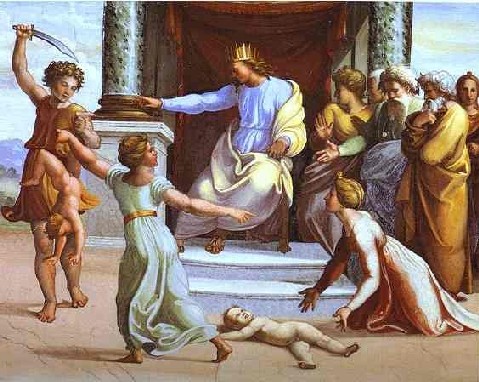
Didnt King Solomon have a case like this once?

When the mother of the child an unmarried father co-created with her decides that she doesn’t want to/ can’t raise the child and doesn’t trust the father to raise her, is it ethical to put said child up for adoption without notifying or consulting the father?

That is the ethical issue the “Baby Emma” incident, first discussed here in an earlier post, ultimately raises. It is a question that I did not discuss in that post, focusing instead on the father’s conduct and his current plight, as self-described on his “Baby Emma” website. I made three ethical assessments, each of which are self-evident:

1. The whole situation would have probably not occurred if John Wyatt and Baby Emma’s mother had been married before conceiving a child.

2. Both of them were irresponsible to plan on having a child together without formalizing a mutual commitment to form a family and raise the child together…that apparently archaic institution known as “marriage.”

3. The mother betrayed John’s trust, deceived him, and treated him unfairly.

I also suggested that, absent a marriage, it is fair and reasonable that the mother of a newborn be able to put the child up for adoption if she deems that course better for the child than being raised by the child’s father. I did not say that was the law, or even that I would vigorously oppose a law that directed otherwise, as Virginia’s law does. I only stated that my own belief is that incentives for irresponsible parenthood are unwise. I have been asked why I focused on the issue I did, rather than the other ethical issues raised by the controversy. It was because the issue was brought to me with the presumption that John Wyatt, the father, was a blameless and unequivocal victim in the matter. My ethics alarms sounded: he has significant ethical accountability for the mess, and I explained why.

As to the answer to question above, I can only say this: it depends. The conduct of Baby Emma’s mother is mysterious and extreme. Did she panic? Did she have a mental break? Why would a lifetime friend and partner of a man conceive a child, pretend to plan to raise her with him, and then secretly negotiate to have the baby adopted and taken out of state?

I see many scenarios that could be behind her decision, which fall into three distinct categories: ethical, unethical, and too close to call: Continue reading

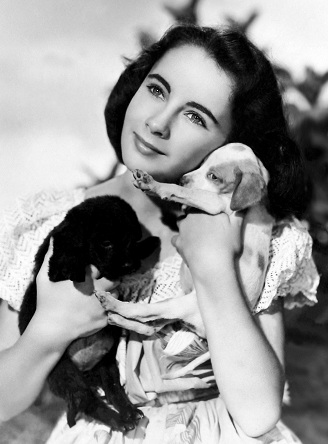
Ethics Star and Ethics Hero Emeritus: Elizabeth Taylor, 1932-2011


You did good, kid! Thanks.

I appreciated Elizabeth Taylor, who died yesterday, as a movie star, though I was never a fan. That she was astonishingly beautiful, there is no doubt, an actress who defined the word “voluptuous” when it didn’t mean”implants.” Like many of the Golden Age stars, acting was secondary with Taylor, who had such on-screen presence that she could steal a movie ( “Cat on a Hot Tin Roof”) from the likes of Paul Newman, Burl Ives, Judith Anderson, and yes, Tennessee Williams by just lounging around in a slip. Her best adult performance was probably her first, “A Place in the Sun”; her Oscars were more or less frauds, the first (“Butterfield 8”) as a film community gesture of sympathy for her health problems, and the second, for “Who’s Afraid of Virginia Woolf,” as one of those nods for playing against type without embarrassing yourself that Hollywood likes to bestow on its favorites. Continue reading

Ethics Dunce: Fort Wayne Mayor Tom Henry

Mayor Trivial T. Spineless

He was, without question, the best mayor Fort Wayne, Indiana has ever had. When he first took office, he consolidated city departments launched construction of Fort Wayne’s massive underground sewage system and built the city sewage treatment plant, which is used to this day, seventy years later. When W.W. II came, he held war materials drives, upgraded city equipment and services, and broke ground for was is now Fort Wayne International Airport. and lowered city tax rates. In his last term, he opened up a major area of the town for development by elevating the railroad tracks. And he kept taxes low.

For 21 years beginning in 1934, this dedicated public servant was only not mayor for three years: he died at his post in 1954. And the people of Ft. Wayne haven’t forgotten him. This year, when city officials asked its citizens to vote on whose name the new government center should bear, the response was overwhelming. Ten times more people again voted for the former mayor they had always voted for while he was alive than for anyone or anything else (the runner-up choice was “Thunderdome”).

The current mayor, however, has decided not follow the results of the poll. He thinks the name would be inappropriate. You see, the famous leader that the people of Fort Wayne want to honor was named Harry Baals.

The current mayor’s name?  Trivial T. Spineless. Continue reading

Nuclear Crisis Ethics

Meltdown! Radiation! Mutations! Well, I guess that's all we have to know.

I just heard, for the twelfth time, Sen. Joe Lieberman telling “Face the Nation” that the United States should put the brakes on nuclear energy plant construction “right now until we understand the ramifications of what’s happening in Japan.” Meanwhile, the anti-nukes crowd is out in full force, seeing Japan’s crisis as their opportunity to scare the bejesus out of the public, which is nervous about nuclear energy anyway since they know nothing about it, other than that something bad happened at Three-Mile Island, the Russians had a catastrophe at Chernobyl,  Jane Fonda made that scary movie, “The China Syndrome,” where they shot Jack Lemmon— “And don’t they make bombs with that nuclear stuff?”—and the fact that Homer Simpson works for a nuclear plant that creates three-eyed fish and is run by that evil old Montgomery Burns. Continue reading

The Ethics Final: Ending My Mother’s Life Today

Some of our most important ethical decisions are made with the least analysis. At least that was the way it was for me this morning at 10:34, when my sister and I directed that my 89-year-old mom, Eleanor Coulouris Marshall, be taken off of life support. Continue reading

Anatomy of An Unethical Report on the Cost of S.B. 1070

The Center for American Progress is out with the results of a study that purports to show the adverse economic effects that Arizona’s economy suffered as the result of conference cancellations and economic boycotts in the wake of the state’s controversial S.B. 1070, which gave police the authority to check on citizen status under some circumstances.

The study itself is fine; it is by a reputable research group, and anything can be studied. The Center’s use of it is manipulative, deceptive and hypocritical, however. Continue reading

More Unethical Anti-Dog Slander by The Daily Beast

It is odd that a news website called “The Daily Beast” is engaging in an ongoing effort to misinform and frighten the public regarding dogs. Someone—publisher Tina Brown perhaps?—in The Daily Beast’s lair must have been badly frightened by a puppy at some point in his or her life, leading to an irrational fear of dogs and mind-blowing ignorance regarding them. Earlier this year, the site published two unhinged calls for the eradication of  anything resembling a pit bull by a writer whose pet was attacked by one. At the moment, The Daily Beast features a gallery with the ominous title “39 Most Dangerous Dog Breeds” that had to be assembled by some one who has seldom seen a real dog, much less owned one. On the home page, the feature is placed under the heading, “Beware of the Dog.”

The criteria for the ranking is completely mysterious—several of the breeds listed, for example, have exactly one attack attached to them. The gallery itself is riddled with errors and is actually quite funny, if one knows anything about dogs at all. In addition to being careless and incompetent, the feature is dishonest, and seems to be calculated to make people irrationally frightened of dogs, when in fact the relationship between human and canines is one of life’s great and fortunate pleasures. Continue reading

Why Future Juan Williamses Will Be Fired, As George Mason Rolls Over In His Grave

College speech codes are the American Left’s special shame, and it the time for them to go the way of parietal hours and mandatory chapel attendance is overdue. There are monstrosities of thought control in schools across the nation, but those in state universities are especially offensive and ominous, since they are in slam-dunk defiance of the First Amendment prohibiting government restrictions on speech. As Barton Hinkle notes in an eye-opening piece in the Richmond Times-Dispatch, not only are state schools stomping on free speech, state schools dedicated to the legacy on the men who wrote the First Amendment are doing it. If there is anything more unethical  than educators stifling thought and the expression of it, that would be it. Continue reading