A Merry Christmas For The Washington Redskins, “The Slants,” And The First Amendment

Yes, The Slants were apparently, disparaging. themselves.

Yes, The Slants were apparently disparaging. themselves.

The political-correctness obsessed Democratic component of our government has decided that forcing Dan Snyder to change the name of his football team due to its alleged offensiveness to people who don’t care about football is a legitimate government function, or so they would have us believe. Actually, they believe it is a legitimate political function to lick the moccasins of progressive activist groups who thrive on opportunities to tell others what they can safely say.

After Senate Democrats signed an unethical  missive threatening the Washington Redskins if the team wasn’t renamed something that an enterprising race-baiter wouldn’t find offensive—not as easy as it may seem— the Patent and Trademark Office canceled the registration of “Redskins” using the excuse that Federal trademark law excludes the registration of “scandalous, immoral, or disparaging marks” as well as trademarks that a “substantial composite of the referenced group” perceives as disparaging to a religion, nation, ethnic group, or  belief system. [ You can read my opinion on this ruling here. I’d quote from it, but it’s Christmas Eve.]

The ruling was upheld in the Fourth Circuit, despite the fact that it seem to be fairly blatant viewpoint-based restriction of speech, or in other words, unconstitutional. To his credit, Snyder is not allowing the Democrats to bully him or illegally try to control his speech either, and has the resources to fight. The betting is that the Supreme Court will tell the Trademark Office to stop playing politics.

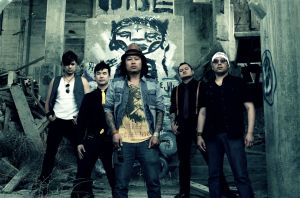
The Patent and Trademark Office also barred the registration of “The Slants,” the trademarked name of Simon Tam’s Asian-American band. Now the U.S. Court of Appeals for the Federal Circuit just held, in the case of In re Tam, by a 9-to-3 vote, that this exclusion of “disparaging” trademarks, and, by extension, the Redskins ban as well, violates the First Amendment.  This means that the Redskins case is likely to go to the Supreme Court if the government doesn’t agree to let people trademark whatever the want to, regardless of who or what it might “disparage.” Continue reading

Ethics Quiz: The Fick Calls Loretta Lynch’s Bluff

bluffing

When I read that our Attorney General, Loretta Lynch, made this provocative statement—

“The fear that you have just mentioned is in fact my greatest fear as a prosecutor, as someone who is sworn to the protection of all of the American people, which is that the rhetoric will be accompanied by acts of violence. Now obviously this is a country that is based on free speech, but when it edges towards violence, when we see the potential for someone lifting that mantle of anti-Muslim rhetoric—or, as we saw after 9/11, violence directed at individuals who may not even be Muslims but perceived to be Muslims, and they will suffer just as much—when we see that we will take action…I think it’s important that as we again talk about the importance of free speech we make it clear that actions predicated on violent talk are not America. They are not who we are, they are not what we do, and they will be prosecuted.”

…my first thought was “oh-oh” and my second thought was, “Boy, Obama’s appointees are as careless with their rhetoric as he is, or Hillary.

For what really was she saying? It sounds like a threat, but is it?  What does “edges towards violence” mean? Violence? Calling for violence? Or rhetoric anti-gun progressives will blame if there is violence? What does…let me rephrase that…What the HELL does “the potential for someone lifting that mantle of anti-Muslim rhetoric” mean? For that matter, what are “actions predicated on violent talk”? Does an action that would not be a crime without violent talk become one based on the rhetoric that inspired it? You’re a lawyer, Ms Lynch, how about speaking precise English? What exactly are you trying to say?

So my third thought was, “Well, we better find out, since is this our top law enforcement official talking and if she is really saying, as one might reasonably interpret her vague and convoluted statement to mean, that she’ll be arresting anyone who dares to venture a harsh judgment of Muslims, it would be good to know.

Donald Trump, I’m sure, would like to know.

And  lo and behold, here comes former GOP tea party congressman turned radio talk show host Joe Walsh to settle the issue! He provides a rant on his Facebook page: Continue reading

Unethical Judge Of The Month: Florida Circuit Judge Jack Schramm Cox; Runner Up: Wisconsin Judge Philip Kirk

JudgeFor a judge, you just can’t get any more incompetent than this.

In Florida, Circuit Judge Jack Schramm Cox ordered the Palm Beach Post to scrub a previously published story from its website. This is prior restraint, or the government preventing publication based on content. The order violates the First Amendment; it isn’t merely unconstitutional, it is incredibly unconstitutional. Concluded Constitutional Law professor and blogger Jonathan Turley in his usual restrained manner,  “The utter lack of legal judgment (and knowledge) shown by Cox in this order is deeply troubling.”

It’s not troubling. It’s ridiculous. Continue reading

Your Ethics Alarms Cognitive Dissonance Guide To The Planned Parenthood Shooter Spin Game


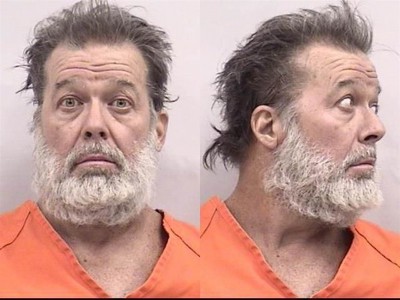
Robert Dear

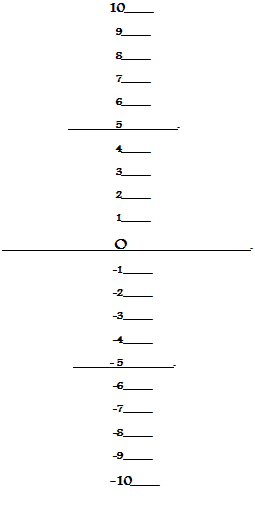
Cognitive DissonanceTo the left is a simplified version of Leon Festinger’s Cognitive Dissonance Scale. Most of the people and institutions who use the scale to mislead and manipulate public opinion neither know this diagram nor have heard of Dr. Festinger, but it is what they are employing in the daily wars to win ideological political converts by distorting the significance of current events.

Robert Dear’s as yet unexplained shooting rampage within a Colorado Springs Planned Parenthood facility has immediately created an opportunity for cognitive dissonance manipulation. Festinger’s research showed that our minds will always try to resolve dissonance when something with a high, or positive score—say, “Free Speech,” appears to be closely associated with something else that is low on the scale, such as “hateful speech.” How the dissonance is resolved will depend on the scores of the two dissonant objects or beliefs.

If you want the public to decide that something it approves of is less worthy of approval, attaching it to something the public believes is reprehensible will do the job by creating cognitive dissonance and pulling the well-regarded object down the scale. If you want the public to move its opinion of a person, organization or concept from negative territory into positive, identifying someone or something the public regards far more negatively who opposes the person, organization or concept will tend to move the object of the negative entity’s opposition upward on the scale. In these situations, the mind seeks distance from the reviled entity. I hate broccoli; I learn that Donald Trump hates broccoli; I don’t want to have anything in common with Donald Trump. Pass the broccoli, please.

The latter is the process repeatedly applied by the protesters of police shootings when African Americans are the victims. The public correctly opposes abuse of power and wrongful violence by law enforcement officials; it is far below the mid-point on the scale. It also a opposes criminal activity and resisting legitimate law enforcement. With rare exceptions, every black victim of a questionable police shooting was engaging in or had engaged in criminal activity, and had resisted arrest. These have been criminals, but because the alleged misconduct of the police is far lower on the scale than the criminal activity involved, the criminal victims are propelled by cognitive dissonance into the scale’s positive territory. (The media assists the process by publicizing the most benign images of the victims they can find. The most frequently used photo of Laquan McDonald, who was executed by a Chicago cop, shows him in his high school graduation gown, for example. The cop didn’t shoot a criminal who refused to stop when ordered to, he shot a smiling young man with a bright future. The police officer is thus a monster; the victim a martyr and a hero.)

Now let’s look at the current use of cognitive dissonance in the wake of the shooting by Robert Dear. Continue reading

Ethics Quiz: Ann Rice O’Hanlon’s Fresco

Fresco

In 1934, under the auspices of the New Deal’s Public Works of Art program, artist Ann Rice O’Hanlon painted a fresco (the largest ever painted by a woman up to that time) in the University of Kentucky’s Memorial Hall. It has become famous and is much admired by art historians, and thousands of Kentucky students have walked past it through the decades. The large, six section artwork depicts many events, industries, traditions and activities that were significant to the state, invented in Kentucky or by Kentuckians, as well as historical events. Among the scenes shown are black slaves picking tobacco and black musicians serenading whites.

Ann Rice O’Hanlon’s masterpiece became the target of choice at Kentucky as the University ‘s black students were seeking to emulate the power plays by their equivalents at the University of Missouri, Yale, Amherst, Harvard Law, Dartmouth and other institutions. The Kentucky students held a meeting with president Eli Capilouto and argued that the fresco was offensive, as it relegated black people to roles as slaves or servants, and did not portray the cruelty of slavery and the later Jim Crow culture that existed in the state.  Capilouto capitulated, agreeing to move the work to “a more appropriate location.” In the meantime, Kentucky will cover up the 45-by-8-foot fresco while adding a sign explaining why the mural is obscured.

Your Ethics Alarms Ethics Quiz of the Day is this:

Should a university remove works of art on campus because particular groups of students or individual members of such groups find the artwork upsetting, offensive, or a negative influence on their experience?

Continue reading

On Immigration, Speech Suppression, War, Terrorism, Police and More, It’s Cultural Death By Compassion Poisoning

Think of the children!Compassion is a wonderful thing. A nation cannot govern or even survive, however, using compassion as its guiding ethical principle. The United States currently seems hell bent on disproving this fact, and is well on the way to confirming it. It is too bad that this is true, and we should all agree that it’s  a damn shame that you can’t run a successful democracy without periodically inflicting pain, creating suffering and harming some human beings in order that many more can live in peace and pursue their lawful ambitions and desires. Nonetheless, that is an immutable fact of existence. Government policy that attempts to deny it is not merely incompetent and naive, but ultimately suicidal. A culture that elevates compassion above all other values like responsibility, accountability, prudence, process and proportion is betting everything on the inherent goodness and rationality of humanity. History tells us it’s a losing bet.

When I woke up to the horrible news of the Paris attacks, and after I had finished simultaneous laughing and crying about the fact that President Obama picked yesterday to proclaim that the threat of ISIS had been “contained,” it suddenly occurred to me that the majority of the crises this nation struggles with today are  linked by the same cultural and leadership malady. The United States increasingly is unwilling to accept the reality that governance is utilitarian, and that punishment, deterrence, sacrifice, pain, retaliation and accountability are indispensable tools that must be used and used unapologetically. The alternative is chaos, and chaos is what we are facing.

An impressive number of these crises have been in the news this week: Continue reading

The Mizzou Meltdown: Unethical Quote, Perfect Answer

Anyone who believes this doesn't understand the concept of "free speech." Fortunately, one of the purposes of a liberal arts education is to teach students what...oh. Right.

Anyone who believes this doesn’t understand the concept of “free speech.” Fortunately, one of the purposes of a liberal arts education is to teach students what…oh. Right.

There is no way, I have suggested, that the actions and rhetoric from the protesters at the University at Missouri clamoring for “safety” and an end to incidents of upsetting speech have any place to go except campus censorship by force. To the extent that the African- American students’ conduct has wider aspirations that extend beyond the campus to U.S. society, they threaten free speech, communication and thought in our society as well. Of course, it must have these aspirations: college is supposed to prepare one for the real world, not to render you more vulnerable to its challenges.

Since the defining character of progressive rhetoric in 2015 is double-talk and ambiguity (for example, “immigration reform,” which really means “no illegal immigration enforcement,” or “mass incarceration,” which means “blaming criminal activity on laws and law enforcement rather than too many people choosing to break laws”), it has been hard to get an explicit statement out of sympathizers that confirm my conclusion. Their intent has been clear, as in the episodes where journalists have been muscled away from “safe” places. Others have interpreted the students’ complaints and demands to require censorship by threat of sanctions, as shown by the Mizzou police e-mail telling students to report “hateful or hurtful speech or actions” and their perpetrators, laying the foundation for an elite, racially-based group of campus inquisitors who have the power to define the hate and haters and send them to a metaphorical stake. The students’ words, however, have remained oblique.

Fortunately, here comes Mizzou student body VP Brenda Smith-Lezama to clarify. She was talking to MSNBC about the declared “safe spaces”—which means, for those who need another translation, this means “places on campus where the Bill of Rights doesn’t apply”—and spat out this:

“I personally am tired of hearing that First Amendment rights protect students when they are creating a hostile and unsafe learning environment for myself and for other students here. I think that it’s important for us to create that distinction and create a space where we can all learn from one another and start to create a place of healing rather than a place where we are experiencing a lot of hate like we have in the past.”

Fortunately, Brookings Institute (That’s the liberal one, remember) Senior Fellow Jonathan Rauch, and the author of “Kindly Inquisitors: The New Attacks on Free Thought”,  had just offered the rebuttal to Smith-Lezama confused view of education in an op-ed the day before. He wrote in part… Continue reading

Bulletin To African-American Activists, Progressives And The University of Missouri : Racial Biases, Slurs, Insults and “Microaggressions” Are Immutable Facts Of Life, And Nobody Can Make You “Safe” From Them In A Free Country

It is clear now, as I initially expected, that what the black student tantrum that brought down the leadership at the University of Missouri wanted is encapsulated by the first gesture by the school’s new puppet regime. This:

Police email

Ah, what a wonderful wonderful world it would be, the race-grievance mob believes, if we could arrest and punish anyone who doesn’t like us, looks at us with a stink-eye, sneers at us or calls us ugly names!  That would make them love their neighbors! The entire Missouri fiasco was nothing but a Kafka-esque satire on this dream. It is one that is constantly fertilized by social justice warriors who increasingly favor totalitarian methods, and who maintain that “hate speech” is immune from the the First Amendment.

The new tactic, apparently, as I read the head-exploding memo above, is to leap right past “hate speech” to banning “mean speech” and “not very nice speech.” Rather than teaching their delicate and misguided students to learn what fat kids, ugly kids, flat-chested girls, 90 pound weakling guys, people with stutters or birth defects,  people who are weak, or not very smart or obnoxious or poor,  people who look different or wear strange clothes or have accents or smell different or who have handicaps or Asperger’s, or infamous parents, or old (my mother complained constantly about the “microagressions” she got from young people)… or, from the other side, those who too smart or too sexy or too articulate or too rich… have to learn in order to become self-sufficient, confident and not to be at the mercy of bullies, assholes and fools all their lives, the University of Missouri (and Yale, and many institutions to come if we can’t successfully humiliate those schools into rationality) are joining with the growing authoritarian wing of the progressive movement to advocate the suppression of free thought and expression. They think this will end racism. They think it is possible to make human beings “safe” from cruel and unjust social interactions.

Not in a free country, it’s not. Continue reading

Ethics Hero: 11th U.S. Circuit Court of Appeals

blog_credit_card_swipe

It’s a small victory to be sure, but those of us who want to protect free speech must take our hope from whatever sources we can.

In the case of Dana’s Railroad Supply v. Florida, the sharp-eyed Atlanta-based 11th U.S. Circuit Court of Appeals  struck down a Florida law barring merchants from imposing a surcharge on customers for credit card use.

The law allowed merchants to give discounts for cash, but would not permit surcharges for using credit cards. “Ah HA!” realized the court, This violates the First Amendment, because it penalizes businesses that want to call price differences based on credit card use a surcharge rather than a cash discount, and they are the exact same thing. “You can penalize credit card users,” the dumb law said, “but you have to call it what we tell you to call it.”

“Tautologically speaking,” the opinion said, “surcharges and discounts are nothing more than two sides of the same coin; a surcharge is simply a ‘negative’ discount, and a discount is a ‘negative’ surcharge. As a result, a merchant who offers the same product at two prices—a lower price for customers paying cash and a higher price for those using credit cards—is allowed to offer a discount for cash while a simple slip of the tongue calling the same price difference a surcharge runs the risk of being fined and imprisoned.”

“The First Amendment prevents staking citizens’ liberty on such distinctions in search of a difference.”

Love it.

___________________

Pointer and Facts: ABA Journal.

Ethics Quiz: The Anti-Washington Redskins Activist’s Bob Marley Costume

The Native American in the middle is dressed as a famous Jamaican. Would it have been offensive if he dressed as Sitting Bull?

The Native American in the middle is dressed as a famous Jamaican. Would it have been offensive if he dressed as Sitting Bull?

Terry Rambler, chief of the San Carlos Apache Tribe in Arizona, has  been at the forefront of the effort to force The Washington Redskins, a privately owned NFL sports franchise, to change its name and logo of long-standing because both are allegedly racist. [ As I have made clear many times, the team’s name is not racist, as neither its origins nor current use suggest or imply racist intent, purpose or impact, and the team’s owner has a First Amendment right to call his team whatever he wants. The decades long political correctness stunt has gained more traction under the Obama administration, because the Obama Administration and Senate Democrats do not respect the Constitution or follow it when it gets in the way of its agenda. (See: drones, Obamacare, immigration, NSA domestic spying, harassment of reporters, IRS partisan activities, recess appointments, Libya bombing, selective prosecution,  putting government pressure on the Redskins to change its name, etc )

But I digress.

This year, Rambler’s Halloween costume was Jamaican musician Bob Marley, complete with dreadlocks, wig, and rasta beanie. He also wore appropriate make-up to look like Marley.

Here is what the chief looks like most days:

Terry

Here he is on Halloween as the Reggae icon…

Halloween Marley

The costume is making  Rambler the target of criticism from both sides of the controversy: Redskins defenders who view his make-up as “blackface” and thus hypocritical, and his own Team Political Correctness, which sees Rambler as engaging in the same kind of insensitive conduct they claim the Washington Redskins embody.

To make things worse for Rambler, there was another recent Bob Marley controversy in  Gaston County, (North Carolina), where a sheriff’s captain  apologized  for wearing dark make-up as part of her own Marley Halloween costume after her in-costume photo appeared online.

And thus your Ethics Alarms Ethics Quiz of the Day is…

Was the Native American activist’s Bob Marley make-up unethical or hypocritical?

Continue reading