Ethics Observations On The Washington Post’s “Ted Cruz’s Kids Are Monkeys” Cartoon Uproar

ted-cruz-monkey-cartoon

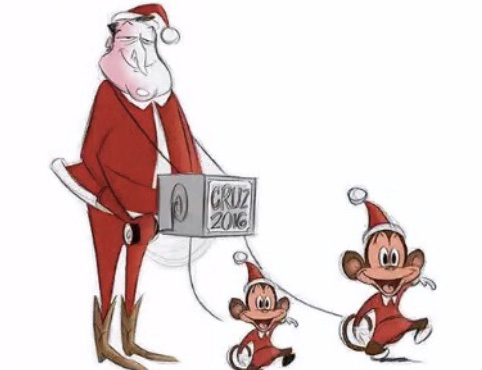
Here’s what you need to know: Ted Cruz launched a political ad  that features the Texas Republican reading parody Christmas fare to his two young daughters, Caroline and Catherine, stuff like “The Grinch Who Lost Her Emails.”  Washington Post political cartoonist Ann Telnaes reacted with the drawing above, titled “Ted Cruz uses his kids as political props.” The children are portrayed as monkeys. Telnaes clearly knew she was on thin ice, and accompanied the cartoon with a justification (now pulled: if anyone has the whole text, I’d like to see it) saying in part,

“But when a politician uses his children as political props, as Ted Cruz recently did in his Christmas parody video in which his eldest daughter read (with her father’s dramatic flourish) a passage of an edited Christmas classic, then I figure they are fair game.”

Note: the daughters are 7 and 4.

Cruz cried foul in a tweet, and the news media and internet was beginning to tilt hard against the Post, when editor Fred Hiatt pulled the cartoon, writing,

“It’s generally been the policy of our editorial section to leave children out of it. I failed to look at this cartoon before it was published. I understand why Ann thought an exception to the policy was warranted in this case, but I do not agree.”

And here we are.

Observations: Continue reading

Comment of the Day: “Who Are You Calling A Nut?” And Other Ethics Issues In The Community College Shooting Aftermath (Continued)”

gunsThere is nothing more welcome, when I am on the road and coping with a malfunctioning laptop, an inexplicably swollen knee and a headache, than a thoughtful, substantive, provocative, long post.  Extradimensional Cephalopod provided just what I needed today, and I am awash with gratitude.

Here is his Comment of the Day on the post “Who Are You Calling A Nut?” And Other Ethics Issues In The Community College Shooting Aftermath (Continued)”:

[ Washington Post editor Fred ] Hyatt’s forthrightness [ in his op-ed here] and his dedication to societal change that he acknowledges is difficult is definitely refreshing. I would object to the comparison to Australia mostly based on the fact that Australia also has a rather extreme (for the Western world) institution of censorship. I am curious as to what people do if they need to shoot a wild animal, as I understand there are many dangerous animals in Australia. Continue reading

“Who Are You Calling A Nut?” And Other Ethics Issues In The Community College Shooting Aftermath (Continued)

I apologize for the length of this two-part entry, but the preponderance of fact- and reasoning-free anti-gun hysteria in the wake of the Oregon shooting has even exceeded Sandy Hook levels, a development I didn’t think was possible. An emotional national reaction to such a tragedy is fine, and natural, as long as it doesn’t stampede policy-makers and make the public dumber and more ignorant than they already are regarding basic rights, the reasons for them, and the limits of law and government. This post and its earlier installment are offered to catalogue, in part, the ethics carnage, and perhaps to save some readers time when they are confronted with a usually sane friend or family member who begins ranting about how “ridiculous” it is that this “problem” hasn’t been “solved” and how it’s all the fault of the NRA and bribed politicians, because if Australia can do it, why can’t we? In my experience, however, the angry anti-gun zealots—yes, you can still be a zealot and talk about “common sense solutions” if they are either not sensible or not solutions—don’t want to hear facts or reason. People have died, guns are bad, and why can’t we stop it? The same people also tend to think we can stop prejudice, poverty, risk, inequality, war, and the effects of mankind living on the planet. They also rank “Imagine” among the most profound songs ever written.

Sigh.

Here are the rest of the points:

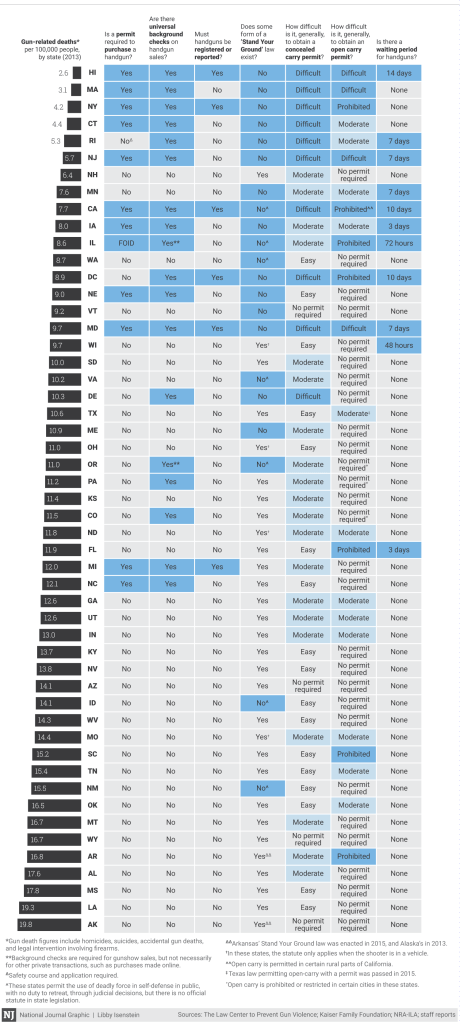
V. Another Facebook friend published this chart…
wholechart

…and said that it showed that “states with fewer gun regulations had frequent gun related murders than those with more regulations. It doesn’t show that. It shows, for example, that Vermont, Maine and North Dakota have few regulations and low gun murder rates. I know him well–he’s an honest man. But he saw what he wanted to see, not what was actually on the chart. Meanwhile, everyone “liked” his post.

VI. I know I’ve made this observation before, but it still drives me crazy. I just had another argument over it with my sister, and she hung up on me. Obama and the hoard leaps on this shooting to once again lobby for “common sense” gun controls that most agree wouldn’t have stopped this shooting. There is , I would say, an obvious, ethical and logical disconnect there. If the measures being sought would not have stopped this shooting, why all the angry, “blood on your hands,” “how long will this go on” rhetoric? The clear and misleading message is that the shooting would have or might have been stopped if only, if only, but when the substantive recommendations are listed they have little or nothing to do with the incident itself. Why do smart people tolerate this? The shooter’s father–who, by the way, shares at least as much culpability for the Oregon shooting as anyone, and a lot more than the NRA, gave an interview in which he blamed the shooting on the fact that the law allowed his son to acquire 13 guns: Continue reading

The Washington Post—Finally—Admits The Truth About President Obama

fingers-pointing

I will reprint The Washington Post’s lead editorial here nearly in full. I will have comments after, though I will make this one now: every character trait and leadership deficit the Post points to  was evident to objective observers—like me—from the beginning of Obama’s administration. That one of the most consistent and prominent Democratic Party and liberal policy boosters in the national news media finally mounts the integrity, honesty and integrity to admit it now is not all that satisfying.

Here is, with a few omissions so you will link to the site and read the whole thing (it’s only fair), is the damning and undeniable editorial:

Charles E. Schumer (D-N.Y.) decided he would vote against President Obama’s nuclear deal with Iran, he explained his reasoning in a 1,700-word essay. On balance, he concluded, “the very real risk that Iran will not moderate and will, instead, use the agreement to pursue its nefarious goals is too great.” We disagree with that conclusion, but not with serene confidence; we share the senator’s concern that Iran will use the lifting of sanctions to intensify its toxic behavior in the region. We understand and respect Mr. Schumer’s decision; also, it’s generally better to treat policy disagreements in good faith.

That has not been the spirit in which Mr. Obama and his team have met his Iran-deal critics. The president has countered them with certitude and ad hominem attacks, the combined import of which is that there are no alternatives to his policy, that support for the deal is an obvious call and that nearly anyone who suggests otherwise is motivated by politics or ideology. Mr. Obama’s rhetoric reached its low point when he observed that the deal’s opponents value war over diplomacy and that Iranian extremists were “making common cause with the Republican caucus.”

Continue reading

After The Latest Obama Botch, A Responsibility Check For Democrats, The News Media And The Public: Will They Face The Facts?


The trade: American security for Obama's "base." Like it?

The trade: American security for Obama’s “base.” Like it?

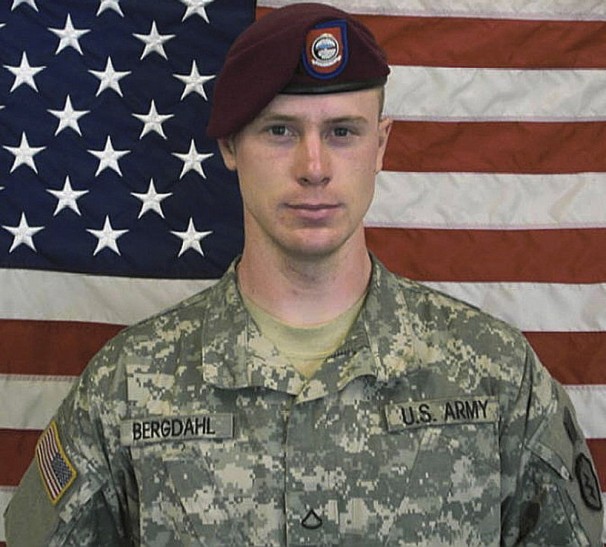
In its lead story today, the Washington Post noted that criticism was “coming from Republicans and the military” in the aftermath of the release of Sgt. Bowe Bergdahl, an American prisoner of war held by the Taliban, in exchange for five Afghan Taliban detainees, also known as “terrorists.” The question should be why criticism isn’t coming from everyone.

Boatloads of ink will be spilled on this topic in the next few weeks, but the fact, as I see them, are not that complicated:

1. Bergdahl deserted his unit and betrayed his duty to his country by walking off the base in Afghanistan, apparently because he was tired of fighting.

2. He was captured by the Taliban, the U.S. enemy, and has been held for the past five years.

3. The U.S. government traded five potentially deadly terrorists back to its enemy to free Bergdahl, who, presumably, will now be tried as a deserter. The army once shot deserters.

4. This required negotiating with terrorists, though expect that Obama administration to go all Clinton on us, and dispute whether the Taliban is really the same as terrorists. Either way, it creates a precedent that endangers Americans, even those who do not abandon their country in combat.

5. The Government and the President did this while violating a law that required the Secretary of Defense to notify Congress before any such prisoner exchange.

What’s wrong with this scenario? What isn’t wrong with it? Continue reading