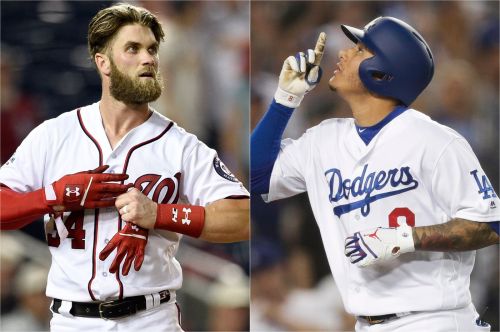
Speaking of Conflicts of Interest and To Prove I’m Occasionally Right: Let’s Revisit “‘Baseball Super-Agent Scott Boras Has Another Super-Conflict And There Is No Excuse For It,’ the Sequel”

I have never recycled a post so soon (this one was was featured in January) but these are special circumstances:

  • After my analysis of the Fani Willis conflicts scandal did not jibe with the judge’s decision, my self-esteem is at a low ebb, and I feel the need to point out my prescience in this matter
  • This, like Willis’s self-made disgrace, is a conflict of interest, and one involving law as well…but also baseball.
  • The conflict of interest I flagged in January has now had some of the adverse results I predicted, and attention should be paid.
  • Baseball is one of the few things that has a chance of cheering me up right now, having gone through my first two weeks without Grace’s companionship and support. We followed the seasons (and the Red Sox) together since before we were married, as I taught her the game by taking her to watch the Orioles play Boston in old Memorial Stadium.

Two months after I wrote the post that follows, Spring Training is almost over and the season is less that two weeks away. Yet the two star pitchers I flagged as the victims of their agent’s greed and unethical conduct remain unsigned. I strongly believe that the reason they are unsigned is that the agent/lawyer they foolishly employ has been pitting teams against each other while using each pitcher as leverage to benefit the other, or so Scott Boras would argue. There is no question in my mind that if Blake Snell (above, right) and Jordan Montgomery (above, left), both talented left-handed starting pitchers that fill the same niche, were represented by different agents, both would have signed rich, long-term contracts by now. Because they have allowed themselves to be marketed by the same agent–an unconscionable conflict that baseball should prohibit and Boras’s bar association should sanction—they will not be ready to start the season even if both signed tomorrow. Pitchers who have had to miss large portions of Spring Training have frequently had off-years as a result: Boras’s greedy practice of representing competing talents may result in off seasons and even damage to their careers.

All of this could have and should have been avoided, and would have been, if baseball’s agents were subjected to any genuine ethical regulation.

Now here is the post… Continue reading

“Baseball Super-Agent Scott Boras Has Another Super-Conflict And There Is No Excuse For It,” The Sequel

Sharp-eyed Ethics Alarms readers who pay attention to my baseball posts might recognize this one. It is like the most inexcusable lazy Hollywood franchise film, a sequel that is nearly identical to the original. I’m going to see how much of the post’s predecessor I can duplicate without having to change anything

Twelve years ago, Ethics Alarms began a post about baseball agents in general and Scott Boras in particular engaging in a flaming conflict of interest that harmed their player clients this way…

Baseball’s super-agent Scott Boras has his annual off-season conflict of interest problem, and as usual, neither Major League Baseball, nor the Players’ Union, nor the legal profession, not his trusting but foolish clients seem to care. Nevertheless, he is operating under circumstances that make it impossible for him to be fair to his clients.

I could have written that paragraph today. Nothing has changed. Literally nothing: as baseball general managers  huddle with player agents in baseball’s off-season and sign players to mind-blowing contracts, the unethical tolerance of players agents indulging in and profiting from a classic conflict of interest continues without protest or reform.

I may be the only one who cares about the issue. I first wrote about it here, on a baseball website. I carried on my campaign to Ethics Alarms, discussing the issue in 2010, 2011 (that’s where the linked quote above comes from), 2014, 2019, and in 2019 again,  and last year, in 2022. There is no publication or website that has covered the issue as thoroughly as this one, and the unethical nature of the practice is irrefutable. But I might as well be shouting in outer space, where no one can hear you scream. The conflict of interest, which is throbbingly obvious and easy to address, sits stinking up the game. Continue reading

Baseball Super-Agent Scott Boras Has Another Super-Conflict And There Is No Excuse For It

Eleven years ago, Ethics Alarms began a post about baseball agents in general and Scott Boras in particular engaging in a flaming conflict of interest that harmed their player clients this way…

Baseball’s super-agent Scott Boras has his annual off-season conflict of interest problem, and as usual, neither Major League Baseball, nor the Players’ Union, nor the legal profession, not his trusting but foolish clients seem to care. Nevertheless, he is operating under circumstances that make it impossible for him to be fair to his clients.

I could have written that paragraph today. Nothing has changed. Literally nothing: as baseball general managers get ready for the 2022 winter meetings where, among other things, they huddle with player agents and sign players to mind-blowing contracts, the unethical tolerance of players agents indulging in and profiting from a classic conflict of interest continues without protest or reform.

I may be the only one who cares about the issue. I first wrote about it here, on a baseball website. I carried on my campaign to Ethics Alarms, discussing the issue in 2010, 2011 (that’s where the linked quote above comes from), 2014, 2019, and in 2019 again,  There is no publication or website that has covered the issue and thoroughly as this one, and the unethical nature of the practice is irrefutable. I might as well be shouting in outer space, where no one can hear you scream. Continue reading

In The Baseball Dead Of Winter, An Old And Unresolved Ethics Problem Glows Bright

From left to right: MLB, players, and the union.

…as Major League Baseball ignores it, as usual.

Ethics alarms test: Scott Boras, lawyer and player agent, represents two Washington Nationals free agents in their prime. One is Stephen Strasburg, one of the best and most sought after starting pitchers in the game. He was seeking, on the advice of his agent, a long-term contract of more than 30 million dollars a year. Another is Anthony Rendon, third-baseman, and the Nationals’ best player in 2019, their championship year. He also is seeking a salary of at least 30 million per year, over many years. He is a fan favorite in Washington, D.C., and obviously enjoys playing there. Contrary to popular belief, however, Major League baseball teams do not have endless supplies of money, though they have a lot. Mike Rizzo, Washington Nationals general manager, told the sports media and Washington fans that the team could not afford to sign both Strasberg and Rendon at the rates they were demanding and the marketplace dictated.

Is there a problem, and if so, what is it?

You shouldn’t need much time to answer, but then again, thousands of baseball sportswriters and the entire baseball establishment havn’t figured this out over many years, do I’ll give you a “Jeopardy!” period of reflection:

OK, contestants,what’s your answer? Continue reading

Once Again, Baseball Agent Conflicts Are Hurting Players Who Don’t Understand Why

Baseball writers are the tools of baseball player agents, useful idiots who write on and on about the underpaid millionaire players and the unfair owners, who won’t pay them what they “deserve.” They scrupulously avoid educating readers about the unethical player agents who manipulate the system and the players for their own benefit, not their clients.  I have written about the unregulated and largely ethics-free baseball agents before, but their conduct this off-season is unusually revolting.

At the top of the list, as usual, is mega-agent Scott Boras, who cleverly treads the line between being an agent and a lawyer—he is both—while having too many stars under his thumb for the sports organizations or bar associations to hold him to account. For example, as a lawyer, Boras would be absolutely bound to tell his clients about a settlement offer, and would be subject to disbarment if he rejected an offer without communicating it to his client (you know, like you regularly see lawyers doing on TV and in the movies). However, there are no player agent rules that require an agent to communicate a team’s salary offer to a player. Agents can, and presumably do, reject offers without their clients ever hearing about them. This, of course, avoids the problem of a baseball star saying, “Oh, hell, that’s more money than I could ever spend anyway. I know it’s less than we talked about, but go ahead and take it.”

Agents have conflicts of interest so grand, and apparently so little understood, that meaningful consent from the client, theoretically the remedy, is virtually impossible. Let’s look at Bryce Harper, Boras’s client who is seeking more than $300 million dollars over a ten year guaranteed contract. Harper is 26 years old and has already made 49 million dollars, not counting endorsements. The functional utility of each dollar he earns is less than the one earned before in his situation. Realistically, there is very little difference between a $250,000,000 contract and a $300,000,000 contract to Harper, except from an ego perspective. The extra 50,000,000 won’t make any difference to him. Boras, however, is a different matter. Let’s say his cut of Harper’s salary is 5%.  He’ll get 15,000,000 if Harper signs for the high figure, but “only” 12,500,000 if Harper agrees to the lower figure. $2.5 million means nothing to Harper: he could throw it down the toilet, and wouldn’t feel a thing. The difference to Boras, however, is much greater in practical, and add to that the marketing advantage of being able to tell potential clients that he set the new all-time record for a free agent contract for his client. Continue reading

On Greed, Stupidity, And Reality: My Baseball Wish

There is now rampant speculation that the twin prime-age free agents who have the so-called Hot Stove League in palpitations—the two are outfielder Bryce Harper (L) and shortstop Manny Machado (R), both 26, burgeoning superstars, and, in the estimation of many including me, assholes—will not sign contracts until February. I find this difficult to believe, since it would be jaw-droppingly stupid (and unethical), but I hope hope hope that it happens, because the ethics lessons the consequences might teach couldl be momentous.

Both young men are reportedly seeking contracts in the range of ten years at 30+ million dollars a year. Both have player agents who are telling them such exorbitant goals are reasonable.  Machado has already made about 34 million dollars in his still-brief Major League career.  Harper had made almost 48 million. Both are in a position in which they could pick out the city and team they want to live in and play with, and say to their agents, “This is where I want to be. Make the best deal you can, and make it happen.” That is what a rational person would do, and indeed, that is what some players, not players with the potential earning power of these two but ones with more brains than Harper and Machado have between them, have done, though rarely.

It is important to note that unless these guys have developed an addiction to eating diamonds or something similarly extravagant, they don’t need to work another day in their lives now. What is their motivation to be paid more than a third of a billion dollars over the next decade, other than having avaricious, unethical agents steering them in that direction? Ego? Insanity? Stupidity? Harper or Machado could call up any one of the 30 MLB teams, ask, “What can you pay me for the next five years?” and have a contract for at least $100,000,000 dollars within 25 hours. How much different will their lives be with those “low-ball” contracts than if they received the longer, richer ones they covet? Not different at all, and quite possibly better. Continue reading

Sick-Bed Ethics Warm-Up, 11/14/18: Ethics Among the Sneezes [UPDATED]

Good whatever it is….

1. Bottom line” Don’t trust Facebook. From the Times: “Facebook failed to closely monitor device makers after granting them access to the personal data of hundreds of millions of people, according to a previously unreported disclosure to Congress last month.” Surprised? As with Google promising moths ago that it was no longer reading our mail, then admitting months later that it had resumed the practice, the big tech companies have proven repeatedly that that we cannot believe what they say, or their motives, or their pledges of good will and public service. More from the Times story:

Facebook’s loose oversight of the partnerships was detected by the company’s government-approved privacy monitor in 2013. But it was never revealed to Facebook users, most of whom had not explicitly given the company permission to share their information. Details of those oversight practices were revealed in a letter Facebook sent last month to Senator Ron Wyden, the Oregon Democrat, a privacy advocate and frequent critic of the social media giant.

In the letter, a copy of which Mr. Wyden provided to The New York Times, Facebook wrote that by early 2013 it had entered into data-sharing agreements with seven device makers to provide what it called the “Facebook experience” — custom-built software, typically, that gave those manufacturers’ customers access to Facebook on their phones. Those partnerships, some of which date to at least 2010, fall under a consent decree with the Federal Trade Commission drafted in 2011 and intended to oversee the company’s privacy practices.

Read the whole thing. I just assume that anything I put on Facebook, regardless of the alleged settings,will be sold to or otherwise obtained by potentially malign entities.

2. Just what we need now, a rogue First Lady. First Lady Melania Trump publicly called for the President’s deputy national security adviser, Mira Ricardel, to be fired.  In a word, well, two: Shut up. The felicitous circumstance of marrying someone who is later elected President of the United States confers no expertise or authority. The position of First Lady has no Constitutionally recognized duties, nor does it carry any real power. There is nothing anyone can do to diminish the influence and spouse may have with the President behind closed doors—and that is a problem—but she or the inevitable he must not confuse, confound or otherwise seek to influence affairs of state with public comments and opinions. Why Melania wants Ricardel fired is irrelevant. It’s none of her business.

I just want to point out that I sneezed six times while typing those last four words. Applause, please. Continue reading

Sunday Morning Ethics Warm-Up, 3/11/2018: Baseball, Bannon, and Chaos

Good Morning!

1 Great. Now I have to defend Steve Bannon. What greeted me this morning, as I surfed the Sunday news shows, Diogenes-like, searching for an honest journalist, but the sight of Steve Bannon in France, addressing the far-right National Front party yesterday and saying, speaking of the party’s effort to stem unrestrained immigration, particularly from Muslim countries,  “Let them call you racist. Let them call you xenophobes. Let them call you nativists. Wear it as a badge of honor.” On every channel, this was interpreted as if Bannon was endorsing racism, xenophobia and nativism. Naturally this was then reflected on Trump as part of the “Trump is a racist” Big Lie that Democrats and the news media push virtually every day.

Bannon has certainly made testaments at other times that raise a rebuttable presumption that he is a racist, but this wasn’t one of them, and the fact that so many journalists would intentionally represent the statement to the public as if it was tells us either that they can’t be trusted to analyze news events, or that they can be trusted to spin them to advance an anti-Trump narrative even when it defies language and reality. From NBC in a typical fake history description: “Bannon’s appearance in France was part of a European tour as he seeks an international platform for his closed-borders, anti-foreigner message that helped Donald Trump win the U.S. presidency.”  Trump did not advocate “closed borders,” nor was his platform “anti-foriegner.” That was the dishonest characterization of “America should enforce its immigration laws” by Democrats and the allied news media.

The words Bannon referenced have been part of the ongoing efforts to silence and demonize legitimate positions that oppose progressive cant, such as condemning rather than welcoming illegal immigration. What  Bannon was obviously saying —and I do mean obviously—is “Don’t let their reflex race-baiting and demonizing tactics discourage you or deter you. Calling sensible immigration laws “xenophobic” is a desperate lie. Calling it racist is a lie. Calling it nativist is a lie. Recognize that their tactics mean you are winning the argument. Be proud, not intimidated.”

The fact that many of those he was addressing may be racists, xenophobes and nativists doesn’t change the meaning of what Bannon said. The news media’s job is to report, not read minds.

I could imagine making the same kind of statement to a colleague who has been savaged as a racist on Facebook for opposing affirmative action, or attacked as a sexist for questioning #MeToo tactics, or called a “Trump apologist” (or a Bannon apologist) for demanding fair and honest treatment from the media for politicians regardless of who they are. “Be proud that they are stooping to name-calling. It means they can’t rebut you on the merits.”

Oh: Bannon also said, “History is on our side.” This really upset the “journalists,” because everyone knows that history is on their side. Continue reading

The Other Alleged Collusion Scandal: Baseball’s Unemployed Free Agents

Major management-labor troubles are brewing below the surface in Major League Baseball. With the 2018 Spring Training camps opening in a few days, over a hundred free agents remain unsigned, including many of the best players on the market. The Players Association is preparing to open a special training camp just for all the unsigned players, and shouting foul. They are alleging illegal collusion among the team owners to keep salaries down.

A lack of signings on this scale has never happened before, and agents and their player clients are increasingly hinting that dark forces are afoot. Fanning the flames are sportswriters and commentators, whose left-wing sympathies are only slightly less dominant than in the rest of the journalism field. The content on MLB’s own radio station on satellite radio has become an almost unbroken rant about how unfair it is that the players aren’t getting “what they have worked so hard for.” The theory appears to be that employees decide how much they are worth, and their self-serving assessments shouldn’t be challenged.

It is not that many of the free agents haven’t offers for their services on the table. It’s not that they don’t have multiple year contracts that will pay them millions of dollars on the table. They do, and thus  many of the unsigned players can substantially fix the bitter impasse by saying “yes.” Oddly, they are finding that public opinion is not substantially in their corner as they choose to bitch instead.

The poster boy for this controversy is, as luck would have it, a player who is sought by my very own Boston Red Sox. He is J.D. Martinez, a slugging outfielder just entering his thirties who had the best year of his life in 2017. Naturally, he wants a large, multi-year contract that will leave him set for life; this is his big and probably only shot. He also has the most aggressive, successful and, in my view, unethical of sports agents,  Scott Boras, who began the free agent auction season by announcing that J.D. would be seeking a contract worth 250 million dollars or more.

The problem is that not a lot of teams can afford such a contract, and those that can are, finally, wising up. Multiple year contracts have a way of blowing up in a team’s face. Analytics are now widely used to allow teams to make intelligent projections regarding just how much a player will add in value and wins. This year, most of the richest clubs are not hurting for home run hitters or outfielders, which leaves the Red Sox, who despite winning their division last year for the second year in a row didn’t hit as many homers in doing so as the spoiled Boston fans are used to, as the most obvious landing place for Martinez. Sure enough,  the team offered Martinez a five year deal reputed to be worth 125 million bucks. No other team has offered anything close, and it is unlikely that any team will. Boras and J.D. still say it’s not enough. They want a sixth year, and more cash. The Red Sox see no reason to bid against themselves, and have said, in essence., ‘There’s our offer. Take it or leave it.’  Somehow the baseball writers and the player see Boston as the villain in all this.

As George Will likes to say, “Well.” Continue reading

Ethics Quiz: The Marriage Mark-Up

Wedding reception

The New York Times published a feature in December exposing how hotels and wedding service vendors typically charge more to couples planning wedding festivities than they do to corporations seeking the same facilities and the same services. Is the result of  gauging, market forces, negotiation inexperience by the happy couple, or something else? Is it unethical?

The article seems to conclude that the vendors are simply taking advantage of purchasers who have no sensitivity to price, especially so-called “Bridezillas.” They want what they want for their perfect day, and will pay whatever it will cost to get it. Are the venders being unethical to take advantage of what is an emotional rather than a rational mindset? After considering whether more price transparency in the wedding industry would help (the author thinks not), the piece concludes,

“Strong consumer preferences — about the flower type, bridesmaid dress, cake decorations, music style, whatever — mean less price sensitivity (what economists refer to as greater demand inelasticity). If the cocktail napkins must be blue, the happy couple will be willing to pay more for blue. So if there are enough brides out there with strong and specific preferences, who want their weddings to be the special day they always dreamed of, that’s going to push equilibrium prices higher, no matter how transparently they are displayed. In other words, the Bridezillas keep prices high for the rest of us.” Continue reading