Now THIS Is As Close To Genuinely Frivolous Lawsuit As You Are Likely To See…And Naturally, It Is An Attack On The President

Publicity stunt? Whatever would make you think this lawsuit is a publicity stunt???

As we have discussed here before, though we often complain of frivolous lawsuits,  even the worst law suits seldom meet the technical standard of what is “frivolous.”

The D.C. bar’s ethics rules state that…

A lawyer shall not bring or defend a proceeding, or assert or controvert an issue therein, unless there is a basis in law and fact for doing so that is not frivolous, which includes a good-faith argument for an extension, modification, or reversal of existing law.

This provides what I sometimes call “stupid lawyer” protection, on the theory that a stupid lawyer may have a sincere belief that an absurd action has a chance of prevailing, thus avoiding the rule’s rock bottom standard for “frivolous.” The recently filed lawsuit in Washington, D.C. against President Trump and the local Trump hotel, however, may be that rarest of legal birds, the truly frivolous lawsuit.

The married couple that owns  the Cork Wine Bar in Washington claim that the Trump International Hotel and the  restaurants similarly located in the Old Post Office building have an illegal advantage over other nearby establishments, like theirs, because of the association with the President.  Essentially the law suit claims that it’s all so unfair.

In addition to the res ipsa loquitur factor, which is to say that the lawsuit screams abuse of process to harass the President, we also have these suspicious factors: Continue reading

Did Apple Kill The Little Girl?

driving_-selfie-car

A Christmas Eve tragedy from 2014 has sparked another ethically provocative lawsuit.

James and Bethany Modisette were driving through Denton County, Texas, on the evening of December 24, 2014, when they had to stop their car due to a traffic incident ahead of them on the Interstate. Their children, Isabella, 8, and Moriah, 5, were in the back seat, Everyone in the vehicle had a seat belt fastened.

Meanwhile, Garrett Wilhelm, idiot, was chatting away on his phone using the FaceTime app, and didn’t notice that the traffic ahead of him was stopped. His car rear-ended the Modisettes’ vehicle at 65 mph. Little Moriah was killed.

Now the Modisettes have filed a lawsuit against Apple, the maker of the app and the iPhone it was used with, citing a “failure to install and implement the safer, alternative design … to ‘lock out’ the ability of drivers to utilize the FaceTime application.” In the suit, the parents claim the company didn’t warn FaceTime users like Wilhelm that “the product was likely to be dangerous when used or misused in a reasonably foreseeable manner.” Continue reading

Observations On The ACLU And “Grand Juror Doe’s” Power Play

Juror Doe now, but trying to become a household name...

Juror Doe now, but trying to become a household name…

In a move that tarnishes the reputation of the ALCU and reveals the deep ideological bias in its ranks, the Missouri chapter of the esteemed organization has encouraged a Ferguson grand juror to sue in order to end the lifetime ban on grand  jurors revealing what occurs during proceedings, allowing the juror to become a media star and, presumably, undermining the credibility of the deliberations that resulted in no indictment against Officer Wilson for his fatal shooting of Michael Brown.

Observations:

1. Grand jury proceedings have to be confidential, or the system will not work (yes, it worked as well as it possibly could have in Ferguson.) Secrecy prevents those who are being investigated from interfering with witnesses and otherwise tampering with and attempting to corrupt the investigation. It protects witnesses who might be reluctant to testify if they believed their comments would be made public. It decreases the likelihood that one who is about to be indicted by a grand jury will flee and thereby avoid being brought to trial on those charges. It also protects innocent individuals whose names may be implicated in a grand jury investigation but who will never be indicted.

2. The prohibition on participants in grand jury proceedings revealing what occurs there is not a restriction on free speech any more than a government employee being prohibited from revealing national security information. This is a necessary restriction based on due process and the functioning of the rule of law, and grand jurors agree to the prohibition as a condition of service.

3. The ACLU is grandstanding for its progressive, civil rights zealot fans and contributors. This is an irresponsible case: if it prevailed, the justice system would be thrown into chaos.

3. If even one grand jury is able to have the ban on secrecy lifted, every grand jury will labor under the fear of those involved that jurors will speak to the media and reveal harmful details. I will be shocked if the ACLU lawsuit succeeds. I think it is a frivolous suit, and a violation of legal ethics Rule 3.1 that prohibits such actions.

4. The grand juror who is seeking the lifting of the ban has arguably already revealed more than he is allowed to do legally under the law, which prohibits disclosing “matters occurring before the grand jury.”

5. The supposed explosive revelations the juror wants to expand upon are nothing at all, just ignorant and biased complaints that have already been thoroughly explored and debated by legal experts. The likes of progressive website Think Progress falsely represents the juror’s views as “significant” because progressives so, so desperately want to prove that Michael Brown was executed by a racist cop who was corruptly exonerated by a biased prosecutor. But as Gertrude Stein said of Oakland, there is no there there.

Here are Grand Juror Doe’s “concerns”: Continue reading

Now THAT’S An Unethical Lawsuit!

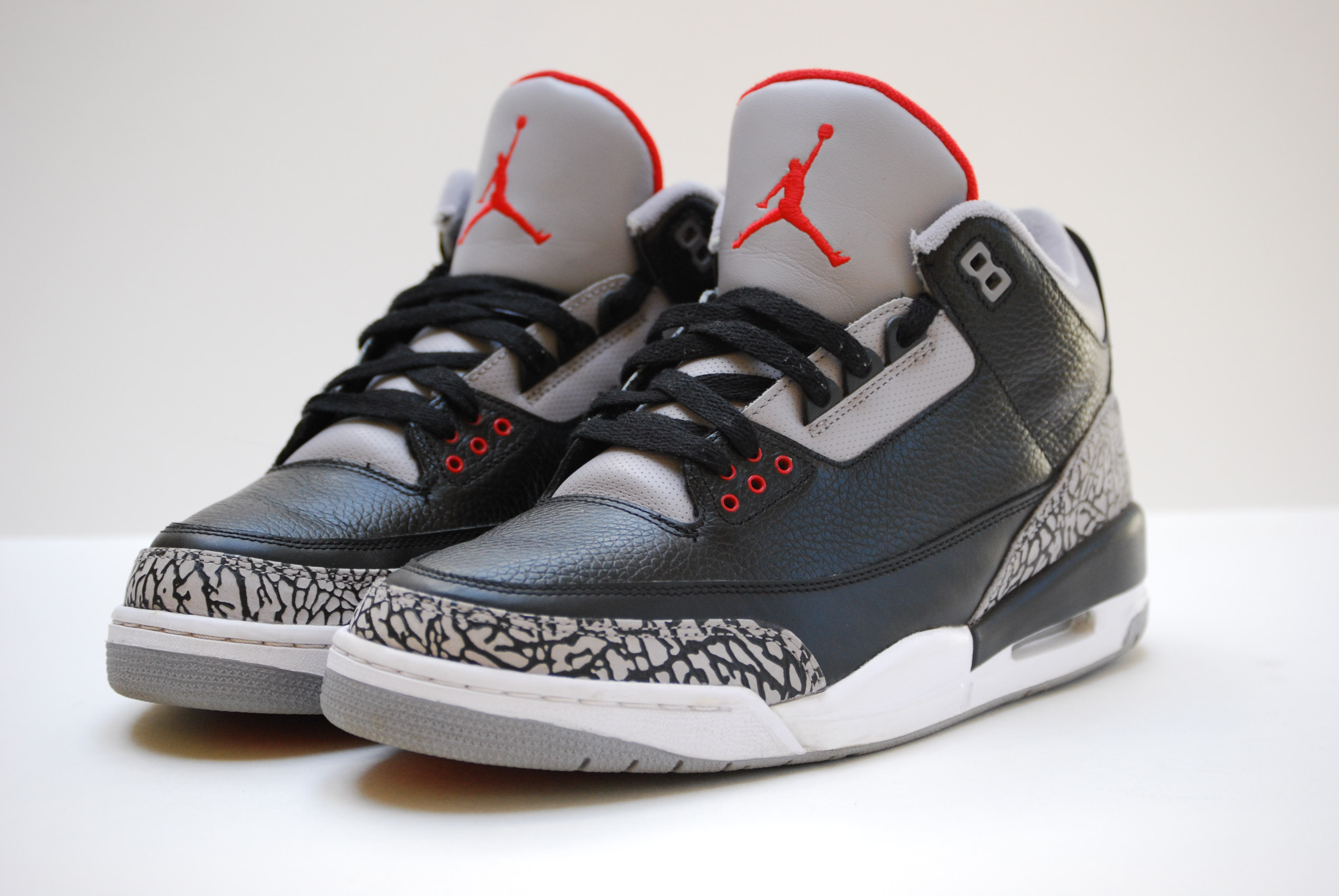
"All right, sir---put down the sneakers and come out with your hands up..."

“All right, sir—put down the sneakers and come out with your hands up…”

Eastern Oregon Correctional Institution inmate Sirgeorgio Clardy should probably forget his aspirations of becoming a jailhouse lawyer, if his first effort is any indication.

Sirgiorgio, an aptly named pimp, is in stir because, among other things, he brutally stomped the face of a john who was trying to leave a Portland hotel without paying Clardy’s prostitute. Jurors found him guilty of second-degree assault for using his Air Jordans as a dangerous weapon to beat the john’s face to a pulp. Now the 26-year-old pimp turned prisoner turned pro se litigant has filed a $100 million lawsuit against Nike, the maker of the Jordans, claiming the shoe manufacturer shares responsibility for the assault that was among the crimes that drew him a 100-year prison sentence. (The jury also found him guilty of robbing the man he beat and  beating the 18-year-old girl he forced to work as his prostitute. This is not, I think it is safe to say, a nice guy.)

Clardy’s creative lawsuit claims Nike breached its duty to place a label on his athletic shoes warning purchasers that they could be used as a dangerous weapon, because, I guess, the evil shoes made him do it. Or, in the alternative, he had no idea that repeatedly slamming his foot down on a man’s head would do any harm. Or something. Basically, he’d just really like a hundred million bucks, and either doesn’t know, or doesn’t care, that he’s making a travesty of the justice system.

I am confident that there is literally no chance such a lawsuit goes to trial; if there is, I am through defending the legal system for good. This is a textbook frivolous lawsuit if brought by a real lawyer, rather than an unrepentant, violent, non-too-swift pimp.  The legal ethics rule that makes such monstrosities an official ethical violation, Rule 3.1, says that…

“A lawyer shall not bring or defend a proceeding, or assert or controvert an issue therein, unless there is a basis in law and fact for doing so that is not frivolous, which includes a good faith argument for an extension, modification or reversal of existing law.” Continue reading

Donald Trump’s Loathsome Lawsuit

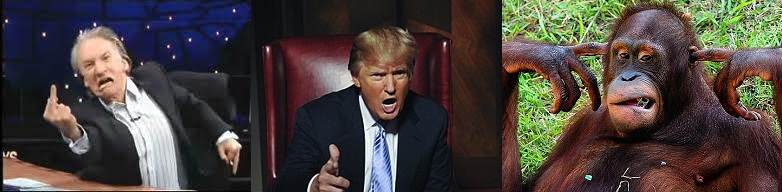
Maher-Trump-Oran

Normally the result of a tiff between Donald Trump and Bill Maher would interest me about as much as I would be invested in the  winner of a battle between Godzilla and Megalon.  Trump’s lawsuit against Maher in retaliation for an obvious joke, however, is unethical and indefensible no matter how much I enjoy seeing Maher, who could only avoid being the most obnoxious human being in world containing the likes of Trump, suffer.

Maher joked to Jay Leno last month that he would pay $5 million to Trump’s charity of choice if Trump could prove that his birth wasn’t the result his mother having sex with orangutan. I missed it, Jay having joined David Letterman and Jimmy Kimmel in my talk-show host Hall of Ethics Shame, but the line did make me laugh, I confess. Maher’s faux challenge was an obvious riff on the offensive offer Trump made to President Barack Obama during the presidential campaign, in which Trump raised the birther canard again and offered $5 million to the President’s charity of choice if  Obama released his college records and definitive proof that he was really born in the U.S.A.

Nonetheless, Trump decided to behave as if it were a real offer. He had his lawyers send the verification to Maher (Trump’s father, the brains of the family, was a legendary real estate innovator and mogul), and now Trump is suing for the $5 million on the pretense that the comic welched on a legitimate and enforceable unilateral contract. “I don’t know whether this case will be won or lost, but I felt a major obligation to bring it on behalf of the charities,” Trump said. Continue reading

Now THIS Is An Unethical Lawsuit (And a Bonus Ethics Quiz!)

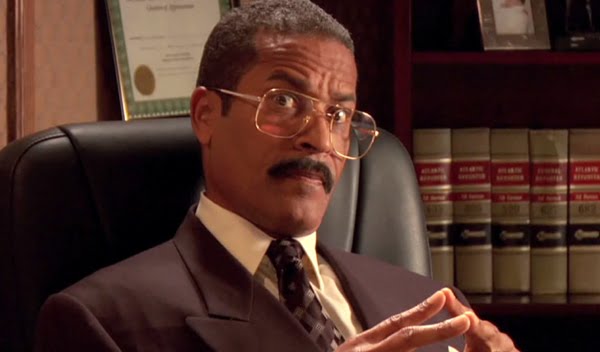
A perfect lawsuit for Jackie!

Not legally unethical, mind you, oh no no no! Remember, a lawyer is not unethical when he brings a crack-brained lawsuit as long as he can muster some vaguely plausible theory to support it. Even if he thinks the case is a long-shot of long-shots, if the lawyer has a good-faith belief that it could prevail without violating the natural laws of time and space, it’s “ethical.” Thus it is that the lawyer for the victims of a car crash caused because the teenaged driver of the other vehicle was reading a text message from his girlfriend can ethically bring a lawsuit against both the driver, Kyle Best, and his girl friend. Continue reading

The Lenahan Effect Meets The Streisand Effect

From the Legal Ethics Forum:

The Lenahan Law Firm in Dallas Texas has subpoenaed Google to release the real name of an anonymous critic who posted an un complimentary online review of the firm’s services. The firm wants to sue the poster for daring to question its performance by writing,

“Bad experience with this firm. I don’t trust the fake reviews here.”

For this perceived insult, the Lenahan firm wants to punish “Ben” to the tune of $50, 000 in damages.

Ironically, the lawsuit, rather than the review, proves to my satisfaction that “Ben” has a point. He was clearly expressing his opinion: it is up to him, and only him, whether he regards the experience of working with the Lenahan firm as “bad” or not. In the complaint, the firm says that the declaration that the positive reviews are “fake” alleges dishonesty and fraud by the firm. Utter nonsense. First of all, the allegation, fair or not, is also obviously an opinion. Second, “Ben” is saying that the reviews are fake, which could mean insincere, among other interpretations. He does not attribute them to the firm. He doesn’t say where they came from. He doesn’t know. Maybe I sent them.

On the screen shot included in the complaint, it clearly says that “0 of 3” people found “Ben’s” review helpful. For that, the firm wants $50,000 in damages, since that zero potential client was driven to another firm with his lucrative business.

Unbelievable.

Over at Popehat, lawyer-blogger (and Ethics Alarms 2011 Ethics Blogger of the Year) Ken has been carrying on a vigorous battle against online censorship of free expression by threats and lawsuits. His current target is a ridiculous faux lawyer who is now threatening Ken for pointing out the error of his ways. In his commentary as well as his various emails to the individual, Ken explains with admirable precision why opinions are not actionable assertions of fact, useful passages that I would recommend to the Lenahan Law firm. The firm’s efforts to bully critics by making an example out of “Ben” also unwisely incur the “Streisand Effect,” the online phenomenon by which efforts to censor information on the web has the perverse consequence of giving it more visibility and influence.

I don’t know if there is a name for the effect—“The Lenahan Effect,” perhaps?—by which a law firm’s willingness to pursue a spurious, unnecessary and excessive lawsuit against a former client for expressing his views about the firm’s work has the perverse effect of showing the world why that client feels the way he does, but that’s what the Lenahan lawsuit against “Ben” does.

That’s only my opinion, of course.

Now THIS Really IS a Frivolous Lawsuit…

I have written here before that the legal ethics breach of filing a frivolous lawsuit (prohibited by Rule 3.1 in most state Rules of Professional Conduct) is almost impossible to accomplish, because it requires a lawyer to lack a good faith belief that the suit can prevail. Since bizarre and attenuated theories sometime do prevail, a law suit really has show no merit at all to prompt sanctions. Like this one, for instance. I quote from the Illinois Institute of Continuing Education’s summary:

“The United States Court of Appeals for the Second Circuit, acting sua sponte, found that the appeal filed by three attorneys in Gallop v. Cheney…, claiming that White House and military officials conspired to cover up government involvement in the 9/11 terrorist attacks was frivolous in that it was “brought without the slightest chance of success>’…The court found that the appeal contained a “comprehensive compilation of every rumor, report, statement, and anecdote that may reveal an inconsistency or omission” in official reports….The court stated that the misconduct was compounded by the filing of a motion to recuse the entire panel that was “peppered with disdainful and unsubstantiated conclusions about the panel members’ emotional stability and competence to serve objectively.” The motion accused the judges of having “severe bias, based in active personal emotions arising from the 9/11 attack . . . leading to a categorical prejudgment totally rejecting [Gallop’s] Complaint, out of hand and with palpable animus.”

“The court found the three attorneys jointly and severally liable for $15,000 in fines and ordered them to pay double the government’s costs for both the frivolous appeal and the recusal motion. The court also ruled that whenever one of the attorneys appears before any tribunal in the Second Circuit within the next year, he must alert the court to the sanctions.

“The court declined to sanction the appellant herself because she relied heavily on her lawyers and did not labor under the same legal and ethical obligations to the court as her attorneys.” 

Yup!!!!


The case is Gallop v. Cheney, 642 F.3d 364, 370 (2d Cir. 2011)


Comment of the Day: “Unethical Business Practices: Online Reputation Services”

For those offended by the fact that this is the second Comment of the Day, I can only note that I haven’t posted a COTD for a while, so they can consider this one as making up for say, September 9.

Tgt has some uncomfortable truths about the practicalities of taking principled stands, in the context of my discussing the dishonest and bullying tactics of so-called online reputation protection services without specifically naming any one company.

There are gradients of this dilemma, which I’m not sure the author sufficiently acknowledges. For example, in the recent Defense of Marriage Act controversy in which law firm King & Spalding arguably dumped an unpopular representation because of inappropriate but no less threatening warnings from its biggest client, there are core professional values involved: once a lawyer ( or firm) accepts a representation, he or she may not, consistent with professional norms, drop the new client because of fear that the representation will have unpleasant consequences. There is no ethical obligation, however, to engage in a protest or civil disobedience when one objects to an abuse of official power. There is an obligation to do something, and it is ethically legitimate to choose a course that addresses the wrong without causing unnecessary harm to oneself or others. One not  cowardly by not being foolhardy.

Unless I accept John Adams’ rather perverse conviction that the only way one knows one is doing the right thing is when he is certain that the consequences will be personally ruinous, I don’t agree that I have failed an ethical obligation by choosing to flag unethical conduct without specifically inciting a company whose business it is to intimidate websites.

Besides, as I noted in my response to this comment, I am not through with these guys. Not by a longshot. But here is tgt’s Comment of the Day to my opening volley: Continue reading

Unethical Business Practices: Online Reputation Services

Consider this just a polite request to remove that accurate but ucomplimentary post about my client.

The web has created some new business niches, and one that fascinated me was the emergence of online reputation defenders, who purport to make sure that Google searches and web research about individuals and businesses do not turn up negative information that can harm business prospects, career advancement, or reputations generally.

While I can see the appeal and potential profitability of such services, manipulating online content is an ethical gray area. It is as wrong to artificially make someone look good  on the internet as to artificially make them look bad. In general, anyone who has been out and about very long will find both positive and negative information about themselves on the web, of varying accuracy. People who have experience with web research understand this, so the impressions they get from checking out a potential employee or business partner will usually, though not always, be tempered with skepticism.

They can and should apply common sense: What is the source of the negative information? How old is it? Was this one incident or complaint that doesn’t seem representative of the individual or company as a whole? I would rather have all the information available, and be able to make my own decisions, rather than have the most favorable material elevated in visibility and the least favorable made difficult to find or removed altogether. These services promise to “bury” the negative material. Continue reading