Hilaria Baldwin’s Funeral Etiquette

[Update: June 28The tweets that inspired this commentary were shown to be wrongly time-stamped, and the reporter’s newspaper have apologized for the error, but not before there were some other developments, discussed here.  Ethics Alarms apologizes to Hilaria too. The criticism of her is withdrawn; the commentary below about tweeting at funerals, and Hilaria’s husband stands.]

In case you wondered what kind of a woman would marry actor Alec Baldwin during his late career, “mega-jerk and proud of it phase, wonder no more.

Baldwin’s wife Hilaria demonstrated that she is at least as self-centered, rude and lacking respect for basic human courtesies by tweeting her head off during James Gandolfini’s funeral in New York.

It’s simple, really. You don’t have to attend anybody’s funeral (though, as Yogi Berra famously warned, if you don’t go to theirs, they won’t come to yours), but if you do, you are obligated to put aside the petty details of your life for a few hours while you solemnly and respectfully join family members and friends in remembering and honoring the concluded life of the deceased. You don’t spent the time passing notes with knock-knock jokes on them to other mourners, you don’t hum inappropriate ditties, and you sure as hell don’t spend the funeral tweeting inane stuff like like this... Continue reading


Sympathy Abuse: The Unethical Death Announcement Request


Take ’em or leave ’em.

The Miami Herald reports that Robert Maurius Reno, a younger brother of former U.S Attorney General Janet Reno has died. In lieu of flowers, the family is asking  friends to give to the Obama campaign –“even if they are Republicans.”

Wrong. Ethics foul.

I know that the Obama campaign has been promoting its tasteless brainstorm of encouraging wedding invitees and birthday celebrants to give money to the campaign rather than a gift, but this is emotional extortion. A citizen has a right to his or her own political activity, and short of using logic, facts and the power of persuasion to prompt a shift in loyalties, it is an abuse of the power of friendship and a misuse of sympathy to exploit a death to make someone give support to a cause, a party or a candidate that he or she would normally oppose.

If a family can compel Republicans to give to the campaign of a Democratic candidate, then it can use a family death to make an anti-abortion advocate give to Planned Parenthood, an Orthodox Jew contribute to Hamas, and a Red Sox fan buy a season ticket to watch the Yankees. This turns a generous and normal desire to show respect for the deceased and support for the grieving family into a trap to make mourners choose between violating their core beliefs and rejecting the wishes of the family.

The device is unfair, unmannerly, offensive and crude, and places politics over friendship and good taste. So is Obama’s birthday and wedding registry scheme, but that only  crossed an ethical line, while this obliterates it. Republican or Democrat, if you’re going to try this strong-arm tactic on me, don’t expect to see me at the funeral.

Or anywhere, for that matter. And I might just give double to the other side.

___________________________________________

Pointer: James Taranto

Facts: Miami Herald

Ethics Alarms attempts to give proper attribution and credit to all sources of facts, analysis and other assistance that go into its blog posts. If you are aware of one I missed, or believe your own work was used in any way without proper attribution, please contact me, Jack Marshall, at  jamproethics@verizon.net.


Dancing With Thomas Jefferson: How Assholes Make the Law Spoil Life For Everyone

Coming to a place of honor and reflection near you.

On Saturday, the U.S. Park Police forcefully arrested five “Code Pink” protesters under the dome of the Jefferson Memorial for defying a recent Federal Appeals Court ruling that dancing at federal monuments was not constitutionally protected expression.

Perhaps you missed that ruling earlier this month, which was, I presume, made necessary by the realization that a flash mob could break out at any moment at the Lincoln Memorial or the Alamo. That was not the threat in 2008, however, when Mary Oberwetter was arrested, also at the Thomas Jefferson Memorial, for hoofing to celebrate Thomas Jefferson’s birthday.

She sued the National Park Service for violating her First Amendment rights, and on May 17 the U.S. Court of Appeals for the D.C. Circuit held that the Jefferson Memorial should have a “solemn atmosphere” and that dancing, silent or otherwise, was an inappropriate form of expression there. The appellate judges concurred with the lower court that the memorial is “not a public forum,” and thus demonstrators must first obtain a  permit. Demonstrations that require permits in the Park Service’s National Capital region are defined as

“…picketing, speechmaking, marching, holding vigils or religious services and all other like forms of conduct which involve the communication or expression of views or grievances, engaged in by one or more persons, the conduct of which has the effect, intent or propensity to draw a crowd or onlookers. [The] term does not include casual park use by visitors or tourists which does not have an intent or propensity to attract a crowd or onlookers.”

The Appellate Court wrote: Continue reading

From First Amendment Outrage to Ethics Hypothetical: The Westboro Baptist Church vs. Brandon, Miss. Hoax

"Never mind!"

Bulletin: The story about how citizens and law enforcement personnel in Brandon, Miss. foiled the efforts of Fred Phelps’ homophobic Westboro Baptist Church to disrupt the funeral of a serviceman killed in Afghanistan never happened. The source of the hoax is unclear, but an enterprising Stars and Stripes blogger investigated and has determined that it never happened. The Church was never even in Brandon.

I detest fake web stories and the people who create them, as you probably know. The public is  confused enough by reality without having falsehoods, fabrications and hoaxes added to its database. Luckily, this is not a news site, but an ethics site, and my commentary about those who applauded this tale of a community conspiring to rob a group of their U.S. Supreme Court confirmed constitutional rights is as valid as when it was widely assumed that the story was real.

The foiling of Fred Phelps’ gang by “Mississippi Burning” tactics is not only an ethics hypothetical that most people flunked, but also an effective trap to lure the self-righteous into agreeing  that ends justify unethical means as long as the victims of those ends are sufficiently despicable.   This group includes one of the most quoted commentators on the story, who approved of the fictional response by the town and wrote,

“This is a template for how to handle the Westboro people. If lawsuits don’t work, other means will. Whatever it takes to keep them from harassing bereaved military families on the day their fallen loved ones are laid to rest.”

He was wrong then, and he’s wrong now.

Don’t Cheer Mississippi’s Westboro Baptist Tactics Too Loudly: You Never Know Who Might Hear You

"Demonstrators? Just leave them to us."

Sgt. Jason Rogers, who was killed in action in Afghanistan, was buried two weeks ago in Brandon, Mississippi. As is its custom, the Westboro Baptist Church, fresh from U.S. Supreme Court-confirmed constitutional protection, was prepared to sully Sgt. Rogers’ funeral with its usual hateful chants about how God kills our soldiers to punish our sinful, homosexual-loving ways. Its plans were foiled, however, by a little bit of traditional Mississippi social control ingenuity.

A couple of days before the funeral, one of Fred Phelps’ vile cultists boasted about the upcoming protest while visiting a Brandon gas station, and the good citizenry on the scene gave him the sound beating they felt his sentiments warranted. Continue reading

My Mother’s Funeral and the Kindness of Strangers

Few things are sadder than a long life commemorated by a sparsely attended funeral. The sadness is based more on illusion than reality, I know: the best way to ensure a good crowd at your funeral is to die young. Still, no son or daughter wants to deliver a eulogy to an empty chapel, even if the attendance figures at a love one’s funeral often say little about the richness of the life being remembered.

Most of the mourners at my mother’s funeral yesterday afternoon at Arlington National Cemetery barely knew her. Many had never met her; I doubt that she would have been able to name half of them if she had encountered them on the street. Yet they came, in the middle of a workday, to make sure that my mother’s family, including my sister and me, did not have to endure the sadness of the empty chapel. It was an amazing group. Among those whose connection to my mother was solely that they knew me, there were several whom I had not seen or spoken with in years, and others whose presence immediately made me feel guilty for being out of touch with them for too long. There were colleagues from jobs I had left long ago, and old friends who had, through the relentless roadblocks that family, work and assorted crises and priorities of living, had receded into names on a Facebook list. A former fiancee…a cast member of a show I had directed long ago. They were all expending time, their most precious resource, to be kind.

I’ve been going to a lot of funerals lately, something I once avoided with a passion. I’m going to start going to a lot more, and not merely just because, to paraphrase a line from the last Indiana Jones movie, I’ve reached the time when life stops giving you things and starts taking them away. As Yogi Berra reputedly said, “You should always go to other people’s funerals, otherwise, they won’t come to yours.” I appreciate the joke, but I’m pretty sure what Yogi was talking about was The Golden Rule.

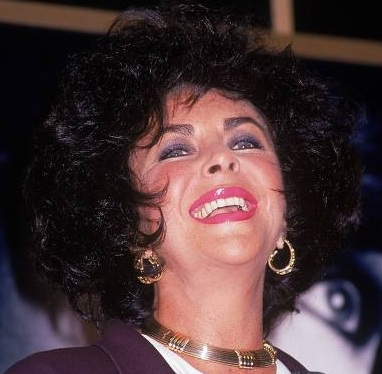
Liz Taylor’s Ethical/Unethical Final Joke

Liz's last laugh

Screen legend Elizabeth Taylor, who drove husbands, producers, directors and co-stars to distraction by her habit of being late to appointments. meetings and film sets, played a joke on her mourners when she arranged to be “late for her own funeral,” scheduling it to start 15 minutes after the announced time.

Anyone who plans a joke for their own funeral generally has my respect and approval. This one, however, is ambiguous as well as funny. Tardiness is disrespectful to those who have to endure it, and often is a sign of arrogance and lack of empathy. Movie stars like Taylor who keep crews and actors on the set fray tempers, inflate budgets and undermine shooting schedules. Being habitually late is being habitually unethical. Continue reading

Jeter, Bob Sheppard, and Funeral Ethics

Bob Sheppard, the “Voice of God” who announced batters in games at Yankee Stadium from Joe DiMaggio to Mark Teixeira, died this month at the age of 99. Yankee shortstop Derek Jeter announced that henceforth he would be introduced by a tape recording of Sheppard’s distinctively cultured tones, and the tributes from former players and current team members were generous and loving.

But when Sheppard was finally laid to rest over the All Star Game break, no Yankee player, past or present, took the time to attend his funeral. The team itself sent appropriate representation, and General Manager Brian Cashman spoke. Still, some journalists, bloggers and New York sportswriters found fault with the complete absence of the Yankee players, considering Sheppard’s iconic stature and their stated admiration of the man. The Daily News’ Bill Madden called it a blatant lack of class.

Perhaps. I’d call it coldness and insincerity. Continue reading