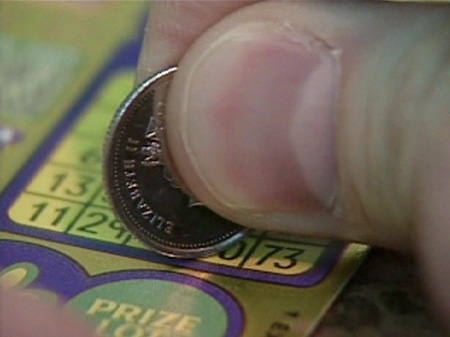
The Ethics Question That Is Driving Me Crazy

I don’t like to poach advice columnist questions unless the columnist makes a mess of the answer. This is an exception, however. It is an ethics question like no other I have ever encountered, the ethics equivalent of Monty Python’s “killer joke.” It is driving me crazy.

The question came to Ariel Kaminer, the writer of the New York Times ethics advice column, “The Ethicist.” Kaminer is typically all over the map, and often makes simple ethics problems more complicated than they are, when she isn’t getting them wrong entirely. “The Ethicist” didn’t get this question wrong entirely, but she did write a long explanation that missed what was really remarkable about the question. The only answer that was absolutely required would have been, “WHAT???

Here’s the jaw-dropping question, from a student:

“My school charged a dollar for students to bet, or “predict,” which team would win the Super Bowl. It was $1 for one team, and if you won, you would get a candy bar. If you bet $3, you could choose both teams and guarantee your candy bar. Is this legal or even morally right?”

 WHAT???

The school (Where is this school?) is not only promoting gambling, it is promoting crooked gambling, or, if you prefer, attempting outright theft. It is encouraging students to spend a dollar on a 50% chance to win something that costs about a dollar! In addition to being a scam, the school is either… Continue reading


Ethics Quote of the Day: Drew Curtis’ Fark

Mitt Romney is not a player.

“The stupid tax just doubled.'”

Drew Curtis’ Fark, in a typically perceptive jibe, at the announcement by Powerball officials that in order to increase the attractiveness of the multi-state super-lottery, it will be raising the levels of jackpots, lowering the odds against winning, and to make more money, doubling the cost of a ticket.

Fark. com was a guilty pleasure before I started an ethics blog, but is now a daily assignment, as Drew Curtis’s clever link collection where he simultaneously uncovers interesting news items and attaches one-line jokes to them has proven to be a rich source of ethics stories.

The various lotteries are all unethical, as state governments too cowardly to pass taxes on those who can afford it duck their duties by enticing the desperate, the poor, the  gambling addicted, and, as Fark correctly notes, the stupid, to spend money they should be saving or spending on necessities. Their foolish objective, nourished by state promotions, is to buy a remote chance at a life-changing stroke of luck—which, statistics say, is more likely to ruin their lives than to fix them. The original argument for these cynical and degrading devices was that they would balance state budgets and improve the schools. You can see how well that is working out.

So, times being tough, the biggest government pocket-picking scheme of them all,  Powerball,  is trying to suck in more people who shouldn’t be playing and who are grossly irresponsible to waste their money, while charging them more to do it. It’s unfair to have a tax on being stupid—being stupid in the 21st Century costs too much already.

But Fark is right. That’s exactly what Powerball is.

Wolf’s Question and the Ethical Answer

"Upon reflection, perhaps failing to buy health insurance was a mistake..."

Wolf Blitzer’s question to Rep. Ron Paul at the CNN/Tea Party Express Republican debate in Tampa, Fla. has received most of its publicity because of the idiotic response it elicited from the audience, or some of it. That is good fodder for the Tea Party-slimers, but it was the query itself that raised the most interesting ethical issue.

What should happen, Wolf asked, when a healthy 30-year-old man who can afford insurance chooses not to buy it, and then goes into a coma and needs intensive care for six months? Ron Paul, true to his libertarian soul, muttered unhelpfully that we should all take responsibility for ourselves, which is true, but non-responsive. Blitzer followed up: “But, Congressman, are you saying the society should just let him die?” (This is where the barbarians at the gates added their bloodthirsty shouts of “Yeah!”)

Slate’s Jonah Goldberg has written about what he calls the three possible options available to American society to handle the comatose slacker: Continue reading

Comment of the Day: “New Jersey Lottery Ethics…”

Tom Fuller, who can be perceptive when he isn’t peppering us with the quotations of others (all right, even sometimes when he is) makes a useful distinction in the Comment of the Day, on today’s post about the New Jersey Lottery:

“Don’t get me wrong. I’m no fan of government-sponsored lotteries, and I share all of the concerns about them mentioned above. But a facile slogan like “lotteries are a tax on people who don’t understand math” is, like most facile slogans, too simplistic a way of making the arguments. There are plenty of psychological and economic reasons why even people who understand the math buy lottery tickets that are, quite literally, bad bets. There is lots of research on this; one of the better articles is now 21 years old, but is still cited as a good, brief, and comprehensible overview.”  [You can read it here.]

“Every gamble is a losing bet in the long run; otherwise it wouldn’t be a gamble. The trouble with state-run lotteries is not so much that they exploit those who “don’t get it”; they exploit anyone, even a mathematical genius, who is drawn towards what society generally regards as undesirable actities, thereby sending the same mixed messages as taxes on tobacco and alcohol.”

New Jersey Lottery Ethics…Well, Not Exactly

New Jersey has taken the live drawings for the state lottery off of television and placed it on the internet. Many regular lottery players are upset about this, it seems.

“I like to see them pull it so they don’t have the chance to switch it,” said one eighty-year-old player. “Older people don’t trust the system. We know what happens.” She doesn’t own a computer, nor do her friends, and they all say they won’t play the lottery again until they can watch the drawings on their televisions. Indeed, the New Jersey Lottery is getting many such complaints, and expected them.

Why?

Because the people most likely to play the lottery are poor, badly educated, ill-informed, dumb, or all of the above, that’s why. Continue reading

Ethics Observation of the Week: the Wall Street Journal’s James Taranto

Dissecting a Washington Post op-ed in which Attorney General Eric Holder and HHS Secretary Kathleen Sibelius argued for the constitutionality of Obamacare,  Wall Street Journal wit and political commentator  James Taranto argued that the two Obama officials…

“…can’t even muster a coherent argument in favor of ObamaCare as a matter of policy. The op-ed opens with what is meant to be a heartstring-tugging anecdote: Continue reading

Sheyla Hershey’s Mega-Breasts and the Ethics of Assisted Self-Destruction

The current bicycle ordeal commenced by the Vogel family was sold to the family’s twin boys as a chance to get into the Guinness Book of Records. That publications has been used to justify more self-destructive conduct than the complete works of Ernest Hemingway, and here’s another example: Sheyla Hershey, owner of the world’s largest breast implants (size M, supposedly) according to Guinness, just had to have them removed because of serious infections. They were also “uncomfortable,” she has told reporters.

Gee, who could have seen that coming? Continue reading

The Slippery Slopes of Religious Freedom and Female Genital Mutilation

The American Academy of Pediatrics slipped on the slipperiest of ethical slopes when earlier this year it attempted to balance multi-culturalism with pragmatism and traditional medical ethics. The topic was the genital mutilation of young girls in a form of (so-called) “female circumcision” practiced by some Muslims, in which the clitoris is cut and mutilated in order to make future sexual activity less enjoyable, thus ensuring a female’s “virtue.” The AAP argued that its members could ethically agree to inflict a lesser “nick”—a ritual drawing of blood— to fulfill a patient’s parents’ request for the ritual cutting, because to do otherwise might lead to greater harm to a girl’s genitalia if the parents sought a full-fledged mutilation abroad or elsewhere.

This policy effectively repealed the ancient ethical standard of “First, do no harm” by employing the versatile rationalization, “If I don’t do it, someone else will.” Predictably, women’s rights advocates were horrified. Equality Now proclaimed in May… Continue reading

The Ethical Significance of Pete Rose’s Corked Bat

To cut to the chase: there is now irrefutable evidence that Pete Rose, Major League Baseball’s all-time hit leader who is currently banned from the game for betting on baseball, used a corked bat. How often he used it, how many other bats were similarly doctored, and what results he got from the illegal bat (s) are all unknown, and probably unknowable. The long, interesting and well-researched article about Rose’s bat on the website “Deadspin” points out that:

  • Corked bats (which have been doctored with a hollow chamber that is filled with cork, on the theory that it lightens the bat without sacrificing power) are forbidden by the rules of baseball, and their use constitutes cheating.
  • Their use is almost impossible to detect; only a handful of players have ever been caught using one, but it is believed that the cheaters are many and notable. Amos Otis, a star for the Kansas City Royals, admitted after he retired that his bats were corked for the majority of his career. Norm Cash, who won a shocking batting championship in 1961 with an average far above any he posted before or after, attributed his career year to a corked bat.
  • It is quite possible that corked bats don’t have any positive effect at all, and might even be worse than regular bats.

The last point cuts no ice with me. Continue reading

When Blind Justice Blinds Love: the Saga of the Gambling Grannies

I’m sure you, like me, are eagerly anticipating the resolution of the case in New Britain Connecticut, in which one elderly sister is suing the other for a share of a 2005 Powerball jackpot of a half million dollars. The result, however, will be determined by technical legal issues, such as whether thee was there a valid contract between the sisters to split all gambling winnings, as the suing sis insists. There has already been one interesting wrinkle: gambling contracts are typically unenforceable, and so was this one until it applied to Powerball, which is state lottery and therefore, unlike other gambling in Connecticut, legal…just one more little bonus from of state governments taking over the numbers racket.

Yet the more important question, for those of us other than the sisters, Rose Bakaysa and her younger sister Theresa Sokaitis, is why some application of ethical values didn’t stop the lawsuit from getting to court. The situation is this: Rose and Theresa were always close,  and in their retirement, the two began gambling regularly, taking trips to casinos and playing the lottery. They made a deal, years ago (Rose is 87 and Theresa is 84) that if either of them won anything, they would split it 50-50.

In 2004, right before Rose hit the jackpot, the sisters had an argument over–what else?—some money, and stopped speaking to each other. Rose tore up the notorized contract, but Theresa kept it safe, just in case. This is why they are in court. Continue reading