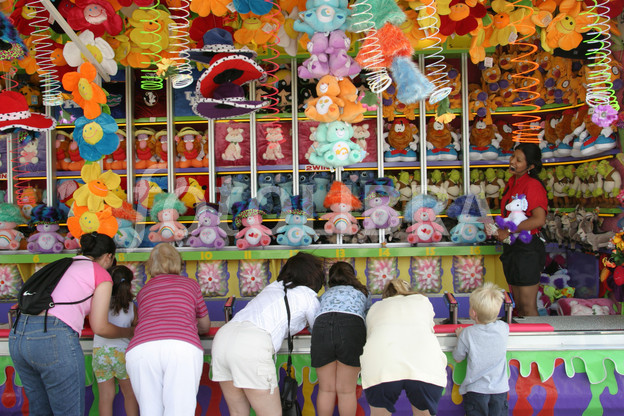
 The AARP website has a post about rigged carnival games, a topic that I have always found intriguing from an ethics perspective. The games…The Basketball Shoot, The Balloon Dart Throw, The Ring Toss, The Milk Bottle Pyramid, The Duck Pond and the rest…are rigged, and I can’t remember a time when I didn’t know they were rigged. It didn’t stop me from playing the silly things. A carnival is a state of mind, a flashback to the days of P.T. Barnum and flim-flam artists. An ethical carnival? Isn’t that an oxymoron? We eat terrible food, pay to go on disappointing rides, listen to barkers who we know are lying through their teeth, and play games that are scams in order to win cheesy prizes worth a fraction of what we paid out to win them and that we wouldn’t dream of buying outside a carnival anyway. That’s the carnival experience. It’s all unethical, and we consent to it.
Or is this just a rationalization? Is capitulation the proper ethical course, or should we carefully regulate carnival games, make sure all of the food is cholesterol-lite and sugar-free, and force the barkers to issue disclaimers and warnings like the recitations in TV drug commercials?
That’s your Ethics Alarms Ethics Quiz for the day, my friends:
Do traditional unethical practices become ethical in the culture of a carnival and similar environments, where the public voluntarily participates in and consents to its own victimization?
With cotton candy dancing in my head, corn dogs singing their siren song and images of the Wild Man of Borneo howling in my fevered brain, I have to confess that my inclination is to say, “Yes.”
And you?
_______________________________________________
Spark: AARP
Graphic: Photolibra




 Ethics Alarms