Ethics Quote Of The Month: Tech Dirt’s Mike Masnick On The Internet Privacy Bill

“We don’t solve problems by misrepresenting what the real scenario is. It’s true that ISPs have way too much power over these markets, and they can see and collect a ton of information on you which can absolutely be misused in privacy-damaging ways. But let’s at least be honest about how it’s happening and what it means. That’s the only way we’re going to see real solutions to these issues.”

Mike Masnick on Techdirt on the ignorance of  supporters, critics, and the public regarding consumer broadband privacy protections, which were just repealed by straight party line votes in Congress, as part of the Congressional Review Act, which allows the legislative branch to eliminate regulations and limits an agency’s ability to issue similar rules to the ones being struck down. President Trump is expected to sign the bill.

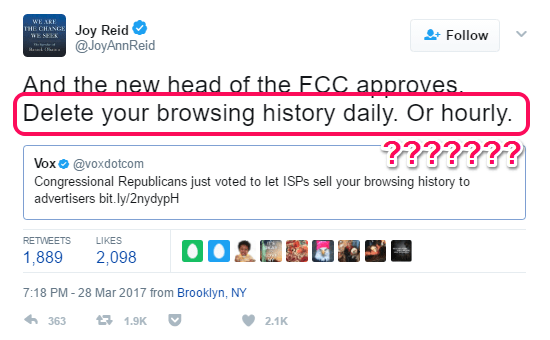
I can see both sides of the Internet “privacy” debate. All I ask is that the average screaming head on TV knows what she’s talking about, and that the news media try to educate citizens on the issue, not portray it as another Obama did it so it’s wonderful, Trump is overturning it, so it’s the end of the world. This morning I watched Morning News Babe Robin Meade roll her eyes while “describing’ what the bill does completely inaccurately. The bill, her unhappy face broadcast is baaaad like everything the Trump Administration and Republicans do is baaaaad. Then she explained that the bill would allow internet service providers, browsers and “search engines” to take your internet history and sell it to big corporations.  Then she giggled about how Max Temkin, inventor of some card game* I have never heard of, promised in a tweet…

“If this shit passes I will buy the browser history of every congressman and congressional aide and publish it.”

Robin, not having the foggiest idea what the bill really did, thought this was so funny and cool. She did not inform her audience, some of whom were actually seeking reliable information and not just tuning in to ogle, that..

  • The bill only undoes the Obama FCC regulations that stopped ISPs from gathering data on its customers’ internet use, and they hadn’t taken effect yet. In other words, it changes nothing.
  • Google, Amazon, Facebook, and other browsers and internet services still can gather anything they get their grubby cyber paws on. The FCC doesn’t regulate them.

You can’t buy Congress’ internet data. You can’t buy my internet data. You can’t buy your internet data. That’s not how this works. It’s a common misconception. We even saw this in Congress four years ago, where Rep. Louis Gohmert went on a smug but totally ignorant rant, asking why Google won’t sell the government all the data it has on people. As we explained at the time, that’s not how it works*. Advertisers aren’t buying your browsing data, and ISPs and other internet companies aren’t selling your data in a neat little package. It doesn’t help anyone to blatantly misrepresent what’s going on.

When ISPs or online services have your data and “sell” it, it doesn’t mean that you can go to, say, AT&T and offer to buy “all of Louis Gohmert’s browsing history.” Instead, what happens is that these companies collect that data for themselves and then sell targeting. That is, when Gohmert goes to visit his favorite publication, that website will cast out to various marketplaces for bids on what ads to show. Thanks to information tracking, it may throw up some demographic and interest data to the marketplace. So, it may say that it has a page being viewed by a male from Texas, who was recently visiting webpages about boardgames and cow farming (to randomly choose some items). Then, from that marketplace, some advertisers’ computerized algorithms will more or less say “well, I’m selling boardgames about cows in Texas, and therefore, this person’s attention is worth 1/10th of a penny more to me than some other company that’s selling boardgames about moose.” And then the webpage will display the ad about cow boardgames. All this happens in a split second, before the page has fully loaded.

At no point does the ad exchange or any of the advertisers know that this is “Louis Gohmert, Congressional Rep.” Nor do they get any other info. They just know that if they are willing to spend the required amount to get the ad shown via the marketplace bidding mechanism, it will show up in front of someone who is somewhat more likely to be interested in the content.

That’s it.

Got that, Robin?

Probably not. Continue reading

Ethics Heroes: North Carolina Democrats

gop-firebombing

Someone firebombed a Republican Party office in North Carolina over the weekend, and added some graffiti telling “Nazi Republicans” to leave town. Police are investigating; I don’t know why, since Donald Trump, responsible and fair as ever, already announced that the Clinton campaign did it.

trump-tweet-ncInspired by a tweet from University of North Carolina’s School of Information Science’s Zeynep Tufekci, David Weinberger of Harvard’s Berkman Klein Center for Internet & Technology launched a campaign on GoFundMe to rebuild the ruined office. He wrote on the fund’s page,
Continue reading

“Why Does Hillary Think Her E-mail Scandal Is So Funny?” And Other Brief Ethics Notes To Get The Week Off To A Depressing Start…

W dead guns

Most Unethical Grieving Mother Of The Year

A caring  friend of Chanelle Chavis created a GoFundMe account asking for donations to Chavis’ 3-year-old daughter’s Camber’s funeral after the grieving mom told the friend that her daughter had died in an accident.  Later, moved by the plea, a woman gave  Chavis a $5,000 personal check to pay for Camber’s funeral expenses after Channelle exchanged text messages with her.

Nearly a month later, investigators found that the body of Camber Chavis was still in deep freeze at the funeral home, and no arrangements for burial had been made. Oh—this was no boating accident. The little girl had been murdered by her father.

On October 16, Chanelle Chavis pleaded guilty to obtaining money by false pretenses, a misdemeanor, and received a six month suspended sentence.

These cases of conning people into donating money are basically  all the same, but bit by bit, they make our society less kind, less generous, and less trusting. The law may see this is a minor crime, but there is nothing minor about the damage it does to our society.

Sure, We Don’t Need Guns… Continue reading

Unethical Website Of The Month: GoFundMe

GoFundMe thinks the 6th Amendment is heinous, apparently...

GoFundMe thinks the 6th Amendment is heinous, apparently…

A about a week ago, I designated the crowd-funding website GoFundMe an Ethics Dunce. Now it’s clear that it is worse than that. It’s an unethical website, period.

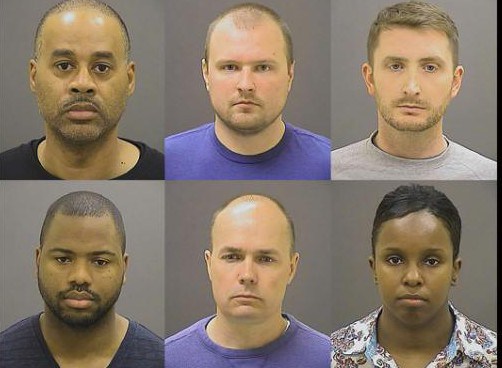
After the six Baltimore police officers were prematurely charged with serious crimes before the investigation into the death of Freddie Gray was complete, the Baltimore City Fraternal Order of Police created a GoFundMe page for their defense. Less than an hour later, it was taken down, with GoFundMe citing the same dubious policy it used to cut off support for a bakery driven out of business by vengeful same-sex marriage supporters:

“‘Campaigns in defense of formal charges of heinous crimes’ are prohibited by our terms . . . GoFundMe cannot be used to benefit those who are charged with serious violations of the law.” Continue reading

Ethics Dunce: GoFundMe

“DESTROY THE EVIL CAKE DISCRIMINATORS!!!!”

If GoFundMe isn’t going to have the integrity to avoid taking sides in complex political and cultural disputes, it is functionally useless.

Perhaps it should change its title to “GoFundMyPoliticallyCorrectCause.”

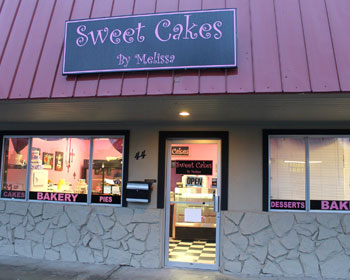
Pusillanimous GoFundMe caved in to pressure from vindictive gay marriage activists and pulled the crowdfunding campaign on the site that had raised more than $109,000 for the Christian-owned bakery,  Sweet Cakes by Melissa.

The cake shop in Gresham, Oregon, became ground zero for the same-sex marriage debate  in January 2013, when it turned away customers who wanted cakes for a same-sex wedding. The spurned couple filed a complaint to the Oregon Bureau of Labor and Industries, claiming their civil rights under the Oregon Equality Act had been infringed. In defense, the owners of the business stated that they  refused to cater  the wedding because of their religious beliefs, and thus their decision was protected by the U.S. Constitution. They subsequently closed the shop, and carried out their business from home. The Oregon Bureau of Labor and Industries proposed a damages award Friday of $135,000 against Aaron and Melissa Klein, the owners, for being in violation of the state’s anti-discrimination law. The award, which is not final, would provide $60,000 in damages to Laurel Bowman-Cryer and $75,000 in damages to Rachel Bowman-Cryer for “emotional suffering stemming directly from unlawful discrimination.”

After taking down the page raising money for the bakery in the belief that they have been unfairly targeted, victimized and mistreated, GoFundMe said in a statement that the campaign violated the site’s policy against raising money “in defense of formal charges of heinous crimes, including violent, hateful, or sexual acts.”

Continue reading