A Donald Trump Ethics Lesson

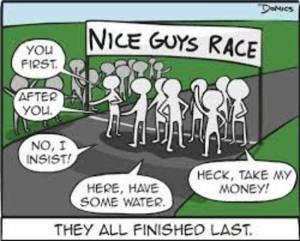
nice-guys“Trump Once Cut Off Medical Care For Sick Infant To Spite the Parents,” shouts the Mediaite headline, thus showing that even somewhat ideologically balanced websites will slant their coverage to make Donald Trump look bad—-strange, because honest reporting  will usually do the trick. What a monster he must be! The problem with the headline is that it intentionally mischaracterizes the episode in question, and “poisons the well,”  framing the story so that a casual reader is likely to interpret it as negatively as possible. This is classic unethical journalism. It also shows how some journalists are incapable of reporting on politicians and leaders, whose world view is so different from theirs.
Fortunately, I should add.

The real story, related over the weekend by the  New York Times, is more complex. The Times told the sad tale of Trump’s older brother Freddy, who died of the effects of alcohol abuse before he was fifty after leaving the family construction business. Trump’s reflections on his brother are uncharacteristically sympathetic and gentle, and it is interesting that The Donald’s reaction to his brother’s fall includes never using tobacco or alcohol, a tribute to his self-discipline.

The incident that prompted the Mediaite hit job occurred after Freddie’s death. Here is how the Times describes it: Continue reading

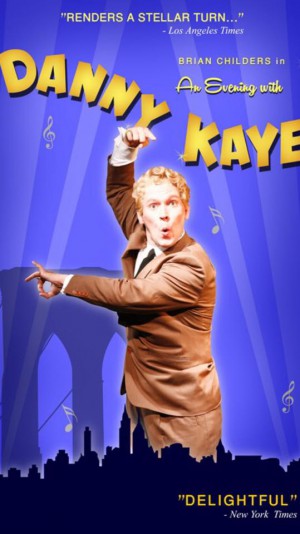
An Act Of Kindness, Danny Kaye And Me : An Ethics Case Study

Brian Childers

This isn’t a Christmas tale exactly, but it is a deeply personal one that will always make a big difference in how I make decisions in my life. It is episode that taught me, once and for all, that when you do the right thing, the amount of good that can come from it is unpredictable and sometimes unimaginable.

Maybe it will inspire you too.

In 2001, my friend Bob McElwaine handed me a script and a CD of a musical he had been working on about his long-time friends and clients, entertainer Danny Kaye and his wife, song writer Sylvia Fine. Bob was in his 70s, retired, a former Hollywood publicist and later an association executive who had taken up writing musicals with his childhood buddy, legendary movie score bassist Bob Bain (that’s Bain you hear playing the famous bass instrumental on the “Bonanza” theme, and the melody line in “The Munsters” intro too.)

McElwaine knew I was a long-time Danny Kaye admirer. He had been a wealth of information for me about Kaye when I was directing “Lady in the Dark,” the Broadway show that had made Danny a star in 1941, for the American Century Theater years before. One day, Bob asked me, as a favor, if I would agree to workshop the new piece, direct it, and see how it turned out in front of an audience.

I was not enthusiastic about the project, not at all. I had my ethics business as well as the theater to oversee; I had just finished directing a show, requiring me to be out of the house every weekday night and all day Saturday, and I thought the piece itself was too old-fashioned and formulaic to work. Mostly, however, I didn’t see how anyone could be a credible Danny Kaye, since Kaye was a unique performer—he wasn’t exactly a comedian, or a singer, or a dancer, yet  all of these and more—that has never had a close equivalent since. I was trying to find a way to turn Bob down nicely when I watched a performance of the show I had just gotten up and running. A young man named Brian Childers who was only in his second professional role played the romantic lead, and that night, for some reason, he handled a scene differently than I had ever seen him do it before—and for maybe three seconds, probably because Bob had just put the late performer’s image in my short term memory, reminded me of Danny Kaye.

After the performance I asked Brian if he would be interested in playing Kaye in this new musical, and he enthusiastically agreed, saying he was a huge Danny Kaye fan. (Later I learned that he barely knew who he was). Continue reading

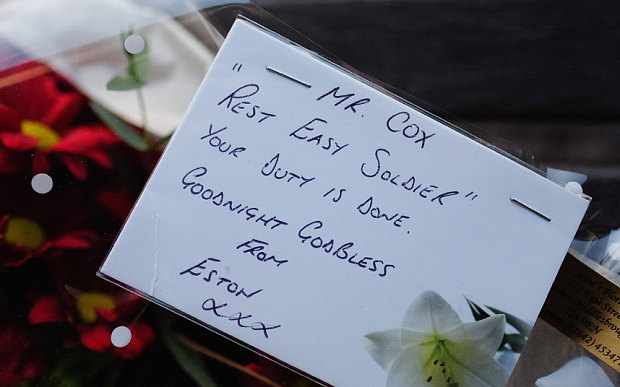
Ethics Heroes: The Community of Middlesborough, England.

COX_funeral_3524163b

Thomas Cox, a British World War Two vet who served in the Royal Pioneer Corps, died at the age of 90 with no known surviving relatives.

Hoping to give Cox the final salute he deserved, the Royal Pioneer Corps Association  posted an appeal on its Facebook page asking for people to attend his funeral. The plea was shared among veteran groups, military groups and others, and when the day came, hundreds of strangers to Cox were on hand to say farewell and thanks to the old soldier. Many of the mourners at the service in Middelborough, Teaside sent flowers and wreaths as well.

They didn’t do this for the family, for there was none, and Cox was beyond caring. They came out of respect for a generation, a pivotal moment in human history, and to assert that we are all part of a larger family, though we usually don’t behave that way.

There’s not a lot more to say, is there?

Mission accomplished.

On the Importance Of Christmas To The Culture And Our Nation : An Ethics Alarms Guide

christmas-hero-H

I don’t know what perverted instinct it is that has persuaded colleges and schools to make their campuses a Christmas-free experience. Nor can I get into the scrimy and misguided minds of people like Roselle Park New Jersey Councilwoman Charlene Storey, who resigned over the city council’s decision to call its Christmas tree lighting a Christmas Tree Lighting, pouting that this wasn’t “inclusive,” or the  CNN goon who dictated the bizarre policy that the Christmas Party shot up by the husband-wife Muslim terrorists had to be called a “Holiday Party.”  Christmas, as the cultural tradition it evolved to be, is about inclusion, and if someone feels excluded, they are excluding themselves.  Is it the name that is so forbidding? Well, too bad. That’s its name, not “holiday.” Arbor Day is a holiday. Christmas is a state of mind. [The Ethics Alarms Christmas posts are here.]

Many years ago, I lost a friend over a workplace dispute on this topic, when a colleague and fellow executive at a large Washington foundation threw a fit of indignation over the designation of the headquarters party as a Christmas party, and the gift exchange (yes, it was stupid) as “Christmas Elves.” Marcia was Jewish, and a militant unionist, pro-abortion, feminist, all-liberal all-the-time activist of considerable power and passion. She cowed our pusillanimous, spineless executive to re-name the party a “holiday party” and the gift giving “Holiday Pixies,” whatever the hell they are.

I told Marcia straight out that she was wrong, and that people like her were harming the culture. Christmas practiced in the workplace, streets, schools and the rest is a cultural holiday of immense value to everyone open enough to experience it, and I told her to read “A Christmas Carol” again. Dickens got it, Scrooge got it, and there was no reason that the time of year culturally assigned by tradition to re-establish our best instincts of love, kindness, gratitude, empathy, charity and generosity should be attacked, shunned or avoided as any kind of religious indoctrination or “government endorsement of religion.”  Jews, Muslims, atheists and Mayans who take part in a secular Christmas and all of its traditions—including the Christmas carols and the Christian traditions of the star, the manger and the rest, lose nothing, and gain a great deal. Christmas is supposed to bring everyone in a society together after the conflicts of the past years have pulled them apart, What could possibly be objectionable to that? What could be more important than that, especially in these especially divisive times? How could it possibly be responsible, sensible or ethical to try to sabotage such a benign, healing, joyful tradition and weaken it in our culture, when we need it most?

I liked and respected Marcia, but I deplore the negative and corrosive effect people like her have had on Christmas, and as a result, the strength of American community. I told her so too, and that was the end of that friendship. Killing America’s strong embrace of Christmas is a terrible, damaging, self-destructive activity, but it us well underway. I wrote about how the process was advancing here, and re-reading what I wrote, I can only see the phenomenon deepening, and hardening like Scrooge’s pre-ghost heart. Then I said…

Christmas just feels half-hearted, uncertain, unenthusiastic now. Forced. Dying.

It was a season culminating in a day in which a whole culture, or most of it, engaged in loving deeds, celebrated ethical values, thought the best of their neighbors and species, and tried to make each other happy and hopeful, and perhaps reverent and whimsical too.  I think it was a healthy phenomenon, and I think we will be the worse for its demise. All of us…even those who have worked so diligently and self-righteously to bring it to this diminished state.

Resuscitating and revitalizing Christmas in our nation’s heart will take more than three ghosts, and will require overcoming political correctness maniacs, victim-mongers and cultural bullies; a timid and dim-witted media, and spineless management everywhere. It is still worth fighting for.

More than five years ago, Ethics Alarms laid out a battle plan to resist the anti-Christmas crush, which this year is already underway. Nobody was reading the blog then; more are now. Here is the post: Continue reading

Veterans Day Ethics

"So run a red light today! It's on us!"

“So run a red light today! It’s on us!”

Ugh.

Ethical…

From the ABA Journal:

The ABA is encouraging lawyers to honor veterans through pro bono assistance, according to a statement by ABA President James R. Silkenat.“America’s lawyers join the rest of the nation on Veterans Day in honoring those who have served for their crucial contributions to preserving our democratic rule of law,” Silkenat says in the statement on the American Bar Association website. The ABA has several military assistance programs. They include:

• The ABA Military Pro Bono Project, which accepts pro bono case referrals from military lawyers on behalf of junior-enlisted, active-duty military personnel and their families.

• The Veterans’ Claims Assistance Network, which helps wounded and disabled veterans complete claims packages for expedited review by the Veterans Administration.

ABA Home Front, a source of free publications and information on legal topics encountered by military families.

More information on ABA programs for veterans is available here.

Unethical (and stupid)…

Also from the Journal:

A New Jersey law firm is offering a free defense to military veterans charged with a traffic offense on Veterans Day.

“Whether it’s a serious matter, like a DWI, or a speeding ticket, we will take care of it for free,” attorney Al Mollo of the Mollo Law Firm told the Asbury Park Press.

He said his Red Bank firm started offering the free representation last year and this year is publicizing it. Mollo, who comes from a military family, says he also hopes to encourage other law firms to join in the effort or adopt similar programs.

An offer of free legal services is generous. Specifying a particular offense…

  • trivializes the offense,
  • suggests that veterans deserve some special leniency regarding the offense, and
  • implies that veterans are particularly likely to engage in the offense.

Imagine a similar offer to veterans for spousal abuse charges on Veterans Day, or illegal drug use, or PTSD rage assaults.

Ugh.


Ethics Musings I : The Dark Side Of Personal Injury Lawyers

better-call-saul

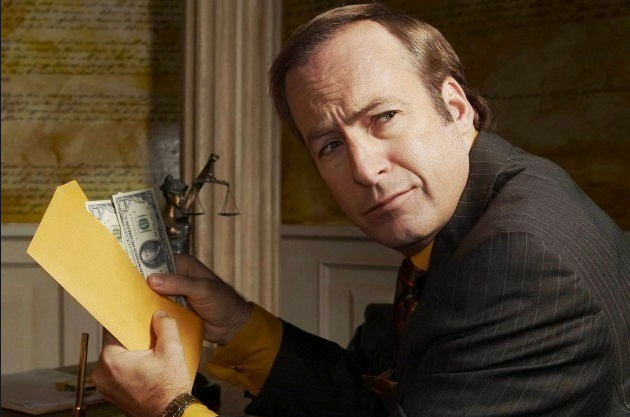
I’ve been reflecting, since yesterday, on the bizarrely angry and intellectually dishonest protests registered here and on his own blog by trial lawyer Eric Turkewitz regarding the aunt who sued her 12-year-old nephew. His arguments, if you can call them that, consisted of constantly shifting the issue from ethics (what the aunt should have done) to law (what the aunt had a legal right to do), denying the core problem (Why would anyone assume that a child is harmed by dragging him into court, subjecting him to examination in front of strangers, and focusing on him as a wrongdoer and responsible for his aunt’s alleges misery, all mandated by the aunt who supposedly loves him?), and appealing to a dizzying list of rationalization and fallacies. He then made his exit by accusing me, a lawyer, of “knowing nothing about the law” (I made no assertions about the law at all—this is not a legal issue) making everyone stupid, and being a narcissist, a full-bore ad hominem attack ending in an ominous “May God have mercy on your soul!” Why would he act like that?

The reason, I realize, is that my posts challenge the basic belief system of the plaintiff’s bar, which I know very, very well having worked in an executive position and run such diverse programs as the research data base, conventions, sections, litigation groups and more over seven years with the Association of Trial Lawyers of America. Now ATLA is called “The American Association for Justice,” a name chosen purposefully to disguise the fact that it is a plaintiff’s lawyer’s lobby by keeping “trial lawyers” out of the name because it had a negative response in marketing studies. (I kid you not.)

Trial lawyers have done a lot of good and important things and continue to, but the profession is corrupting. There is a lot of money to be made, and ATLA–excuse me, AAJ, is devoted to eliminating any limits on their members’ ability to sue anyone for any amount, no matter what harm it does to the economy, the nation, the cost of health care, the bonds of trust in society, personal liberty, or public respect for the civil justice system. Individually, members of AAJ are among the top donors to the Democratic Party, in part to make sure that they can block all Republican efforts to limit jury awards, spurious lawsuits, and damages that have to be paid by negligent corporations when they destroy lives through shoddy products, conspiracies, and other conduct. The other reason is that Democrats support the redistribution of wealth, and trial lawyers profit by it.

In the matter of keeping corporations accountable, the AAJ is, as they will constantly remind us, on the side of the angels. But like other interest groups (the NRA, the ACLU, NOW, and may more) that stake out  extreme, self-serving and unethical positions in defense of legitimate rights, trial lawyers often feel that they must take the position that every injury and misfortune deserves compensation by someone else. Eventually, they believe it. Justice is taken out of the equation for all but the plaintiffs bar’s clients. Justice means that someone else is always at fault. Continue reading

At Target, One Of Life’s Little Ethics Tests


target-logo

We were just shopping at Target, buying everything from dog food to throw pillows to laundry detergent. The lines were long, I was feeling crappy, and the bill was $142.78. The stuff was all loaded into the trunk of our car, a long walk from the entrance, when my wife noticed a tiny 25 watt light bulb—price: $2. 27— that had slipped into a crevice in the cart. “Ooooh, I bet they didn’t charge us for that,” she said.

Immediately, I was hit with a furious rationalization assault trying to kill my ethics alarms like Santa Anna’s men climbing over the Alamo’s walls:

  • “Who cares? They won’t care. Let’s just go!”
  • “It wouldn’t have been missed if the line didn’t make us late! Target deserves to lose the bulb!”
  • “We can tell them about it next time!”
  • “Nobody would go back and return this!”
  • “The walk and the inconvenience are more trouble than the lousy bulb is worth!”
  • “You think it’s stealing? Fine, leave it in the cart. Then we don’t get it either.”
  • “This wasn’t my fault!”

We went back and gave the unpaid for bulb to the customer service clerk. She raised an eyebrow and said, “Really?” Not “Wow, you people are so ethical. I’m going to tell my children about you” really, but “Wow, you people are idiots. Nobody does this. It’s a lousy $2.27! I’m going to tell my friends about this, and they will laugh long and hard” really.

This is anti-ethics bias micro-aggression, and in its own, incremental, crummy way, it makes society more unethical and untrusting because it treats ethical conduct as aberrational. If I had been feeling better and my usual annoying, feisty self, I may well have said,

“Oh, is a customer being honest ridiculous to you? So from that I assume that you approve of minor theft, is that accurate? Does that mean you are lifting low priced items from the store, and allowing your friends and family to do so? Let me talk with your manager, please. I want to ask him if you reflect Target policy. I’d like it clarified myself. What priced items are considered so disposable that theft of them is expected to be shrugged off as trivial? Under five bucks? Ten? Twenty? Why stop at twenty? Fifty? A hundred?”

“Before I explain your reaction to your supervisor and ask if that accurately reflects the store’s attitude toward not paying for inexpensive merchandise, let me convey this for future reference. The proper response to a customer who returns an unchecked item rather than just leaving with it is ‘Thank-you!’ and a smile. Not “Really?” and a smirk. Got that?”

Dirty Harry would have added, “Well, do ya…punk?”

A Presidents Day Celebration (PART 1): I Love These Guys, I Really Do. Yes, Every One Of Them.

Hall of the Presidents

I have a lifetime love affair with the Presidents of the United States.

I love these guys, every one of them. The best of them are among the most skilled and courageous leaders in world history; the least of them took more risks and sacrificed more for their country than any of us ever can or will, including me. Every one of our Presidents, whatever their blunders, flaws and bad choices, was a remarkable and an accomplished human being, and exemplified the people he led in important ways. Every one of them accepted not only the burden of leadership, but the almost unbearable burden of leading the most dynamic, ambitious, confusing, cantankerous and often unappreciative nation that has ever existed. I respect that and honor it.

I have been a President junkie since I was eight years old. It’s Robert Ripley’s fault. My father bought an old, dog-eared paperback in the “Believe it or Not!” series and gave it to me. It was published in 1948. One of Ripley’s entries was about the “Presidents Curse”: every U.S. President elected in a year ending with a zero since 1840 (William Henry Harrison) had died in office, and only one President who had dies in office, Zachary Taylor, hadn’t been elected in such a year. The cartoon featured a creep chart—I still have it—listing the names of the dead Presidents, the years they were elected, and the year 1960 with ???? next to it. When Jack Kennedy, the youngest President ever elected, won the office in 1960, my Dad, who by that time was sick of me reminding him of the uncanny pattern, said, “Well, son, so much for Ripley’s curse!”

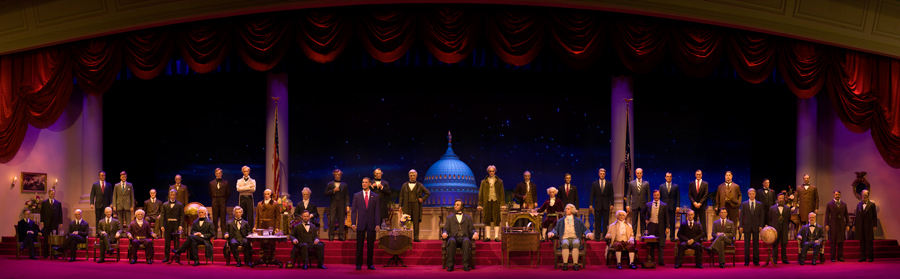
You know what happened. (John Hinckley almost kept the curse going, but Ronald Reagan, elected in 1980, finally broke it.) That year I became obsessed with Presidential history, devising a lecture that gave an overview of the men and their significance in order. My teacher allowed me to inflict it on my classmates.  Much later, Presidential leadership and character was the topic of my honors thesis in college. When I finally got a chance to go to Disneyland, the first place I went was the Hall of Presidents. When the recorded announcer said, “Ladies and Gentlemen, the Presidents of the United States!” and the red curtain parted to show the audio-animatrons of all of them together, it was one of the biggest thrills of my life.

Today I will honor our past Presidents with some of my favorite facts about each of them, trying hard not to get carried away. Is it ethics? It’s leadership, which has always been the dominant sub-topic here, but yes, it’s ethics.  I know I’m hard on our Presidents, as I think we all should be: supportive, loyal, but demanding and critical. I am also, however, cognizant of how much they give to the country and their shared determination to do what they think, rightly or wrongly, is in the country’s best long-term interests. File this post under respect, fairness, gratitude, and especially citizenship. And now…

“Ladies and Gentlemen, the Presidents of the United States!

Continue reading

News From The “Pay It Forward” Front: Neal Shytles

Neal-Shytles-buys-goodies

At the beginning of this month, Ethics Alarms honored Ashley McLemore of Norfolk, Virginia, who answered the ad placed by a homeless man, Neal Shytles who wanted to spend Thanksgiving with a family. He spent the day with hers, and for Christmas, Shytles devised a way to help others like himself in need of holiday kindness.

Neal resolved to make goodie bags for the hundreds of men who always assemble for dinner at his local mission, creating a Facebook page to collect Walmart gift cards to purchase socks, gloves, hand warmers and candy. His efforts raised more than a thousand dollars that was matched by the local TV station that first broadcast the story of Ashley McLemore’s kindness.   Then WTKR took Neal to Walmart, where he filled four carts, and its staff helped him  assemble the gifts  into dozens of brown paper bags.

Thanks, Neal. I needed this story.