Ethics Quiz: The Beautiful Young Woman In Georgetown

beautiful-face

Late last night, the previous post regarding the video showing a woman being repeatedly shouted at by rude and intrusive males as she silently walked down New York City streets sparked an ancient memory from my past.

The incident before my career shift into ethics, indeed before I was married. I was in Georgetown on a lovely fall day (like this one), and it had been a lousty week. I was feeling lost and depressed. Suddenly I was aware of the young woman walking slightly ahead of me toward the corner of Wisconsin and M streets, Georgetown Central. She wasn’t merely beautiful, but heart-stoppingly beautiful, the kind of rare combination of perfect genetics aesthetic taste who makes one realize how dishonest Hollywood’s representation of humanity is. Maybe this young woman would have blended into the scenery in Tinseltown, but I doubt it very much. Greek myths described how mortals, if they saw a god or goddess in their true form, would be instantly burned to ash, and that was almost the effect this woman had on me.

Yet she did not have the aura of a star or a model who was aware that she was gorgeous and conscious of her effect on those around her—I have seen that many times. Beautiful people generally know they are beautiful and are used to being treated differently because of it; they sometimes have a “leave me alone” force field around them, and this woman didn’t have that either. For some reason, perhaps because the jolt she had given me renewed my flagging enthusiasm for life in general at that moment—I literally never do this, not before and not since—when we reached the corner together, I turned to her and said, as I recall it,

“Excuse me, I don’t want you to take this the wrong way, but your are incredibly lovely, and seeing you today has made me happy, when I was anything but happy before.  I just wanted to say thank you.”

Your Ethics Alarms Ethics Quiz:

Was this wrong?

Continue reading

Comment of the Day: “Roshomon, Good Citizenship And Ethics: The Case Of The Concerned Stranger And The Indignant Father”

Poster - RashomonJeff Gates, the father, photographer and writer whose essay in the Washington Post prompted my post here and a lively discussion thereafter, has been kind enough to contribute additional thoughts and clarifications in response. This is one of the really good things about the internet, and his willingness to enhance the discussion with additional perspective reveals good things about Jeff as well. His original article is here.

At the outset, I want to clarify something about my post that I kept intending to do but obviously did not, at least not well. The fact that the man who was suspicious of his photo-session with his daughter said later that he worked for Homeland Security didn’t figure into my analysis at all, and still doesn’t. I am concerned with the original encounter, and the question of whether this was excessive Big Brotherism clouds the issue, which I see, and saw as this: we should applaud and encourage proactive fellow citizens who have the courage and the concern to step into developing situation that they believe might involve one individual harming another.  As the man needed no special authority to do that, I don’t care whether he was a federal agent or not; I thought it was pretty clear that this was not official action. Indeed, I think as official action, the man’s intervention was ham-handed and unprofessional.

Here is Jeff Gates’ Comment of the Day, on the post, “Roshomon, Good Citizenship And Ethics: The Case Of The Concerned Stranger And The Indignant Father.” Continue reading

Roshomon, Good Citizenship And Ethics: The Case Of The Concerned Stranger And The Indignant Father

“O wad some Power the giftie gie us To see oursels as ithers see us!”

—Robert Burns bystander-effectJeff Gates, a writer and adoptive father, contributed a thought-provoking column in the Washington Post’s Outlook section this weekend, describing what seemed to him to be a traumatic experience at Cape May. It begins…

“After my family arrives on the Cape May ferry for our annual vacation to the Jersey Shore, I take pictures of our two daughters on the ferry’s deck as we leave the harbor. I’ve been doing this since they were 3 and 4 years old. They are now 16 and 17. Each photo chronicles one year in the life of our family and our daughters’ growth into the beautiful young women they have become….On that first day of vacation, the sea was calm and the sky a brilliant blue. As I focused on the image in my camera’s viewfinder, the girls stood in their usual spot against the railing at the back of the boat. I was looking for just the right pose…Totally engaged with the scene in front of me, I jumped when a man came up beside me and said to my daughters: “I would be remiss if I didn’t ask if you were okay.”

He goes on:

“It took me a moment to figure out what he meant, but then it hit me: He thought I might be exploiting the girls, taking questionable photos for one of those “Exotic Beauties Want to Meet You!” Web sites or something just as unseemly. When I explained to my daughters what he was talking about, they were understandably confused. I told the man I was their father. He quickly apologized and turned away. But that perfect moment was ruined, and our annual photo shoot was over.”

Many of us might laugh off the experience as a funny anecdote, but not Gates, and not his daughters. He is Caucasian and they are both of Chinese heritage, having been adopted as infants in China by Gates and his wife. He obsessed about the incident for a while, and worked up sufficient indignation to track down the man and confront him, saying “Excuse me, sir, but you just embarrassed me in front of my children and strangers. And what you said was racist.” Continue reading

Ethics Dunce: Texas Rangers Ace Yu Darvish


Only Yu...

Only Yu…

Pitcher Yu Darvish is 7-4 with a 2.62 ERA in 14 starts this season. The ace of the Texas Rangers pitching staff has amassed 118 strikeouts in 96 1/3 innings, and is undeniably one of the top hurlers in the American League. He would be chosen for the All-Star game, beyond question, except that he says he doesn’t want to play, and won’t.

He’s a jerk and an ingrate.  The reason Darvish is paid the millions of dollars he is to work once every five days is the support and interest of baseball fans and the huge sums television pays Major League Baseball for its premium attractions, the World Series, the play-offs, and the All-Star Game. The latter is a gift to the fans, an exhibition that purports to be a “dream game,” and once was how the players, with the help of the game’s turnstile receipts, replenished the tills of the players’ retirement fund.

Being selected to the game is an honor, as well as a chance to show the fans that these throwing and batting tycoons play for something more than money, and for someone other than themselves. Virtually every player would love to have the four days off, but they show up anyway, to give their team’s fans someone to root for, to show loyalty to their league, and respect to the game.

Not Darvish…he says he would rather go shopping.

Ethics Hero, Mother’s Day Division: NBA MVP Kevin Durant

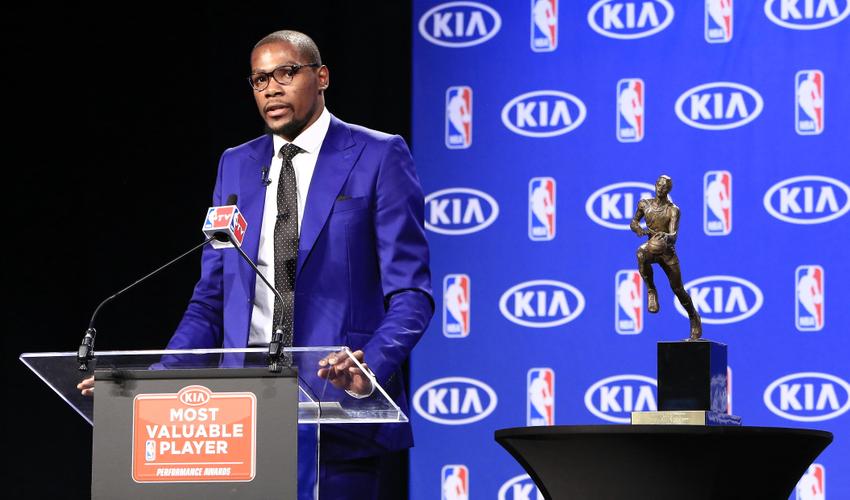
kevin-durant-nba-kevin-durant-mvp-press-conference2

Just in time to temporarily relieve the National Basketball Association from public exposure of its expediency, hypocrisy and criminalization of thought, and also just in time for Mother’s Day, Oklahoma Thunder forward Kevin Durant delivered an ethics slam-dunk of an acceptance speech when he was honored with the league’s Most Valuable Player Award.

‘Tis not always thus. Another NBA great, Michael Jordan, revealed the bleakness of his character in his nauseating speech upon being admitted to pro basketball’s Hall of Fame, settling old grudges and celebrating himself. Durant, in glorious contrast, was graceful, humble, sincere, gracious, and filled with gratitude, particularly toward his mother, who was in the audience. It takes a sense of fairness, respect and perspective, as well as confidence,  to use the spotlight at an event that honors you to shift attention to others, and that is what Durant did. His speech itself is proof that his mother raised him well, and his words drove the message home:

“One my best memories I have is when we moved into our first apartment. No bed, no furniture, we all just sat in the living room and just hugged each other. We thought we made it. … You wake me up in the middle of the night in the summertime, making me run up a hill, making me do push-ups. Screaming at me from the sidelines of my games at eight or nine years old … When you didn’t eat, you made sure we ate. You went to sleep hungry. You sacrificed for us. You’re the real MVP.”

Here is his entire speech, displaying an ethical character that can’t be faked.

My Friend, Greg

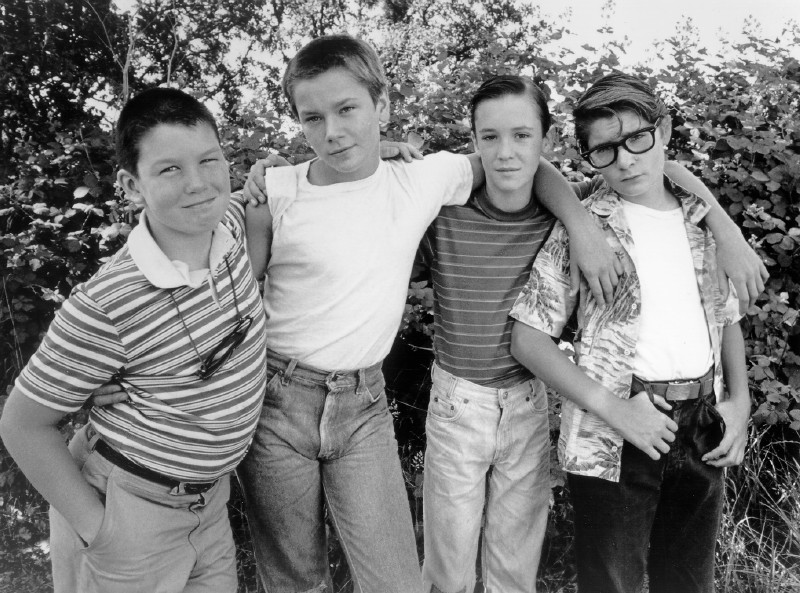
stand by me

I’m not sure exactly what this post has to do with ethics. Obligation, perhaps. Still, I have to write it.

Yesterday, I learned that Greg Davidson had died. The news thrust me into the heart of some intense and strange hybrid of “Stand By Me,” “Animal House,” “Mister Roberts,” and “The Sandlot.” I hadn’t seen or talked to Greg for 41 years, since the day he sold me my first car, a red Nova that I paid for with cash, using my bank account started for me by my Dad when I was a baby. Wiped it out, too. But that’s not why Greg Davidson was important in my life.

I met Greg in the 7th Grade, when we were both 12. He was the first un-self-consciously cool kid I ever met, and one of the few people I have known had this distinction. (I will embarrass him by saying this, but my son is one of them too.) If you can picture the character of Chris (River Phoenix) in “Stand by Me,” that was Greg—athletic, physically graceful, blond, with a buzz cut, relatively quiet, and a natural leader. He was, essentially, a man in attitude and conduct long before the rest of us (some of us are still working at it)—he won the affections of my 6th grade crush, Margie, and formed a famous, much admired steady couple with her that lasted well into high school.

He was smart, but defiant in a puckish and courageous way: this was the early Sixties, and we all regarded the regimentation of school as an insult. Greg undermined that, regularly, and at considerable personal cost, by waging clever, chaotic war against authority that he considered an affront to human dignity—the equivalent of Mr.Roberts throwing the Captain’s palm tree into the drink. One of my favorites was when he tweaked a pompous high school English teacher who chafed under the nick-name Greg had devised for him—“Tweety Bird”—because it caught on, and because it was so dead-on accurate. Greg went to the trouble of making stationery with a small picture of the Warner Brothers avian in the corner, distributed it, and that week poor Mr. Hendrickson received an assigned essay from every student on Tweety paper. Greg denied that he had anything to do with the plot, but accompanied his denials with Otter’s iconic wink to Dean Wormer, so he left no doubt who Mr. H’s true tormenter was, not there was any doubt.

The teacher did not take it well. Continue reading

Fundraising Ethics Controversy in Michigan! Naming Buildings After Big University Donors: Ethical or Not?

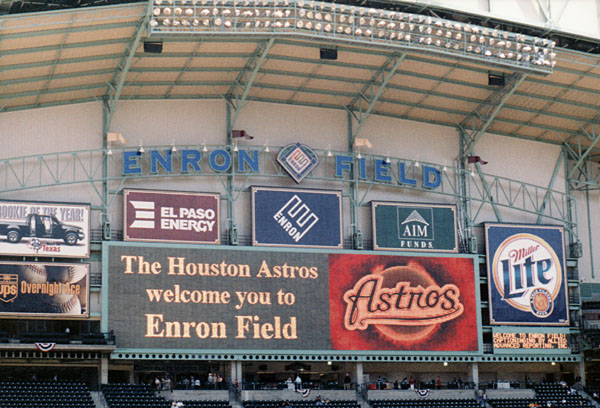
Enron-Field

I worked in the development (capital fundraising) office of Georgetown University for many years, and am well aware of the sausage-making that goes into attracting big donations. Thus the controversy that recently erupted in Michigan is of interest both for its ethical content and the way it dances around inconvenient truths.

With the college student’s wonderful knack for avoiding the obvious, the student newspaper of Grand Valley (Michigan) State University declared ethics war on what it called “billboards”: buildings and lecture halls named after corporate and individual donors. With naivete and boundless ignorance of the world of philanthropy and non-profit fundraising, the editorial declared (among other things)…

  • “What’s next? Will we turn Lake Huron 133 into the “Amway Lecture Hall?” Will the backs of our chairs have plaques dedicated to the lower-level donors?” COMMENT: For enough money, of course the university would rename the hall. Why should it care what a lecture hall is called, if it can avoid having to raise tuition? As for the backs of seats: did the editors do any research at all? Opera companies, theaters, museaums and other non-profit entities do exactly this. So what?

Continue reading

Ethics Quote Of The Week: Matthew McConaughey

Matthew-McConaughey

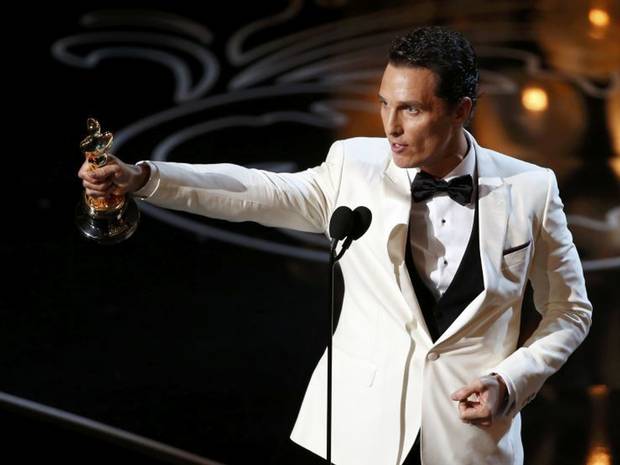
It happens but rarely: an Oscar acceptance speech with something of substance to communicate, other than a list of thank-yous. Yet last night was one of those rare occasions, as actor Matthew McConaughey used his well-deserved award for Best Actor to express his views on how to lead an ethical life:

Here is the text of his speech—much thanks to reader Phil Kraemer, who located it:

Thank you. Thank you, thank you, thank you, thank you to the Academy for this—all 6,000 members. Thank you to the other nominees. All these performances were impeccable in my opinion. I didn’t see a false note anywhere. I want to thank Jean-Marc Vallée, our director. Want to thank Jared Leto, Jennifer Garner, who I worked with daily.

There’s a few things, about three things to my account that I need each day. One of them is something to look up to, another is something to look forward to, and another is someone to chase. Now, first off, I want to thank God. ‘Cause that’s who I look up to. He has graced my life with opportunities that I know are not of my hand or any other human hand. He has shown me that it’s a scientific fact that gratitude reciprocates. In the words of the late Charlie Laughton, who said, “When you’ve got God, you got a friend. And that friend is you.”

To my family, that who and what I look forward to. To my father who, I know he’s up there right now with a big pot of gumbo. He’s got a lemon meringue pie over there. He’s probably in his underwear. And he’s got a cold can of Miller Lite and he’s dancing right now. To you, Dad, you taught me what it means to be a man. To my mother who’s here tonight, who taught me and my two older brothers… demanded that we respect ourselves. And what we in turn learned was that we were then better able to respect others. Thank you for that, Mama. To my wife, Camila, and my kids Levi, Vida and Mr. Stone, the courage and significance you give me every day I go out the door is unparalleled. You are the four people in my life that I want to make the most proud of me. Thank you.

And to my hero. That’s who I chase. Now when I was 15 years old, I had a very important person in my life come to me and say “who’s your hero?” And I said, “I don’t know, I gotta think about that. Give me a couple of weeks.” I come back two weeks later, this person comes up and says “who’s your hero?” I said, “I thought about it. You know who it is? It’s me in 10 years.” So I turned 25. Ten years later, that same person comes to me and says, “So, are you a hero?” And I was like, “not even close. No, no, no.” She said, “Why?” I said, “Because my hero’s me at 35.” So you see every day, every week, every month and every year of my life, my hero’s always 10 years away. I’m never gonna be my hero. I’m not gonna attain that. I know I’m not, and that’s just fine with me because that keeps me with somebody to keep on chasing.

So, to any of us, whatever those things are, whatever it is we look up to, whatever it is we look forward to, and whoever it is we’re chasing, to that I say, “Amen.” To that I say, “Alright, alright, alright.” To that I say “just keep living.” Thank you.

You have to wonder about the various tweeters and pundits who objected to McConaughey’s candor about his inner compass as “bizarre” (Time) or egomaniacal (several). Yes, by nature and necessity actors are unusually self-absorbed; the latter complaint is akin to faulting a dog show winner as inarticulate. What was admirable and inspiring about  McConaughey’s speech was his exuberant explanation of how his personal hero is always who he will be in the next ten years.

I doubt that this is an original formula, but I have never heard it before, and it is the essence of ethics: we strive to keep learning, getting better, and aspiring to be the best people we can be, or life is pointless. Ironically, this was also the lesson of “Groundhog Day,” the comedy masterpiece of the late writer-director Harold Ramis, whose name and career were evoked more than one during the Academy Awards broadcast. Having other people as heroes doesn’t accomplish much, unless we aspire to and learn from their values and conduct, and eventually  capable of similar heroism ourselves.

As for all those who are criticizing the actor for his religious sentiments: back off. Religion has played a major role in minting some good and remarkable human beings, and McConaughey seems to be one of them. If he chooses to thank God in his moment of exhilaration and triumph, that should be beyond reproach.

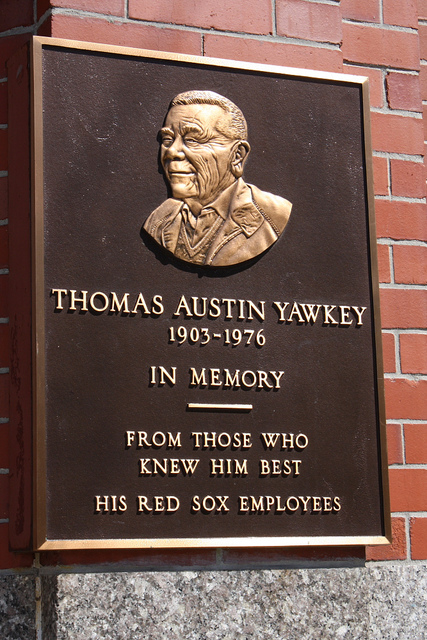
Tom Yawkey, J. Edgar Hoover, Political Correctness and Gratitude

Yawkey TributeIt’s not often that I am called upon to rebut a web post that relies on one of my articles for its unethical conclusions, but that is the position that Ron Chimelis has placed me in with his recent essay, Why the Boston Red Sox should rename Yawkey Way.

To catch you up quickly: Tom Yawkey was a lumber tycoon and baseball enthusiast who owned the Boston Red Sox from 1933 to 1976, making him the longest-tenured team owner in the sport’s history. Yawkey was almost certainly a racist; if he was not a racist, his team’s policies certainly were for many years. The Red Sox were the last major league team to integrate, and blacks did not have a significant place on the team’s roster until the late 1960s, two decades after Jackie Robinson broke the color line. From the beginning, Yawkey ran the Red Sox as a public utility, paying little attention to the bottom line as he tried to build a winner out of the franchise that had been a perennial loser since selling Babe Ruth to the Yankees in 1919. After his death, Yawkey’s wife Jean continued the family tradition, running the Red Sox, except for a few years, until her own death in 1992.

When Tom Yawkey died, the City of Boston re-named Jersey Street, which runs past the entry to Fenway Park where the Red Sox play, Yawkey Way in his honor.

In the unerring clarity of hindsight bias, Chimelis argues that Tom Yawkey is undeserving of any recognition by the city that he devoted much of his life to representing, enhancing, serving, inspiring and entertaining because racism is the ultimate crime, and anyone possessing that vile state of mind should be consigned to shame forever. It is a common point of view, and an unfair one. Continue reading

Ethical Quote Of The Week: Ben Stein

On CBS Sunday Morning, writer-actor Ben Stein issued a  call for expressing gratitude to our parents.  I’ll let Ben speak for himself:

Bravo.