Employee Ethics and Professonalism: The Anthony Rendon Saga

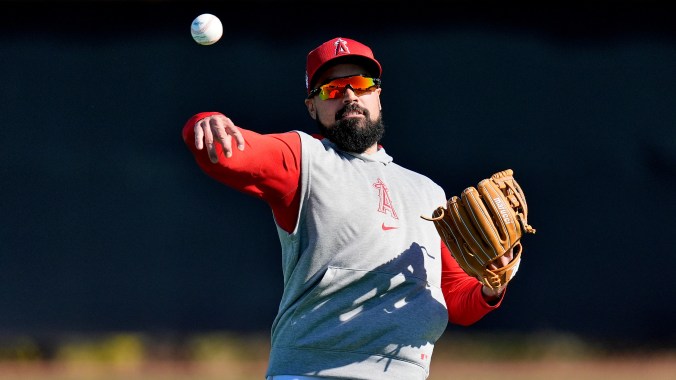
The Los Angeles Angels (it’s a baseball team. Sheesh…) are in talks with long-time disappointment third baseman Anthony Rendon about buying out the final year of his contract. Rendon wants to retire, but doesn’t want to forfeit the final year, $38 million bucks of it in his seven-year, $245 million long-time contract that has become an albatross for the Angels and a bonanza for him. Rendon spent the entire 2025 season recovering from hip surgery, as was typical of his Angels tenure. He was paid all the same.

The 35-year-old has been limited to playing in only 205 of a potential 648 games since 2020, due to injuries to his left groin, left knee, left hamstring, left shin, left oblique, lower back, both wrists and both hips. He has never played as many as 60 games in any of the four 162 game seasons. When Rendon was able to play, he wasn’t very good. The Angels had made Rendon the game’s highest-paid third baseman in December 2019, whereupon he performed well in the pandemic-shortened 2020 MLB season (which I don’t think counts) and that was the end of his productivity.

Rendon has famously stated that he doesn’t really like baseball, he just happened to be good at it. It’s just a job to him, not a passionate pursuit that he cares about; he doesn’t care about the accolades or attention either. Did his lack of passion contribute to his failure to suit up and take the field because of all the injuries? Nobody can say.

Continue reading

Wow, Look at All the Nice People and Respectable Organizations Profiting From Listerine Killing Alcoholics!

I last posted “The Amazing Mouthwash Deception: Helping Alcoholics Relapse For Profit” in March of 2024, about a week after my wife Grace died suddenly. Her death was almost certainly a direct consequence of her alcoholism, which she frequently serviced through the surreptitious consumption of alcohol-containing mouthwash, usually Listerine. I was not planning on re-posting the piece so soon afterwards, but today I discovered the weird story of how botched contract drafting in 1881 resulted in Johnson & Johnson having to pay six dollars for every 2,016 ounces of Listerine sold, (the equivalent to 144 14-oz. bottles) to Listerine’s many royalty holders. Even though the royalties have been split, sold and traded, they are still worth a lot of money because Listerine is the best selling mouthwash (and secret alcoholic beverage) in the world. You can read the whole, strange tale here , but what matters ethically is this: among the organizations making money off of this deadly stuff are…

  • Wellesley College
  • The American Bible Society
  • The Salvation Army
  • The Rockefeller Foundation
  • The Bell Telephone Company

…and the Catholic Archdiocese of New York owned a 50% stake in Listerine royalties for nearly two decades, making almost $13 million over 16 years.

Shame on all of them. As I first explained in 2010 in a post that has been read over 50,000 times (it’s still not enough), Listerine is a destructive resource for alcoholics, and that use represents an untold, but definitely large, percentage of Listerine sales. The companies that have owned Listerine have deliberately maintained the deception that it can’t be guzzled, and the deception benefits their huge market of addicts, and of course, the companies, their shareholders, and royalty owners.

In my 2016 introduction to the post, I wrote in part, “Most of all, I am revolted that what I increasingly have come to believe is an intentional, profit-motivated deception by manufacturers continues, despite their knowledge that their product is killing alcoholics and destroying families. I know proof would be difficult, but there have been successful class action lawsuits with millions in punitive damage settlements for less despicable conduct. Somewhere, there must be an employee or executive who acknowledges that the makers of mouthwash with alcohol know their product is being swallowed rather than swished, and are happy to profit from it….People are killing themselves right under our noses, and we are being thrown of by the minty smell of their breath.”

And now I know that all sorts of nice people and admirable organizations profit from their deaths.

Once again, here is “The Amazing Mouthwash Deception: Helping Alcoholics Relapse For Profit,” dedicated, as it always will be, to brilliant, beautiful, kind, loving—and dead—- Grace Bowen Marshall:

Continue reading

Ethics Observations on the $765 Million Baseball Player

My Aunt Bea, the family progressive and knee-jerk Democrat, died this year at the age of 96, cantankerous and opinionated to the end. She was a big Cincinnati Reds fan (she lived in Dayton, Ohio) and I remember her having many arguments with my father when free agency exploded the salaries in Major League Baseball in the late 1970s. “No baseball player is worth those salaries,” she insisted. My father would laugh and say, “Bea, by definition they are worth those salaries, because the people who benefit from their unique talents are willing to pay them.” Then she would talk about teacher salaries, and my father would say, “It may seem unfair, but a lot more people are capable of teaching than are able to hit a fastball, and the sad fact is that a a large number of Americans care more about sports than they do public education.”

I wonder what my aunt and my father would be saying now after the announcement that Juan Soto, the young (26), amazingly talented slugger widely recognized as a generational talent and a certain Hall of Famer barring some catastrophe, agreed yesterday to a 15-year, $765 million contract with the New York Mets.

In his short major league career so far, Soto has already earned over 80 million dollars. Even though the previous record-setting contract was given out just last year to freakish Shohei Ohtani, who is both a great hitter (he was the National League MVP in 2024) and an ace starting pitcher, Soto’s new deal for just his batting prowess topped it. This contract automatically raises the worth of every other player, increases team payroll expenses, increases ticket prices, makes it increasingly unaffordable for families to attend baseball games, makes it more difficult for small market teams to compete, and, once again, makes Gordon Gekko look prescient when he said in “Wall Street,” “Greed is good!”

Continue reading

This Isn’t a Baseball Ethics Post, It’s a “Money Makes Organizations Forget Their Core Values” Post

Gee, what a surprise.

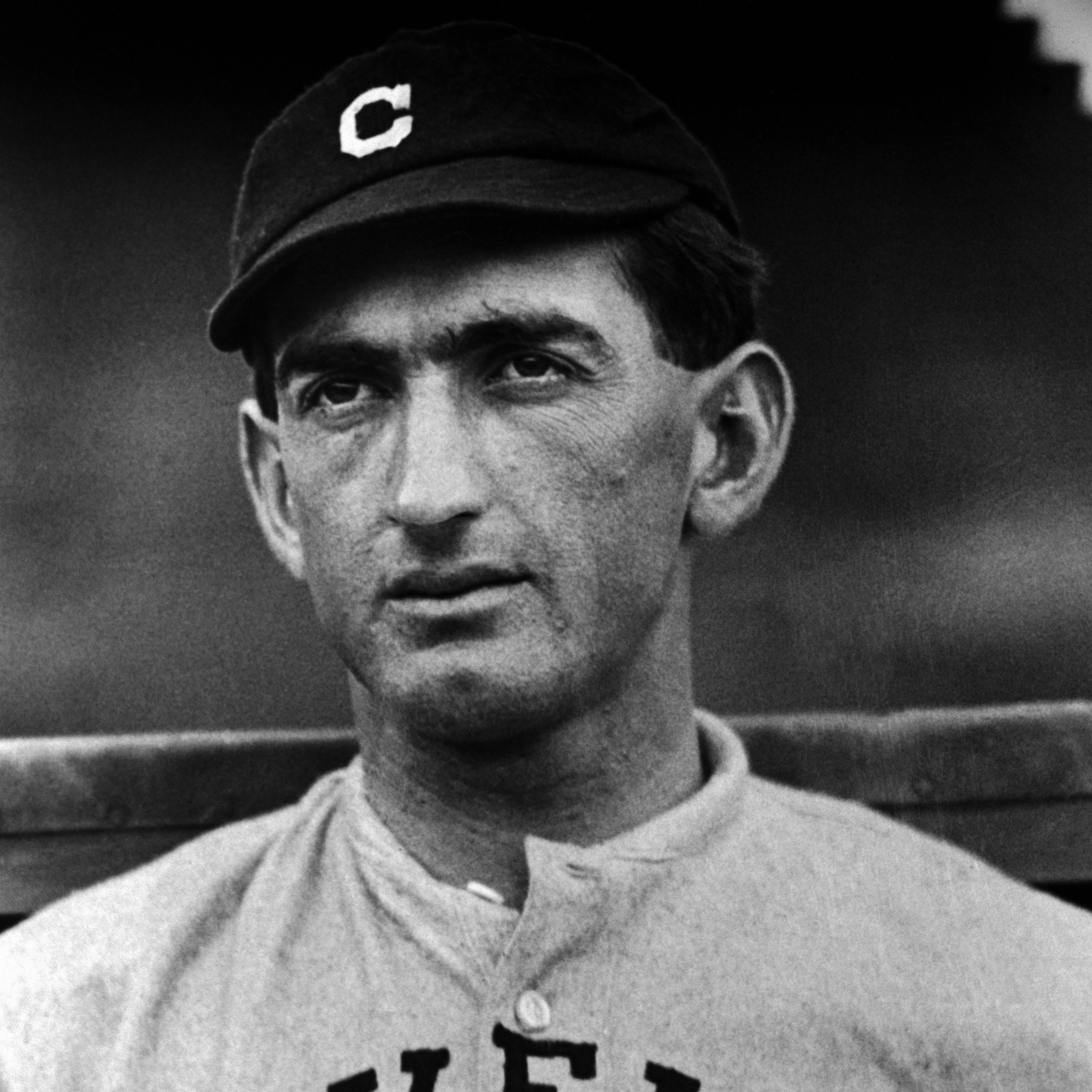
Major League Baseball, almost destroyed by a gambling scandal in 1919, with two of its greatest players, Shoeless Joe Jackson and Pete Rose (its all-time hit leader), banned from the game and exiled from the Hall of Fame for participating in baseball gambling (Jackson helped throw a World Series for gamblers; that’s him above. He was no Ray Liotta, was he?), is suddenly awash in new gambling scandals. How could this happen, you may ask? Easy. Once the Supreme Court opened the door to online gambling, all of the professional sports leaped into the money pit. Now online sports gambling outfits like DraftKings are the most ubiquitous sponsors of televised sports. In the middle of televised Red Sox games, the screen will show the odds on bets like “Will Rafael Devers hit a homerun?” David Ortiz, a lifetime Red Sox hero and icon, stars in commercials for DraftKings. The obvious message is that gambling on baseball is fun, virtuous, harmless, and…

For Major League Baseball, with its history, of all sports, to take this U-Turn was wildly irresponsible and perilous. How can the sport maintain the fan’s trust in the legitimacy of games played in an environment where billions are being wagered on them, openly and without any fear of corrupting the players?

Fay Vincent, the last real baseball commissioner (the first one was appointed because of the Black Sox scandal in 1919) told the Times, “The inevitability of corruption is triggered by the enormous amount of money that’s at stake. When you pour all this gambling money into baseball, or all the professional sports — or for that matter, even amateur sports — that amount of money is so staggering that eventually the players and I think, tragically, the umpires, the regulators, everybody is going to be tempted to see if they can get a million dollars.”

Vincent is an ethical man. The current “commissioner” (he’s the owners’ toady, just like Bud Selig, his predecessor), not so much. In a statement reacting to baseball this week banning one Major League Player for life for gambling on his own team and suspending four more for a year, Rob Manfred ludicrously said, “The strict enforcement of Major League Baseball’s rules and policies governing gambling conduct is a critical component of upholding our most important priority: protecting the integrity of our games for the fans. The longstanding prohibition against betting on Major League Baseball games by those in the sport has been a bedrock principle for over a century.”

Funny that after decades of no gambling scandals, baseball is suddenly drowning in them. What a coinkydink!

Continue reading

Ethics Quiz: The Forrest Fenn Treasure Hunt

This is rather old story, but it’s new to me, and of course none of the accounts, including a “48 Hours” episode, explored the ethics issue involved.

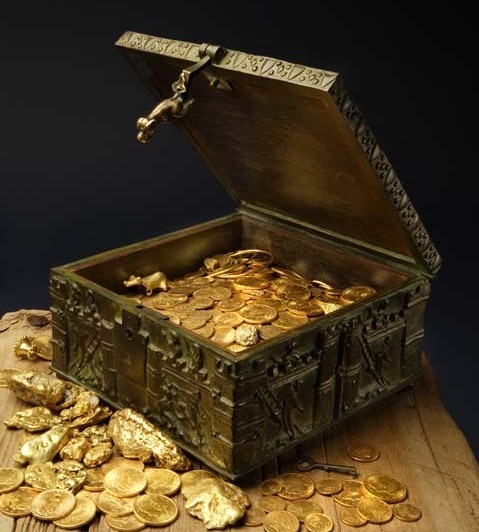
Forrest Fenn (August 22, 1930 – September 7, 2020) was a decorated pilot in the United States Air Force. After his retirement he ran the well-known Arrowsmith-Fenn Gallery, later the Fenn Gallery, in Santa Fe, New Mexico. It reportedly grossed around $6 million a year. After Fenn was diagnosed with likely terminal cancer in 1988, he began collecting gold coins and other valuable objects that he placed in a small, ornate box. He decided to hide the box in the wilderness, and to launch a treasure hunt. As his health improved and the terminal cancer diagnosis proved to be wrong, Fenn self-published “The Thrill of the Chase: A Memoir” in 2010. Along with various stories about his exploits, the book also revealed that he had hidden a treasure chest containing gold nuggets, rare coins and gems “in the mountains somewhere north of Santa Fe.” Fenn wrote a (really bad) poem in the chapter titled “Gold and More” that he said contained sufficient clues to allow a clever and dedicated treasure hunter to find the box, with the contents estimated to be worth between one and two million dollars.

The box was finally found in Wyoming in 2020, and shortly after that, Fenn died. His treasure hunt, however, had sent over a hundred thousand would-be Indiana Joneses of both sexes and varying skills into the mountains with Fenn’s doggerel in hand as a treasure map. Many became obsessed with the quest. Five men died in separate incidents looking for Fenn’s box, and several others nearly perished. After the first two fatalities, Fenn was implored to call off the hunt, but he showed no indication that he felt that he had any responsibility for the fatalities, saying in response that all outdoor activities come with some risk. He also insisted that the box “was not in a dangerous place.”

You can guess this question by now. Your Ethics Alarms Ethics Quiz of the Day is…

Was Fenn’s treasure hunt ethical, or was it reckless and irresponsible?

I know my answer, and here are three clues to what it is: “It’s a Mad, Mad, Mad, Mad World,””Rat Race,” and “attractive nuisance.”

From The Res Ipsa Loquitur Files…

I know, I know...this might have been staged. Maybe it was. Maybe it wasn’t staged, but just a single group of assholes after other trick-or-treaters used the communal candy basket as it was designed to be used. Maybe this video has no larger significance at all.

I hope it doesn’t.

But I suspect it does.

ADDED: I see that Ann Althouse also posted this video. Her focus is a bit different. She writes,

Why are we doing handouts anyway? To show what human beings are like? If you answer the door and dispense the handout personally, you can maintain a system of one portion per person, and you might even get a smile or a thank you. If you put out a big bowl of multiple portions because you don’t want to monitor the process and impose single portions, then people will serve their own interests and take all they want. You knew that. The kids who took it all also knew that if they didn’t take it all, the next group of kids would take it all. It’s a state of nature without supervision and enforcement. Don’t pretend you trusted people and you had some sort of admirable “hope” that now I’m supposed to feel bad got crushed. No, you lazy bastard. Answer the damned door next time. Or have the courage to turn off the porch light and huddle in a back room and celebrate the end of the holiday you no longer believe in.

Well, in the past, I have known people who did this (put out baskets of candy to be used with the honor system) not because they were lazy or didn’t want to participate in Halloween, but because they were not going to be home, or had mobility issues for one reason or another. Ann just assumes that the natural tendency is to act badly and just take it all. I don’t.

But she lives in uber-progressive Madison, Wisconsin, so there’s that…

And Yet Another Baseball Great Chooses Money Over His Team, Fans, Integrity and Honor…

Over the weekend, I got to watch (again) the nauseating spectacle of Detroit Tigers firstbaseman Miguel Cabrera disgracing his own legacy as one of the greatest players of all time. A guaranteed first ballot Hall of Famer with over 3,000 hits and more than 500 career homers, Cabrera is no longer even a passable performer at age 40, and hasn’t been since 2017. That year and every year since, Cabrera has been paid an average of $30 million a season for production that the Tigers could have gotten from a mediocre minor league journeyman playing for the Major League minimum salary. All weekend, the TV broadcasters were blathering on about what a wonderful human being “Miggy” is. If he were really wonderful, he would have retired as soon as he realized he was stealing his salary and hurting his team in the process.

Cabrera has graciously announced that this will be his final season, as if he had any choice in the matter. His long term contract is up: he’s squeezed over $200 million out of it without having a single season worthy of his reputation or his salary. He has one (1) home run this season, with less than a third of the schedule to go. The year he signed his contract, he hit 44.

But Cabrera isn’t the subject of this post; I already complained about him and other greedy, fading players here. There’s a worse offender in baseball now, believe it or not. The current miscreant is St. Louis starting pitcher Adam Wainwright, who had announced before this season that it would be his last. [Wainwright, by the way, has one of the more varied and interesting Ethics Alarms dossiers among pro athletes.] He is 41, and not only are 40+-year-old pitchers who still belong in the Major Leagues rarer than star sapphires, Wainwright’s 2022 season at 40 was not a harbinger of optimism, though he still was getting batters out, albeit not as he once had. But Adam Wainwright has pitched for the St. Louis Cardinals and only them for 17 years , winning just short of 200 games along the way. He is regarded as a hometown hero to Cardinal fans, who also wanted him aboard for one more campaign because they had reason to think their perennial play-off team had a real chance to get to the World Series again in 2023, and nothing is more valued on such teams as a grizzled old veteran who has been through the wars before.

It was a good theory, anyway. Unfortunately, Wainwright was done, through, cooked, out of pitches and excuses. This season his earned run average is almost 9 runs a game, which means he is pitching batting practice to the opposition. A starting pitcher without a long-term contract and with no reputation as a team legend is usually cut if he can’t keep his ERA below 6; under 4 runs a game is good, under 4.5 is considered acceptable. But 8.78, which is what Wainwright has delivered in 15 starts? A decent college pitcher could do that well, maybe a top high school pitcher too. And for this consistent failure, Adam Wainwright is being paid $17,500,000.

Continue reading

The Rest Of The Story: Manny’s Opt-Out (Corrected)

After a post and a Comment of the Day on San Diego Padres third baseman Manny Machado’s announcement that he would be opting out of his 10 year, 300 million dollar contract after next season to seek more money that he won’t even notice, it has been reported that Machado has agreed to a contract upgrade that will now pay him $35 million a year for eleven years.

Whew! Now he’ll finally be able to afford those custom-built, nuclear powered, gold-plated android models of the Major League Baseball Hall of Fame’s 342 members that he covets, and still have enough pin money to buy the Bolshoi Ballet.

So Manny’s announcement that he would opt out—he wasn’t ambiguous about it, he said that was a fact—was just a bargaining ploy. A lie. I said I detested this guy. I should have known.

When someone has tried such tactics on me, they learned that my response always is, “Fine, it’s settled then. Bye!” Eventually the word gets around, and nobody tries it any more. That’s what the Padres should have done. People keep using unethical tactics because their victims let them, and so they work.

Congratulations, Manny! You have your extra 5 million a year. May you choke on it.

Baseball Ethics Dunce: San Diego Padres Third Baseman Manny Machado


This isn’t so much about baseball ethics as values, and how our sports “heroes” corrupt ours.

I suppose I am obligated to confess that I detest Manny Machado. I haven’t watched him much since he moved to San Diego, but when he was with the Baltimore Orioles, he was one of the dirtiest players I’ve ever seen. He also wrecked the career of Dustin Pedroia, the star Red Sox second baseman whose values are the direct opposite of Machado’s, with an illegal slide.

Machado just announced that he plans on opting out of the remainder of his contract following the 2023 season, as the terms of his current deal allows. When Machado signed his current 10-year, $300 million agreement with San Diego ahead of the 2019 season, it was among the top three player contracts in MLB history. Now, however, 30 million dollars a year isn’t enough for Manny. You see, a few high-profile free agents have signed for more this off season, so this means, according to player agents’ Bizarro World logic, that Manny is being underpaid.

Continue reading

Iconic Movie Hero Ethics: The Humiliation Of Indiana Jones

One upon a time, Hollywood showed respect to its greatest movie heroes. They deserved it, after all. We never had to see what became of Rick Blaine as he battled the Nazis. We never had to watch Scarlet chase Rhett. Nobody made as watch the plucky Hickory High School basketball team try to hold on to its title the next year after its miracle triumph. Hollywood got greedy (greedier), though, as imaginations ran out and audiences looked elsewhere for their entertainment. And thus the sublime ending of “Rocky” (“There ain’t gonna be no rematch!” “Don’t want one!”) was eroded and superseded by endless inferior sequels. “Star Wars” ended with a jubilant celebration of victory over the Empire and the characters happy, safe, and young, but studio finances dictated that it all had to be diluted with inferior and derivative prequels and sequels, with audiences being tortured by aging husks of Leia, Luke and Han Solo, instead of allowing them to be preserved in our memories as immortal, like legends should.

Now it’s Indiana Jones’ turn. Spielberg and Lucas already set up the perfect farewell for Indy in the third of the original trilogy, flawed as it was. We saw him ride off with his father and Marcus Brody into the sunset after drinking from the Holy Grail, which should have conferred eternal youth. Perfect!

They couldn’t let it go, though, or the studio couldn’t, or Spielberg’s alimony, or something. So we had to watch, many years later, an over-the-hill Indy in a jumping-the-shark fourth film that George Lucas signaled would stretch out the franchise ad infinitum by symbolically passing The Hat on to Indiana’s newly discovered son, the then young and promising Shia LaBeouf.

Continue reading