Albert Pujols: Yes, He’s Disloyal, Greedy, and Confused.

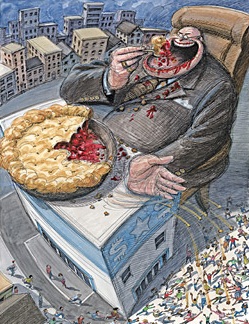
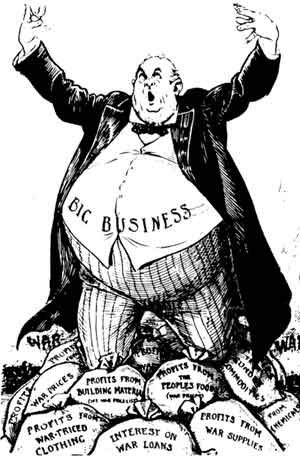
I'm sorry! This was supposed to be a picture of Albert Pujols, not King Midas. Well, six of one, half-dozen of the other...

Cardinal free agent first baseman Albert Pujols, generally regarded as the most talented baseball slugger alive, just jumped from his supposedly beloved St. Louis to the Los Angeles Angels because they offered him several more millions of dollars per year that he couldn’t possible spend if he tried than the Cardinals did. The attitude of most players, fans and sportswriters, not to mention the players’ union (naturally), is “Of course! Who wouldn’t?”

Who wouldn’t? A more ethical, less greedy, more thoughtful human being, that’s who.

The Angels won Pujols with an offer of $254 million dollars for ten years, making him the highest paid player on captivity. The Cardinals. on the other hand, whose fans had cheered him, embraced him and worshipped him, and which had established Pujols as one of the franchise’s icons fit to stand with Stan the Man Musial, Bob Gibson, Dizzy Dean and Lou Brock, had offered a measly $204 million for nine years, or about 23 million a year. The difference between the two offers is minimized, if not eliminated, by the cost of living disparity between the two locales: housing, for example, is about 250% more expensive in LA. Continue reading
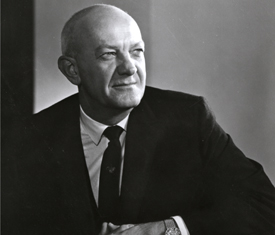
Now THIS Is Disloyalty…

Good ol' whatshisname. We'll never forget him.

…also ingratitude, venality, and crassness.

Baseball’s  Kansas City Royals are putting the name of their ball park, now Kauffman Staudium, up for corporate bidding. Soon the stadium that stood as a monument to the late Kansas City community leader Ewing Kauffmann, who owned the Royals in their very first season (1969), built the state-of-the-art home for them that is still a source of civic pride, and turned the team into a model franchise and perennial pennant contender in record time, will be named “Kansas City Masterpiece Stadium” or something else that makes it a giant billboard. Meanwhile, little will be left to remind future baseball fans and Kansas City residents of the life and dedication of the man who was responsible for the city having a major league team at all. Continue reading

Do the right thing? Naaaa.

Business executives regard this as a gross and unfair exaggeration. It's time for them to prove it.

Nabors Industries Ltd. (NBR), the world’s largest oil-drilling companies, will pay outgoing CEO Gene Isenberg $100 million in cash as a result of provisions in Isenberg’s employment agreement. Isenberg is 81, and has led Nabors since 1987.

Jeff Dietert, an analyst at Simmons & Co., an energy investment bank in Houston, wrote his clients yesterday that “We believe the compensation to Mr. Isenberg is excessive,” noting that handing over $100 million payment “for what we view as essentially retiring will be offensive to some.”

May be excessive? Offensive to some?

Here’s what I would hope would be going through Mr. Isenberg’s mind about now: Continue reading

Yes, I Am An Idiot. That Doesn’t Make It Ethical To Take Advantage of Me.

I just fell for an online marketing scam, and am considering putting my brain up for auction on eBay in the hopes that it may net me enough to buy the complete DVD set of “Police Academy”. Failing that, I plan on devoting the rest of my days to exacting my revenge on the supposedly honest companies that were willing participants in my disgrace.

They caught me in a weak moment, surfing the net, having just lost a winnable game of Spider Solitaire. A screen popped up with the words,

“Congratulations, ALEXANDRIA! You have been selected to receive a free Apple iPad, Smartphone, or a thousand dollars worth of merchandise for taking a brief survey! It will only take a few minutes.”

As it turned out, there were two instances of deceit and three outright lies in this message, and I had several clear warnings that this was likely the case. For one thing, I wasn’t born yesterday. For another, I know my name isn’t ALEXANDRIA.

Yet I went to the next screen.  Why? Curiosity, which killed the cat; avarice, because the idea of getting something for nothing was appealing. Amnesia, because I’ve seen these things before.  Cockiness, as I was certain I would be able to determine whether this was a scam or not without losing much time or anything else. And, of course, abject stupidity, because I am an idiot. Continue reading

Ethics Dunce: Parasole Resteraunts in Minneapolis

Back to the good old days!

Ah, nostalgia! It’s nice to see that some corporations have the respect for history and tradition to emulate, even in these difficult times, the robber baron mentality of America’s past.

The  Minneapolis company Parasole Restaurants, which operates a chain of popular eateries with names like Chino Latino, Good Earth, Il Gatto, Manny’s Steakhouse, Uptown Cafeteria and Sky Bar, accessed its inner capitalist pig and decided that the best way to offset an increase in the cost of doing business was….to steal a portion of its waiters’ tips.

Servers at Parasole restaurants received word last week that they’ll have to give up 2% of their credit card tips to their employer. The Parasol suits explained the move as being necessary due to the combination of rising credit card use by customers and higher fees from banks. Continue reading

Unethical Plaintiffs in the Case Of the Shortened Penis

Ronnie had it easy in "King's Row"---he just woke up missing his legs.

A Kentucky truck-driver, 64-year-old Phillip Seaton, went into surgery to remove his inflamed foreskin in what began as a simple circumcision.  Dr. John Patterson, the surgeon, began the procedure and saw that Seaton’s penis was riddled with cancer. He amputated more than just the foreskin, and Seaton awoke one full inch shorter than when he arrived. And Extenz wasn’t going to help.

He and his short-changed wife sued Patterson for malpractice, arguing that he had been mutilated and unmanned without his consent, and that Patterson should have performed only the circumcision, sewn him up, and consulted with the truck-driver and his wife regarding their options.

Clever law suit. We can’t blame the lawyer who took it on: a sawed-off penis is a good bet to get jury sympathy. All that is required for a lawsuit to be ethical from a lawyer’s perspective is for there to be a good-faith and reasonable belief that the suit could prevail under the law. This one could have. Generally it’s a good idea, and only polite, to ask before cutting off a piece of someone’s penis. I know it’s the rule in our house. Continue reading

Ethical Quote of the Week: Angels Pitcher Jered Weaver

Is enough ever enough?

“How much more do you need? Could have got more, whatever. Who cares? If $85 million is not enough to take care of my family and generations to come, then I’m pretty stupid.”

—Los Angeles Angels pitching ace Jered Weaver,after signing a 5 year, $85 million contract to stay with Angels.

Weaver hardly signed for chicken feed, but his statement should be heeded by greedy athletes and corporate executives alike. After next year, he probably could have demanded another two or three million dollars a year or more from the highest bidder for his services, in exchange for leaving a team and a city where he is appreciated and comfortable, putting additional pressure on himself, and using funds that otherwise could pay the salaries of many lower paid club workers who might end up with no jobs at all. Continue reading

A Batboy Sells Out His Heroes

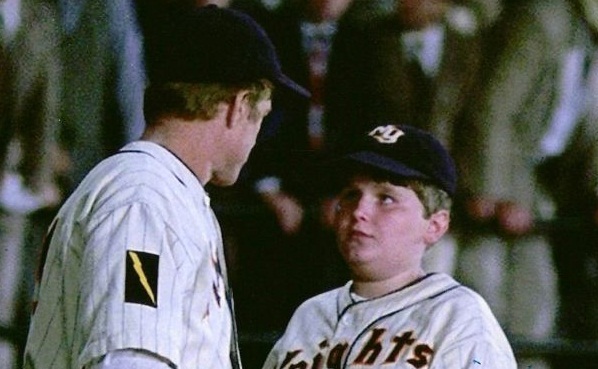
Don't trust him, Roy...he's doing research for a book!

Luis Castillo became a batboy for the New York Yankees at the age of 15, and for eight baseball seasons shared the clubhouse with his hometown heroes. Now he’s cashing in, having written a tell-all memoir of his experiences  that dishes on Derek Jeter, Alex Rodriguez, Roger Clemens and others, all of whom trusted him to be fair, respectful, and discreet.

The recurrent theme from the media’s commentators, which I heard repeated on CNN this morning as it hosted Castillo in his book-hawking efforts (in this case he told an embarrassing anecdote about Yankee catcher Jose Posada) is that “Castillo is able to divulge Yankee secrets in his new memoir because he was part of the last group of batboys who did not have to sign confidentiality agreements.”

This is accurate, but wrong. It is also typical of what passed today as journalistic ethics. Continue reading

We Know Enough about Ethics Already

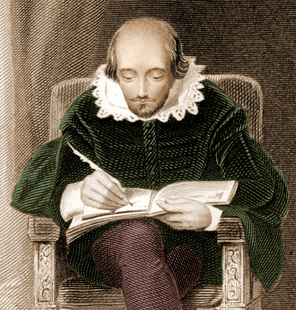
If Shakespeare understood ethics so well, why are we still pretending to be ignorant about it?

I awoke to read about a breathlessly announced new work on ethics, a book called “Blind Spots: Why We Fail to do What’s Right and What to do About it.” Business Professor  Ann Tenbrunsel and co-author Max Bazerman write that we are unaware of the “ethical blind spots” that keep us from recognizing how we engage in unethical actions. The book cites tests and new research showing behavior that the authors call “ethical fading” and “motivated blindness.” They examine such case studies as Enron and the Madoff scam to show how people “believe they will behave ethically in a given situation, but they don’t. Then they believe they behaved ethically when they didn’t. It’s no surprise, then, that most individuals erroneously believe they are more ethical than the majority of their peers.”

Stop the presses! Conflicts of interest make us ignore core values and act in our own best interests, and we rationalize our actions to avoid confronting the true nature of our conduct!

Oops! I just stated the entire thesis of the book. I’m sorry, Ann! Apologies, Max! Continue reading

Comment of the Day: “New Jersey Lottery Ethics…”

Tom Fuller, who can be perceptive when he isn’t peppering us with the quotations of others (all right, even sometimes when he is) makes a useful distinction in the Comment of the Day, on today’s post about the New Jersey Lottery:

“Don’t get me wrong. I’m no fan of government-sponsored lotteries, and I share all of the concerns about them mentioned above. But a facile slogan like “lotteries are a tax on people who don’t understand math” is, like most facile slogans, too simplistic a way of making the arguments. There are plenty of psychological and economic reasons why even people who understand the math buy lottery tickets that are, quite literally, bad bets. There is lots of research on this; one of the better articles is now 21 years old, but is still cited as a good, brief, and comprehensible overview.”  [You can read it here.]

“Every gamble is a losing bet in the long run; otherwise it wouldn’t be a gamble. The trouble with state-run lotteries is not so much that they exploit those who “don’t get it”; they exploit anyone, even a mathematical genius, who is drawn towards what society generally regards as undesirable actities, thereby sending the same mixed messages as taxes on tobacco and alcohol.”