Comment of the Day: “New Jersey Lottery Ethics…”

Tom Fuller, who can be perceptive when he isn’t peppering us with the quotations of others (all right, even sometimes when he is) makes a useful distinction in the Comment of the Day, on today’s post about the New Jersey Lottery:

“Don’t get me wrong. I’m no fan of government-sponsored lotteries, and I share all of the concerns about them mentioned above. But a facile slogan like “lotteries are a tax on people who don’t understand math” is, like most facile slogans, too simplistic a way of making the arguments. There are plenty of psychological and economic reasons why even people who understand the math buy lottery tickets that are, quite literally, bad bets. There is lots of research on this; one of the better articles is now 21 years old, but is still cited as a good, brief, and comprehensible overview.”  [You can read it here.]

“Every gamble is a losing bet in the long run; otherwise it wouldn’t be a gamble. The trouble with state-run lotteries is not so much that they exploit those who “don’t get it”; they exploit anyone, even a mathematical genius, who is drawn towards what society generally regards as undesirable actities, thereby sending the same mixed messages as taxes on tobacco and alcohol.”


New Jersey Lottery Ethics…Well, Not Exactly

New Jersey has taken the live drawings for the state lottery off of television and placed it on the internet. Many regular lottery players are upset about this, it seems.

“I like to see them pull it so they don’t have the chance to switch it,” said one eighty-year-old player. “Older people don’t trust the system. We know what happens.” She doesn’t own a computer, nor do her friends, and they all say they won’t play the lottery again until they can watch the drawings on their televisions. Indeed, the New Jersey Lottery is getting many such complaints, and expected them.

Why?

Because the people most likely to play the lottery are poor, badly educated, ill-informed, dumb, or all of the above, that’s why. Continue reading →

Fick Sighting in Prince George’s County

Leslie Johnson, fick.

Ethics Alarms recently coined the useful term fick to describe the especially shameless individual who violates society’s ethical norms openly, publicly and flagrantly, without remorse or apology. It takes a certain kind of anti-social arrogance to be a true fick, with the gold standard established by Michigan lottery winner Leroy Fick, a millionaire who happily continues to collect food stamps because of a statutory loophole despite howls of indignation from his neighbors in one of the most fiscally-challenged states in the nation.  Other ficks who have come to light include Hugh Heffner despicable ex-fiance Crystal Harris, who plotted to humiliate him at the altar to launch a reality show. Of course, there is  longstanding Octo-fick Nadya Suleman, and celebrity fick Charlie Sheen.

Now lucky Prince George’s County in Maryland has a bona fide fick of its own.  Continue reading →

Ethics Dunce: Bernie Madoff, Now and Forever

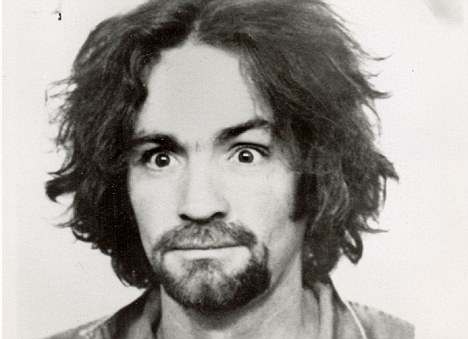
Would I rather have Charlie or Bernie on the loose? Tough call...

Bernie Madoff, reports the New York Times, is feeling mistreated.

Two years into his 150 year sentence for defrauding hundreds of investors, destroying dozens of charities, and crushing the financial security of people who trusted him with their future, Madoff thinks it was unfair for Judge Denny Chin, who sentenced him, to make certain that he would die in prison. Accusing Chin of having “zero understanding of the industry”—meaning what, I wonder; that it was normal for the investment industry to set out to ruin people?—-and saying that he was being made a scapegoat while Wall Street firms and government officials “walk away free,” Madoff told reporter Ben Weiser, “Remember, they caused the recession, not me.”

Yes, and the Crusades started the chain of events that led to 9-11, and Teddy Roosevelt’s Asian policies lit the fuse for Pearl Harbor. Continue reading →

How the Lack of Ethics Cripples Democracy, Reason #2: Corporate Executive Greed


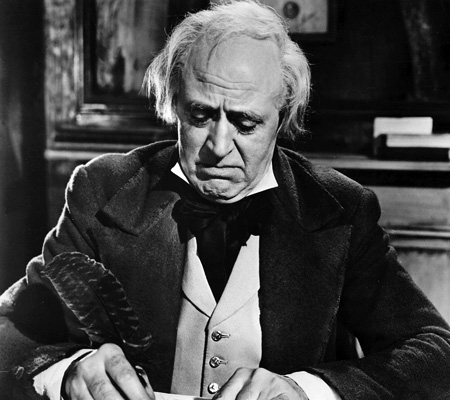
"Let's see...that's one schilling for Cratchet, 280 for me..."

The average compensation for chief executives of the 500 largest U.S. corporations is going up again.

According to Governance Metrics International, the average compensation for the CEOs, including salary, bonus and benefits plus the exercise of stock options, the vesting of stock grants and retirement benefits, was just under $12 million in 2010, up 18 percent from 2009. As Washington Post business writer Steve Pearlstein observes in his column this week, if you believe this is justified by market forces and common sense, “then you must also believe two things: First, that none of these guys would do the same job for a nickel less. Second, that the value of the chief executive went up 18 percent last year while the value of average workers in their companies changed very little.”  “And,” concludes Pearlstein, “if you believe that, you are a fool and an ideal candidate for an open seat on an S&P company board of directors.” Continue reading →

Trapped in “The Ethics Zone”

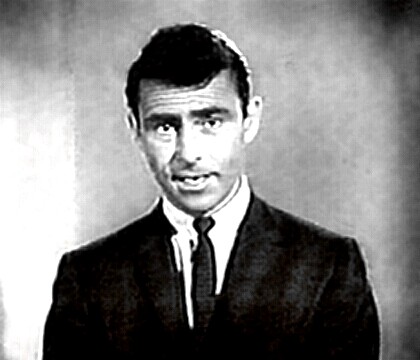
Rod Serling is your guest host for this episode.

We are traveling in a realm beyond time and space, to a dimension where right and wrong are vague and indistinguishable. Witness the strange case of Roy Thomas, a Houston man trapped in a hostile maelstrom of illogical laws and imaginary daughters. He is a victim of an ethics deficit, nourished by greed and desperation, the kind that sometimes lurks in the dark corners of….

The Ethics Zone!

Submitted for your consideration, the saga of Roy Thomas, who has been forced to pay child support for a daughter he supposedly fathered  more than two decades ago, though he always maintained that the child wasn’t his. Continue reading →

Comment of the Day: “Ethics Hero and Dunce: A Tale of Two Windfalls”

In a classic example of  “Be careful what you wish for,” I had been thinking about how none of the recent comments, excellent though many were, quite struck the “Comment of the Day” gong for me, and then, like the answer granted by a perverse genie, this turns up. A reader named Lawrence Reliford argues that Stephen McDow had every right to spend the money erroneously deposited in his bank account, and in the process evokes—let’s see—six rationalizations, three misconceptions, two bad analogies, one wonderful Malaprop and a partridge in a pear tree.  (I may have miscounted; this can also be an ethics quiz.) On a more depressing note, I am quite certain that a larger portion of the population than any of us would be comfortable admitting agree with Lawrence. You can find my response to his comment with the original post, here...but please feel free to write your own. Lawrence needs all the guidance he can get. Here is The Comment of the Day: Continue reading →

Ethics Hero and Dunce: A Tale of Two Windfalls


You can trust Robert Adams. Well, that's ONE....

Stephen Reginald McDow of Laguna Beach, California found an unexpected $110,000 federal tax refund in his bank account. He knew it wasn’t his; he also had to realize it was an error. But what the heck…he took a shot. McDow spent the money on foreclosure debts and  paying off his student and car loans.

He’s been charged with one felony count of theft of lost property, with a sentencing enhancement for taking property over $65,000, and faces a maximum sentence of four years in state prison.

There is a lot of sympathy for McDow; you can see man in the street interviews on cable where people say things like, “Hey, are you kidding me? If I found all that money in my bank account, I’d spend it too! Anyway, it isn’t his fault!” A lot of people apparently think this way, which means they are ethically inert. The issue isn’t who was responsible for the money landing in the wrong account (the rightful recipient of the refund had given the IRS the wrong bank account number), but that someone had lost money that rightfully belonged to her, not McDow, and it became his duty to fix the problem.Instead, he spent it, and crossed his fingers. Continue reading →

Today’s Ethics Quiz: How Do You React To Congressional Insider Trading?


Gekko for Congress. He has what It takes...Insider trading experience!

An  study in the journal Business and Politics last week reported that the investments of members of the House of Representatives outperformed those of the average investor by 55 basis points per month, or 6 percent annually. It concluded that lawmakers are taking advantage of inside information to make significant profits, engaging in conduct that would send a Gordon Gekko or Martha Stewart to jail.

“We find strong evidence that members of the House have some type of non-public information which they use for personal gain,” the four researchers who authored  “Abnormal Returns From the Common Stock Investments of Members of the U.S. House of Representatives” wrote. Continue reading →

The Indescribable Leroy Fick

Fick, n.: "One who shamelessly and openly violates cultural norms of fairness and decency out of selfish motives"

If Ethics Alarms hadn’t awarded Donald Trump the Jerk of the Year Award, would Leroy Fick deserve it instead?

If Keith Olbermann was still giving out his “Worst Person ” titles, would Leroy Fick retire the category?

What is the right term for someone as shamelessly self-centered, and greedy as Leroy Fick?  “Bounder” is too dignified. “Creep” is too mild. “Bum’ is too sympathic. “Asshole’ is too generic. I’ve been searching all night; there isn’t a word in existence that does him justice.

Leroy Fick is a 59-year-old Auburn, Michigan man who won $2 million in a state lottery last June. Nevertheless, he is still living on food stamps, because eligibility for food stamps is based on gross income,  and  lottery winnings  don’t count as income. As long as Fick’s gross income stays below the eligibility requirement for food stamps, he can legally qualify for them, and despite the fact that  he knows they are only meant to help support low-income families, and despite the fact that they are paid for by taxpayers, and despite the fact that Michigan, like most states, is swimming in red ink, Leroy Fick intends to keep letting the state help feed him just as if he was destitute.

“If you’re going to try to make me feel bad, you’re not going to do it,” Fick told WNEM-TV in Saginaw on Monday. Naturally, Fick has a lawyer whose task it is to excuse his client’s astoundingly irresponsible conduct. He says that Fick “has done nothing wrong. It’s the system that needs (to be) changed.” Continue reading →