The Chris Davis Saga: How Much Money Is “Enough”?

Chris Davis is under there somewhere...

Chris Davis is under there somewhere…

I have too many political issues on the runway, and I’m about to be buried in snow. This seems a perfect time to reflect on Chris Davis, the slugging Baltimore Orioles first baseman who just re-signed with the team in a seven-year, $161 million deal. Yes, he’s a baseball player, but the ethics issue here is not confined to baseball, or even professional sports.

Two weeks ago, it looked as if Davis and the Orioles were at an impasse. The team had, we were told, offered a take-it-or-leave-it 150 million dollar package, and Davis and his agent had turned it down. Davis’s manager, Buck Showalter, told the press that he had asked Davis, who by all accounts loves playing in Baltimore,”How much is enough?”:  “I asked Chris during the season, ‘Chris, when you walk into a Target store, can you buy anything you want. So, how much is enough?'”

Sportswriters, not being reflective sorts,  even the smarter ones, who are always taking the players union’s position that the more money a player can squeeze out of fat cat owners the better, jumped on Showalter. Said CBS writer David Brown, “Showalter trying to shame him into taking less — so that ownership can keep more — is shameful in itself. Why isn’t Showalter asking Angelos ‘ How much is enough?'”*

Showalter, who is one of the most intelligent and perceptive people in the game, was not trying to shame Davis. He was trying to get him to think; he was trying to impart some wisdom…and some ethics. Continue reading

Toward An Ethical Lottery

Powerball

Powerball, like all government-sponsored lotteries, is unethical in every way except that it is not fixed, at least as far as we know. The excitement over lotteries is also depressing. The whole scenario is like something out of a movie about a dystopian culture in which only a lucky draw can rescue citizens from despair and failure—this, in a society of unique personal freedom and opportunities for success. The worst aspect of lotteries—arguably, since there are so many bad things about them—is that they are cruel cheats. As often as not, indeed more often than not, winning a jackpot just provides conclusive proof of why the individual needed a lottery to achieve even temporary affluence. The poor decision-making skills, inadequate education and self-destructive tendencies of many of these winners lead to disaster and  financial distress incredibly quickly; many have lost all of their winnings within five years or less,.

It doesn’t have to be this way. There are people, many of them, who have the skills, ideas, talents and character to achieve great things for themselves and society if they had a little help, like some spare time and extra cash. Some of these people achieve a great deal without the time or cash, but might do more good for society with some help.

I would like to see a merit, ambition and potential-based “lottery,” which individuals enter with an explanation of their aspirations and some valid support for their ability to achieve them. Have the entrance fee reasonable, say, twenty bucks, and allow nominations to be submitted by others for a lesser amount, say, ten. Wait until the pool reaches an appropriate size, like 20 million dollars, and have a selection committee choose finalists to interview. In the end, a group of  worthy candidates are awarded a million dollars (or more, or less—I’m not designing details here) to see what they do with it. There will be no further strings attached.

Naturally there will be frauds and failures; it will be the job of the selection process to try to sniff out and avoid them, but some duds will slip through. Never mind. This would still be a “lottery” that has a fighting chance of benefiting society rather than a lucky few who spent money on an upscale, state-promoted version of the numbers game they should have been investing in a college fund for their kids or in a degree for themselves.

It would have a chance of making life a little better, rather than worse, which is what the current “games” do.

An Unethical Heart-Warming Christmas Story…Dumb, Too

clara3

The headline:

“Mom did porn to buy son’s Christmas presents”

The story, as told by the New York Post:

A single mom has been more naughty than nice this year — but all in the spirit of Christmas.

Megan Clara spent the last year starring in porn movies so she could afford everything on her 5-year-old son Ashton’s Christmas list. The 20-year-old UK resident says she was devastated last holiday season when Ashton complained he didn’t have the same expensive presents as his friends. Making nearly $120 a week, she was only able to buy an Etch A Sketch, cuddly toys and new clothes
“Last Christmas I could barely scrape any money together, it was really tough and I couldn’t help but worry Ashton was going to be left out and disappointed” the mom from Portsmouth, England, told Caters News Agency.

After seeing an old friend “stripping off,” Clara got in touch with her friend’s photographer. The rest, she says, is history.

“My job’s amazing, I love being in front of the camera,” she said. “My idol is Katie Price, I thought if she can make money by glamor modeling it was worth me giving it a go too – I’m in awe of her.”

The young mom now gets paid $743 per scene and has spent almost $2,200 on her son this Christmas.

“Ashton has wanted a bike for over three years and I’ve finally been able to make his dream come true. It’s an amazing feeling. The only downside is that he now bribes me into buying him toys for being well-behaved,” she said.

The adult film star already received backlash about her chosen profession, but says that “some people are just jealous.”

“I know not everyone agrees with the adult film industry but I’m a great mum, why should it matter what my occupation is,” she said. “I love the excitement and get a rush. Plus it pays well too.”…“This year has been a complete roller coaster and a whirlwind, there’s been ups and downs but now I’ve learned to ignore what other people think.

Here’s what I think, whether Clara cares or not: There is so much wrong with this story that it qualified as a Christmas Kaboom, but my head, in the spirit of Christmas, didn’t want to explode all over the tree. Continue reading

Pop Ethics: The Drifters And Musical Self-Plagiarism

Does the song “Sand in My Shoes” sound familiar? It should: it’s an embarrassing 1964 rip-off by the Drifters of the Drifters, written and recorded immediately after their previous song, 1963’s “Under the Boardwalk,” was a big hit. Here, notice the resemblance?

Of course you do; that was the idea. Continue reading

Update On “The Worst Aunt Ever” Debate

Auntie Maim and Nephew Maimer...

Auntie Maim and Nephew Maimer…

Remember the Ethics Alarms post about the favorite aunt who sued her 12-year old nephew for damages based on her injury when he jumped into her arms at his birthday party when he was 8? Remember the indignant plaintiffs lawyer who couldn’t get his mind around the fact that normal people don’t (ande shouldn’t) always see right and wrong like lawyers do, or that “it’s done all the time” (that is, The Golden Rationalization, #1 on the Rationalizations list, “Everybody does it”) and “there are worse lawsuits” ( or the worst of all rationalizations, #22, “Comparative Virtue” or “Its not the worst thing”) are not sufficient ethical defenses of a woman who voluntarily traumatizes a child who trusts her and who just lost his mother?

The Weekly Standard looks at the episode from some different angles, and writer Charlotte Allen does an excellent job providing a balanced analysis of the case (which I am now using in my ethics seminars to explain to lawyers how legal ethics alone is often not enough to make lawyers ethical). I am awash with regret that I didn’t think of the gag  “Auntie Maim” in the original post, which admittedly went a bit overboard in its condemnation as it was. Mostly, however, I am gratified that I was quoted in the piece after a well-handled interview with Charlotte, and indeed that she used my perspective to sum up the significance of the episode.

You can read it all here.

Ethics Musings I : The Dark Side Of Personal Injury Lawyers

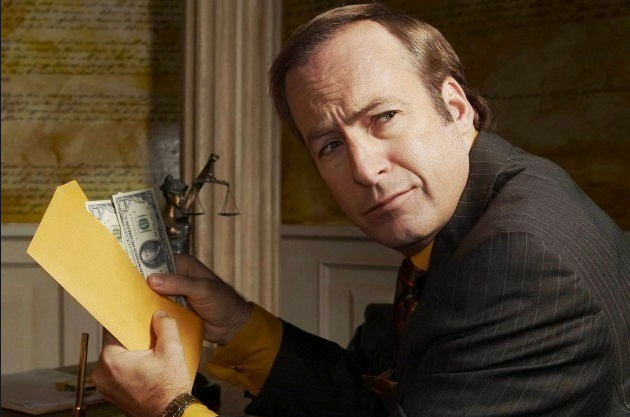
better-call-saul

I’ve been reflecting, since yesterday, on the bizarrely angry and intellectually dishonest protests registered here and on his own blog by trial lawyer Eric Turkewitz regarding the aunt who sued her 12-year-old nephew. His arguments, if you can call them that, consisted of constantly shifting the issue from ethics (what the aunt should have done) to law (what the aunt had a legal right to do), denying the core problem (Why would anyone assume that a child is harmed by dragging him into court, subjecting him to examination in front of strangers, and focusing on him as a wrongdoer and responsible for his aunt’s alleges misery, all mandated by the aunt who supposedly loves him?), and appealing to a dizzying list of rationalization and fallacies. He then made his exit by accusing me, a lawyer, of “knowing nothing about the law” (I made no assertions about the law at all—this is not a legal issue) making everyone stupid, and being a narcissist, a full-bore ad hominem attack ending in an ominous “May God have mercy on your soul!” Why would he act like that?

The reason, I realize, is that my posts challenge the basic belief system of the plaintiff’s bar, which I know very, very well having worked in an executive position and run such diverse programs as the research data base, conventions, sections, litigation groups and more over seven years with the Association of Trial Lawyers of America. Now ATLA is called “The American Association for Justice,” a name chosen purposefully to disguise the fact that it is a plaintiff’s lawyer’s lobby by keeping “trial lawyers” out of the name because it had a negative response in marketing studies. (I kid you not.)

Trial lawyers have done a lot of good and important things and continue to, but the profession is corrupting. There is a lot of money to be made, and ATLA–excuse me, AAJ, is devoted to eliminating any limits on their members’ ability to sue anyone for any amount, no matter what harm it does to the economy, the nation, the cost of health care, the bonds of trust in society, personal liberty, or public respect for the civil justice system. Individually, members of AAJ are among the top donors to the Democratic Party, in part to make sure that they can block all Republican efforts to limit jury awards, spurious lawsuits, and damages that have to be paid by negligent corporations when they destroy lives through shoddy products, conspiracies, and other conduct. The other reason is that Democrats support the redistribution of wealth, and trial lawyers profit by it.

In the matter of keeping corporations accountable, the AAJ is, as they will constantly remind us, on the side of the angels. But like other interest groups (the NRA, the ACLU, NOW, and may more) that stake out  extreme, self-serving and unethical positions in defense of legitimate rights, trial lawyers often feel that they must take the position that every injury and misfortune deserves compensation by someone else. Eventually, they believe it. Justice is taken out of the equation for all but the plaintiffs bar’s clients. Justice means that someone else is always at fault. Continue reading

My Reply To Eric Turkewitz’s Criticism Regarding “The Worst Aunt Ever”

This guy would have given The Bad Aunt the right advice...

This guy would have given The Bad Aunt the right advice…

Eric Turkewitz is a New York trial attorney, by all accounts a terrific lawyer, by the evidence of his writing an ethical and astute one, in our brief encounters a very nice guy, and the proprietor of “The New York Personal Injury Law Blog.” In a recent post, he defends the decision of Jennifer Connell to sue her young nephew for a four-year old injury she received when he hugged her too enthusiastically at her birthday party. He notes, correctly, that the decision to sue was based on the client accepting a “bad call” by her lawyer. He also includes a lot of information not mentioned in the early posts on the matter, including mine. Still, he defends Connell. He also specifically criticizes my post. Eric writes,

And this is from Jack Marshall, who says he actually teaches ethics and has a blog called Ethics Alarms (coded “no follow“):

“What’s going on is that Aunt Jennifer is pure hellspawn, a mysteriously animated pile of human excrement that embodies the worst of humanity.”

This is what happens when people elect to post stuff on the web based on an initial news report that was, shall we say, very selective on what it chose to report. This site is getting quite a bit of traffic, most likely from many who never knew it existed. So let me answer a question some of you may have: Yes, I know what it’s like to be on the receiving end of lawsuits, and they weren’t nearly as benign as this run-of-the-mill kind: On Suing and Being Sued.

Yes, I “actually teach ethics,” and I could, in fact, teach Eric some things that he would find useful and enlightening. I’m not going to get in a pissing match with him, in part because, as I learned from another tiff four years ago (in which I was wrong, and duly apologized), he has some very, very nasty pals, and I don’t want to throw blood in the water. This is, however, an excellent example of how lawyers often end up seeing the world, and in fact I may use his post, unattributed, in seminars to show where legal ethics and ethics diverge. It is wise for lawyers to be atuned to both.

Here was the response I made to Eric on his blog: Continue reading

The Worst Aunt Ever

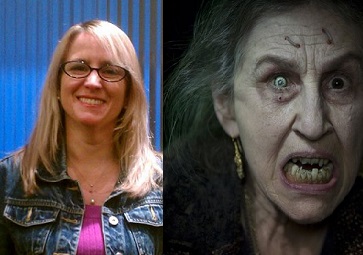
(L) Auntie Jenn in her "Loving Aunt" disguise, and (R), my best guess at what she looks like without it...

(L) Auntie Jenn in her “Loving Aunt” disguise, and (R), my best guess at what she looks like without it…

[ WARNING: This story may make your head explode. I’m not sure why mine didn’t; it may because there’s nothing left to blow.]

Jennifer Connell, a 54-year-old human resources manager in Manhattan, is suing her 12-year old nephew, Sean Tarala, in Connecticut for $127,000 in damages for an accident that occurred at his 8th birthday party.

On March 18, 2011, Connell arrived at the Tarala home  to attend Sean’s birthday party. She was greeted with the sight of the excited kid riding his major gift, a red bicycle, around the the yard.  When he spotted Aunt Jennifer, he jumped off his new bike and ran toward her, shouting, “Auntie Jen! Auntie Jen!”

Connell testified that “all of a sudden he was there in the air, I had to catch him and we tumbled onto the ground. I remember him shouting, ‘Auntie Jen I love you,’ and there he was flying at me.” Connell said she her wrist was hurt, but she didn’t mention it because “It was his birthday party and I didn’t want to upset him.” Now, however, though he has always been “very loving, sensitive,” toward her, Connell believes he should be held accountable for her injury. Continue reading

Unethical App Of The Month: Peeple

The co-founders of Peeple. I don't care which is which.

The co-founders of Peeple. I don’t care which is which.

(I’m officially adding this as an Ethics Alarms category. I don’t know why it too so long.)

The Washington Post reports that a greedy woman who never heard of the Golden Rule will be launching Peeple, “essentially Yelp for humans,” sometime in November:

“…you will be able to assign reviews and one- to five-star ratings to everyone you know: your exes, your co-workers, the old guy who lives next door. You can’t opt out — once someone puts your name in the Peeple system, it’s there unless you violate the site’s terms of service. And you can’t delete bad or biased reviews — that would defeat the whole purpose.”

Which is what, exactly? To pre-bias all future relationships by making sure they are colored by someone else’s judgment, emotions, or prejudices? Not only should no one want to be rated on such a service, no one should want to use it if they have a brain in their head. (No one should want to use Yelp, either.) Why should my standards, which are unique to me, be suppressed by the standards of other people I don’t know or respect? My ability to trust new acquaintances will be undermined by people I have no reason to trust, since a) I won’t know them and b) I won’t trust anyone so unethical as to smear someone like this.

As for positive reviews, what’s to stop someone from arranging to give positive feedback on a friend in exchange for a return rave? Nothing. The app will pave the way for sociopaths and con artists. Imagine what Bill Clinton’s reviews would look like.

Julia Cordray, one of the app’s founders, tells the Post, “People do so much research when they buy a car or make those kinds of decisions Why not do the same kind of research on other aspects of your life?”

Because it isn’t valid research, you moron. It is hearsay and opinion, neither of which would be admissible in court, for excellent reasons: they are unreliable.

The Post:

“A bubbly, no-holds-barred trendy lady” with a marketing degree and two recruiting companies”—“Trendy lady”? Great, I hate her already—“Cordray sees no reason you wouldn’t want to ‘showcase your character’ online”—I already showcase my character online, thanks. It’s called Ethics Alarms, but the difference is that I really do know myself, and I trust the standards of the reviewer implicitly. They are very close to my own…

“Co-founder Nicole McCullough comes at the app from a different angle: As a mother of two in an era when people don’t always know their neighbors, she wanted something to help her decide whom to trust with her kids.”

There we go. With any luck, there will be a few good, whopping law suits for defamation that will either reduce the user base of this App From Hell to four pranksters and a few mean and bored seniors with grudges, or drive the Trendy Lady to another scheme to make the world a little more unpleasant. Continue reading

Robert Samuelson And Social Security’s Pro-Rich Bias

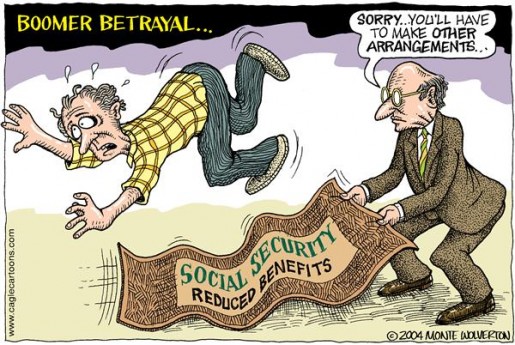
A typical nuanced view of the problem...

                                    A typical nuanced view of the problem…

My father was in the private pension business before he died, and the idiocy of how Social Security was set up drove him to distraction. I’m pretty sure he voted for Ross Perot in 1992 because Perot argued that it made no sense not to means test the program. I’m tempted to take a copy of Robert J. Samuelson’s op-ed last week to Arlington National Cemetery and leave it on his gravestone.

Samuelson is reliably one of the most rational, thoughtful and probing of all the op-ed columnists. Last week he wrote about how the life-expectancy gap between the wealthier segments of U.S. society and the poorer ones made Social Security as it is currently constituted a significant contributor to the income gap that progressives desperately want to make a key issue in the 2016 election, because dividing the nation by class (and race, ethnicity, religion and gender) is a big part of their playbook.

He wrote…

“The figures come from a new report by the National Academies of Sciences, Engineering and Medicine, which estimated life expectancies for workers born in 1930 (now 85) and 1960 (now 55) at age 50. The findings are stark. For the richest fifth of men, there was a 7.1-year increase in life expectancy, from 81.7 for those born in 1930 to 88.8 years for those born in 1960. Meanwhile, for the poorest fifth of men, life expectancy fell slightly, from 76.6 years for those born in 1930 to 76.1 for those born in 1960. The changes for the remaining men also parallel income: For the second richest fifth, the increase was 8 years to 87.8 years; for the third richest, 5.3 years to 83.4 years; and for the fourth richest, 1.1 years to 78.3 years.”

Nobody should be surprised that wealth equals health. It is difficult to pinpoint why the gap is so large, but should we have to? It seems intuitively obvious. Many  disadvantages–race, upbringing, family stability, good roles models, education, character, intelligence, opportunities, culture, neighborhoods—that undermine quality of life simultaneously or in combination with each other handicap earning ability  and health before we even get to the question of medical care.

Samuelson goes on… Continue reading