Morning Ethics Warm-Up: 6/16/17

1. It looks like Bill Cosby is going to be acquitted, and probably rightly so, though probably for the wrong reason: bias. The jury is deadlocked, and I’d bet my head that one or more hold-outs just can’t accept the fact that that nice Cliff Huxtable would do those horrible things unless the victim consented somehow. Cheat on his wife. maybe. But not that.

Celebrity defendants whose public images are benign begin criminal trials with automatic unreasonable doubt built-in; this is part of the reason O.J. and Robert Blake (“Baretta”) avoided murder convictions. Celebrities with less sterling reputations are not so fortunate: had Bill Cosby been the one who shot a woman he barely knew at his home under strange circumstances, he would have probably been acquitted. Unfortunately for Phil Spector, the pop record producer had a well-established reputation for being nuts. The reasons Cosby can be acquitted for just reasons is that the victim is on record calling and chatting with him dozens of times after she was drugged and sexually assaulted, and because only one of the 50 or so Cosby victims was allowed to testify to show a pattern of behavior. The standard of  proven  guilt beyond a reasonable doubt is intentionally difficult to meet. There is no doubt whatsoever in my mind that Cosby is guilty, and his eventual acquittal won’t change my certainty. Nonetheless, those attacking the verdict and the jurors will be wrong, just as they were with O.J. and Casey Anthony.

2. One more thing regarding Cosby: yesterday I heard a CNN anchor who was about to interview another Cosby victim describe the woman as someone who has accused Bill Cosby of “inappropriate conduct.” The host caught herself, sort of, by adding, after a pause, “to say the least.” The woman claimed she had been raped. Even the anchor couldn’t bring herself to attach to dear, funny, sweet Cos such a heinous crime, so she engaged in craven equivocation. “Inappropriate conduct”?  Belching at the dinner table is inappropriate conduct. Drugging trusting young women and raping them is entirely different.

This is CNN.

 I regard a broadcast news journalist stating that Bill Cosby has been accused of “inappropriate conduct” misleading, incompetent, and fake news. Continue reading
Ethics Observations Upon Viewing “The People v. O.J. Simpson: American Crime Story”

oj-show

I never got to see all ten episodes of last year’s ambitious and star-studded mini-series about the O.J. Simpson trial before this weekend. Thanks to Netflix, I was able to watch them all in two nights. I watched most of the televised trial at the time, so the program brought back a lot of bad memories.

Overall the production was excellent, and some of the casting was creepily good, especially Sarah Paulson  as Marcia Clark, Sterling K. Brown as Chris Darden, Kenneth Choi  as Judge Ito, Courtney B. Vance in a magnificent portrayal of Johnnie Cochran, Rob Morrow as
Barry Scheck,  Robert Morse, unrecognizable as Dominick Dunne, and Joseph Siravo as Fred Goldman. Unfortunately, Cuba Gooding, Jr., an excellent actor, is so unlike O.J. that it kept reminding us that this was a TV show. Nathan Lane and David Shwimmer also were unable to disappear sufficiently into their roles as F. Lee Bailey and Robert Kardashian. I couldn’t help thinking of “The Bird Cage” and “Friends.”

The script was  remarkably even-handed, and for the most part, accurate. However, there were three legal ethics howlers that require some exposition, as well as some other matters that came to mind.

1. The Defense’s Secret Redecoration of O.J.’s home.

In the episode “The Race Card,”  Johnnie Cochran was shown redecorating  O.J. Simpson’s house before the jury came for a judge-approved viewing. Pictures of half-nude models were replaced by benign photos of Simpson’s mother and children, and Cochran scattered pieces of African art around the rooms, taken from his own collection.

Could the lawyers do this? Of course not! It’s a visual lie, and an attempt to mislead the jury. Ito ordered that the heroic statute of Simpson in his back yard be covered with a sheet to avoid biasing the jury in favor of the defendant. Had the prosecution team suspected that Cochran had pulled such a stunt, as the dramatization suggested, it would have alerted the judge, a mistrial would have been likely, and Cochran as well as every lawyer involved would have faced serious bar discipline.

The question is, did this really happen as portrayed? Defense attorney Carl Douglas said in a Dateline NBC’s special THE PEOPLE vs. OJ SIMPSON: What the Jury Never Heard that it did, and that he organized the redecoration. Douglas said the intention was to make the estate look “lived-in and stand with all of its regalness so that the jurors would say ‘O.J. Simpson would not have risked all of this for this woman.'”  Douglas said that “photos of Simpson with white women were swapped out for pictures of him with black people. A Norman Rockwell painting from Johnnie Cochran’s office and a bedside photo of Simpson’s mother were placed in prominent view.”

Douglas should be suspended from the practice of law at the very least for this confession of outrageous ethics misconduct. (Cochran, who is dead, is beyond punishment.) Clark, Darden and Ito also failed their duties to justice and the public by allowing such a deception to warp the jurors’ perceptions. Continue reading

From The “When Ethics Alarms Don’t Ring” Files: The Non-Sexual Coat-Hanger Rape

coat-hanger

What’s going on here? We may not  know enough to be sure, but one thing is certain: Deputy Attorney General Casey Hammer’s brain and mouth are not connected to his ethics alarms. Maybe the whole Idaho Attorney General’s office has the same problem.

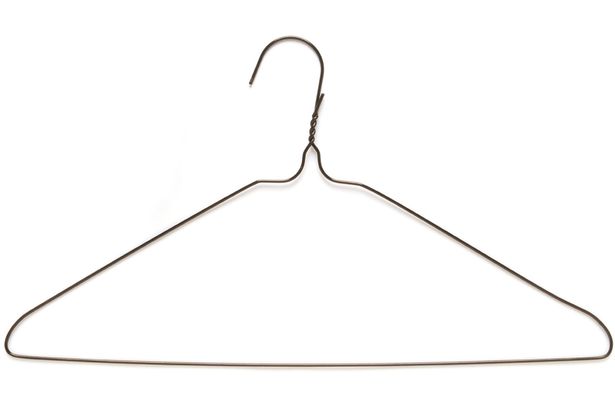
In 2015, charges were brought against  three white Dietrich, Idaho high school football players alleging that they attacked and sexually assaulted a black, mentally disabled teammate. John R.K. Howard, then 18, was charged as an adult and accused of thrusting a coat-hanger into the anus of the boy while the others held him.

Now 19,  Howard was allowed last week to avoid jail time in exchange for an Alford plea, a device allowed in some states, in which he acknowledges that he would have likely been found guilty in trial but doesn’t admit his guilt.  He pleaded to a single felony count of injury to a child, for which he will be sentenced to only two to three years of probation and 300 hours of community service. In my state, serious traffic violations can get harsher punishment than that.

Deputy Attorney General Casey Hammer “explained” that while Howard’s behavior was “egregious” and caused the victim “a lot of suffering,” it was not a really a sex crime, and so his office agreed to dropping the charge to the lesser felony. This means that in Idaho, apparently, kicking a hanger into a male victim’s rectum doesn’t qualify as rape. I wonder if any object being kicked into someone’s rectum is similarly immune from the charge. Would someone who kicked a hanger into a woman’s vagina be called rape? How about if the assailant was black and the victim was white?

Incredibly, Hemmer’s commentary got worse. “We don’t believe it’s appropriate for Mr. Howard to suffer the consequences of a sex offender,” Hemmer said. “But he still needs to be held accountable.”

Heaven forbid that that a student who does this to a disabled team mate while he is being held by two other students should suffer. We can’t have that.

Continue reading

More Lone Juror Ethics: The Slager Trial, Juries, And Justice

lone-juror

This was what I was afraid of. It is also why Michael Slager, who is guilty as hell, didn’t plead guilty despite slam-dunk, irrefutable evidence that he executed  African-American Walter Scott as he was fleeing arrest last year. It is why I argued that if Slager ethically cared more about the law, his profession, his community and his country than he did about literally getting away with murder, he was ethically obligated to plead guilty so this couldn’t and wouldn’t happen.

A single juror told the judge in the Slager trial last week that he can’t find the ex-cop guilty. In a letter to the court, the would-be Henry Fonda said, “I cannot in good conscience consider a guilty verdict…I cannot and will not change my mind.”

The jury foreperson confirmed  in a separate note  that it was only one juror who was “having issues” convicting Slager, who pulled over Scott’s car in North Charleston, South Carolina last year, and ended up shooting him in the back while a bystander recorded the killing on video. Circuit Judge Clifton Newman sent the jury back for more deliberation, and they are expected to report on their progress at 9 a.m. Monday.

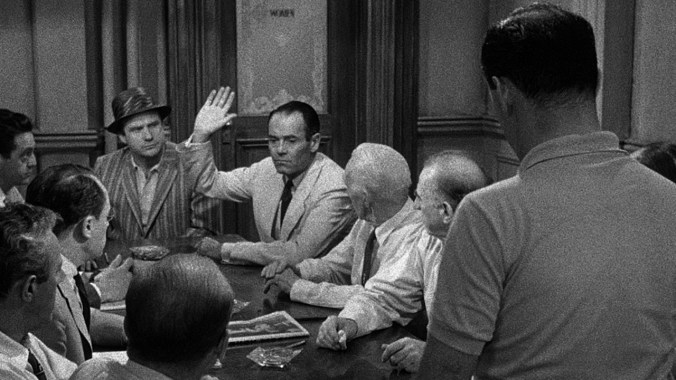
The lone juror holding out for innocence against eleven wanting to convict is celebrated as a courageous and system-defining stand in “Twelve Angry Men,” but it strains our faith in the system when the facts are like they are in this case. Nonetheless, the possibility of a not guilty verdict in the supposedly open-and-shut case is essential to the integrity of our system’s principle that even the most obviously guilty deserve a competent defense and a trial before a jury of their peers. Either we believe, as it has been said by many, that it is better for 100 guilty defendants to go free than for a single innocent citizen to be convicted, then we have to respect and accept the result when a lone juror seems to violate common sense and law.

Is Slager “more guilty” than O.J.? I could argue that they both deserve punishment, but if one deserves it more than they other, I’d pick Simpson, who killed two people, and wasn’t attempting a lawful arrest. (I could also argue that this kind of shooting by a police officer deserves a harsher punishment, because of his profession and his duties to society.) However we feel, we cannot condemn the lone juror without endorsing summary justice and show trials. If we believe in fair trials, we must believe in not guilty verdicts when a defendant seem obviously guilty, and lone jurors who cannot be convinced of guilt beyond a reasonable doubt.

Taking the other approach—emotion, anger and irrational hate—will be the likes of Elie Mystal, who, I think it is fair to say, needs a vacation. In an embarrassing post on the legal gossip site “Above the Law,” the African-American pundit intentionally misleads his readers by leaving out the key fact that it is only one juror who isn’t convinced by the overwhelming case against Slager, in order to indulge in an anti-white hate-fest: Continue reading