Ethics Verdict: When Your Town Is Being Overrun, It’s Not Racist To Use The Term “Overrun.”

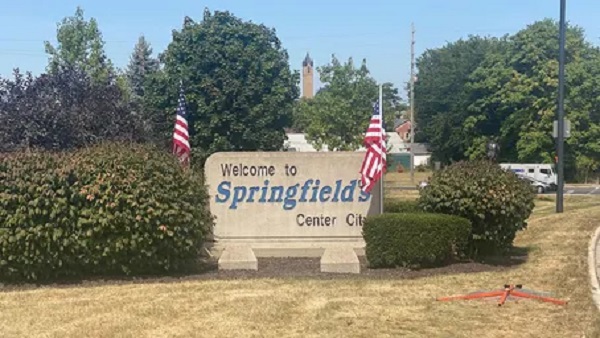
How Orwellian of CNN! When former Trump administration official Tricia McLaughlin explained why residents of Springfield, Ohio was being “overrun” by Haitian immigrants, “CNN NewsNight With Abby Phillip” host Phillip insisted that using words like “overrun” was “part of the problem.” Part of what problem? The problem of letting the American public know exactly what is happening in their country as a result of Biden Administration open border policies? Yes, that is a problem for Democrats, and I can certainly understand how our Big Brother party wants to eliminate words that can accurately explain the situation.

What is the nice word for what’s going on when 20,000 recent immigrants from a third world country and hopelessly messed up culture descend on a struggling town of just 60,000? That’s a 30% influx of completely unassimilated foreigners in a town that is having trouble caring for the people living there already. Is the town being “visited”? No, these arrivals are planning on staying: Springfield must seem like Disney World to someone from Haiti. Are the Haitians enhancing the town? No, because such a large group of new residents lacking familiarity with English and other cultural norms can’t avoid causing serious problems, and they are. “Overrun” is as good a word for what’s happening as I can think of.

Continue reading

The Legitimate and Important Ethics Conflict Behind the Springfield Cat-Eating Controversy

As he does so often, Donald Trump accepted something he read or heard as gospel truth and repeated it as fact, this time in a Presidential debate, and was promptly ‘factchecked” and subsequently ridiculed. The back-ground: a large number of Haitian “migrants,” who may or may not be here legally, seem to have ended up in Springfield, Ohio. One resident complained that they were eating pet geese and cats, her claim went viral, and the meme-makers have had a field day…

…as you can see.

Continue reading

The Latest Chaos in Haiti Brings Into Focus a Taboo Ethics Subject

Once again, Haiti is in the throes of violence and upheaval. It has ever been thus. While the nation Haiti shares the island of Hispaniola with, the Dominican Republic, has been relatively thriving (the key word is “relatively”) Haiti is in almost perpetual chaos. Florida is expecting another mass flotilla of refugees fleeing the hell-hole, and make no mistake, Haiti is a hell-hole. Under current law, and certainly under the warped Biden administration’s immigration policies, it is hard to imagine any scenario where thousands of Haitians do not enter the American populace.

Here is the ethics dilemma that it is politically incorrect to mention above a whisper: Haiti has a toxic, violent, ugly and undemocratic culture that has been ossifying for centuries. People who come from bad cultures, and this is a truly terrible culture, tend to have values and behavior traits that are antithetical to American society. Many in our “Imagine” subculture refuse to accept the fact that any culture is inferior to any other culture; hence they oppose “assimilation,” celebrating multi-culturalism instead. Multi-culturalism eventually metastasized into the DEI religion, and the success of the United States as a nation and a culture has been built on a once-solid foundation embodying the principle that immigrants come here to become Americans, with all the values and priorities that implies. Much of the division and cultural rot we are witnessing in the 21st century is a direct result of several decades of undermining that foundation.

Continue reading

Why Shouldn’t Baseball Star Jose Abreu Be Deported?

No,no,no! Not “passport to eating,” EATING A PASSPORT!

There was a trial, still ongoing,  in a Federal court in Miami last week, where sports agent Bartolo Hernandez and baseball trainer Julio Estrada were tried before a jury for alien smuggling and conspiracy. Prosecutors say they operated a ring that took Cuban players from the Castros’ island to other countries where they could established residency and sign lucrative Major League Baseball contracts.  The big surprise in the trial came when star Chicago White Sox first baseman Jose Abreu told a Miami federal jury Wednesday how he ate his fake passport while flying to the U.S. to cover up the fact that he was arriving illegally as a prime participant in the smuggling operation.

Abreu said he ordered a beer on an Air France flight from Haiti to Miami and used it to wash down the section of his passport showing a false name with  his photo. The reason the unique meal was urgent? Money. Abreu was about to  miss an October 2013 deadline that would forfeit the $68 million agreement he had in place withe White Sox.

“If I had not been there on that particular day, the deadline, then the contract would not be executed and would no longer be valid,” Abreu told jurors. “We had to be in Chicago to sign the contract.”

Ah. Then that’s all right, then!

Abreu the was American League Rookie of the Year in 2014. He  testified under a grant of limited immunity, meaning he wouldn’t be prosecuted if he told the truth on the witness stand.  Jurors learned that the slugger got the fake passport in Haiti, where he and his family had escaped to from Cuba by speedboat in August 2013. One of the associates of Hernandez and Estrada—naturally, the smugglers got a cut of Abreu’s contract—obtained the fake passport and booked the Air France flight, telling the ballplayer to destroy the document on the plane. .

He did not tell him to eat it. Continue reading

The Ethical Callousness of Photojournalists

Eric Kim Street Photography launched an ethics controversy by running two photographs. One, a prize-winning photo of 15-year-old Haitian Fabienne Cherisma, who was shot and killed by Haitian police after stealing two plastic chairs and three framed pictures in the chaos following the nation’s devastating earthquake last year. The other picture showed the origins of the photo and others like it, a crowd of intent photographers in a group, snapping away at the horrible scene like paparazzi trying to get a good shot of Lindsay Lohan.

Kim agreed that the initial photo is crucial news journalism, but worried that the second photo showed callousness on the part of the photographers, who appeared to be exploiting a tragedy.

Judge for yourself. Photojournalism, like medicine, law enforcement, social work, government leadership, and many other professions, is an ethically-conflicting job by nature,  because it requires dispassionate calculations in situations where non-professionals would be overwhelmed with emotion. This is purely utilitarian conduct. The pictures need to be taken. The public is served by vivid illustrations of the world and events. Competent and effective pictures require pragmatism, opportunism and professional cool that will often seem repugnant to observers. That is unavoidable, and fully justified by the importance of the work.

Verdict: the photographers are ethical.

But how they do their job sure can look awful.

Provocative Ethics Reading for a Sunday

If your endangered Sunday newspaper is as shrunken from cost-cutting as mine, you may need some extra reading material as you wait breathless for the results of the House vote on health care reform. Here are some provocative ethics pieces from around the web:

Don’t Apologize for the Truth, Mr. President.

For the second time in less than  a year, Nevada officials are annoyed with President Obama for a remark he has made about Las Vegas–essentially the same remark, in fact, he delivered before.

Speaking in New Hampshire about budget austerity, the President said, “You don’t blow a bunch of cash on Vegas when you’re trying to save for college. You prioritize. You make tough choices. It’s time your government did the same.”

The mayor of Las Vegas is demanding an apology. True, in tough economic times, the President should refrain from specifically discouraging tourism to a particular location. Continue reading

The Ethics Verdict on Haitian Luxury Cruises

Luxury cruise lines and their passengers are being condemned in some quarters for continuing to dock their ships at Haiti’s private beaches while the rest of Haiti is in the midst of destruction, death and horror. “Royal Caribbean is performing a sickening act to me by taking tourists to Haiti,” one critic wrote one poster on CNN’s “Connect the World” blog. “Having a beach party while people are dead, dying and suffering minutes away hardly makes me want to cruise that particular line,” wrote another. Continue reading

Media Ethics and Haiti

  • Rebecca Solnit has written a powerful piece questioning the news media’s accounts of “looting” in Haiti. She argues that people in the midst of a disaster with a breakdown of infrastructure and government assistance are acting reasonably and justifiably when they take food and other necessities from abandoned stores. She believes that media accounts emphasizing looting warp the public perception of what is happening, vilifies the victims of the disaster, and prompts excessive measures against the “looters,” who are only trying to survive. She has a point. You can read her whole piece here.
  • There is something oppressive and coercive when so many networks and cable channels interrupt regular programming to carry a telethon, as they did last night. It turns an appeal for help into a demand for help. Continue reading