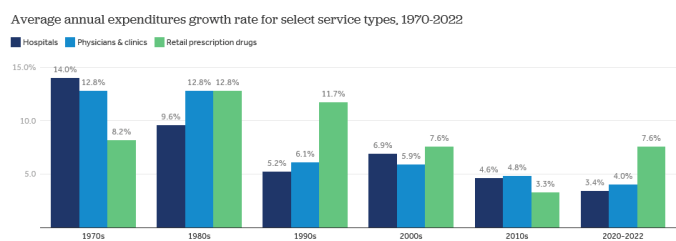
 [Source: Health System Tracker]
In his useful Comment of the Day on the recent essay about “wanted” posters going up around New York City to target health industry executives, Chris Marschner examines some of the factors underlying the high cost of staying alive in the U.S.
I worked on health care costs and the various schemes to keep them down in the 1980s at the U.S. Chamber of Commerce. Then, the big panacea was going to be HMOs. The cruel reality was that they were over-sold: HMO’s were great if you had something very simple or something very serious: in between, the care just wasn’t any good, as I found out when I first started suffering from chronic gout. Unless there is some incentive for the health care consumer to minimize costs, insurance helps make health care more expensive. Personally, I blame Franklin Roosevelt’s socialist theory that Americans should be guaranteed “Freedom from Want,” meaning guaranteed housing , jobs, a “living wage,” and cradle to grave health care. If people are not sufficiently motivated to avoid unnecessary trips to the doctor or emergency rooms because they won’t have to pay for the consequences of their life choices, medical costs will keep going up. Thus Obama’s “Affordable Care Act” was even less effective at keeping health care affordable than Biden’s Inflation Reduction Act was at reducing inflation.
Here is Chris Marschner’s Comment of the Day on “From the Res Ipsa Loquitur Files:”….
***
These posters would be, in my humble opinion, incitement to violence and immediate threats to the individuals identified. As such, claims of free speech cannot be defended.
I read an interesting article on the history of health insurance from PubMed A (Brief) History of Health Policy in the United States – PMC. While it outlined the historical development it fails miserably with respect to why health care costs have risen so dramatically. The primary reason for health care inflation is that insurance decouples the patient from the provider when it comes to making choices. If health care providers were not compensated based on a fee for service model it stands to reason that the number of services would fall which would allow greater access to health care when actually needed. Having your primary care physician have you make an appointment every 3-6 months just to evaluate you is an appointment that cannot go to someone in need resulting in long wait times.






 Ethics Alarms