“True Grit” Ethics

I haven’t seen the remake of “True Grit,” but I know I will, and like many other fans of the original 1969 version, I’m trying to conquer my biases. The latest effort by the usually brilliant Coen brothers creates ethical conflicts for me, and I am hoping I can resolve them right now. Can I be fair to their work, while being loyal to a film that is important to me for many reasons?

The original, 1969 “True Grit” won John Wayne his only Oscar for his self-mocking portrayal of fat, seedy law man Rooster Cogburn, 

who is hired by a young girl to track down her father’s murderer. I love the film; I saw it on the big screen nine times, in fact. Remaking it with anyone else in the starring role feels like an insult, somehow, as if the Duke’s version was somehow inadequate.

Intellectually, I know that’s nonsense. Artists have a right to revisit classic stories and put their personal stamp on them, and they should be encouraged to do it. Every new version of a good story, if done well, will discover some unmined treasure in the material. Why discourage the exploration? Continue reading

Bret Favre, Meet Derek, LeBron, and Tiger

Recent revelations about Joe DiMaggio’s conduct while doing PR work for the military during World War II shocked some people who had been humming “Mrs. Robinson” over the years. Joe, as insiders had long maintained, really was a selfish and anti-social guy, far from the knight in shining armor that the public took him to be. But he played his hero role well when he was in the public eye, and that is to his credit: DiMaggio met his obligation as a hero-for-hire. Athletic heroes are challenged to live up to their on-field character, and not surprisingly, few are equal to the task. One who was has been back in the news lately: Stan (the Man) Musial, the St. Louis baseball great who will soon be awarded the Medal of Freedom by President Obama.

In these anxious times when every institution and every champion seems to betray us eventually, sports heroes who can remain untarnished are especially valuable, which is one reason why they earn so much money. On the field, court, course, ring or track, they can exhibit courage, trustworthiness, selflessness, leadership, sacrifice, diligence, loyalty, fair play and sportsmanship to inspire us and serve as role models for our children. All they have to do is avoid showing that it is all an illusion after the games are over. It shouldn’t be difficult, yet it is.

Tiger Woods only needed to be a responsible and trustworthy husband and father. LeBron James only had to avoid revealing himself as a fame-obsessed child. Derek Jeter only had to resist the impulse to extort the team he symbolized for money he neither deserved or needed. Yet they couldn’t, or wouldn’t do it. They hurt their own images, reputation and legacy beyond repair, but more important, they robbed us of heroes that we sorely need.

The latest addition to the pantheon of fallen idols is Bret Favre, the star NFL quarterback now suffering through the humiliating final season that was more or less guaranteed by his inability to retire while he could still pick up a football. Continue reading

False Redemption and the Michael Vick Fallacy

Michael Vick was once a star quarterback for NFL’s Atlanta Falcons. Then it was discovered that he was secretly in the illegal dog-fighting business, breaking the law and being brutally cruel to dogs in the process. This lost him his job, his contract, his freedom, and many millions of dollars. Now he’s a star quarterback again, leading the Philadelphia Eagles. Last Monday night, he had what some have called the best game any quarterback has had in the NFL in forty years. Many are celebrating his return to stardom as an inspiring example of rehabilitation and redemption. After all, he’s a hero again.

Not to me, he isn’t.

It well may be that Michael Vick is a changed man, but the jury is out on that; it’s just taking longer to get a verdict than it did for his dog-fighting charges. There is absolutely no nexus between Vick’s resurgence on the football field and his character. Continue reading

Rewarding Wrongdoers to Corrupt Us All

It would be wonderful if Steven Slater would go before the cameras and say,

“I want to apologize to Jet Blue and its passengers for my conduct. I was frustrated and emotionally over-wrought, and I wrongly endangered the air travelers, betrayed by co-workers, and embarrassed my employers. I am not a folk hero or a role model. I am ordinary human being who lost control of his emotions, and behaved badly. I am sorry. If my meltdown contributes to a national dialogue that reminds people that we need to be civil patient and kind to one another, then at least something productive will have come out of an incident that I sincerely regret.”

That’s not going to happen. Continue reading

Steven Slater And The Rest of the Story: No Surprises

Occasionally, there is cosmic justice. The astounding number of bloggers, media commentators and  ordinary working folks who have expressed admiration for Steven Slater, the irresponsible and unprofessional flight attendant who threw a tantrum of Adam Sandler proportions at the end of a recent Jet Blue flight, appears to have been itching for a confrontation throughout the flight, and had behaved is a rude and provocative manner to more than one passenger.

Well, of course. Continue reading

Charlie Rangel, Ethics Corrupter

Rep. Charles Rangel—statesman, icon, war hero, and Congressional force of nature—stands accused of ethics violations many and serious, ranging from using his influence to raise money for an institution named after him, to accepting trips and other benefits from special interests, to failing to pay his taxes. Actually, “accused” is a technicality in Rangel’s case, or rather cases, because the facts are plain and damning in every single one. House Speaker Nancy Pelosi initially refused to do anything about Rangel (he was eventually asked to step down, if only “temporarily” from his position as Chairman of the Ways and Means Committee) by saying, “Wait for the results of the investigation.” She meant, considering the shameless politicization of the House ethics process, “Let’s see if he can skate by this time.” He couldn’t. Rangel did all of the conflicted, reckless and irresponsible things he has been accused of, and actually admits doing most of them. He refuses to resign, however, and proclaims his “innocence,” not because he didn’t do unethical things, but because he doesn’t believe it should matter. Continue reading

What Hugo Alfredo Tale-Yax Can Teach America

The one with the premium-grade ethics alarms bled to death on the sidewalk. The people who never had them installed at all took pictures. Is this the way it’s going to be?

Hugo Alfredo Tale-Yax was a Guatemalan immigrant who lived in Queens, New York. His life was a mess; he was destitute, ill, and had no job or likelihood of getting one. When he saw a knife-wielding man apparently assaulting a woman on the street two weeks ago, however, he knew what his ethical obligations were. He rescued her by intervening in the struggle, and got stabbed, badly, for his actions. The attacker ran off, and so did the woman, who didn’t check on Hugo after he fell, and  never contacted the police. She also neglected to say, “Thanks for saving my life.” Continue reading

Nomar, Beantown, and the Legacy Obligation

Organizations have histories, and that means they have debts to pay. Time moves on, and personnel changes, but the organization that neglects the human beings who played major roles in defining their image, goals, achievements and success has breached its integrity, and violated its Legacy Obligation.

For nearly eight seasons, shortstop Nomar Garciaparra was the face, heart, and soul of the Boston Red Sox. A spidery gymnast in the field who completed the Holy Trinity of Hall of Fame-bound shortstops—Jeter, A-Rod and “Nomah” —who lit up the American League in the mid-Nineties, Garciaparra was a home-grown fan idol. He did everything wonderfully and with panache; Ted Williams, the city’s reigning baseball god, pronounced him his official successor.

Then, suddenly, it all unraveled. Continue reading

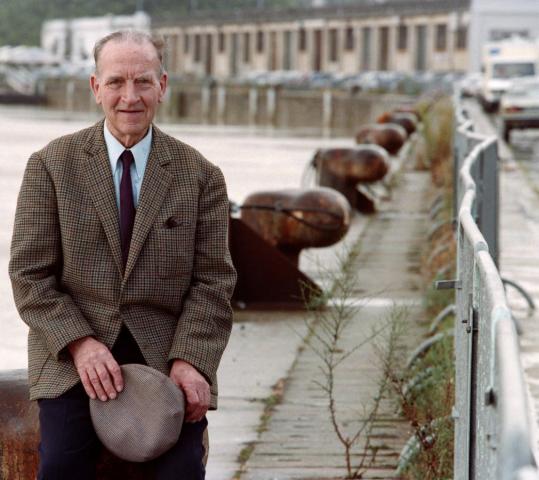
Ethics Hero Emeritus: Henri Salmide, 1919-2010

Henri Salmide by the port he saved, and came to love.

Henri Salmide by the port he saved, and came to love.

In the Nuremberg war crimes trials following World War II, the Allies took the high-minded position that “just following orders” was no defense to “crimes against humanity” committed during wartime. It is and has always been much easier to argue for defying military orders in the abstract, however, than in real combat situations. Conveniently, the victors in a war can take such a position, even knowing in their hearts, as most honest soldiers do, that they themselves might not be able to muster the courage and conviction to tell a commanding officer, “No!”

Henri Salmide, a former German soldier in World War II who died in France this week, would have been an appropriate judge for the trials, for he would not have been plagued by any such conflict or hypocrisy. For Salmide, back when he was called by his birth name of Heinz Stahlschmidt, was a rare and remarkable man who did defy an order he knew was wrong, and saved a city with his courageous, dangerous, and principled actions. Continue reading

Ethics Hero: Liev Schreiber, an Actor Who Understands the Duty to Act

The rescue situation is finally beginning to come into focus. If you are in need to be rescued in a public venue, you don’t want to have to depend on the rapid response of off-duty EMT’s or the assistance of on-duty security personnel. No, what you need nearby is a good, professional, quick-thinking, courageous Broadway actor.

Liev Schreiber, the star of the Broadway revival of Arthur Miller’s drama “A View From the Bridge,” rushed to the aid of an audience member who lost consciousness during a performance. The man’s wife began screaming for help, and when the theater house lights were turned on, Schrieber could be seen emerging from backstage and running down the aisle to where the unconscious man was sitting. The actor tried to offer aid to him until a physician emerged from the audience, and eventually the stricken audience member was placed in the care of paramedics. Continue reading