Ethics Quiz: The Obituary Campaign Pitch

Oh, heck, let's see how Larry polls against the GOP field...

Oh, heck, let’s see how Larry polls against the GOP field…

In Colorado’s Cabarrus County, the family of Larry Upright, 81, concluded his on-line funeral home obituary with this…

“Also, the family respectfully asks that you do not vote for Hillary Clinton in 2016. R.I.P. Grandaddy.”

I can’t resist this one, and so your Ethics Alarms Ethics Quiz of the Day is:

Is it ethical for a family to include a political message in a family member’s obituary? Continue reading

Already, Clinton’s Compulsive, Clumsy Lies Are Flowing: Are Her Supporters Really Going To Pretend Ethics Don’t Matter To The Bitter End?

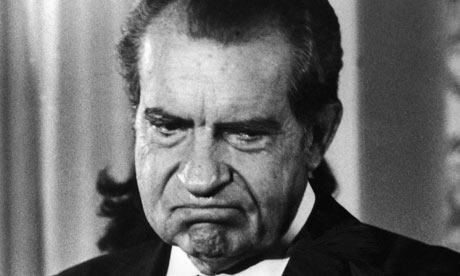
If you don't know why a photo of Richard Nixon is appropriate in a post about Hillary Clinton, you need help...

If you don’t know why a photo of Richard Nixon is appropriate in a post about Hillary Clinton, you need help…

Hillary lies. That’s what she does. She can’t help herself; she does it by reflex, even when there is no reason to. Even when one includes Richard M. Nixon, whose reputation as a liar was think well before he became President, Hillary Clinton’s record is remarkable. She lies about little things (Claiming to be a Yankee fan), big things (conservatives made up the Monica story); she lies without caring who the lies hurt (the White House travel office debacle), and lies to make herself look heroic (her Brian Williams-like tale about being under fire). She lies to try to duck responsibility for her own actions (saying that her use of a  private e-mail server was compliant with government rules), and she lies when it is obvious that what she is saying is ridiculous (she and Bill left the White House in penury.) Unlike her charismatic husband, she’s not even good at lying, and apparently practice doesn’t help, in her case.

Yet she keeps doing it. She is not being well served by her supporters, who have given Clinton no reason to reform, improve, or respect the them or the public they are part of.  The message Clinton has received is that it doesn’t matter what she does or says. She’s a woman, and she’s a Democrat, and that’s all that matters. Have any voters adopted such an indefensible, irresponsible and civicly disgraceful approach to self-government? Well, yes, come to think or it: the 95% of black citizens who supported Barack Obama for a second term based on race and little more. That’s not mitigation.

Barely out of the gate, Hillary is at it again. Speaking in Iowa Wednesday, she told an audience that all her grandparents had immigrated to the United States, a story that public census data and other records related to her maternal and paternal grandparents show is fabrication. Continue reading

Iowa’s Kirkwood Community College Imprisons Its Students In Deference To Hillary Clinton

"This is a great community college, you know?"

“This is a great community college, you know?”

I’m willing to entertain the notion that the exigencies of the situation may have justified Boston’s police ordering citizens to stay in their homes during the dragnet for the Boston Marathon bombers in 2013, Barely. Still, the explosion of extra-legal, unconstitutional abuses of power by national and state governments during the Presidency of Barack Obama is profoundly troubling, and even more so is the complacency of the public and media when it occurs.

Yes indeed, I see this particularly frightening fish-rot as being initiated from the head in the White House, who has embraced the governing theory that if consensus and compromise on desired measures, laws and policies can’t be achieved under the Constitution’s formula, do it anyway. This isn’t strength, you know. It is weakness, the desperate resort of an unskilled executive with contempt for democracy. Under this administration, we have seen a President and a Justice department refuse to fulfill their duties and defend a duly passed and signed law that they just didn’t like (DOMA). Wrong. We have seen a President unilaterally amend his own sloppy health care law because he knows that if he tried to fix it legally, the Congress would gut it. Wrong. We have seen Obama repeal immigration restrictions by executive order, and declare that the Senate was in recess in order to avoid the bother of getting legally mandated  confirmation of his appointments—that one, at least, was struck down by the Supreme Court.

The cumulative effect of all of this is gradually increasing public tolerance for official breaches of the rule of law, at all levels of government, and by private entities too. I believe that that this threatens the democratic culture, and I do not understand why progressives are not as outraged by this development as moderates and conservatives. Do they really think that having allowed Constitutional protections to erode so their precious agenda can be advanced, those protections will be suddenly vigorous again when their adversaries have the upper hand? What utter, utter fools:

The sickening effect of this complacency was on display at Kirkwood Community College in Monticello, Iowa, Continue reading

Typo Ethics: Early Accountability Check For Candidate Clinton

“From her mother’s own childhood – in which she was abandoned by her parents – to her work going door-to-door for the Children’s Defense Fund to her battling to create the Children’s Health Insurance Program, she’s fought children and families all her career.”


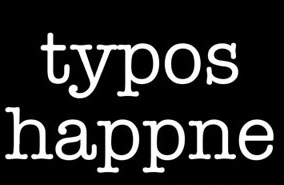
That doesn't mean they don't matter, however...

That doesn’t mean they don’t matter, however…

That was the startling news in Hillary Clinton’s long-awaited presidential candidacy announcement: that Hillary has fought families and children all her career. As an ethicist, I find the candor laudable, but I am surprised that Mrs. Clinton is making such a strong bid for the anti-family and child-hating voting bloc.

OK, it’s a typo. The Clinton campaign website fixed it, and her spokespeople reassured the news media “that the former secretary of state has not been secretly fighting children all these years.”

I almost passed on this story, being seldom able to post a typo-free 800 words myself despite reading the damn things repeatedly, but that would have been cowardly. This is not necessarily trivial. This bears some watching. I know that the large Hillary Zombie Squad, which appears to care only about the former First Lady’s chromosomes and nothing else, won’t give a second’s thought to this if her destruction of e-mail evidence and willful skirting of her own agency’s transparency and security policies don’t trouble them, but it is not insignificant. Continue reading

Ethics Over Compliance: The Dutch Banker’s Oath

bankers oath

“Professional ethics” is a never-ending battle between compliance and ethics, between rules and penalties on one side, and principles and values on the other. Compliance is easier: all you do is tell people with rules and regulations what they must or can’t do, and promise that there will be consequences if those rules are violated. For ethics to work, people actually have to understand ethical values and be committed to living by them in a professional context.

Compliance has little to do with ethics. Jack the Ripper will follow rules if they are clear, if he knows he’ll get caught if he violates them, and if the punishment when he does will be  harsh enough. That won’t make him ethical. In fact, compliance–rules-based professional conduct control—is often antithetical to ethics. Rules and laws are merely a challenge to the type that Oliver Wendell Holmes called “The Bad Man”-–which includes bad women—to find ways to do things that are wrong but that avoid violating rules sufficiently to justify punishment.  This is why most compliance codes have language in their introductions noting that it’s impossible to make a code that will cover every wrong someone can think of, so ethics are important too.

Pure compliance-based systems don’t improve ethical conduct. The financial collapse in 2008 was largely caused by financial manipulators operating in the grey areas of the rules and laws—that’s why so few of them could be prosecuted. In politics, The compliance mindset is extremely convenient for clever liars and cheats like the Clintons, which is why Hillary could try to explain her e-mail shenanigans by saying that “I fully complied with every rule I was governed by (heh-heh-heh!).” Unethical people will always find ways to get around rules. Ethical people, in contrast, barely need rules at all.

Another benefit of ethics over compliance is that ethics rules–compliance codes—have to be long and detailed, otherwise it’s too easy for Clinton-types to find loopholes, though they usually will find some anyway. Ethical values, on the other hand, can be stated very simply. An ethical employer thinks, “Hmm, that intern is cute, but I am married and have duties of loyalty and honesty to my wife and family, and it would be an abuse of power and influence as well as irresponsible for me as a leader to have an affair with someone under my supervision in the organization.” The Bad Man thinks, “Wow, she’s hot; my wife won’t care as long as I’m not caught; getting a hummer isn’t considered sex where I come from, and there’s nothing that says a President can’t fool around!” For the former, “A leader should not have sex with subordinates” is clear as a bell; his values tell him why. The latter, though, is thinking, “Hmmm. How can I get around this? That rule says “should” but not “shall”— that’s good. No punishment is specified. Sounds like more of a guideline than a rule. “Sex”—that must mean sexual intercourse: great! Lots of wiggle room there. And “subordinate”—is an intern really a subordinate? And I bet I could argue that this is personal, not official conduct. All good…now where’s that cigar?

Invoking ethics rather than compliance is a new oath required by the Dutch Bankers Association. It could be printed on a postcard, and if a banker is ethical, it is all he or she needs:

I swear within the boundaries of the position that I hold in the banking sector…

…that I will perform my duties with integrity and care;

…that I will carefully balance all the interests involved in the enterprise, namely those of customers, shareholders, employees and the society in which the bank operates;

…that in this balancing, I will put the interests of the customer first;

…that I will behave in accordance with the laws, regulations and codes of conduct that apply to me;

…that I will keep the secrets entrusted to me;

…that I will make no misuse of my banking knowledge;

…that I will be open and transparent, and am aware of my responsibility to society;

…that I will endeavor to maintain and promote confidence in the banking system.

So truly help me God.

And if a banker isn’t ethical,

it won’t matter anyway.

__________________________

Pointer: Legal Ethics Forum

Sources: Bloomberg, The Conglomerate

Graphic: Bloomberg

Unethical Comment Threads: Slate’s Soulless, Cynical Hillary Enablers

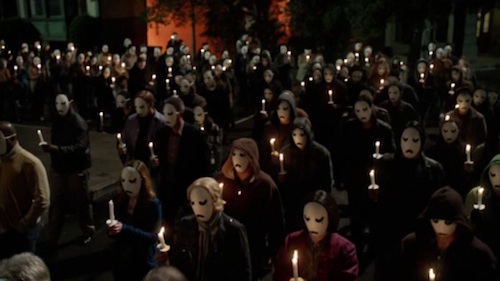
The-Soulless

Hillary Clinton wiped her server clean of emails after a congressional committee had been established to investigate matters that she knew her e-mails related to and would be requested to investigate. She also made this decision after the Department of State belatedly asked her to return her e-mails for the public record as the law requires.

Destruction of documents after they have been requested by an official body authorized to do so is called spoliation. That’s intentional destruction of evidence to hide the truth: it can be illegal, and is always unethical. Moreover, spoliation supports the rebuttable presumption that the individual in charge  is attempting to cover up wrongdoing.  For an ex-government official to do this is damning; for a potential presidential candidate to do it is disqualifying…or should be, if the partisans of the party she belongs to have a shred of integrity, decency, civic responsibility or common sense.

Based on the comments on the Slate report on Clinton’s spoiliation, they may not have. Continue reading

Tales of “The King’s Pass”: Pete Rose and Jeremy Clarkson

King

The King’s Pass has been much in the ethics news of late—Brian Williams, Bill O’Reilly, David Petraeus, Hillary. Let’s review, shall we?

11. The King’s Pass, The Star Syndrome, or “What Will We Do Without Him?”

One will often hear unethical behavior excused because the person involved is so important, so accomplished, and has done such great things for so many people that we should look the other way, just this once. This is a terribly dangerous mindset, because celebrities and powerful public figures come to depend on it. Their achievements, in their own minds and those of their supporters and fans, have earned them a more lenient ethical standard. This pass for bad behavior is as insidious as it is pervasive, and should be recognized and rejected whenever it raises its slimy head.  In fact, the more respectable and accomplished an individual is, the more damage he or she can do through unethical conduct, because such individuals engender great trust. Thus the corrupting influence on the individual of The King’s Pass leads to the corruption of others…

1. The BBC just demonstrated how the King’s Pass should be rejected—with courage and gusto.

Jeremy Clarkson, the main host of the popular BBC auto show “Top Gear,” spent March misbehaving. He got in a shoving match with a producer, verbally abused staff and was recorded trashing the network. When Clarkson topped it off with a physical altercation with a show staffer, the BBC decided not to renew his contract. BBC head Tony Hall said in a statement:

It is with great regret that I have told Jeremy Clarkson today that the BBC will not be renewing his contract. It is not a decision I have taken lightly. I have done so only after a very careful consideration of the facts…I take no pleasure in doing so. I am only making [the facts] public so people can better understand the background. I know how popular the programme is and I know that this decision will divide opinion. The main facts are not disputed by those involved.

The BBC is a broad church…We need distinctive and different voices but they cannot come at any price. Common to all at the BBC have to be standards of decency and respect. I cannot condone what has happened on this occasion. A member of staff – who is a completely innocent party – took himself to Accident and Emergency after a physical altercation accompanied by sustained and prolonged verbal abuse of an extreme nature. For me a line has been crossed. There cannot be one rule for one and one rule for another dictated by either rank, or public relations and commercial considerations… Obviously none of us wanted to find ourselves in this position. This decision should in no way detract from the extraordinary contribution that Jeremy Clarkson has made to the BBC. I have always personally been a great fan of his work and “Top Gear”…The BBC must now look to renew Top Gear for 2016. This will be a big challenge and there is no point in pretending otherwise. I have asked Kim Shillinglaw [Controller of BBC Two] to look at how best we might take this forward over the coming months. I have also asked her to look at how we put out the last programmes in the current series.

The show, without Clarkson, is toast, and Hall knows it. Nonetheless, he had the guts to do the necessary and ethical act: not allowing its indispensable star to abuse his power and popularity . Once Clarkson did that, “Top Gear” was doomed anyway; firing him now just minimizes the carnage. Although Hall has no responsibility to other networks and organizations, his decisive handling of the episode has saved other programs even as it destroys his own. It is a precedent and a role model for employers refusing to allow themselves to be turned into enablers  by stars assuming the King’s Pass works. When they say, “You can’t fire me, I’m irreplaceable! There’s no show without me!”, the response now can be, per the BBC: “If there’s no show without a jerk like you, then there’s no show. Bye!”

2. Once again, Pete Rose is sucking the ethics right out of people’s brains.

Ah, Pete Rose. He was the topic of the first ethics post I ever wrote, way back in 2004. Then, in 2007, he became my first and only Ethics Dunce Emeritus.

The Pete Rose case is simple. Baseball has an absolute, no exceptions rule that demands a lifetime ban of any player, coach or manager who gambles on major league baseball games. Such banned players can’t be hired by major league teams for any purpose, and cannot be considered for Hall of Fame membership., ever, even after they are dead. Everyone in baseball knows why this rule exists—baseball was nearly destroyed in 1919 when gamblers bribed the Chicago White Sox to throw the World Series—and the rule is posted in every clubhouse. Rose bet on baseball while a major league manager, and also bet on his own team. Thus he is banned.

The significance of the fact that he is, as a player, the all-time hits leader and was the face of the game is that it led Rose to believe that the game would never ban him, and that if caught, he would be treated with special leniency. His excellence on the playing field doesn’t mitigate his conduct, or justify minimizing the ban it earned, at all.

The New York Times published a story about Rose’s efforts to get baseball to lift the ban, now that a new Commissioner, Rob Manfred, is in office. You can read the article here, which is remarkable for the many jaw-droppingly unethical arguments put forth by the baseball people the article quotes, contrasted with the occasional quote that shows that a speaker comprehends the concepts of consequences, accountability, and why letting stars break the rules is suicidal to any culture. It would be an excellent ethics exam.

Here are the quotes; my comments follow in bold. Continue reading

Some Hillary E-Mail Ethics Test Results: Dowd, Carville, Maher, Whitehouse, Boxer, Huffington

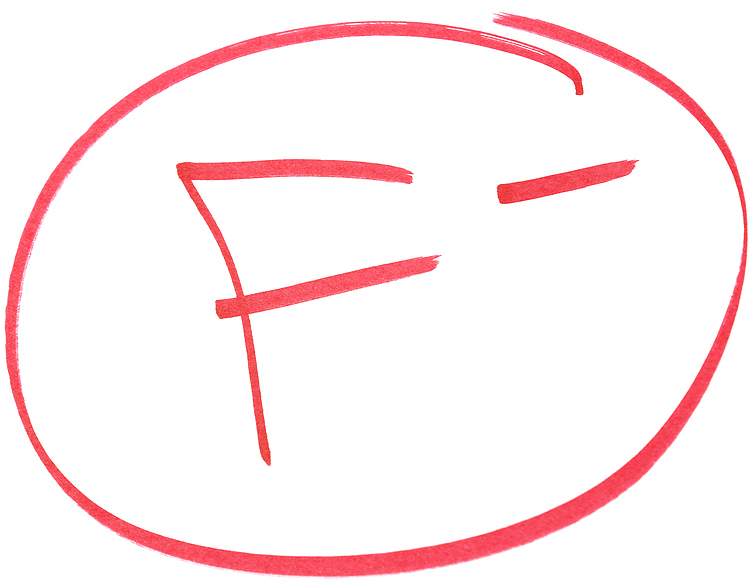
F minusLast week I pointed out that the controversy over Hillary’s secret e-mail server and the various deceits and lies she has employed to justify is invaluable, not merely as further evidence of the character of the woman Democrats seem determine to stuff down America’s throat as the next President, but also as an integrity and values test for the politicians, elected officials, pundits and journalists who choose to publicly defend her…or not.

So it has been, and continues to be. Unfortunately, Republicans and reliably conservative pundits are disqualified from the test, as they would be condemning Hillary whether there was an ethical defense of her e-mails or not. They will end up on the right side of this issue by simply following their ideological proclivities, and thus deserve no credit for being incidentally correct.

Here is what you have to remember, however: the fact the Republicans and conservatives who reached their position on this issue without giving it any thought detest and distrust Hillary Clinton and are being, in some cases, unattractively gleeful about the scandal does not make Hillary’s defense any stronger. As I explained in the earlier posts, she has no legitimate defense, just spin, rationalizations and deceit. That’s why the e-mail incident challenges the non-Hillary haters to exhibit integrity.

I was tempted to exempt Democratic strategists and Clinton consultants from the test as well, since they are, in essence, paid liars. For anyone inclined to believe them, however, the fact that these people—Karen Finney, Donna Brazile, Lanny Davis, David Brock, James Carville— will go on national TV, look an interviewer and the American public in the eye and say what they know is false should prove that their level of trustworthiness is below sea level.

Carville, for example, gave a tour de force of rationalizations on ABC’s “This Week” yesterday, making the recently popular argument that the Clinton’s just can’t get away with fudges and sneaks that other politicians do, and that this is so, so unfair.  Let’s go to the Rationalizations List! This is the Golden Rationalization (“Everybody does it”) squared by the #39. The Pioneer’s Lament, or “Why should I be the first?” (That argument is disingenuous, because the Clintons are not like everyone else. They have a long, ugly record of deception and rule-breaking. At this point, they cannot credibly claim, “We just made a mistake” —# 19 and #20. There is a pattern. Once a pattern is established, you have to be especially careful not to repeat it, or there is a rebuttable presumption that you can’t help yourself. Is it unfair to an alcoholic to make a bigger deal out of him coming home drunk than when an occasional drinker does the same thing?) Continue reading

Hillary’s Defense: An Ethics Mess

  • I’m going to go rely heavily on links here. I have written a lot about this story already, and there are many other issues to cover. I’ll summarize the content in the pieces linked to, but the thrust is this: Hillary’s explanation in her 20 minute press conference was deceitful, dishonest, and unbelievable. Of course it was.
  • I would declare Hillary’s e-mail fiasco an Ethics Train Wreck, and still might, except that so many are refusing to buy a ticket. Even Bill is afraid to go near the tracks.
  • There are a few who are disgracing themselves—I don’t count paid Clinton cleaners like Lanny Davis, or Media Matters—but one head-exploding performance I saw today was that of Van Jones, the former White House Czar turned CNN pundit, in a “New Day” discussion this morning paired with CNN’s resident conservative pundit—because heaven forbid we examine Clinton’s conduct based on truth, honesty, and principles rather than as political gamesmanship. The two (Ann Navarro for some reason is the only Republican CNN can usually find in the morning) were asked about the phony “Colin Powell did it!” defense dreamed up in the Clinton bunker. Navarro, like anyone else who has examined that argument, found it to be bunkum, simply because the use of e-mail, its regulation in government and what we know about e-mail security has changed so much since Powell referred to it as “new-fangled.” Here’s what Jones said, after first saying that he couldn’t argue with Navarro on her reasoning, emphasis mine:

“Again, she’s playing to the heartland. If you say, listen, I did what Colin Powell did. I’m trying to do a good job. I want convenience. You know, the average person in the heartland, if you hate the Clintons, no answer is good enough. But if you’re — if you’re an honest person, well, geez, maybe this makes sense. I actually do agree, though, that we are in a different world from the Colin Powell days. I think the Colin Powell excuse sounds really good from a press point of view. I hope she keeps saying it. But I do think that, at the end of the day, we are in a different world.”

That’s Jones; that’s the Democratic spin machine, that’s the “the ends justify the means” crowd, and that’s who the networks are asking for analysis: ‘Yes, it’s just designed to confuse the yokels, and it’s not true, but it works,and I hope she keeps saying it.’

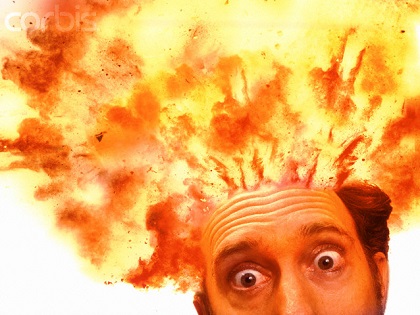
Kaboom.

Exploding head

There goes the old skull, exploding again.

Have I ever heard such an open, shameless admission that politicians not only do deceive the public, but that these horrible people like Jones think it’s fine if they do? Fire him. Continue reading

Hillary’s Secret E-Mails: An Invaluable Ethics Litmus Test

finney_newday

All civic minded citizens should encourage as many individuals—public, private, elected, celebrities, media figures, reporters and pundits—to discuss the issues and significance of the Clinton e-mail scandal. It is a marvelous litmus test to unerringly reveal whether the individual understands basic ethical principles like integrity, honesty, responsibility and trust, as well as his or her reliance on intellectually and ethically bankrupt rationalizations like “Everybody does it,” “It’s not the worst thing,” “Don’t sweat the small stuff,” and others, or, just as disturbing, whether the individual is willing to reject basic ethical principles in a misguided effort to defend a public figure unworthy of the sacrifice, like Hillary Clinton. Keep this public debate going. Before it has run its course, we may have outed thousands, hundreds of thousands, who we will know cannot themselves be trusted.

It takes all my will and civility reserves not to say that this is an IQ test as well. I keep reading comments on blogs and Facebook by people who really seem to be unable to fathom why it should matter when the individual who leads our official dealings with foreign governments mysteriously chooses to take dominion over all her official communications, allowing her to destroy them at will, when such conduct violates the policies and directives of the administration of which she is a member, her own department, and common sense, despite incurring security risks, despite questions over her foundation soliciting contributions from foreign governments while she was in a position to have such contributions warp national policy, when the individual involved, was well as her husband, has a history of skirting laws, obfuscation and mendacity. “This is just more manufactured Hillary-bashing!” Seriously? I know the Clintons pay people to say this, but really believing it requires total corruption or life-threatening brain lesions.

As an example of how this issue exposes a lack of honesty and integrity the way those blue light things show traces of blood on “CSI,” let’s examine the CNN transcript of yesterday’s segment on “New Day,” which featured a “point-counterpoint” style debate on the Clinton e-mails featuring former Bush press secretary Ari Fleischer and former Hillary press secretary (and current Media Matters partisan warrior) Karen Finney.

This pairing is manipulation by CNN, by the way. Nobody but hacks, liars and fools honestly defends Clinton’s conduct here, and many non-partisan commentators can articulate clearly exactly what’s wrong with it. Placing a presumed partisan like Fleischer opposite Finney cleverly and unethically suggests that this is one more political dust-up without substance, where there’s no real dispute, just a red/blue divide. That may be what CNN wishes were true, but this issue is not partisan, and shouldn’t be presented as such. The Washington Post, which has, like most of the print media, been pretty straight on this issue, played to the partisan spin by saying,

“Instead of a fresh chapter in which Clinton came into her own, her time as the country’s top diplomat now threatens to remind voters of what some people dislike about her — a tendency toward secrecy and defensiveness, along with the whiff of scandal that clouded the presidency of her husband, Bill Clinton.”

Wait, there are people who like secrecy and scandal? Are they called Democrats, perhaps? Clinton supporters? What an idiotic way to frame Hillary’s problem.

It’s not complicated: the issues involve trust and the character of a potential President.

Now here is the CNN transcript, with my comments in bold: Continue reading