Eventually, We May Have To Call It “The Great Stupid Day”

It’s Columbus Day, and The New York Times’ way of celebrating it is to publish an op-ed  by a Hispanic anti-Columbus freelance audio journalist who complains about there being a gigantic statue to the explorer in Puerto Rico. After all, she reasons, the island is in “the part of the world that suffered Columbus’s brutality firsthand.”

Columbus’s “brutality,” of course, is not what’s being celebrated or honored by Columbus Day.   In 2019, before the Dawn of The Great Stupid, I re-posted both essays I have authored on Ethics Alarms about Columbus, the first, from 2011, explaining why it was an ethical holiday; the second, from two years later, taking the ethical position that Columbus is a problematical figure to honor. The comments the dual post inspired were diverse and excellent, and none of them endorsed contrarian post #2. 

2019 seems decades away now, with the annus horribilis of 2020 yawning between then and now like, well, the Atlantic Ocean. One bit of the Times op-ed perfectly crystalized why I cannot embrace the anti-Columbus Day movement—-even Massachusetts is considering making it “Indigenous Peoples Day,” meaning the Mayflower is next on the airbrushing list—and it was a CBS story linked to it about all the other Columbus statues that have been toppled lately (while the one on Puerto Rico, where Columbus is mentioned in the national anthem, still stands) “explains”:

After George Floyd, a 46-year-old Black man, was killed in police custody in Minneapolis on May 25, protests flooded the country and forced America to reckon with its past. Many protesters across the country flocked to local statues, demanding their removal and in some cases taking them down themselves. Almost 60 Confederate monuments have been removed, relocated and renamed since Floyd’s death, according to the Southern Poverty Law Center.

Yeah, THAT makes a lot of sense. A non-racial incident in Minnesota involving an over-dosing habitual criminal trying to resist arrest and ending up dying in the midst of negligent restraint by a bad cop makes people want to cancel an iconic 15th Century explorer. Brilliant. Yet it is also fitting, somehow: the same episode was permitted to launch the Great Stupid and its prevailing ethos that only the negative consequences created by something matter, the somethings including free speech, rules, laws, law enforcement, men, romance, white people, the Founders, literature, “Gone With The Wind,” gestating babies, industry, civilization, and the United States of America, among others. The one really bad line of my anti-Columbus (but not anti-Columbus Day) piece was this: “And who is to say that the world would be better today had pre-Columbian civilizations persisted without European interference?”

Ugh. NOBODY can say the world would be better today if those primitive cultures had not been overwhelmed by a superior one. Well, the can say it, but it would be incredibly stupid. A satirical article linked to a comment in 2019 made the point nicely with its facetious list of ways to “not be a bigot on Indigenous Peoples’ Day.” The list (with explanations; read the piece):

  1. Perform human sacrifice
  2. Massacre neighboring indigenous peoples
  3. Collect scalps of your enemies
  4. Enslave other humans
  5. Eat people
  6. Steal everything
  7. Torture your enemies
  8. Complain about Europeans doing the same thing you did

The article concludes, “If you don’t do these—at least one of them—you’re a bigot.”

Well played.

Here are the two Columbus articles again. I no longer endorse the second, but it’s worth including for the counterpoint. It’s also worth including this Comment of That Day, though it wasn’t recognized at the time (mea culpa), by Steve-O-in NJ:

I hate to break the news to you, but this isn’t about Christopher Columbus and what he did or didn’t do. This isn’t about the Indians and how they should or shouldn’t have been treated. This is about two things leading to a third thing. First this is about dividing society, not just between the Italian-Americans and the Indians, but between those who choose to celebrate, or even who choose to leave it alone, and those who oppose to appear “woke” or “forward-thinking” or just not to appear racist. Second, it’s about an attack on the West, its history, and its traditions by those who hate it and all it stands for, and can’t wait to try to make this place into the illusory utopia people like Bernie Sanders promise. It’s from both those things that a few folks hope to score political points and generate political capital.

It’s rich to call those who choose to celebrate Italian-American culture and contributions racist. We were treated pretty badly upon arrival, and not really even considered white initially. The biggest lynching ever in the US was of 11 Italian-Americans in New Orleans. It was also a year before we were allowed to join the fight in WW2 because we “passed the test” according to FDR. We might not boast a heavily decorated UNIT from that conflict like the 442nd, but we do boast several highly decorated INDIVIDUALS, like John Basilone, Vito Bertoldo, and Ralph Cheli.

It’s also rich to call the third most influential person (after Christ and Mohammed tied for first and Guttenberg second) in history a villain for making everything that is America possible. Don’t give me that Leif Erickson was first nonsense, he established no lasting link. But while we’re on the topic, if Leif truly was first, doesn’t the guilt transfer to him? Don’t bother answering, the question was rhetorical. And please don’t throw out that pseudohistory about the Welsh Indians and Chinese villages on the West Coast before Columbus. Here’s one you can answer, though: Do you really think that, once it was known there was a whole untouched hemisphere, the rulers of Europe would have written some kind of treaty banning any European from sailing west out of sight of the Pillars of Hercules? Do you think such a treaty would have lasted more than a generation? Do you really think that the world would be a better place had the United States never come to be? Yes or no, please, no equivocating. If the answer is no, then why the fuss? If the answer is yes, why are you still here?

Viva Italia! Viva America! Viva Colombo!

The two posts….

I. Celebrate Columbus Day, Honor Columbus

Continue reading

“Titan” Submersible Tragedy Ethics

Debris from the OceanGate Expeditions Titan submersible was found Yesterday. As feared, all five of those on board perished. There has been a splash of ethics-related matters in the wake of the disaster:

1. Former US President Barack Obama, once again proving the hoary “stopped clock” metaphor’s accuracy, criticized Western media hypocrisy for making a missing submersible carrying five wealthy would-be adventurers on a tour of the Titanic’s wreckage a sensational news story while giving little coverage to a refugee-filled trawler sinking off Greece with up to 700 people on board. At least 82 people died in that tragedy this week, and hundreds more are feared to have drowned. The incident off Greece was completely overshadowed by the Titan rescue operation as soon as news of its disappearance surfaced. BBC, CNN, the New York Times covered the Titan rescue operation minute by minute. Meanwhile, no survivors or bodies have been found since the trawler sank carrying an estimated 750 men, women and children from Syria, Egypt, Palestine and Pakistan.

Of course the disparity in news coverage is due to commerce and profits blotting out journalism as well as decency. “Titanic” is a magic word that generates clicks and TV ratings, and despite their pretenses at other times, the news media knows that its readers are more interested in the fate of five rich people on a high-priced, high-tech junket than 750 poor refugees on a trawler. If journalists were the professionals they claim to be, they would report the news according to its obvious human and international priorities, and let the clicks fall where they may. But they aren’t. As we know.

Obama is right.

Continue reading

Monday Morning Ethics Warm-Up, 8/23/2021: Farewell Everly Brothers And Other Problems

Don Everly has died, and that’s the end of the Everly Brothers (Phil died years ago), one of the most influential and perhaps the most harmonious singing group of all time. The unique sympathetic vibrations that only sibling singers seem to be able to achieve is a marvelous metaphor for the ethical benefits of teamwork and trust.

This date also marks the demise of another famous duo: despite worldwide demonstrations in support of their alleged innocence, Italian-born anarchists Nicola Sacco and Bartolomeo Vanzetti were executed for murder in Massachusetts in 1921 .On April 15, 1920, a paymaster for a shoe company in South Braintree was shot and killed along with his guard. The murderers, who escaped with more than $15,000, were described by witnesses as two “swarthy Italian men.” Sacco and Vanzetti were arrested and charged with the crime. The men carried guns and lied to the police, but neither had a previous criminal record, and they definitely didn’t get a fair trial by modern standards. Prejudice against Italian-Americans was strong, and suspicion of anarchists was stronger. The pair was convicted on July 14, 1921, and sent to the electric chair on August 23.

A TV dramatization of their case, written by Reginald Rose (who authored “Twelve Angry Men”) made a huge impression on me as a child, and sparked the first stirrings of my interest in the law. In 1961, a test of Sacco’s gun using modern forensic techniques proved that it was his gun that killed the guard; he, at least, was guilty, but there was little evidence to implicate Vanzetti in the killing. To make this ethics train wreck complete, Massachusetts Governor Michael Dukakis ignored the evidence of Sacco’s guilt and issued a proclamation exonerating both Sacco and Vanzetti and proclaiming that no stigma should be associated with their names.

Typical of Dukakis.

1. Accountability? What accountability? “Sources”—and I stipulate that un-named “sources” are untrustworthy—tell various news outlets that “President Biden isn’t inclined to fire any senior national security officials over the chaos in Kabul unless the situation drastically deteriorates or there’s significant loss of American life.” That sounds as likely as it is depressing. The reluctance of American Presidents to fire subordinates for gross incompetence has become the norm rather than the exception, and the trend ensures that our government, whoever is the President and whatever party is power, will continue to decline in competence and trustworthiness. Consider President Bush’s refusal to fire any of those responsible for the botched intelligence regarding Iraq’s WMDs, and later Abu Ghraib, or my personal favorite, Barack Obama’s refusal to acknowledge the gross incompetence of Kathleen Sebelius, his Secretary of Health, after her inexcusable reliance on a flawed website to launch the Affordable Care Act.

Dumber still is the qualification “unless the situation drastically deteriorates or there’s significant loss of American life.” Morons. Morons! Whether the situation gets worse or not is pure moral luck; it doesn’t change the utter incompetence of the Afghanistan abandonment. Imagine a babysitter who gives a toddler knives to play with, and a parent whose reaction is, “Well, the kid wasn’t hurt, so there’s no reason to fire her.” That is literally what the reasoning at the White House is…if “sources” are accurate.

Continue reading

Ethics Dunce: University of Illinois Chicago John Marshall Law School

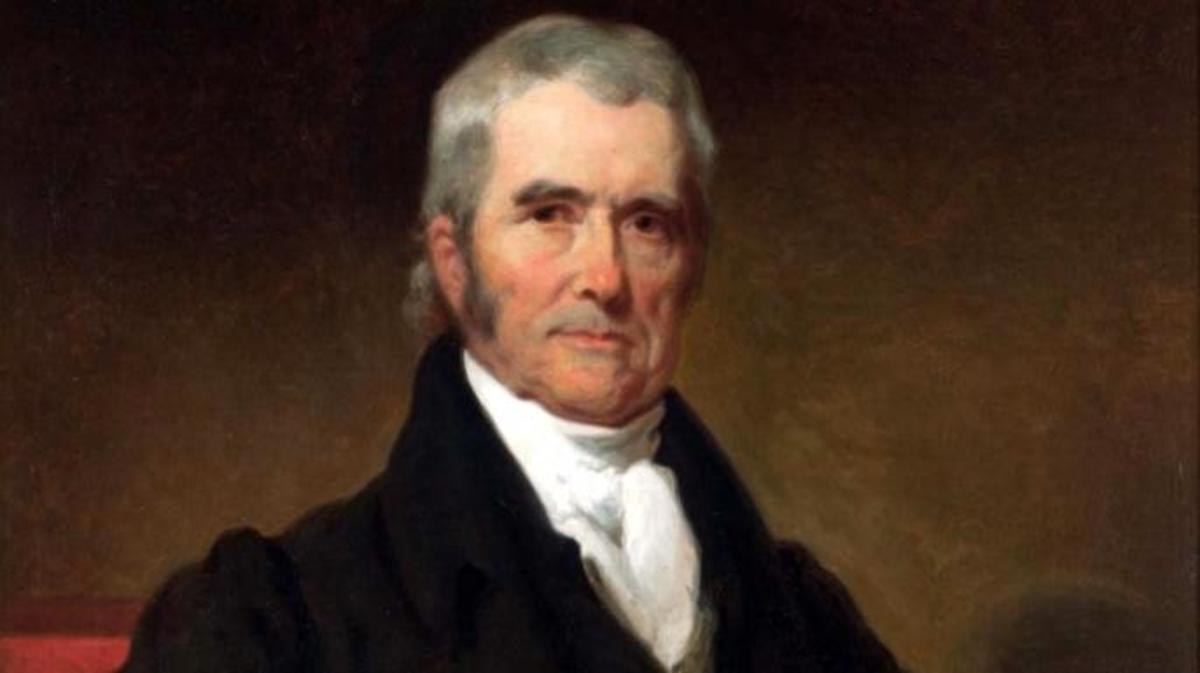
Marshall

You knew I couldn’t let this one pass.

The UIC John Marshall Law School is officially changing its name to the University of Illinois Chicago School of Law. The decision, a capitulation to the unethical mentality of the cancel culture and historical air-brushing strategy embraced by the political Left, comes after months of review by a task force. The resulting report noted, “that despite Chief Justice Marshall’s legacy as one of the nation’s most significant U.S. Supreme Court justices, the newly discovered research regarding his role as a slave trader, slave owner of hundreds of slaves, pro-slavery jurisprudence, and racist views render him a highly inappropriate namesake for the Law School.”

The most influential and important jurist in U.S, history is a highly inappropriate namesake for a law school. Got it.

John Marshall was the fourth chief justice of the Supreme Court, (1801 – 1835), and the only essential one. He authored the majority opinion in Marbury v. Madison (1803) that established judicial review, giving the Court power to declare legislative acts and executive actions unconstitutional. Without Marshall, the Constitution wouldn’t work. He took a bold and controversial step to ensure that basic rights and principles would not be wiped out by a rogue Congress or a dictatorial President. How many landmark SCOTUS decisions does the nation owe to Marshall as a result? How different would our lives be without his deft adjustment to the balance of the Branches? Would the United States of America even exist at all?

Continue reading

Observations On The U.S. Supreme Court “Final Four” For “Greatest Justice Ever”

The indispensible and, as far as I can discern, scrupulously non-partisan and objective Supreme Court analysis site SCOTUSBLOG, has, in a rare display of frivolousness, created a “bracket” quest for its readers to decide on the “the greatest Supreme Court justice” of all time.

The contest is now down to the “Final Four,” as a parody of the NCAA tournament that I somehow manage to miss every years because of my sock drawer emergencies. Writes James Rosomer:

This tenacious tetrad of justices (just enough to grant cert!) is an apt representation of 220 years of American jurisprudence. In their ideologies, their sensibilities and their historical eras, these four semifinalists are diverse in many ways – though the lack of racial and gender diversity also stands out as a sad reflection of the court’s history.

What matters is the intellectual diversity on the Court, not color or genes, but even SCOTUSBLOG apparently feels the need to pander to the woke mob. I’ll forgive Rosomer, and the readers who voted in the competition have mostly shown an admirable lack of ideological bias and substantial historical perspective. “A liberal icon, a conservative icon, an early 19th-century pioneer, an early 20th-century luminary” is how the blog correctly describes the finalists.

My favorite Supreme Court Justice was among the 16 entered, but didn’t make it to the finals. No, not John Marshall: my favorite is Hugo Black. That the best writer and the keenest legal mind of all (in my opinion) would lose to Earl Warren demonstrates the unavoidable vagaries of the term “greatest.” Is that intended to mean most important? Marshall has to win in that category. Most influential? Warren, perhaps, but that was as an administrator and leader, not as a judge.

Black was a First Amendment absolutist, and we could use his eloquence now. The black mark against Black is that he wrote the court’s majority opinion in Korematsu v. United States, which upheld Roosevelt’s decision to intern Japanese Americans during World War II. Black believed the judiciary should stay in its lane, and thus believed that the Court should not interfere with  legislative and executive actions during wartime. It is fair to say that everyone was wrong in the decision to take away the rights of Japanese Americans. Calling Black a racist, however is unsupportable. He joined the majority in Shelley v. Kraemer (1948), which invalidated the judicial enforcement of racially restrictive covenants.He joined the unanimous Brown v. Board of Education (1954)decision that struck down segregation in public schools.

Black, however, staunchly opposed bending the law and law enforcement to accommodate civil rights activism. He opposed the Warren Court’s penchant for  reversing convictions of sit-in protesters, saying In 1968,, “Unfortunately there are some who think that Negroes should have special privileges under the law.” Unfortunately, there are more who think that now.

Black argued that waiving legal consequences for laws broken for  “good causes” could eventually lead to support for evil causes later. Black said he was “vigorously opposed to efforts to extend the First Amendment’s freedom of speech” to conduct. Ah, well, I’m a Red Sox fan; I’m used to losing.

Of the remaining four, I would think Marshall is the easy choice.

Continue reading

Morning Ethics Warm-Up, 8/5/2020: Words, Spin, And Millard Fillmore

Because “Glibby-glop-gloopy” or whatever the hell Oliver is singing here makes about as much sense as anything else I’m hearing…

1. Today in The Great Stupid’s cancellation orgy:

  • The ABA Journal reports that the Massachusetts Appeals Court  wants the word “grandfathering” to be “canceled.” Ruling in a zoning dispute, the court said a structure built before the enactment of zoning regulations had a certain level of protection, but the court  didn’t have a good word to describe that protection because  it wouldn’t use  “grandfathering.”  “Because we acknowledge that it has racist origins,” the woke and silly judges declared.

Apparently the phrase “grandfather clause” originally referred to laws adopted by some states after the Civil War to create barriers to voting by African Americans, explained Justice James Milkey in footnote 11 to the August 3 opinion. Interesting! And completely irrelevant to how the word is used now. Now, if I were Ann Althouse, who is word-obsessed, I might spend hours looking for other words used routinely today that have unsavory origins. I don’t care what words originally meant or when  they were first used. The objective with all words is communication. “Grandfathered” is a useful word. I used it in my baseball lecture for the Smithsonian to describe how spitball pitchers were allowed to keep throwing the unsanitary pitch after it was banned for everyone else in 1920. The court’s kind of virtue-signalling makes people stupid and communication difficult, and shame on the court for indulging in it.

  • The University of Buffalo will remove any reference to President Millard Fillmore on its campus,though he helped found the school and served as its first chancellor from 1846 until his death in 1874. School officials said in a news release that its decision to erase the memory of an individual the university owes its existence to “aligns with the university’s commitment to fight systemic racism and create a welcoming environment for all.”

No, it aligns with craven cowering to Black Lives Matter intimidation  and statue-toppling mobs.  Millard Fillmore—-great name, crummy President—signed The Compromise of 1850, which included the Fugitive Slave Act. Since it was a compromise, the school’s logic would require “canceling” all the anti-slavery crusaders who were part of it, as everyone at the time was desperately trying to keep the United States from ripping apart. When that effort failed, we got the Civil War, and more American casualties than any war before or since. How dare Fillmore try to stop that?

I think the Fillmore-cancelers should be obligated to explain how they would have handled the growing tensions over slavery and the cultural divide between North and South. I’m sure they have a brilliant answer ready.

As the suddenly “In” Fred Rogers would  say, “Can you say ‘hindsight bias’? Sure you can!” Continue reading

The Big Lies Of The “Resistance”: #9 “Trump’s Mishandling Of The Pandemic Killed People”


Instapundit has a running “Jaws”-evoking gag, jointly favored by contributors Stephen Green and Ed Driscoll,  when they are introducing posts that highlight certain outrages. For example, the link to an article titled “Five Times Obama Abused His Power and Democrats Didn’t Care”  was introduced with their catch phrase,“You’re gonna need a bigger blog.” That would be an appropriate introduction for the latest addition to the Ethics Alarms list of the Big Lies launched in the ongoing effort to undermine Donald Trump.

[The Big Lies Of The “Resistance”: A Directory has been updated, and can be found here.]

This one, the ninth (it replaces the previous #9, which is now subsumed in this one), is made up of hundreds, maybe thousands of smaller lies, fake news and deliberate misinformation, along with the now familiar sneering innuendos in virtually every report on the Administration’s efforts to respond to an ongoing health crisis.

The Democratic Party/”resistance”/mainstream media collective got overambitious with this one. It is simultaneously attempting to blame Trump for the Wuhan virus and the economic collapse that was the direct result of measures they claim he undertook too late. Meanwhile, they are advocating continuing damage to the economy in response to the virus now, while fearmongering about its risks. The internal hypocrisy and contradictions inherent in this is too obvious even for dimmer citizens to miss.

Big Lie #9 can stand as one of the most flagrant examples of unrestrained hindsight bias in world history. Leaders often have to act without perfect or even adequate information ; this was–is— especially the case with the pandemic. Even now, not enough is known about the virus, which may also have multiple strains and mutations. Whether any measures put in place by decision-makers are “good” decisions can only be judged by what is known at the time they are made;  to do otherwise is consequentialism, which is unfortunatley how most people think, but which is, upon reflection, moronic. Stupid decisions that work, they reason, are smart; well-considered decisions that don’t are incompetent. President Trump’s enemies are counting on this non-logic to carry the Democrats  to victory in November. It is a cynical and dangerous strategy, because it relies on undermining trust in the nation’s leadership.

The fact is that there may have been nothing President Trump could have done to make the effects of the virus any less devastating than they have been. Health organizations have been wrong; his experts have been wrong, China engaged in a deadly cover-up. One particularly hypocritical theme, which has also been employed as criticism in the wake of the George Floyd riots, is that President Trump has failed the test of leadership, that unlike President Roosevelt in his eloquent messages about the Depression and after Pearl Harbor, this President was unable to rally the nation through a crisis.

This criticism makes me particularly angry. Trump is no FDR, but the entire effort by the “resistance” and the news media since the President’s election has been to destroy his ability to be a bipartisan leader. They have withheld the respect for the office that all Presidents need to function effectively, and that all elected Presidents before this one were accorded as a matter of institutional tradition. They removed that crucial tool in their relentless efforts to destroy him, and now they denigrate him for not using it. The hypocrisy is loathsome.

One mistake Trump made, a typical one for him, was to say, early on, that he was not “responsible” for the outbreak. This is yet another example of how the President’s clumsiness in his rhetoric undermines his effectiveness and hands his foes metaphorical clubs to beat him with. He apparently thinks responsibility is synonymous with blame. It is not. Leaders are responsible for what occurs while they are in power. They are not, however, necessarily at fault. Continue reading

From The Ethics Alarms Archives: Two Ethics Takes On Columbus Day

In 2011, I wrote an Ethics Alarm post extolling Christopher Columbus, and urging readers to celebrate this day named in his honor. Two years later, I wrote a post arguing that the holiday was a mistake. Which is how I really feel? Which is correct? I have no idea. I just read both, and found each persuasive. You know the famous observation in thethe essay “Self-Reliance” by Ralph Waldo Emerson, “A foolish consistency is the hobgoblin of small minds”? Today I like that line. Sometimes I don’t.

I certainly don’t like the current movement to cancel Columbus Day, and Columbus, out of the culture and historical record because he was not appropriately sensitive to indigenous people by 21st Century standards. That is no better than tearing down statues of Robert E. Lee, airbrushing history to avoid the inherent conflicts and dilemmas that make it invaluable to us going forward into the unknown…like Columbus did.

Here are the two posts. You decide. Meanwhile, I’m thrilled I could find the great Stan Freberg’s version of Columbus’s quest (above). More of my sensibilities about life, humor and history were effected by Freberg’s satire than I like to admit…

I. Celebrate Columbus Day, Honor Columbus

Continue reading

Travel Notes…[UPDATED]

Every trip I take seems to require some ethical clarification…

  • Lose-lose. At our hotel in Ft. Lauderdale, a convention of either transvestites, transgender individuals, or some combination of the two dominated the hotel. The organization was “Himmaher”…I think I’m spelling it right. [Correction: I wasn’t. And that wasn’t the organization; it was the name that was listed for the gathering, and the name was HIMMERSHE. Thanks to Zanshin in the Comments below for the correction.]

I had several illuminating encounters. I don’t know that this is true of all such people, but the members of this association or club all seemed to want to make any non-club member they saw as uncomfortable as possible. Yes, that’s unethical. How you choose to dress, what you choose to have lopped off, and who you want to sleep with could not interest me less, and that is the  attitude a society like ours should strive to encourage. (None of those things should engender and advantages, either.) But what these people seemed to be seeking was imposed ethics zugswang. If you looked directly at them, the response was a chip-on-the-shoulder, “Go ahead and stare, honey: neverf seen a freak before?” If you appeared to be avoiding staring—I regard a six-foot ex-male standing in the middle of a hotel lobby in a  wig, skimpy bathing suit, 6 inch heels and speaking loudly in a base voice as parading a psychological problem or ten, and deserving the same social courtesy I would offer to a Tourette’s victim or a hebephrenic—then the individual decided to make it a project to get you to stare, as if your failure to provide the attention they craved was an insult.

Yeah, I know this is a stage, similar to the early stages of the gay rights movement. Continue reading

The Carson Smith Fallacy

Reading the comments on sports blogs is a great way to lose faith one’s fellow occupants of the planet.

Take, for example, the saga of Carson Smith, erstwhile relief pitcher for the Boston Red Sox. Smith was nigh unhittable in the National League in 2015, and Sox General Manager Dave Dombrowski was widely regarded as having pulled off a heist when he acquired the young right-hander in a trade. Smith then promptly hurt his arm and required “Tommy John surgery,” a procedure that requires a full year or more to recover from. Naturally, Dombrowski was blamed for the injury, which nobody could have predicted, and was routinely mocked online by Red Sox fans for making it.

Carson Smith missed most of 2016 but returned to the mound in 2017, showing enough of his former skill to raise the hopes of  fans. In 2018 he looked even better. Then, after a bad outing in which he lost a lead and the game, Smith, disgusted with himself, hurled his glove to the dugout floors. Somehow, the angry gesture dislocated his shoulder, tore a muscle, and required surgery, ending his season, and possibly his career.

Ever since, Red Sox fans in droves have been posting comments online like this one, which I saw today:

“I’m so glad we waited a year or two for Carson Smith. He’s the greatest thing since sliced bread when he’s not accidentally blowing out his own pitching arm. Good grief.  Maybe the bullpen guys should have a new motto: “Try not to do anything stupid”. I guess this works for GM’s, too.”

Continue reading