Ethics Dunce: Slate Editor David Plotz

SlateDavid Plotz, journalist and editor of the on-line culture magazine Slate, takes on the California Supreme Court in an essay in his magazine, harshly criticizing the 7-0 decision yesterday to deny Stephen Glass the opportunity to practice law in the state. Glass has been attempting for almost 20 year to persuade some state that a star journalist who was exposed as a pathological liar is a trustworthy lawyer. Plotz’s attack on the opinion as smug and self-righteous says a lot more about Plotz and his field of journalism than it does about the court. It  exposes the perils of a non-lawyer delving into legal ethics without even a modicum of research. Mostly, the exercise shows how far journalism has fallen, when the editor of a prestigious on-line journalistic enterprise essentially denies the importance of professionalism. “It’s a job,” he concludes about the law, trying to bring lawyers down to the depths of his own, thoroughly debased line of work.

Not that the decision isn’t ripe for criticism, for it is. In particular, the majority reasoning continues the legal field’s strange hypocrisy of applying a far more stringent standard to the character of those trying to get their licenses that it does to those who have proven themselves unworthy of holding them. The District of Columbia, supposedly one of the toughest jurisdiction regarding legal discipline, recently administered a mild reprimand to a Justice Department attorney who had been practicing on a suspended license for more than two decades. John Edwards, whose trail of lies while deceiving his dying wife and devising schemes to hide his pregnant mistress in order to gull the Democratic party into nominating him for President, has managed to avoid any discipline at all despite the fact that his continuing leave to practice law disgraces every lawyer on the planet. And, of course, the very same court Plotz derides now recently delivered the stunning conclusion that a non-citizen who entered the country illegally and engaged in years of lies to remain here is nonetheless fit to be a lawyer. (Naturally, Plotz liked that decision.) None of these are mentioned in the post. Continue reading
Ethics Quote of The Week: The California Supreme Court

stephen_glass

“Glass and the witnesses who supported his application stress his talent in the law and his commitment to the profession, and they argue that he has already paid a high enough price for his misdeeds to warrant admission to the bar. They emphasize his personal redemption, but we must recall that what is at stake is not compassion for Glass, who wishes to advance from being a supervised law clerk to enjoying a license to engage in the practice of law on an independent basis. Given our duty to protect the public and maintain the integrity and high standards of the profession (see Gossage, supra, 23 Cal.4th at p. 1105), our focus is on the applicant‟s moral fitness to practice law. On this record, the applicant failed to carry his heavy burden of establishing his rehabilitation and current fitness.”

—–The California Supreme Court, finally rejecting the application of disgraced journalist Stephen Glass for admission the the California Bar, on the grounds of trustworthiness and poor character.

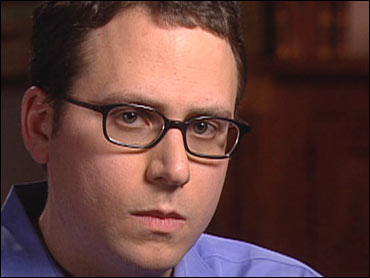
This should end Glass’s efforts to enter the new profession of law after spectacularly destroying his reputation in his former one, that of star journalist for The New Republic. After he was found to have fabricated more than 40 pieces for the magazine and gone to elaborate efforts to deceive fact-checkers. Stephen Glass  (Whom I first wrote about here) was fired in 1998. Luckily for him, he was already a student at Georgetown Law Center at the time, attending its night school, as he almost certainly would not have been admitted after his public exposure as a serial liar. Glass graduated, and beginning in 2002 commenced on this long,  difficult and ultimately unsuccessful journey to professional redemption, taking and passing multiple bar exams and being rejected, first by New York and now by California.

Upon reflection, Glass may well conclude that lying to the New York Board of Bar Examiners was an especially bad idea. Continue reading

Ethics Hero: Pro Track Star Lauren Fleshman

Lauren Fleshman

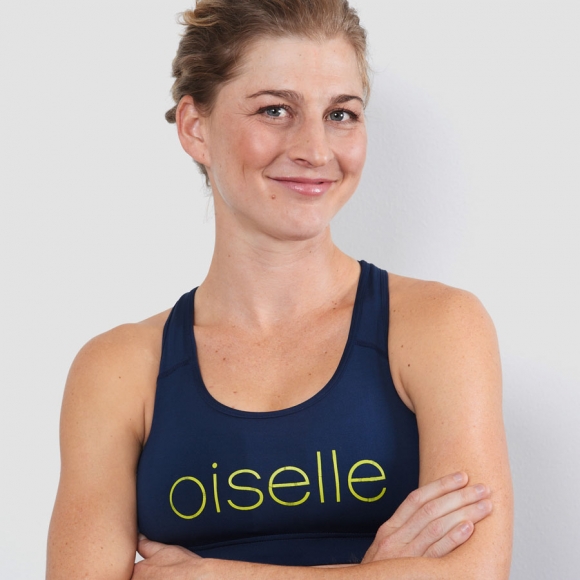
Lauren Fleshman is a 31-year-old track star whose attractive looks have garnered her product sponsorships, magazine covers and fashion show appearances. Thus it represents a noble sacrifice for her to choose to reveal the truth about her beauty and fitness—that she’s human, and is not as perfect a specimen of the species as the media would lead us to believe.

On her blog, Fleshman struck a blow against vanity and for the acceptance of realistic and healthy female body images by exposing the kinds of photos of glamorous athletes like her that the public isn’t usually permitted to see. Images like this… Continue reading

Ethics Quiz: Rank The Unethical Politicians!

Three pols

For your first Ethics Alarms Ethics Quiz of the New Year:

Consider these unethical politicians from Florida, Texas and California…

Unethical Politician A:

California State Sen. Kevin de Leon (D-Los Angeles)

Ethics Failures:

Competence, Responsibility, Diligence

Explaining his proposed legislation SB808, dealing with “ghost guns” (that is, home-made weapons) at the California Capitol in Sacramento last week, de Leon held up such a firearm and said, “This right here has the ability with a .30-caliber clip to disperse with 30 bullets within half a second. Thirty magazine clip in half a second.”

This is genuine anti-gun gibberish that could not possibly be uttered with a straight face by anyone even slightly familiar with guns. There is no such thing as a “30-caliber clip;” he is referring to a 30-round magazine. (There is also no such thing as a “30 magazine clip.) “Caliber” refers the measurement of the width of a bullet or the internal diameter of a gun barrel, not what the magazine will hold. And the average rate of fire for a semi-automatic rifle, which is what he was holding, is about 120 rounds per minute, not 3,600 rounds per minute.

Why are legislators who don’t care enough about guns to educate themselves about what they are, how they work and what they are capable of doing, submitting legislation about guns? Because they just know guns are dangerous, and in their infantile, knee-jerk reasoning, that’s all they have to know. The rest is fakery: the legislator is pretending that he has sufficient expertise to be credible on the issue, when he is too lazy and arrogant to do the minimum study necessary to render him qualified to vote on gun regulations, much less author them.  This is the equivalent of a legislator who thinks babies are delivered by storks proposing abortion laws. Continue reading

Ethics Tales Of Three Governors, As Hope Slowly Dwindles

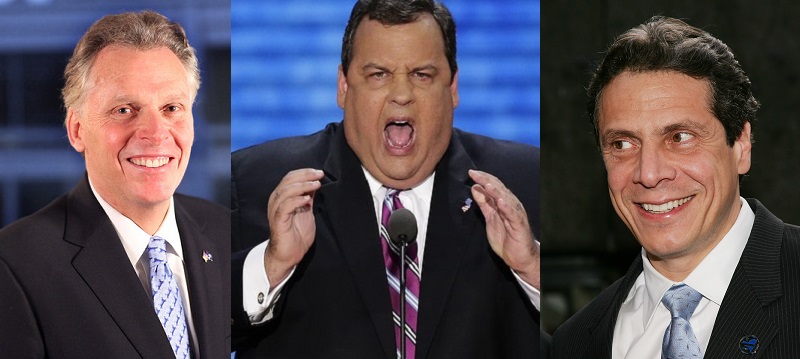
McAuliffe-Christie-Cuomo

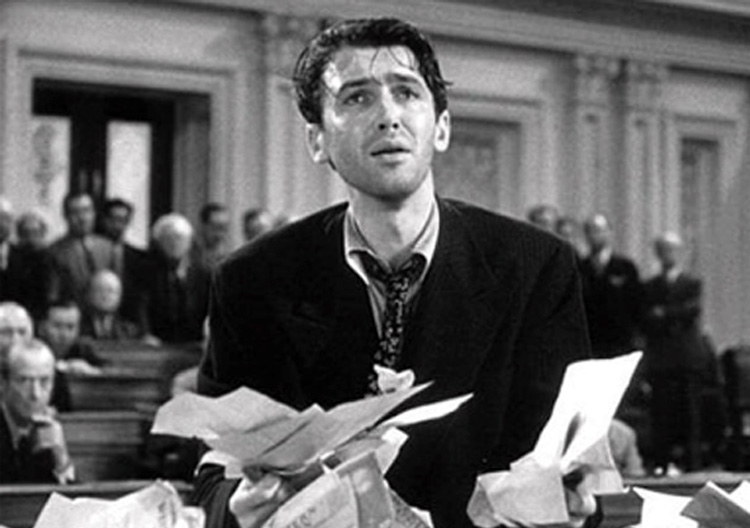
The U.S.’s recent experiment with a Senator-President has been disheartening—persuasive words unhinged to action and actual principles. There was a remarkable example of this in the President’s NSA speech, in fact, in a quote that would have been the Ethics Quote of the Month had it not been so cynical coming from him. The President said

“Given the unique power of the state, it is not enough for leaders to say: Trust us, we won’t abuse the data we collect. For history has too many examples when that trust has been breached. Our system of government is built on the premise that our liberty cannot depend on the good intentions of those in power; it depends on the law to constrain those in power.”

Wonderful! If only this had been uttered by a leader with credibility and integrity, rather than one who has shrugged off, firing no one, interference with the federal election process by the IRS, illegal spying by the NSA, and the intentional facilitation of illegal firearms coming into the murderous hands of drug cartels by his Justice Department, after bombing Libya illegally in defiance of law, selectively enforcing immigration laws, using drones to kill American citizens abroad without due process, making recess appointments when the Senate wasn’t in recess, and more recently, unconstitutionally amending the ACA on his own after it was signed into law.

This was all foretold, however. Community organizers and senators make speeches and inspire people, but unfortunately seldom have a clue how to actually govern unless, as Obama himself has wistfully noted, they have absolute power. This is why, in theory, at least, state governors, who at least have experience governing, now seem like a better recruitment field for the next occupant of the Oval Office. It sounds good in the abstract, but the recent news from the state houses  is like ice water in the face—-

Christie And Obama: Is It Me? I Keep Expecting Partisans And the News Media To Have Integrity And Honesty, And I Keep Getting Disappointed…

Nah!

Nah!

The news media feeding frenzy over Chris Christie’s traffic jam scandal continues, with the news that a special prosecutor is being handed the investigation being treated with solemn nods and predictions of sinister revelations to come. This is all fine and good: the possibility that any elected government leader would intentionally cause pain for the citizens it is pledged to serve is too offensive to the concept of duty to be allowed to linger in doubt. When a New Jersey Democratic legislator opined that the governor should face impeachment if it is shown that he ordered the despicable traffic sabotage, I heartily agreed, and I count myself as a Christie admirer. The poll results so far regarding this incident, especially in New Jersey, are troubling: by Ann Athouse’s calculations, 7% of those polled believed that Christie was behind the outrage and lied about it, and don’t mind a bit. Where are the ethical standards of such individuals? What’s wrong with those people?

Whatever it is, it is apparently the same thing that is wrong with Democrats, progressives, African-Americans and the news media, who don’t seem bothered at all that equally insidious, or worse, governmental abuses have been, may have been or are being engineered by President Obama and/or his lackeys, and there appears to be no accountability for it, or even adequate bipartisan criticism. How can this be? What am I missing? Continue reading

“Jack Reacher” Ethics, Or Why It’s No Fun Going To Movies With Me

Jack ReacherI thought the Tom Cruise action film “Jack Reacher” would be a good way to escape from an aggravating day at the ethics grindstone, but no. It was rapidly apparent that this would be one of these movies with a sociopathic vigilante hero—Reacher (Cruise) is kind of a cross between Steven Segal and Billy Jack, summarily executing bad guys and completely uninterested in nuances like trials. The character, from the pen of British writer Jim Grant, is supposed to be 6’5″ tall and weigh about 250, so having the diminutive Cruise play him is a bit like having Danny DeVito play Fezzik in “The Princess Bride.”

The main annoyance was the typical persistent misrepresentation of legal ethics, especially the attorney-client privilege. Reacher is dark, free-lance, drifting Mr. Fix-it, and he is engaged by lawyer Helen Rodin as an investigator to prove her client, an ex-military sniper who is being prosecuted by her father, the DA, for apparently gunning down five random innocent victims in a shooting spree, is something more than a mad dog killer. In their initial conversation about the case, Cruise asks if what he is telling her is privileged. She assures him that it is, but the sequence is misleading, for Reacher and for the audience. Continue reading

Ethics Hero: Former Brooklyn Judge Frank J. Barbaro (Zimmerman Furies: Is This Your Future?)

We can hope.

From the NY Times...

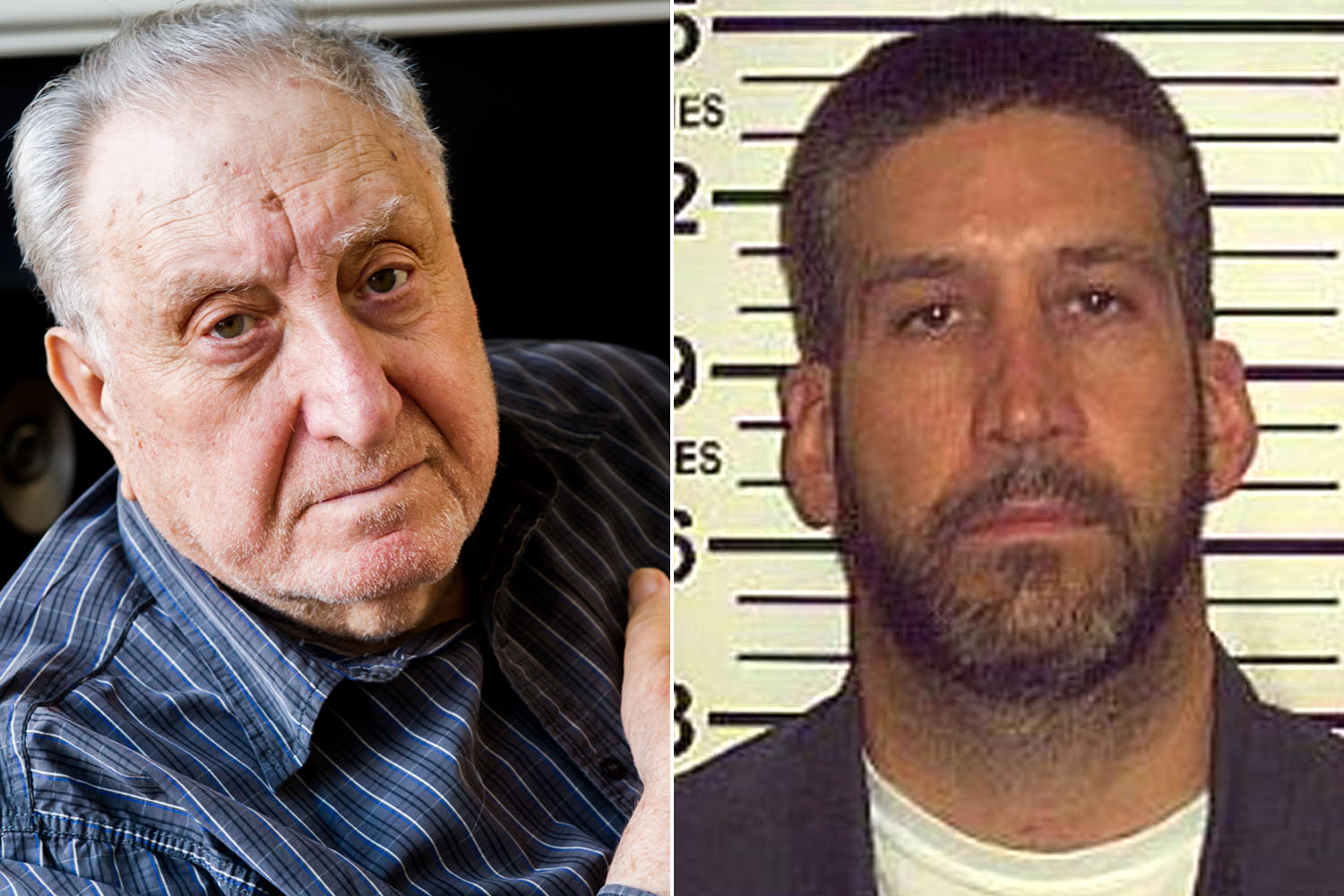
 The judge’s conscience gnawed at him a little more every year after he retired from the bench. With every news article he read about a wrongful conviction, Frank J. Barbaro, the former Brooklyn judge and assemblyman, would return to a particular murder case in 1999, and question whether he had made the right decision to send a man to prison for 15 years to life. Not long ago, Mr. Barbaro, 85, decided to contact the lawyer for the man, Donald Kagan. He got a transcript of the trial, during which Mr. Kagan had waived his right to a jury and put his fate in Judge Barbaro’s hands.

“As I read it, I couldn’t believe my eyes,” the former judge said in an interview. “It was so obvious I had made a mistake. I got sick. Physically sick.”

Mr. Barbaro’s change of heart led to a highly unusual spectacle this week in a Brooklyn courtroom: He took the witness stand in State Supreme Court to testify at a hearing that his own verdict should be set aside. His reason was even more unusual: As a die-hard liberal who had fought as a politician against racism in Brooklyn and weathered the race conflicts in Bensonhurst, he said he had been biased against Mr. Kagan because he was white and the shooting victim, Wavell Wint, was black.

“I believe now that I was seeing this young white fellow as a bigot, as someone who assassinated an African-American,” Mr. Barbaro testified on Wednesday before Justice ShawnDya L. Simpson. He added: “I was prejudiced during the trial.” Continue reading

Ethics Hero: Bill Clinton

Clinton and Bloom

A couple of initial observations on an ironic first Ethics Hero for 2014:

  • President Clinton has been an Ethics Hero before, despite the fact that it was his successful efforts at corrupting the nation’s ethics that led me to launch my first ethics website.
  • As always, when Bill does the right thing, it raises the classic ethics conundrum: did he do the right thing because it was right; did he do it because he knew someone had to do right and he wanted to be first; did he do it because he felt he had a duty to do right; did he do it because he wanted to be perceived as doing right; or did he do it to fool people into believing that he was the kind of person who just does the right thing?
  • Good luck, New York City! You are going to need it.

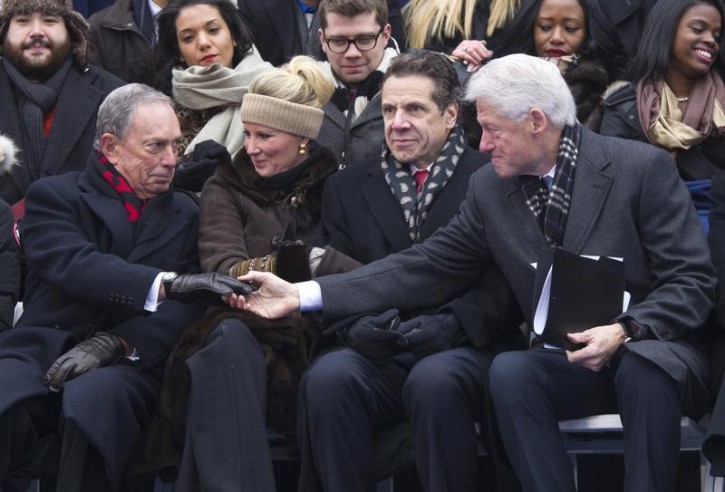
The speakers lined up for  Mayor Bill  de Blasio’s inauguration’s made one wonder if being rude, arrogant and confrontational is a mandatory qualification for being a New York progressive. Continue reading

Shia LaBeouf, Plagiarism Addict, With Much Worse To Come

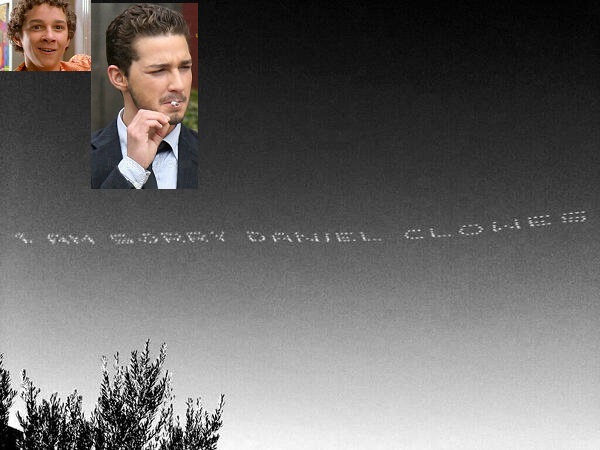
Shia past and present, with apology...

The child star past and present, with apology…

Actor Shia LaBeouf, known to Disney Channel aficionados as the annoying little brother on “Even Stevens” and to movie fans as Indiana Jones’ son and the Transformers Guy, is so much more, and not in a good way. His rapidly expanding list of reckless and socially-clueless episodes, including the obligatory misconduct behind the wheel of an expensive car, signals that he may be the new Lindsay Lohan, a talented former child-star raised to adulthood without basic life-skills, respect for others, and an appreciation of the difference between right and wrong. This is a tragic scenario that we are cursed to witness again and again—we saw it in 2013 in the increasingly obnoxious and desperate conduct of pop star Justin Bieber. Give a child wealth, power and adulation without first imbuing him or her with values, discipline and humility and what do you get? A menace.

As LaBeouf’s acting career has waned with his growing reputation as an untrustworthy (and sometimes violent) jerk, he has refashioned himself into an aspiring artist. Unfortunately, he lacks some basic traits of successful artists, like integrity and creativity. His inclination, being raised, like most child stars, in an unstable environment by self-absorbed and dysfunctional parents, is to cheat. In 2012, LaBeouf attached his name to three short graphic novels and a webcomic series. This year, we learned that at least two of the graphic novels contained text plagiarized from other writers. Then LaBeouf attached his name as writer to the short film (which he also directed) called “HowardCantour.com,” which was unveiled at the Cannes Film Festival and received some praise there. The  short, about an online film critic, included a strong resemblance to Daniel Clowes’ 2007 comic “Justin M. Damiano,” as well as large sections of dialogue directly lifted from it. No one picked up on the plagiarism until LaBeouf  released his film online.  Continue reading