Comment of the Day: “From ‘Psychology Today’: How To Be A Better Liar—And A Negligent Endorsement Of Deceit”

Every adult a lawyer: the politician's worst nightmare!

Every adult a lawyer: the politician’s worst nightmare!

The second Comment of the Day comes from Australia, as zoebrain flags an excellent example of deceit at work, in her comment to my post about the dangerous tendency to regard deceits as less unethical than straightforward lying, and yes, that’s quite an oxymoron.

One of the many points of contention between me and the lawscam crowd is that many of the aggrieved out-of-work and under-employed lawyers only obtained their law degrees as a means to achieve what they believed were guaranteed riches, and thus feel cheated that the current economic mess has shown that to be a false assumption. I, in contrast, assert that a law degree pays for itself over a lifetime regardless of whether or not it leads to well-compensated employment as a lawyer, and one of the reasons is that legal training inoculates you against the deceit of others. If nothing else, law students learn to pay attention to what words really mean, making it much harder for masters of deceit to fool them with carefully chosen weasel words. A nation of citizens trained in the law would not so easily fall victim to the deceit of politicians, those who peddle bad loans and investments, weight loss scams (“results not typical!”) and the predations of other con-artists….including, sadly, other lawyers.

Here is zoebrain’s Comment of the Day on the weekend’s post, “From ‘Psychology Today’: How To Be A Better Liar—And A Negligent Endorsement Of Deceit”:

“Here’s an example for you: testimony in an Australian Senate inquiry on same-sex marriage”:

Senator Pratt: But what if someone is of indeterminate gender? I am unclear whether they should have the right, according to the way you would argue it, to be part of such a union.

Mr Meney : People suffering from Turner syndrome, Klinefelter syndrome and things of that ilk are typically infertile or regarded as being mentally handicapped in some way. Many things about marriage require people to have the capacity to consent to what marriage is all about, so a significant mental incapacity might be something that might mitigate against a person being able to consent to a contract of marriage. But that is true of any marriage.

Every word true, as befits testimony from the Director of the Life, Marriage & Family Centre, Catholic Archdiocese of Sydney.

“Although they are not mentally retarded, most XXY males have some degree of language impairment. As children, they often learn to speak much later than do other children and may have difficulty learning to read and write.”

——Understanding Klinefelter Syndrome — National Institute of Child Health and Human Development.

“Mental retardation is not a feature of Turner syndrome, despite such claims in older medical textbooks. Thorough psychological studies show that these women are normal intellectually, but often have a characteristic pattern of intellectual functioning. While their verbal 10 usually is average or above, their non-verbal IQ may be considerably lower because of problems visualizing objects in relation to each other. This difficulty may show up in poor performance in math, geometry, and tasks requiring manual dexterity or sense of direction.”

—–Turner Syndrome — Human Growth Foundation.

He didn’t lie: it’s true that “People suffering from Turner syndrome, Klinefelter syndrome and things of that ilk are typically … regarded as being mentally handicapped in some way.” They’re not, of course, as he well knows, but that’s not what he said, is it?

That was his defense when the Organisation Intersex International took him to task for this. He didn’t actually lie. As a good Catholic, he wouldn’t do that – it would be a sin.

______________________________

Graphic: Financial Post
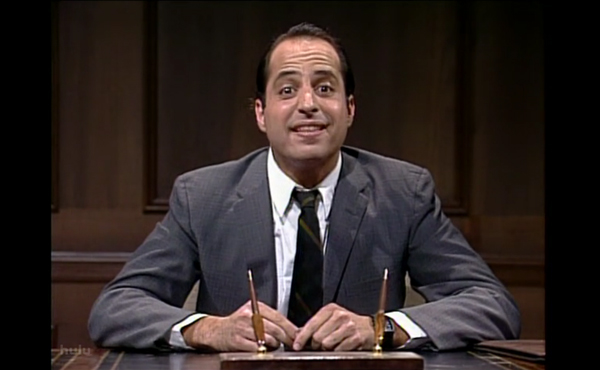
From “Psychology Today”: How To Be A Better Liar—And A Negligent Endorsement Of Deceit

Tommy Flanagan

“Psychology Today” has tips for Tommy Flanagan and the other aspiring liars out there.

Jeff Wise provides what he calls “The Ten Secrets of Effective Liars” on the “Psychology Today” website. I have some problems with his list, among them that despite his protestations to the contrary, it sure reads more like a handy-dandy self-help list for the George Costanzas, Tommy Flanagans and Bill Clintons among us.

My main objection, though, is to his #3 on the list, #3 Tell the truth, misleadingly. He correctly points out that a statement that is technically true will often be the most effective way of misleading others, but writes, “Technically, it’s only a prevarication – about half a sin.” I don’t know or care about how it ranks on the sin scale, but he is describing deceit, and deceit is a lie, period, no question about it. Wise is passing on a misconception himself, one that allows the most effective and destructive liars among us deceive routinely and then rationalize that they “really weren’t lying.” Spreading this common, popular and useful—to liars—myth does more damage than any of the supposedly beneficial results of his list could make up for.

Among the sinister results of promoting deceit as only half a lie, and therefore twice as forgivable as a “real” lie, is that it gives deceit masters (like Clinton) an effective excuse when they are caught. “Oh! Oh, I’m sorry! When I said ‘I didn’t have sex with that woman,” you thought I meant that I didn’t use my superior power and influence to persuade my young female intern to give me a hummer! I should have been clearer!” Right. Thus the liar switches the real blame onto the listener who was originally deceived. If that listener likes the liar and was inclined to trust him (or her), the rationalization that it was all a big misunderstanding will often be enough to allow the party deceived to keep trusting the liar…and be set up to be deceived again. Continue reading

Georgetown Law Center and The Case Of The Double-Crossed Donor

Sometimes those naming deals backfire, you know?

Sometimes those naming deals backfire, you know?

Scott K.  Ginsburg, a media mogul who got a J.D. from Georgetown Law Center in 1978, had been wooed by the school’s development team for a major gift when he was riding high, amassing billions in the 1990s. He agreed to contribute some pocket change–five million bucks—to build a new fitness center that would bear his name. The deal was put into writing, and the University issued a cheerful press release. Then, in 1999, shortly after the agreement was reached,  the Securities and Exchange Commission filed suit against Ginsburg, accusing him of passing along inside information to his father and brother. A jury agreed with the SEC, and he was orderedto pay $1 million in fines. After a flurry of appeals, the verdict stuck. (NOTE: In the first version of this post, I implied that this was a criminal case. It wasn’t: this was a regulatory lawsuit, and a civil verdict. A dumb error on my part, and I apologize to readers and Mt. Ginsburg for the misinformation.)

While all of this was going on, the Law Center, understandably, got nervous. Although Ginsburg was not a practicing attorney at the time, law schools don’t like having facilities named after grads who have been found to have violated laws or regulations in high-profile cases. In 2002, then-Georgetown Law Center Dean Judith Areen sent Ginsburg a letter thanking him for his support but also asking to revise the agreement, eliminating the promise of naming rights.  Areen said the school would find some way to “honor your gift without generating negative media coverage.”  Ginsburg, however, refused to sign on. As the years went by and the school continued to promote his gift as enticement to other donors as well as hitting him up for more money, he assumed the Scott K. Ginsburg Health and Fitness Center was under construction. There’s a fitness center, all right, on the GULC campus, but Ginsburg’s name isn’t on it. Now he is suing the Law Center, alleging that it reneged on the deal. Continue reading

Ethics Dunces: The Hugo Chavez Fan Club (Michael Moore, Sean Penn, Rep. Jose Serrano (D-NY), Oliver Stone and Joe Kennedy III

"We love you Hugo, we really do-oo! There isn't anyone, we love like you-oo! When you're not with us, we're blue! Oh, Hugo, we love you!"---From the new musical, "Bye-Bye Chavez," written by Oliver Stone, starring Sean Penn!

“We love you Hugo, we really do-oo! There isn’t anyone, we love like you-oo! When you’re not with us, we’re blue! Oh, Hugo, we love you!”—From the new musical, “Bye-Bye Chavez,” written by Oliver Stone, starring Sean Penn!

What do we learn from those who mourn the passing of Venezuelan autocrat Hugo Chavez and praise his leadership? Chavez leaves his nation with a corrupted judiciary, an intimidated and manipulated press, a soaring violent crime rate, massive debt, crumbling infrastructure, galloping inflation, government-sanctioned anti-Semitism, and the prospect of political instability for the foreseeable future. When we hear an American praise Chavez, we learn that he or she neither trusts or values the institutions of democracy, like a free press and independent judiciary. We learn that such an individual believes that indeed the ends justify the means; that lies, repression, manipulation of news and public opinion, cultism, divisiveness and class warfare are all forgivable and even laudable in pursuit of “social justice,” roughly defined in the manner of Lenin, Stalin, Mao and Castro, murderers all. Continue reading

In Connecticut, A Surrogate Mother Triggers An Epic Ethics Train Wreck

Crystal Kelley and...somebody's baby

Crystal Kelley and…somebody’s baby

There is no field of ethics more murky or subject to conflicting interpretations than bioethics, and few issues in bioethics are as confusing as those involving surrogate mothers who decide that they should have some say regarding the fate of the child that grows in their bodies. CNN has reported on the most perplexing such scenario I’ve every encountered, so perplexing that I can’t unravel the ethical rights and wrongs of it.  I wonder if anyone can with confidence. I’ll just summarize the main features and some of the issues raised; you will need to read the whole, stunning story to fully appreciate this train wreck’s sweep and carnage.

I. Crystal Kelley, a single mother who had endured two miscarriages, wanted to help another couple conceive, but mostly wanted the $22,000 fee since she was out of a job. She contracted with a couple seeking their fourth child, and was implanted with two previously frozen embryos. One survived. Ethics issue: Did Kelley tell the parents about her miscarriages?

2. Five months into her pregnancy, tests showed the baby Kelley was carrying had serious medical problems, though the child had a chance at survival. The couple said that they wanted Kelley’s pregnancy terminated because they didn’t want the baby to suffer. Ethics issues: Is that a valid reason to take an unborn child’s life? Was it the real reason? Was the real reason that they were unwilling to pay for and endure all the necessary medical treatmenst, or that they wanted nothing less than a “perfect” baby? Does it matter what the real reason was? Continue reading

Ethics Dunce: Devon Gluck

"Hmmmm...keep this money that isn't mine, or return it to the owner? What a knotty ethical puzzle!"

Hmmmm…keep this money that isn’t mine, or return it to the owner? What a knotty ethical puzzle!”

Devon Gluck, a senior finance major at the University of Delaware, was the surprised recipient of $1800 spit at him by a malfunctioning ATM machine. Obviously the money wasn’t his, or meant for him. Obviously it belonged to the bank, and another depositor. Obviously, the ethical thing to do was to return the money, just as you would return a wallet full of money dropped by someone walking right in front of you. Doing otherwise is theft.

Nonetheless, it took 20-year-old Devon four days and consultation with his father to come to a conclusion that any properly raised 8-year-old should have reached in about 30 seconds. After thinking about all the things he could do with the cash that wasn’t his, he finally returned it to the bank.

Whoopie.

Devon Gluck is going into the finance field, where he will be, sadly, right at home with his hair-trigger ethical instincts. Our families, our schools, our leaders and  and our culture are plainly failing to install even rudimentary ethics alarms in rising generations.

You’re not getting your hands on any of my money, Devon, if I can help it. I recommend that everyone else exercise similar caution. See if your Dad can explain to you why.

_________________________________

Facts: Delaware online

Graphic: Debt No Problem


The Washington Post Gives Up On Independent Ombudsmen: 1) Too Bad, Because It Needs One Desperately and 2) No Wonder, Since Its Last One Was A Bozo

Agreed: He's an improvement over the last ombudsman. But the Washington Post readers deserve better.

Agreed: He’s an improvement over the last ombudsman. But the Washington Post readers deserve better.

The Washington Post, which in 1970 became the first newspaper to employ a full-time “independent ombudsman” to explore reader complaints and exercise ethical oversight, has given up on the concept, pronouncing it a device “created decades ago for a different era.” You know–that era when people trusted the news media, and occasionally were given good cause to do so. Now the Post will rely on a “reader representative” named from the newspaper’s staff.

So much for “independence.”

Giving up on ombudsmen after having Patrick B. Pexton filling the role for the last two years is a little like giving up eating after Thanksgiving at my late Aunt Anna’s house. Her green, slimy, Wonder Bread turkey stuffing had to be tasted (but, oh God, never swallowed!) to be believed. Similarly, Pexton was an utter disgrace as an ombudsman, making excuses for unethical Post excursions into partisan hackery, and apparently completely unaware that his own biases mirrored those of his paper, which supposedly placed him in his job to offer perspective, not cover. And just as I seriously considered never again taking the risk of putting food in my mouth after that memorable holiday dinner in 1966, I can understand the Post thinking, as Pexton’s two year contract mercifully expired last week, thinking, “If we can’t do better than this clown, why have the position at all?” Continue reading

Ethics Quote of the Week: The Washington Post Editorial Board

“…Why is Mr. Obama not leading the way to a solution? From the start, and increasingly in his second term, Mr. Obama has presented entitlement reform as something he would do grudgingly, as a favor to the opposition, when he should be explaining to the American people — and to his party — why it is an urgent national need.”

—–The Washington Post’s editors, in a spot-on editorial splitting the blame for what it correctly calls the “stupid” sequester fight equally between Congressional Republicans and the President, but pointing out the President Obama, because he is President, will be accountable for his failure to lead on the issue.

No way to run a country.

No way to run a country.

Good for the Post. I began a draft of a very similar article, and abandoned it because I have expressed my harsh assessment of President Obama’s leadership style and skills too many times here to be regarded as objective on the topic. There is nothing in the editorial I disagree with. This President’s concept of leadership has been to order the opposition to do what he wants, orchestrate deceitful  PR battles about the horrible consequences that will occur if his edict was not followed, and then to seek partisan advantage by casting all blame on his opponents when his preferred approach was rejected. His acolytes and enablers in the media have allowed him to continue this pattern: to its credit, the Washington Post has been a notable exception, particularly regarding Libya, Syria, and Iran, but also previous budget battles.

President Obama’s handling of the sequester might be his worst leadership botch yet. First he proposed the sequester. He made no effort to make resolving the issue a priority prior to the election, but falsely claimed in the third debate with Mitt Romney that it was not his idea, and that he did not propose it. Continue reading

The Oscar Nominee Truth Squad Goes After “Argo”

argo-poster

The ethics of using artistic license in films based on fact isn’t only being debated in the case of “Lincoln” as we approach the Oscar ceremonies: “Argo” is also under fire.

For some reason conservative radio hostess Laura Ingraham is fond of James Lipton, the unctuous host of PBS’s “Actor’s Studio” interview program. He sounds off frequently on her show, usually about films, and in his most recent gig was pontificating about the Academy Awards. Lipton seems to believe that bias is a condition one is helpless to adjust for: he kept announcing his preferences for various nominees based solely on their association with him or the Actor’s Studio, and explaining his choices by saying, “I’m biased, you see.”

Recognizing bias is just half the job, James. The other half is getting over it. Continue reading

Picking Through The Wreckage of An Ethics Tesla Wreck

The wreck participants. Not pictured: the Tesla.

The wreck participants. Not pictured: the Tesla.

There was questionable ethical conduct galore in the recently-stilled ethics wreck sparked by a New York Times review of the new Tesla electric car, the Model S. Times reporter John Broder test drove the car from Washington, D.C., to Boston, using the  charging stations Tesla has opened along the way.  Broder’s Tesla ran out of juice, and the article concluded with a sad photo of the highly-anticipated Model S  on a tow truck. In short, it was not a positive review.

In response to the review, Tesla’s CEO Elon Musk called it a “fake” on Twitter, then wrote a rebuttal using the data logs of the vehicle Broder tested. Broder wrote a rebuttal to the rebuttal, and eventually the Times “public editor” (others would call her its ombudsman), Margaret Sullivan, was drawn into the battle, performing an investigation and concluding that…

“…I am convinced that [Broder]  took on the test drive in good faith, and told the story as he experienced it. Did he use good judgment along the way? Not especially. In particular, decisions he made at a crucial juncture – when he recharged the Model S in Norwich, Conn., a stop forced by the unexpected loss of charge overnight – were certainly instrumental in this saga’s high-drama ending. In addition, Mr. Broder left himself open to valid criticism by taking what seem to be casual and imprecise notes along the journey, unaware that his every move was being monitored. A little red notebook in the front seat is no match for digitally recorded driving logs, which Mr. Musk has used, in the most damaging (and sometimes quite misleading) ways possible, as he defended his vehicle’s reputation…People will go on contesting these points – and insisting that they know what they prove — and that’s understandable. In the matter of the Tesla Model S and its now infamous test drive, there is still plenty to argue about and few conclusions that are unassailable.”

Perhaps realizing that his vigorous defense of his car had triggered the Streisand Effect, Musk took to Twitter again, this time saying that the ombudsmadam’s article was “thoughtful” and that his faith in the Times was hereby restored. This put a nicely disingenuous spin on the whole episode.

Here is the final ethics tally: Continue reading