Ethics Dunce: Rapper and Hip-Hop Music Mogul Ryan Leslie

I wouldn't mess with this guy. No way.

I wouldn’t mess with this guy, Ryan.  No way. But be my guest…

The real mystery for me in this silly scenario is why the rapper would think he could publicly promise a $1 million reward and not have to make good on it. Any rational theories will be received with pleasure.

Ryan Leslie, who has penned a hit song or two and performs as a hip-hop artist himself, had his laptop and external hard-drive stolen while he was on tour in Cologne, Germany two years ago. Apparently he felt that the demos and songs on the equipment had potential, because he offered $20,000 for the laptop and hard-drive’s return. When that didn’t work, he upped the reward to $1 million. A man named Armin Augstein found the computer while walking his dog in a park not far from where the computer had been taken, and he turned it over to German police. When the man claimed his reward, Leslie refused to hand it over, claiming that Augstein must have been involved in the theft, though police found no evidence supporting that allegation. Continue reading
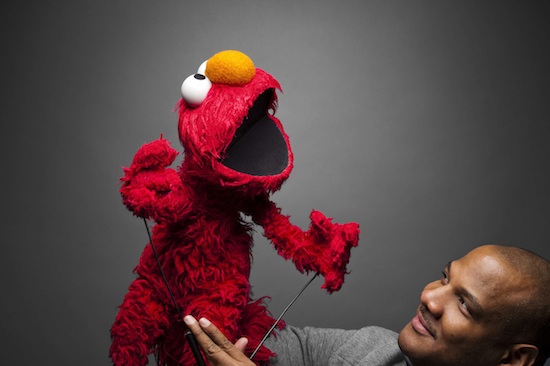

Elmo and the One Recant Rule

When we last left the sad saga of Kevin Clash, the Muppets puppeteer whose voice and hands give cute little Elmo his panache, the 23-year-old man who had accused Clash of having underage sex with him had recanted, agreeing with Clash’s defense that their relationship was consummated later, when both were consenting adults. I opined that this would do little to rescue Clash’s career, as the most innocent Muppet on Sesame Street could not survive being operated by a man who was now associated with gay sex, consensual of not. This likely result seemed unfair to Clash, but is nonetheless a responsible decision on the part of Clash’s employers, the Children’s Television Workshop, whose duty is to their mission and core audience, not to one unmasked Muppet.

Clash’s prospects have not improved. It was revealed last week that the recant was bought and paid for by Clash, who handed Sheldon Stephens $125,000 to deny his previous accusation and never to raise it again. Needless to say, a recant induced by monetary compensation is not a reliable one, and leaves as many questions open as the original claim, if not more. In a settlement, the accuser is paid to drop any legal action, but doesn’t agree to retract the original claim. What Clash did is called “buying testimony,” or ” a pay-off.” Continue reading

NOW You Tell Us? Rep. Scott DesJarlais (R-Tenn) Is Not What What He Appeared To Be

Unconfirmed photo of Tennessee Rep. Scott DesJarlais caught out of his man suit.

In 2010, physician Scott DesJarnais ran to represent Tennessee’s Fourth Congressional District on a pro-life, anti-abortion platform, and won. He also ran as an honest, trustworthy, honorable individual, as all members of the U.S. House of Representatives ought to be.  He is an MD; integrity, intelligence and professional standards of conduct should be assumed. Little more than week after he was re-elected by Tennessee’s voters this year, however, the court records of his 2001 divorce were released. The Democratic Party in the state had fought to have them released before the election with the support of his ex-wife, but DesJarnais successfully persuaded a judge to wait—after all, why spoil a good surprise? When the transcripts were finally revealed, Tennesseans learned that their re-elected, pro-family Representative:

  • Supported his ex-wife’s two abortions before they were wed
  • Helped arrange abortions for a mistress and a patient he impregnated after they were married.
  • Had multiple sexual affairs with co-workers, subordinates and patients
  • Prescribed recreational pills for at least one of his sex partners
  • At one point, put a pistol barrel in his mouth for two hours and threatened suicide
  • Engaged in multiple actions that are violations of medical ethics, workplace ethics, and laws. Continue reading

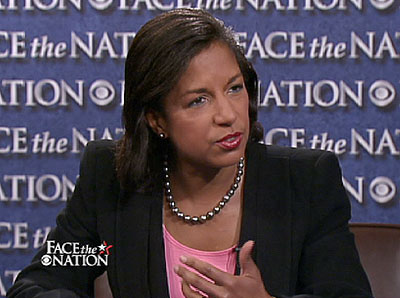
Accountabilty Check: President Obama’s Bizarre Defense of Susan Rice

“Don’t pick on my poor. defenseless, untrustworthy ambassador!”

Add to the list of the Top Ten Outrageous Remarks of President Obama this stunner, the low-light of his first full press conference since March.

“If Sen. McCain and Sen. Graham and others want to go after somebody they should go after me. For them to go after the UN ambassador who had nothing to do with Benghazi…to besmirch her reputation is outrageous.”

“Accountability” continues to be an alien ethical concept to the President, and this proves it. U.N. Ambassador Rice went on the Sunday morning TV shows four days after the deadly Benghazi attack and after U.S. intelligence had determined that the attack that killed the American ambassador in Libya was not a spontaneous demonstration sparked by an anti-Islam video, but a planned, organized, terrorist enterprise. She did this while asserting in no uncertain terms that the attack was not what U.S. intelligence had told the State Department and the White House that it was. Rice, in making this mistaken or dishonest case on behalf of the administration, put her name, her status, her credibility and her position behind it. From the moment she became the Administration’s spokesperson on Benghazi, she had something to do with Benghazi. Continue reading

Ethical Quote of the Month: Gen. David Petraeus

“Yesterday afternoon, I went to the White House and asked the President to be allowed, for personal reasons, to resign from my position as D/CIA. After being married for over 37 years, I showed extremely poor judgment by engaging in an extramarital affair. Such behavior is unacceptable, both as a husband and as the leader of an organization such as ours. This afternoon, the President graciously accepted my resignation.”

—-Gen. David H. Petraeus, Director of the Central Intelligence Agency, in a public statement announcing his resignation from that position.

How quaint.

Democrats and Republicans must have felt that they had stumbled into the Way-Back Machine and delivered into England circa. 1904. A high government official resigning over adultery, sex,…”personal misconduct?” How bizarre! Naturally, Sen. Diane Feinstein, who heads the Senate Intelligence Committee,  announced that she would have supported Petraeus if he had chosen to stay. “I wish President Obama had not accepted this resignation, but I understand and respect the decision,” she said in a statement, and described Petraeus’s resignation as an “enormous loss for our nation’s intelligence community and for our country.”

The right way to leave after an affair, apparently, is to try to cover it up, submit to extortion, corrupt others in the process, and only quit when the hideout is surrounded, the hounds are clawing at the door and someone is yelling at you through a bullhorn—you know, like former GOP Sen. John Ensign, who waited two years to resign while his colleagues, like Feinstein, looked the other way. Nobody gets it in Washington—“it” being the ironclad principle that leadership must set the highest example, not the lowest level it can get away with, or the whole system rots below. Nobody, apparently, except the man who just resigned. Continue reading

Ethics Hero: Golfer Blayne Barber

Aspiring professional golfers can’t just join the PGA tour. They have to qualify by completing and passing PGA school.  Blayne Barber is one such golfer, and his dreams of winning tournaments and cash prizes will have to wait at least another year, if they are realized at all. He washed out this year. The way he washed out, however, is remarkable, and shows that if he does make it into the PGA ranks, Barber will be a credit to his sport.

Indeed, most pro golfers are credits to their sport, because golf has managed to hold the line against the increasing cultural acceptance of poor sportsmanship better than any of our professional pastimes, with tennis a distant second, and third place too far away to see without binoculars. This is a sport where the honor system is mandatory. One reason the tradition of self-regulation has persisted in golf may be because cheating in contests is so easy, and because there are so many ways to do it. Players find their own balls, and write down their own scores. Anyone who has seen James Bond and Auric Goldfinger take turns cheating each other in the famous grudge match from the movie knows that amateur golf can be cutthroat and nasty. The pros have built a culture that requires exemplary conduct.

Few would be this exemplary, however. Continue reading

There Is Nothing Noble About A Deathbed Confession…

Don’t you just hate it when you think you are going to die and confess a horrible crime and then you miraculously recover?

…which is why this O. Henry-esque story makes me smile.

Someone stabbed Joyce Goodener in the neck, set her on fire and bludgeoned her to death with a cinder block in 1995. Nobody was arrested for her murder. But three years ago, James Washington, a Tennessee prisoner, thought he was dying from a heart attack. The downside of confessing to a crime right before you kick off is nil, and the up-side might be admission through the Pearly Gates, so Washington confessed to a prison guard that he had killed Goodener. “I have something to tell you. I have to get something off my conscience and you need to hear this,’” he told the guard, James Tomlinson. “I killed somebody. I beat her to death.”  He confessed all the gory details. Then, conveniently unburdened, Washington waited to go into the light, to mercy, forgiveness, and maybe a nice pair of wings and a golden harp.

Oops. He recovered. Now he’s facing at least another 50 years in prison.

There is nothing admirable or ethical about a death-bed confession. It doesn’t show contrition, honesty, accountability or good citizenship. Such confessions are examples of self-serving cowardice. Although it is true that the world would be a better, safer place with Washington gone, the fact that he now has to face earthly retribution rather than reap the benefits of heavenly absolution is the essence of justice.

But hey, thanks for sharing, James!

_____________________________________________
Facts and Graphic: Daily News

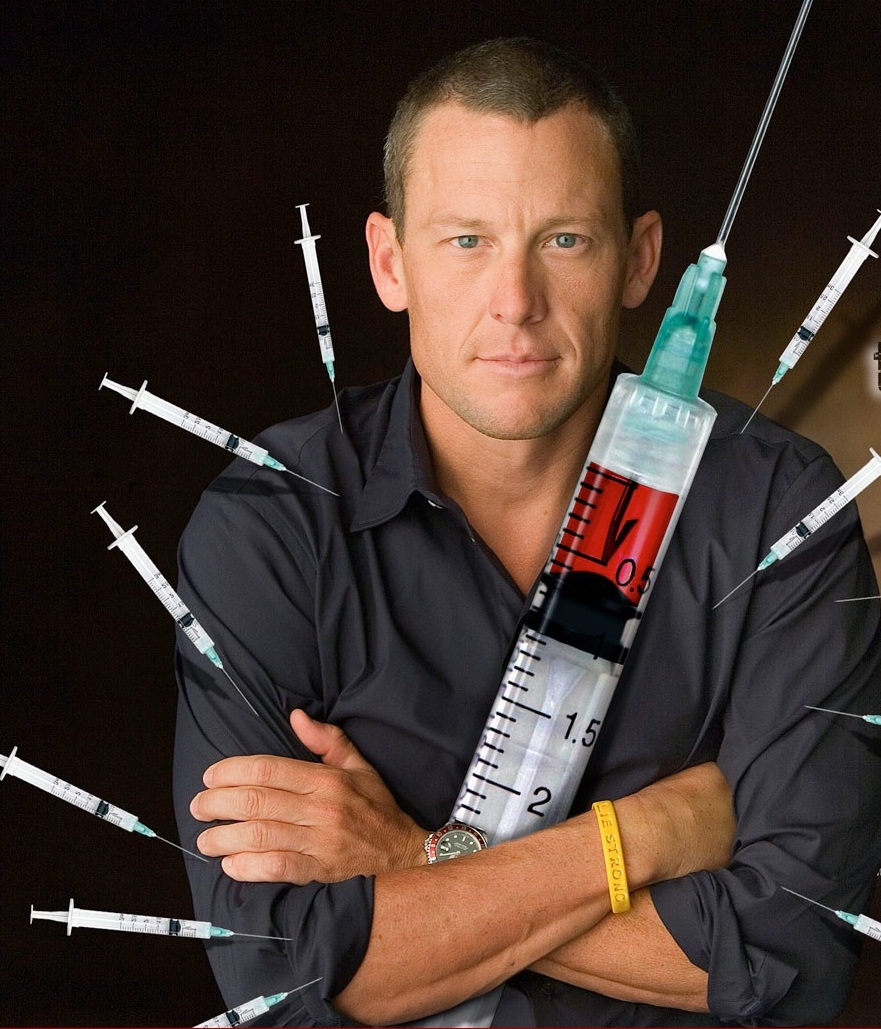
Lance Armstrong As The Status Quo: An Unethical Essay From An Ethics Expert

Don’t worry, Lance. Braden Allenby understands you. You were just ahead of your time, that’s all.

There are many things to learn from Prof. Braden Allenby’s Washington Post essay, “Lance Armstrong’s fall: A case for allowing performance enhancement,” none of which have anything to do with Lance Armstrong. Among the lessons:

  • “Everybody does it “really is the most seductive and sinister rationalization for unethical conduct.
  • Someone really shouldn’t write about sports ethics when they know nothing about sports.
  • If you only understand an author’s bias after reading the short biographical sketch at the end of the article, then he wasn’t responsibly correcting for his bias in his article.
  • When someone uses the worst of all rationalizations, the deplorable, “It’s not the worst thing,” neither their judgment nor their argument can be trusted.
  • Some ethics experts have appalling judgment in regarding ethics.

Allenby’s essay takes the position that all sports should allow athletes to take whatever performance enhancing drugs that become available, beginning with the tragedy of Lance Armstrong’s final disgrace as a cheater and corrupter of his sport. Seldom do you see an argument clothesline itself so quickly: here is Allenby’s opening sally:

“In the past month, cyclist Lance Armstrong has been stripped of his seven Tour de France titles. His commercial sponsors, including Nike, have fled. He has resigned as chairman of Livestrong, the anti-cancer charity he founded. Why? Because the U.S. Anti-Doping Agency and the International Cycling Union say he artificially enhanced his performance in ways not approved by his sport and helped others on his team do the same. This may seem like justice, but that’s an illusion. Whether Armstrong cheated is not the core consideration. Rather, his case shows that enhancement is here to stay. If everyone’s enhancing, it’s a reality that we should embrace.” Continue reading

Election Publicity Hound Ethics Quiz: Whose “October Surprise” Was Dirtier?

That’s Gloria on the left, Donald on the right.

What could be more challenging than trying to choose between Gloria Allred and Donald Trump in the field of inappropriate and shameless headline grabbing?

Both Trump and Allred this week decided to distract voters from the solemn and difficult job of deciding which Presidential candidate’s misrepresentations to forgive by trumpeting an upcoming “October Surprise” that would propel their respective champions to victory. In addition, both are shameless using the election to get their names in the papers for pure personal publicity purposes, to attack Obama or Romney using innuendo, and to attempt to skew a close election by using old matters far past their pull date. The tactic worked for both publicity hounds, because an October surprise in 2000, held for months and leaked by a Gore operative, probably cost George W. Bush the popular vote: his covered up DWI arrest of more than a decade earlier.

Your test: whose attempted late hit was more unethical? We will stipulate that both are revolting. The candidates: Continue reading

Ethics Oxymoron: The Psychic Friends Network’s Honest Scam

You don’t see this every day: an inherently dishonest business based on exploiting  consumer gullibility and ignorance making its deception clear in publicly released materials.

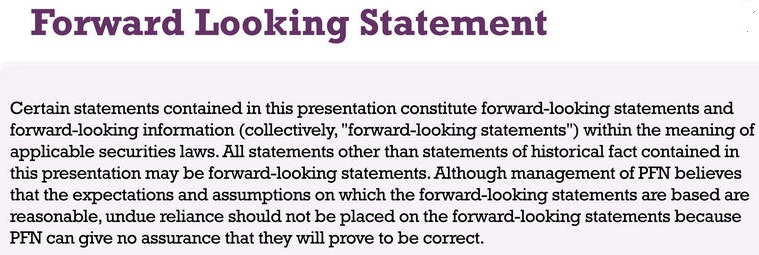
The Psychic Friends Network, which is allowed to advertise its fake psychic and fortune-telling services by appending a small sentence declaring that it is “for entertainment only,” has been to bankruptcy and back since those halcyon days when it was being pitched on TV by pop star Dionne Warwick. Now it is looking for investors, and  forecasting $64 million of net income for fiscal 2015. Hey–a forecast from a self-acclaimed network of psychics is money in the bank, right?

Uh, no. Says the PFN, being careful, candid, and admitting their business is 100% hooey:

Let’s get this straight: The Psychic Friends Network, which induces consumers to pay its “network” employees to tell them what is going to happen in the future, states in its public materials that it has no way of telling what is going to happen in the future. Does this make it an honest scam? Can there be such a thing as an honest scam? Is it ethical to invest in an enterprise that openly admits that its premise is a lie? I don’t think so. Will many people invest in such a business?

I don’t know.

The funny thing is, neither does the Psychic Friends Network.

_________________________________________

Sources: Bloomberg