
Comment Of The Day: “Comment Of The Day: ‘Catching Up: Professional Ethics And The Challenger Disaster’”
For some reason, the question about which sports movies are the “best” or individual favorites has turned up in all sorts of places this week, I have no idea why. When it turned up during tonight’s Red Sox broadcast, I decided it was time to give my list.
(The Red Sox and Rays are tied in the 7th, 4-4.)
Most sports movies are ethics movies, and my favorite five all fit that description.
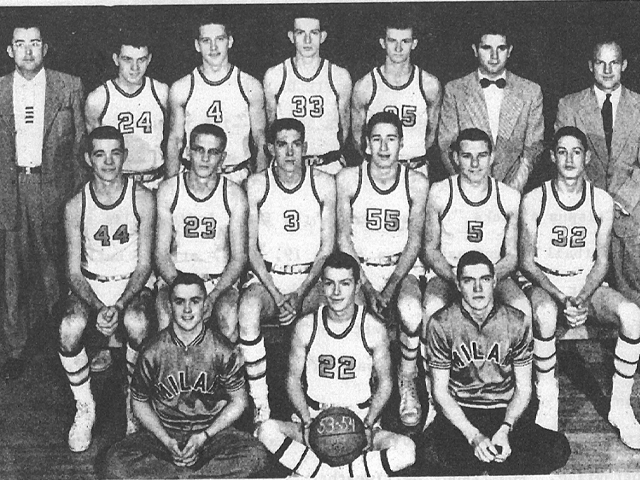
1. ” “Hoosiers“(1986) The Gene Hackman movie about a tiny Indiana town’s surprise victory in the state basketball tournament (the actual 1954 team is above), covers many ethics themes, including leadership, integrity, sacrifice , redemption, learning from past mistakes, and moral luck. The basketball games are surprisingly realistic, and Jerry Goldsmith’s score, evoking bouncing basketballs on a court, is one of my all-time favorites. Favorite ethics moment: after training the team to obey him without question, and teaching them to play as a team, not individuals, coach Hackman tells his players with one play left in the championship game that they will use their star, Jimmy, as a decoy, and let another player take the final, game deciding shot. After a long pause, Jimmy tells him, “I’ll make it.” And like all good leaders, Hackman knows when to trust his subordinates. He let’s Jimmy countermand his order, and Jimmy indeed wins the game. Continue reading

I am compiling a new list of great ethics movies to help those troubled by the recently completed Presidential campaign, the election and its aftermath. I haven’t decided whether to reveal it piecemeal, or collectively as I have before, but I do need to begin by presenting the previous list of 25, actually the combination of several previous posts. Ethics films I have covered individually since those lists debuted, like Spotlight and Bridge of Spies, will eventually be added.
For now, here’s the top 25. Don’t pay attention to the order.
1. Spartacus (196o)

The raw history is inspiring enough: an escaped gladiator led an army of slaves to multiple victories over the Roman legions in one of the greatest underdog triumphs ever recorded. Stanley Kubrick’s sword-and-sandal classic has many inspiring sequences, none more so than the moment when Spartacus’s defeated army chooses death rather than to allow him to identify himself to their Roman captors (“I am Spartacus!”)
Ethical issues highlighted: Liberty, slavery, sacrifice, trust, politics, courage, determination, the duty to resist abusive power, revolution, love, loyalty.
Favorite quote: “When a free man dies, he loses the pleasure of life. A slave loses his pain. Death is the only freedom a slave knows. That’s why he’s not afraid of it. That’s why we’ll win.” [Spartacus (Kirk Douglas)]
2. Hoosiers (1986)
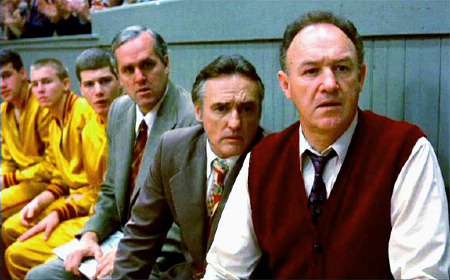
“Hoosiers” is loosely based on true story, but its strength is the way it combines classic sports movie clichés—the win-at-all-costs coach down on his luck, the remote superstar, over-achieving team—into a powerful lesson: it isn’t the final victory that matters most, but the journey to achieving it.
Ethical issues highlighted: Forgiveness, generosity, leadership, kindness, courage, loyalty, diligence, redemption.
Favorite quote: “If you put your effort and concentration into playing to your potential, to be the best that you can be, I don’t care what the scoreboard says at the end of the game, in my book we’re gonna be winners.” [ Coach Norman Dale (Gene Hackman)]
3. Babe (1995)
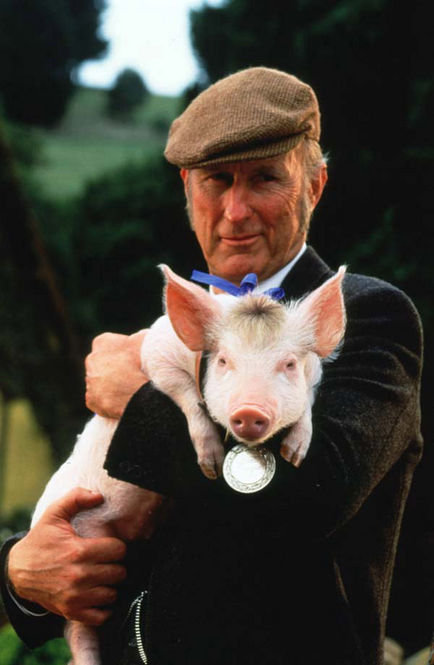
A wonderful movie about the virtues of being nice, the greatest civility film of all time. Second place: “Harvey.”
Ethical issues highlighted: Civility, kindness, reciprocity, loyalty, courage, love, friendship, bigotry, bias.
Favorite quote: “Fly decided to speak very slowly, for it was a cold fact of nature that sheep were stupid, and there was nothing that could convince her otherwise…The sheep decided to speak very slowly, for it was a cold fact of nature that wolves were ignorant, and there was nothing that could convince them otherwise” The Narrator (Roscoe Lee Browne) Continue reading
The end of the baseball season is traumatic for me, except for those few years that ended in Boston Red Sox championships, and those two golden glow seasons (1967 and 1975), when the team lost at the end but fought such a good fight that it felt like they had won. In my house we refer to the days between the end of the World Series and the beginning of Spring Training as The Dark Time.
On the plus side, I have about three more hours every day to do something productive.
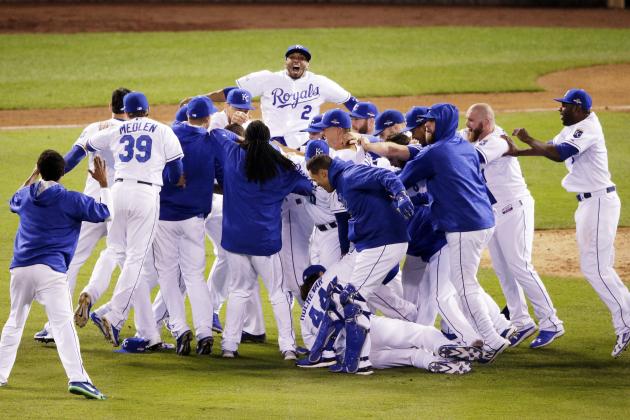
For the second consecutive year, baseball ended with an ethics conundrum in its final game. Last night, as the Kansas City Royals battled back from a late deficit again (they had done so in the previous game as well) to take the Series four games to one,against the New York Mets at Citi Field, the topics were trust, courage, leadership, and most of all, consequentialism. The latter is to baseball as apple pie—or baseball— is to America.
Let me set the stage. The Royals, having stolen the previous game from the Mets’ grasp by an unlikely 8th inning rally (the Mets lost one game all season when they were leading in the 8th; they lost two such games in this five game series). With their backs against the wall (on the short end of a 3-1 game tally, the Mets had to win last night to avoid elimination), the New York sent their ace, the remarkable Matt Harvey, to the mound to do what aces do: win. Harvey had it all last night. After eight innings, the Royals hadn’t scored. Harvey looked fresh in the eighth, and got the Royals out without surrendering a baserunner.
All season long, with a close game after eight innings, Mets manager Terry Collins would tell his starter to take a seat and let his closer finish the game. This is standard practice now: complete games by starting pitchers are a rarity. Once, not too long ago, the league leader in that category would be in double figures. Now the top is usually about five. Moreover, nobody cares. The best teams have 9th inning specialists who almost never lose one-run leads, much less two, and the Mets had a great one, Jeurys Familia.
After Harvey’s dominant eighth, the Fox cameras recorded the drama unfolding in the Mets dugout. Collins’ pitching coach told Harvey that his night was done and Familia, as usual, would close out the game. Harvey pushed past the coach to confront his manager, passionately. Let me finish it, he insisted. The game is mine. Continue reading
Part 1 listed the first seven of my 15 cinematic remedies for Penn State-inspired ethics ennui. Part 2 includes the final eight. Please don’t take the order too seriously; I could have shuffled the whole batch. I also tried to include as many genres as possible. When it comes to ethics, good lists can be compiled using all Westerns, all sports movies, all war movies, courtroom drama or science fiction. Here we go…
8. Spartacus (196o)
The raw history is inspiring enough: an escaped gladiator led an army of slaves to multiple victories over the Roman legions in one of the greatest underdog triumphs ever recorded. Stanley Kubrick’s sword-and-sandal classic has many inspiring sequences, none more so than the moment when Spartacus’s defeated army chooses death rather than to allow him to identify himself to their Roman captors (“I am Spartacus!”)
Ethical issues highlighted: Liberty, slavery, sacrifice, trust, politics, courage, determination, the duty to resist abusive power, revolution, love, loyalty.
Favorite quote: “When a free man dies, he loses the pleasure of life. A slave loses his pain. Death is the only freedom a slave knows. That’s why he’s not afraid of it. That’s why we’ll win.” [Spartacus (Kirk Douglas)] Continue reading
In the tiny west Texas town of Kermit, just north of Mexico, an ethics train wreck is underway that may have long-term consequences far beyond the Lone Star State.
Anne Mitchell, a nurse with an impeccable record, became disturbed at the conduct of a physician at the Winkler County hospital where she worked. After unsuccessfully attempting to get hospital administrators to deal with what she believed was a matter of patient endangerment, she sent an anonymous complaint to the Texas Medical Board. This was a classic whistle-blower situation, protected by law and encouraged by the ethics code governing nurses. Unless she trumped up her accusations for a personal vendetta, she did exactly what the medical profession says she has an obligation to do, a responsible act of medical system self-policing that all too few nurses are willing to follow. Continue reading
 Ethics Alarms
Matthew B. scored a Comment of the Day by raising an issue I had never thought about before: how the misapplication of PowerPoint leads to inadequate training and information dissemination within organizations and bureaucracies. He also references the reluctance of managers to know when to hand over decision-making to subordinates. That is something I have thought about, a great deal.
Two of my favorite movies illustrate how competent leaders and managers know when to delegate a crucial decision down. “Topsy-Turvy,” the superb 1999 film depicting the creation of “The Mikado” by Gilbert and Sullivan, accurately depicts the real incident when, after the final rehearsal, W.S. Gilbert told the “Mikado” cast that he was cutting “My Object All Sublime,” also known as “The Mikado’s Song.” Gilbert was a tyrannical director, and the cast was terrified of incurring his wrath. This time, however, they stood up to him. The cast as one told him that he was making a mistake. The soloist, Richard Temple, they told their shocked and steaming director who also had conceived of the song, should have the chance to perform it in front of an audience. His fellow cast members were certain it would be a hit. Gilbert, recognizing the certitude the cast must have had to risk his fury at being contradicted, decided that his performers might have a clearer understanding of the show even that he had, and relented. Temple would sing about letting “the punishment fit the crime” on opening night.
The song was an instant sensation, like “The Mikado” itself, and is still one of the most quoted of all G&S songs.
The other example is at the climax of “Hoosiers,” the great basketball film based on the true story of the miraculous Indiana state championship won by a tiny school from Milan, Ind. in 1954. During the last time-out before the team’s last chance to score, which would, if successful, give the team a one-point victory over their greatly favored competition in the championship game, the coach (Gene Hackman), who has led the ragtag group this far by emphasizing teamwork over individual achievement, lays out a play in which the team’s superstar, Jimmy Chitwood will be a decoy. He plans for another player to take the final shot, but the team doesn’t move. “What’s the matter with you?” he shouts as his players just stare, looking hesitant. “If I get the shot, I’ll make it,” Jimmy says, after a long pause. So the coach, who has insisted all season that his word was law, makes the same decision Gilbert did. When your subordinates are that sure, trust them. They know better than you.
Jimmy shoots and scores the winning basket as time runs out.
Here is Matthew B.’s Comment of the Day on “Comment Of The Day: ‘Catching Up: Professional Ethics And The Challenger Disaster’”:
Continue reading →