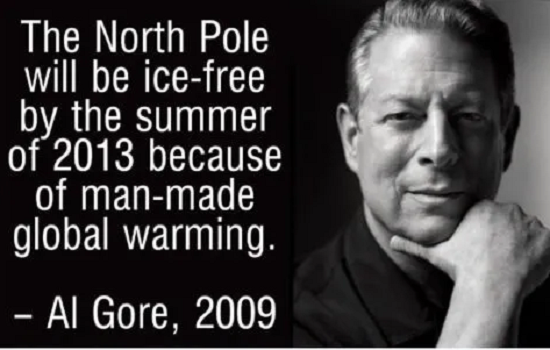
“We have been warned repeatedly that climate change is an existential threat, and the resulting climate anxiety has affected the emotional well-being of multiple generations.The hyperbole that fed the panic has been shown to have been based on unscientific assumptions that were never compatible with basic energy economics and demography.”
—-Commerce Secretary Howard Lutnick in an opinion piece for The Wall Street Journal in the wake of the collapse of the COP31 climate change meetings in Turkey.
Lutnick is under fire for other reasons these days, but as the saying goes, “when you’re right, you’re right,” and he’s right. So is Ethics Alarms, which has been pointing out that the climate change hysteria is rooted in cynical political manipulation by the Left, bad science, ignorant if sincere activists, and a journalism establishment—boy I’m sick of writing this—that is gullible, incompetent, partisan and irresponsible. Even the so-called conservative media buys into the climate change hype. NewsMax, reporting on the COP31 failure, wrote, “This all happened as global warming accelerates with ever-worsening heat waves, floods, storms, and droughts.” That characterization is simply false, and unforgivably so. Never mind: there’s a “narrative” to maintain.
Lutnick correctly pointed out that the supposedly scientific projections driving various climate change rules, regulations, laws and policies “were sold to the public as ‘settled science’ even though they were based on completely unrealistic assumptions.” “For nearly two decades,” Lutnick wrote, federal policy, insurance underwriting, endangered-species rules, and climate lawsuits have relied on high-risk emissions scenarios that were deliberately exaggerated or fanciful. Those scenarios “have now been dismissed by the same international scientific committees that released them.”
Verdict: true. For example, models assumed that by 2100, global coal use would grow to eight times today’s level, although, as Lutnick pointed out, coal’s share of global energy has been shrinking for nearly 15 years. Models also assumed a world population of 12 to 13 billion, which is delusional. (cont.)

