Comment of the Day: “Baseball Ethics Quiz: The Hug”

If I have learned one thing writing Ethics Alarms since 2009 is that I don’t know anything, particularly regarding which posts will spark the most interest or the most lively debates. I never expect the usual volume of commentary on my baseball ethics posts (the first ethics post I ever wrote, on the old Ethics Scoreboard, was on baseball: Pete Rose), but yesterday’s quiz regarding Red Sox pitcher Peyton Tolle’s impulsive hug of an opposing player as he applied an inning ending tag spawned commentary that raised some aspects of the incident that I never considered.

Best of all was this Comment of the Day by AM Golden, on “Baseball Ethics Quiz: The Hug.”

[Oh: I’m from Old School Boston. I have always been uncomfortable with hugs of any kind, from any one, for any reason. I have learned over the years when to submit and also when taking the initiative in a hug is expected of me and therefore only polite.]

***

For transparency purposes, I have to disclose that I am a big fan of hugging.

It took a very long time for me to realize that not everyone likes to be hugged, though. Also, that there is a time and a place to hug people.

A workplace setting, for example, that wants to be taken seriously might want to discourage hugging among colleagues and, especially, between superiors and subordinates. An employee that wants to be taken seriously might decide that hugging people in the office undermines that goal. One never knows how another person may react to spontaneous hugging, after all. It might be welcomes, it might be spurned, it might give you an unwanted love interest or it might get you reprimanded by HR.

During a baseball game, a player is expected to be professional. Is it any different from being in a boardroom, a classroom or an examining room?

Lunch Time Ethics Appetizer, 2/13/2019: Rail, Restaurants, Resignation And Reality

Yum Yum!

1. When reality meets ideology… California Gov. Gavin Newsom  announced that

[He’s] abandoning a $77 billion plan to build a high-speed rail line between Los Angeles and San Francisco and will focus instead on completing a 119-mile (190-kilometer) segment in the state’s agricultural heartland. Voters approved a ballot measure in 2008 calling for the linking of Northern and Southern California, a rail project initially estimated to cost $33 billion and be completed in 2020. Subsequent estimates more than doubled the cost and pushed the timeline to 2033. Newsom pledged to finish the segment already under construction through California’s Central Valley. He rejected the idea critics have raised that it will be a “train to nowhere” and said it can help revitalize the economically depressed region.

We’ll see how much that part costs, if it’s ever completed. Meanwhile, Democrats are going to have to declare their fealty to the “Green New Deal,” which pledges to eliminate air travel nation-wide with “high speed rail.”

2. What part of “convenient double standards” is unclear to you? Kelli Goff writes at the Daily Beast (relayed by Ann Althouse, since I have the DB on my Ethics Alarms  Untrustworthy Black List):

“When Rachel Dolezal was unmasked as a white woman who misrepresented her racial and ethnic identity in part to bolster her professional bona fides as a voice of the disenfranchised, she was penalized—heavily. She went from rising media star to late-night punchline, unemployable and impoverished. I don’t wish poverty on Warren, but I don’t understand how her only punishment for a similar fraud seems to be that she may become president.”

Warren, a polished demagogue, got rave reviews for her recent speech throwing her war-bonnet  into the 2020 ring; like Barack Obama, skillful public speaking is the full extent of her qualifications for leadership. But wow—with the Democrats more or less trapped into nominating another woman to run against Donald Trump, what an awful field of openly unethical females they have assembled so far! Warren’s a fraud; Gillibrand is an anti-male bigot; Gabbard is running away from strong anti-gay positions, Harris has attacked the Catholic faith as a disqualifying feature for a judge, and then there’s Hillary, who looks outstanding in this field. Continue reading

Now THIS Is Ethics Zugzwang! The Unfixable Catch-22 Of Sexual Harassment Law

A recent question to the New York Times workplace column “The Workologist” perfectly illustrates a permanent flaw in sexual harassment law. Believe it or not, I have no recommendation regarding how to fix it. I don’t think it can be fixed.

Here was the question:

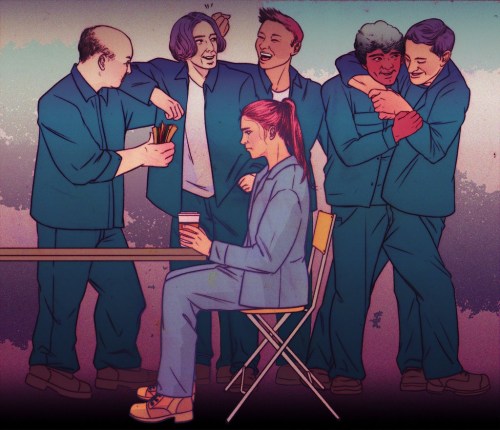
I work at a blue-collar job, and I am one of four women in a crew of 40. The guys never touch or harass me, or any of the women, as far as I know.They do, however, constantly hug and grab and bump each other in a friendly way. It’s not unusual for one of the guys to go through a whole short meeting (a stand-up “huddle”) with an arm around another guy’s shoulder. No one ever touches me, and it’s not that I want them to. That would be weird. But I almost feel left out. Should I let this “bro contact” bother me?

I love it. Perfect. This is what using the law to dictate ethics can result in, and does result in frequently: hypocrisy, confusion, and a double-bind.

Let’s begin with the last sentence: “Should I let this “bro contact” bother me?” The whole point of “hostile work environment” sexual harassment law is to make sure no woman has to ask this question. A boss who responds to a female employee’s complaint of a hostile work environment-creating unwanted sexual attention in the office with “Don’t let it bother you!” has breached his or her duty under the law.

So what’s going on here? The men in the company have adopted the current fad (Yechhh.) of hugging each other to express a range of things—support, congratulation, sympathy, platonic affection—and quite properly do not hug the few women in their midst, lest one of the females, reasonably or not (or perhaps intentionally, to grab some power or cash) be made “uncomfortable,” take the physical contact as unwanted and sexual in intent, complain, and perhaps sue. By not hugging them, however, the men isolate the women, exclude them from the social fabric of the “team,” and, in essence, discriminate against them by signalling that they are “the other,” thus creating a hostile work environment.

Even if some of the women announced their consent to be treated as “one of the guys,” it would not solve the dilemma. One of those bro-hugs could still turn into a copped feel, or be perceived as crossing lines by the female huggee. Then there is the looming  third party harassment problem: a woman who has not consented to being hugged might see her female colleagues being man-handled (but completely innocently, of course) and assume that consenting to unwanted physical contact was a condition of employment, or that they would be adversely affected if they did not agree to participate enthusiastically in the hug-fest. Not treating the women in the company like the men is discrimination; treating them the same is an open invitation to a sexual harassment lawsuit. Continue reading