It’s all for the best.
The last time my friend “Ethics Bob” Stone blogged about ethics, it was way back in August, and he was writing about some guy named “Romney.” Now he’s back on the job, thank goodness, with a comeback post titled “Zero Dark Thirty: Did torture lead us to Osama bin Laden?”. And he’s ticking me off.
“Zero Dark Thirty” is Hollywood’s treatment of the search, apprehension and execution of Osama Bin Laden. The film suggest that methods of torture were employed by the CIA to uncover crucial intelligence that led to the terrorist mastermind’s demise. Torture opponents, including some U.S. Senators, are alarmed by this, and disputing the film’s account. (Imagine that: a movie that misrepresents history!) Meanwhile, conservatives, neocons, Bush administration bitter-enders, talk radio hosts and admirers of Dr. Fu Manchu and James Bond villains are citing the film as confirmation that they were right all along: torture is a wonderful thing.
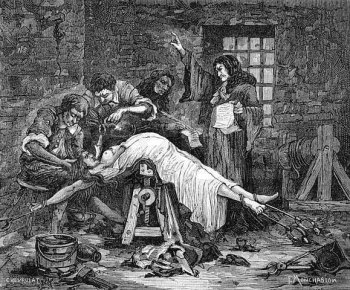
I am puzzled that Bob got in the middle of this debate as an ethicist. “It worked!” and “It came out all right in the end!” are not valid ethical arguments or justifications. The first is an embrace of a pure “the ends justify the means” rationale, a favorite tool of Auric Goldfinger and Dr. No. The other is consequentialism. When ethicists and principled opponents of torture allow the issue to be adjudicated on this basis, they are surrendering their principles at the outset. “Torture doesn’t work” is a pragmatic argument, not an ethical one. If the societal consensus regarding torture is going to be determined by how much we can benefit by returning to the rack and wheel, then ethical considerations have already been jettisoned. Continue reading





 Ethics Alarms