Presenting Rationalization #64, “Yoo’s Rationalization,” And How It Missed Getting On The List This Long, I’ll Never Know

no-means-yesRationalization #64, the eighty-first rationalization overall when you add up the sub-rationalizations on the Ethics Alarms Rationalizations List, is a major one, and should be near the top. (One of these days I’ll re-arrange and renumber them.) It is in evidence almost every day, and embodies the human fallacy of denial, as well as confirmation bias and contrived ignorance. Named after John Yoo, the Bush lawyer who wrote the infamous memo declaring that waterboarding, an “enhanced interrogation technique,” wasn’t technically torture, Rationalization #64, Yoo’s Rationalization or “It isn’t what it is,” is one of the most effective self-deceptions there is, a handy-dandy way to avoid logic, conscience, accountability and reality.*

I saw a prime example of it this morning, in former Homeland Security Secretary Janet Napolitano’s op-ed about the “Deferred Action For Childhood Arrivals Program,” a euphemism for “amnesty for illegal immigrants who arrived as kids with their parents, so they can grow up and vote Democratic.”

She writes,

“This narrative about an initiative that has given temporary haven and work authorization to more than 700,000 undocumented minors, the so-called Dreamers, still has critics howling about presidential overreach, about brazen nose-thumbing at the rule of law and about encouraging others to breach the borders of the United States. But there’s a problem with this take on the program. It is dead wrong.”

What the program really is, she explains, is “prosecutorial discretion,” like the case by case discretion prosecutors have to use to avoid misusing resources.  This is Rationalization #63. Continue reading

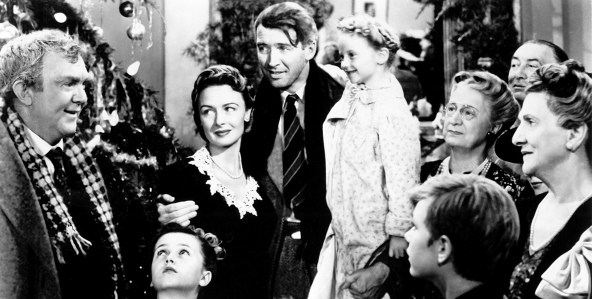
The Complete “It’s A Wonderful Life” Ethics Guide [UPDATED AGAIN! ]

 Once again, Ethics Alarms re-posts its ethics guide to Frank Capra’s 1946 masterpiece “It’s A Wonderful Life,”one of the great ethics movies of all time. It was written in 2011, and revised regularly since, including for this year’s version. I suspect we need it more in 2016 than usual.

It is fashionable now, and was even when the film was released, to mock its sentiment and optimism. On one crucial point Capra was correct, however, and it is worth watching the film regularly to recall it. Everyone’s life does touch many others, and everyone has played a part in the chaotic ordering of random occurrences for good. Think about the children who have been born because you somehow were involved in the chain of events that linked their parents. And if you can’t think of something in your life that has a positive impact on someone–although there has to have been one, and probably many—then do something now. It doesn’t take much; sometimes a smile and a kind word is enough. Remembering the lessons of “It’s a Wonderful Life” really can make life more wonderful, and not just for you.

Here we go:

1. “If It’s About Ethics, God Must Be Involved”

The movie begins in heaven, represented by twinkling stars. There is no way around this, as divine intervention is at the core of the fantasy. Heaven and angels were big in Hollywood in the Forties. Nevertheless, the framing of the tale advances the anti-ethical idea, central to many religions, that good behavior on earth will be rewarded in the hereafter, bolstering the theory that without God and eternal rewards, doing good is pointless.

We are introduced to George Bailey, who, we are told, is in trouble and has prayed for help. He’s going to get it, too, or at least the heavenly authorities will make the effort. They are assigning an Angel 2nd Class, Clarence Oddbody, to the job. He is, we learn later, something of a second rate angel as well as a 2nd Class one, so it is interesting that whether or not George is in fact saved will be entrusted to less than Heaven’s best. Some lack of commitment, there—then again, George says he’s “not a praying man.” This will teach him—sub-par service!

2. Extra Credit for Moral Luck

George’s first ethical act is saving his brother, Harry, from drowning, an early exhibition of courage, caring and sacrifice. The sacrifice part is that the childhood episode costs George the hearing in one ear. He doesn’t really deserve extra credit for this, as it was not a conscious trade of his hearing for Harry’s young life, but he gets it anyway, just as soldiers who are wounded in battle receive more admiration and accolades than those who are not. Yet this is only moral luck. A wounded hero is no more heroic than a unwounded one, and may be less competent as well as less lucky.

3.  The Confusing Drug Store Incident

George Bailey’s next ethical act is when he saves the life of another child by not delivering a bottle of pills that had been inadvertently poisoned by his boss, the druggist, Mr. Gower. This is nothing to get too excited over, really—if George had knowingly delivered poisoned pills, he would have been more guilty than the druggist, who was only careless. What do we call someone who intentionally delivers poison that he knows will be mistaken for medication? A murderer, that’s what.  We’re supposed to admire George for not committing murder.

Mr. Gower, at worst, would be guilty of negligent homicide. George saves him from that fate when he saves the child, but if he really wanted to show exemplary ethics, he should have reported the incident to authorities. Mr. Gower is not a trustworthy pharmacist—he was also the beneficiary of moral luck. He poisoned a child’s pills through inattentiveness. If his customers knew that, would they keep getting their drugs from him? Should they? A professional whose errors are potentially deadly must not dare the fates by working when his or her faculties are impaired by illness, sleeplessness or, in Gower’s case, grief and alcohol.

4. The Uncle Billy Problem

As George grows up, we see that he is loyal and respectful to his father. That’s admirable. What is not admirable is that George’s father, who has fiduciary duties as the head of a Building and Loan, has placed his brother Billy in a position of responsibility. As we soon learn, Billy is a souse, a fool and an incompetent. This is a breach of fiscal and business ethics by the elder Bailey, and one that George engages in as well, to his eventual sorrow. Continue reading

The Unethical Self-Delusion Of Open-Borders Supporters

She was killed because an illegal immigrant didn't want her to report that he was illegal, but her death had nothing to do with illegal immigration., or the fact that her killer was able to kill her because he was here illegally.

She was killed because an illegal immigrant didn’t want her to report that he was illegal, but her death had nothing to do with illegal immigration or the fact that her murderer was able to kill her because he was here illegally.

The New York Times op-ed headline online is (at least until someone at the Times figures out how damning it is)…

“My Wife’s Killer Was Not an ‘Illegal Immigrant’”

Author Andy Ostroy‘s wife, actress Adrienne Shelley, was murdered by an illegal immigrant, and the fact that the Times thinks this headline is a responsible one speaks volumes to the increasing dishonesty from Democrats and the news media on the issue of illegal immigration.

Ostroy ties himself into logical and ethical pretzels while explaining his kindly open-mindedness over the murder of his wife by “a 19-year-old undocumented Ecuadorean construction worker” who feared she would report him and have him deported. Writes Ostroy:

“Given the anger and grief I still feel, I could easily be seduced by Donald J. Trump’s anti-immigrant rhetoric that is the cornerstone of his presidential run. “They’re bringing drugs. They’re bringing crime. They’re rapists,” he said as he began his campaign in 2015. And in these final weeks before the election, rather than tacking to the middle, he seems to be doubling down. “We’ve got some bad hombres,” he said in last week’s debate, referring to immigrants who commit crimes.”

First, Donald Trump’s rhetoric is anti-illegal immigrant rhetoric, not “anti-immigrant.” The intentional blurring of these two very different categories is a strategy of deceit. Any writer who engages in it has marked himself as untrustworthy, and any publication that does the same has also flagged itself as dishonest and biased.  The use of the intentionally vague term “undocumented” immigrant is similarly proof of unethical advocacy. The immigrants at issue are here illegally, hence they are illegal. If they had documentation that they were illegal, they would still be illegal, and if they had documentation that they were legal, that would be additionally illegal, since the documents would necessarily be false. Continue reading

OK, Voter ID Opponents, Here’s An Integrity Test: Is This A Smoking Gun Or An Amazing Coincidence?

Wow! Just a handful of fraudulent voters in the whole country for years, and one of them just happens to be captured for terrorism! What are the odds?

Wow! Just a handful of fraudulent voters in the whole country for years, and one of them just happens to be captured for terrorism! What are the odds?

Those opposing voter ID requirements as a thinly-veiled Republican effort to suppress black voting maintain that there is no need for identification at the polls because voter fraud doesn’t exist. Last week, discussing the controversy,  I flagged a New York Times editorial  titled, The Success of the Voter Fraud Myth.

It argued in part,

As study after study has shown, there is virtually no voter fraud anywhere in the country. The most comprehensive investigation to date found that out of one billion votes cast in all American elections between 2000 and 2014, there were 31 possible cases of impersonation fraud. Other violations — like absentee ballot fraud, multiple voting and registration fraud — are also exceedingly rare. So why do so many people continue to believe this falsehood?

Wendy Weiser, director of the Democracy Program at the Brennan Center for Justice, wrote in U.S. News & World Report in 2012  that voter fraud didn’t exist:

“Voter fraud would be a real problem if it actually happened. It’s a serious crime, and one that can undermine our democracy. Fortunately, it’s a crime we have largely figured out how to prevent.”

Huh.

Well then, what does this mean?

From King5 TV (NBC):

The Cascade Mall shooting suspect, Arcan Cetin, may face an additional investigation related to his voting record and citizenship status.

Federal sources confirm to KING 5 that Cetin was not a U.S. citizen, meaning legally he cannot vote. However, state records show Cetin registered to vote in 2014 and participated in three election cycles, including the May presidential primary.

Cetin, who immigrated to the United States from Turkey as a child, is considered a permanent resident or green card holder. While a permanent resident can apply for U.S. citizenship after a certain period of time, sources tell KING his status had not changed from green card holder to U.S. citizen.

While voters must attest to citizenship upon registering online or registering to vote at the Department of Licensing Office, Washington state doesn’t require proof of citizenship. Therefore elections officials say the state’s elections system operates, more or less, under an honor system.

“We don’t have a provision in state law that allows us either county elections officials or the Secretary of State’s office to verify someone’s citizenship,” explained Secretary of State Kim Wyman. “So, we’re in this place where we want to make sure we’re maintaining people’s confidence in the elections and the integrity of the process, but also that we’re giving this individual, like we would any voter, his due process. We’re moving forward, and that investigation is really coming out of the investigation from the shootings.”

The penalty for voting as a non U.S. citizen could result in five years of prison time or a $10,000, according to Secretary of State’s Office.

The options are: Continue reading

Voter IDs And The “Don’t Lock The Barn Door Because The Horse Hasn’t Escaped Yet” Argument

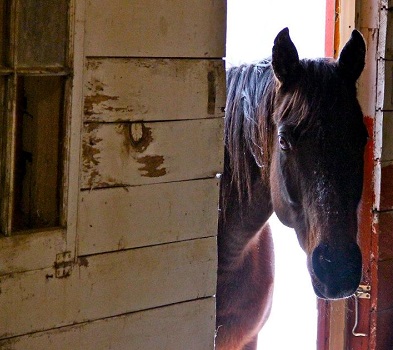
horse-in-barn-door

There are some political and partisan controversies in which I just cannot comprehend, from an ethical perspective, why there is any serious disagreement. Illegal immigration is one of them. Of course we need to control immigration; of course it is madness to encourage illegal immigrants to enter the country; and of course we have to enforce our laws. The arguments against these obvious and undeniable facts are entirely based on rationalizations, emotion, cynical political strategies and group loyalties. The advocates for illegal immigrants have  one valid argument that only applies to those who currently live here: it’s too late and too difficult to get rid of them now. I agree, but that doesn’t mean it is responsible to keep adding to the problem.

Voter identification requirements is another one of those debates. Of course it makes sense to protect the integrity of elections by requiring valid IDs. The last time the Supreme Court visited the issue, an ideologically-mixed court found a voter ID requirement reasonable, necessary and constitutional. Writing for the 6-3 majority in 2008, Justice Stevens (who in retirement has become something of a progressive icon), wrote,

“The relevant burdens here are those imposed on eligible voters who lack photo identification cards that comply with [the Indiana law.] Because Indiana’s cards are free, the inconvenience of going to the Bureau of Motor Vehicles, gathering required documents, and posing for a photograph does not qualify as a substantial burden on most voters’ right to vote, or represent a significant increase over the usual burdens of voting. The severity of the somewhat heavier burden that may be placed on a limited number of persons—e.g., elderly persons born out-of-state, who may have difficulty obtaining a birth certificate—is mitigated by the fact that eligible voters without photo identification may cast provisional ballots that will be counted if they execute the required affidavit at the circuit court clerk’s office. Even assuming that the burden may not be justified as to a few voters, that conclusion is by no means sufficient to establish petitioners’ right to the relief they seek.”

Of course.  Our government is entirely dependent on elections. Nobody questions the reasonableness of requiring IDs to buy liquor, open a bank account, rent a car or check into a hotel, yet we’re going to rely on the honor system for our elections? The idea is madness, though, to be fair, two current members of the Court, Justice Ginsberg and Breyer,  argued that avoiding “disparate impact” justified allowing a gaping vulnerability in the integrity of elections to go unaddressed. Breyer wrote:

“Indiana’s statute requires registered voters to present photo identification at the polls. It imposes a burden upon some voters, but it does so in order to prevent fraud, to build confidence in the voting system, and thereby to maintain the integrity of the voting process. In determining whether this statute violates the Federal Constitution, I would balance the voting-related interests that the statute affects, asking “whether the statute burdens any one such interest in a manner out of proportion to the statute’s salutary effects upon the others (perhaps, but not necessarily, because of the existence of a clearly superior, less restrictive alternative)…”

Justice Breyer concluded that the alleged “burden” to some groups outweighed the integrity of the democratic system, thus embodying the current delusion of modern liberalism: race is more important that anything else, especially when that race is a reliable and uncritical source of power for Democrats.

It wasn’t until several political and judicial factors changed that the Ginsberg-Breyer rationale became politically weaponized, among them the increasing employment of the dubious “disparate impact” doctrine, the Democratic party strategists’ realization that painting Republicans as racists was an excellent way to get minorities to the polls; the growing tendency of African Americans to automatically vote a straight Democratic ticket regardless of who the candidates were and what they had accomplished; an aggressively political and partisan Justice Department and, yes, the realization that all those illegal immigrants here who are counting on keeping the borders as porous as possible might somehow find ways to vote, that requiring IDs became controversial.

Do some, even many, Republican legislators and conservative pundits promote state voter ID laws because they believe there would be a disparate impact on Democratic voting blocs? Absolutely; I have no doubts whatsoever. Does responsible and necessary legislation become magically irresponsible and unconstitutional because unethical motives merge with the ethical ones in passing it? Again, of course not. It is a principle of ethical analysis discussed here many times: many actions have both ethical and unethical motives, but the ethical nature of the conduct must be judged on its intended purpose, reasonably anticipated results, and effect on society as a whole. In the case of voter identification, the obvious and reasonable approach is to pass legislation to protect the integrity of the system and then seek to mitigate any inequities by separate means. In an ethical, reasonable system where one party didn’t see itself gaining power by allowing loose enforcement of voting requirements and the other party didn’t similarly see happy side-effect of enforcing them vigorously, this wouldn’t be a partisan issue at all. Of course we should have laws making sure that voters are who they say they are. Of course we should make sure that every citizen has access to such identification.

The current ascendant argument against voter ID laws is articulated by the New York Times in an editorial today titled, The Success of the Voter Fraud Myth.  Continue reading

Ann Coulter’s “In Trump We Trust: E Pluribus Awesome!” : Unethical Book Title Of The Millennium?

Ann Coulter: Take seriously at your own risk. Just like Donald Trump...

Ann Coulter: Take seriously at your own risk. Just like Donald Trump…

I have long been waffling over whether to bother mentioning Ann Coulter’s cheerleading for Donald Trump, which began almost a year ago. Coulter is freakishly unethical and proud of it, a rare professional fick, whose shtick (I guess one shouldn’t use fick and shtick in the same sentence: sorry) is to pander to The Angry Right in such obnoxious and inflammatory terms that the Angry Left goes bananas with hate, thus selling books and providing her with media appearances to promote them. I have  assigned her to the dark corner reserved for performance artists who posture and lie for a living, for that’s Ann. I have no idea what she really believes, just as I have no idea what James Carville, Milo Yiannopoulos or Rush Limbaugh really believe—and anyone who really thinks that they know what Donald Trump really believes is beyond redemption, since it is quite evident that he doesn’t know himself.

Thus when I heard that Ann’s latest book, doubtlessly written in about five hours of dictation and containing some measure of her trademark snark, which she is very skilled at, was called “In Trump We Trust: E Pluribus Awesome!,” I was sorely tempted to express my disgust, especially since Coulter, an educated woman and a lawyer, actually stooped to using that mark of an illiterate, “awesome,’ like the book was authored by a modern day Gidget. But why play into Ann’s hands? This is why she writes this crap: to cause buzz on the net and cable so she can sell the books to right wing idiots who will be soothed by her calculated pose.

The title is an absurd, almost Orwellian (“War is Peace”) lie. Trump, as much as anyone alive,  cannot be trusted regarding anything, especially to hold great power. The reasons for this are evident and undeniable, and have been so long before running for President, wrecking the Republican Party, threatening the United States’ public’s faith in democracy and handing the White House to the most corrupt candidate a Presidential race has ever featured was a twinkle in the Donald’s eye.

However, listening to Trump blather about immigration last week, and seeming to renege on his signature promise to depart each and every illegal immigrant, almost compelled one to direct massive schadenfreude Ann Coulter’s way. Continue reading

Ethics Quiz: “Advertising” Safe Zones

illegal crossing sign

Interesting.

The U.S. Customs and Border Protection (CBP) includes information on its website about “Sensitive Locations,” which is CBP-speak for “Places where we won’t arrest you if you are an illegal immigrant.”  In careful, oh-so-delicate and respectful language, the agency explains that immigration laws are not to be enforced at  designated “sensitive locations”  so that illegal aliens can be “free” to live their lives “without fear or hesitation.”

It reads in part…

“The policies provide that enforcement actions at or focused on sensitive locations such as schools, places of worship, and hospitals should generally be avoided, and that such actions may only take place when (a) prior approval is obtained from an appropriate supervisory official, or (b) there are exigent circumstances necessitating immediate action without supervisor approval.  The policies are meant to ensure that ICE and CBP officers and agents exercise sound judgment when enforcing federal law at or focused on sensitive locations, to enhance the public understanding and trust, and to ensure that people seeking to participate in activities or utilize services provided at any sensitive location are free to do so, without fear or hesitation.”

“This policy is designed to ensure that these enforcement actions do not occur at nor are focused on sensitive locations such as schools and churches” without meeting special exceptions, the  ICE Sensitive Locations Policy states.

Locations covered by  Sensitive Locations Policy  include, but are not limited to:

  • Schools, such as known and licensed daycares, pre-schools and other early learning programs; primary schools; secondary schools; post-secondary schools up to and including colleges and universities; as well as scholastic or education-related activities or events, and school bus stops that are marked and/or known to the officer, during periods when school children are present at the stop;
  • Medical treatment and health care facilities, such as hospitals, doctors’ offices, accredited health clinics, and emergent or urgent care facilities;
  • Places of worship, such as churches, synagogues, mosques, and temples;
  • Religious or civil ceremonies or observances, such as funerals and weddings; and
  • During public demonstration, such as a march, rally, or parade.

“The enforcement actions covered by this policy are (1) arrests; (2) interviews; (3) searches; and (4) for the purposes of immigration enforcement only, surveillance,” the ICE  further explains.

The CBP  “FAQ” answers are accompanied by a Spanish translation, and the CBP website  provides a toll-free number and email address so aggrieved illegal aliens can report immigration that violate these policies.

As I said…

Interesting.

Your Ethics Alarms Ethics Quiz of the Day is…

Is this a responsible, competent and ethical exercise of government power?

Continue reading

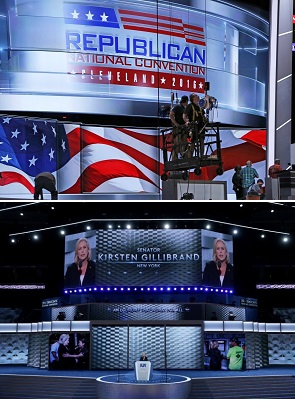
Is It Fair To Question The Democratic Party’s Values When It Has No American Flags Visible During Its National Convention?

Yes.

Of course yes.

One of these things, is not like the others...

One of these things, is not like the others…

Opening night of the Democratic National Convention—that gathering of the historic institution created by Thomas Jefferson and Andrew Jackson to facilitate democracy by fulfilling the idealistic vision of the Founders, who bravely led the original colonies, represented by thirteen red and white stripes, to rise up against a hereditary monarchy and through courage, sacrifice and enterprise create the most successful and humanist nation ever seen on earth…you know, that Democratic National Convention?—showed no American flags on the stage, no red, white and blue symbolism, and an apparently flagless crowd.

Was the American flag actually banned from the convention? That can’t be…but it certainly looked like it.  The absence of any flags can’t be an accident, or unintentional.

What’s going on here?

Nothing good.

Nothing healthy.

In the eight years since Barack Obama was nominated…by the way, here is the scene of his second nomination, just four years ago…

Obama Accepts Nomination On Final Day Of Democratic National Convention

…the Democratic Party has morphed into an organization that is increasingly dependent on the pleasure and approval of anti-American groups. The supporters of illegal immigration, some of whom advocate returning the Southwest to Mexico; angry black liberation movement activists, who regard the United States as a racist nation and culture; radical internationalists, who believe the United States should not only behave like “other first world nations,” but allow itself to be governed by them; progressives whose view of the United States, nourished by indoctrination in the public schools and colleges dominated by far left faculties, is relentlessly negative; growing numbers of socialists, anti-capitalists, anti-law enforcement activists and fans of soft totalitarianism—-these are increasingly the voting blocs that the professional politicians who  run the Democratic Party feel they must pander to and satisfy. Continue reading

Why Hillary Clinton Is Untrustworthy, In One Tweet

twoface Hillary

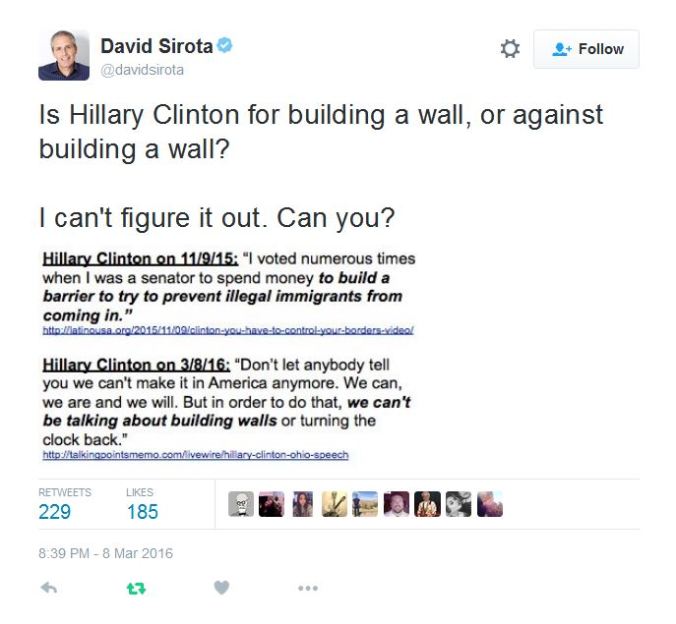
David Sirota, who is an American political commentator, radio host, a nationally syndicated newspaper columnist, a blogger, and from time to time a Democratic Party spokesperson, tweeted this yesterday:

hillary_then_and_now_3-18-16That’s pretty straight-forward, don’t you think? Res ipsa loquitur, I would say. To be fair, Hillary would have to turn the clock back for her to be “talking about building walls,” but only four months back

The question really isn’t whether Hillary Clinton is trustworthy, but how anyone can think she is, or more pointedly, how anyone can claim she is and look at themselves in the mirror without gagging.

______________________

Pointer: Instapundit

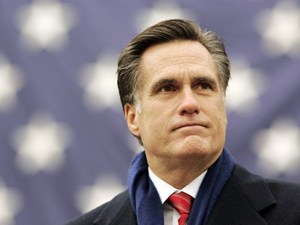
Post-Debate Ethics, Part I (of 4): The New York Times And The Biased Media’s Disrespect For Mitt Romney

"Boy, what a jerk, warning the public against a power-mad, narcissist blow-hard before they make him President...."

“Boy, what a jerk, warning the public against a power-mad, narcissist blow-hard before they make him President….”

Since the last GOP debate, several ethics issues have emerged, for those inclined to see them:

1. The New York Times and the Media’s Anti-Romney Bias

The biased news media helped sink Mitt Romney’s chances four years ago, and now, perhaps by habit, it can’t stop itself from bashing him even for doing something indisputably good. Though Mitt did a thoroughly statesmanlike, honest, accurate and unprecedented job eviscerating any argument for supporting Donald Trump, his own party’s front-runner for the nomination, most of the media couldn’t bring themselves to give him credit. Democratic operative Matt Lauer, on the “Today Show,” asked Romney if his direct attack was “betrayal,” as Trump portrayed it. (Hint, Matt: any time Trump stakes out an ethics position, you can assume it’s either self-serving or stupid.). The theory behind Matt’s Mistake is that Romney asked and received Trump’s endorsement in 2008, so he owed Trump the same in 2016. Let me explain to you Matt, the concepts of patriotism and statesmanship, as well as truth-telling, and how loyalty works.

You see, Matt, Mitt Romney’s loyalties in this matter, in order of priority, are individual, party, and country. If returning Trump’s courtesy had no negative impact on the Republican Party or the future of our nation, then yes, he would be ethically obligated to return Trump’s courtesy. That is not the situation, however, as I’m sure you know, but want to pretend otherwise in order to try to blunt Romney’s message and ensure that the  Democratic nominee, either the unqualified Bernie Sanders or the corrupt Hillary Clinton, has to face the weakest opponent possible, now that Ben Carson has finally withdrawn.

When Romney sought and got Trump’s endorsement, Trump didn’t predicate it on a future endorsement when Donald ran, because nobody in their right mind, even Trump, would have seriously suggested that Trump would or could mount as credible campaign. Mitt was seeking the endorsement of a businessman, a reality TV figure with high visibility, celebrity and a potential donor, and that’s all he was doing. That doesn’t obligate Romney to return the favor. Lauer apparently thinks Mitt is in “The Godfather” : accept the favor from the Don(ald), and you must do whatever you are asked at a later date, even if it means shooting someone. No, you are not obligated to do anything. What you asked before was a favor; what is being asked of you now is a wrong.

For nominating Trump will wreck the Republican party. It will dissolve its values, embarrass its members, soil its reputation and legacy, and when Trump turns out to be the new Silvio Berlusconi, or a modern day Huey Long, or an American Hitler, or, as I suspect, being an optimist, just a more destructive version of Evan Meacham, the car salesman turned Arizona Governor who became the first U.S. governor to simultaneously face removal from office through impeachment, a scheduled recall election, and a felony indictment, or, in the best case scenario, a national version of Jesse Ventura. Under any of these scenarios, however, the GOP will be crippled, accountable and ultimately doomed, and that’s just what journalists like Lauer want in their heart of hearts. What they don’t seem to realize is that there is a real risk that Trump could win.

Romney owes his first loyalty in this matter to his party, and his highest to his fellow citizens. His speech was not a betrayal of either of these, but an ethical act to its core.

Even worse than Lauer was the New York Times editors, who wrote yet another embarrassing editorial, one of many they have authored in the past 12 months or so as the paper has almost completely shed its mantle as the exemplar of U.S. journalism. Rather than an objective and fair editorial praising Romney’s courageous and well-aimed broadside at a juggernaut, the Times used the opportunity to play partisan politics while expanding and re-using old cheap shots at Romney: Continue reading