Ethics Dunce and Unethical Quote of the Month: NYT Columnist Tressie McMillan Cottom

Once again we are faced with the despicable ethics violation of an alleged authority making her readers dumber and more ignorant. And, once again, the example falls in the category of someone unqualified to read a Supreme Court opinion declaring what the holding means without understanding it.

Tressie McMillan Cottom is a 2020 MacArthur “genius” grant recipient who opines in the Times and elsewhere on culture, “higher education, work, media and inequality”(she is black, so I guess that’s mandatory). Her credentials do not justify her writing this in her latest essay:

“[T]he Supreme Court finally weighed in on presidential immunity. There is no other way to read its decision than as a signal that whoever owns the Republican Party also owns the power to break the law.”

That’s funny, because there is no possible way to read that ridiculously misrepresented decision to mean that at all. If she’s read the decision, then she’s lying or incompetent. If she hasn’t read the decision, then her ethical breach is worse. Continue reading

Addendum to “The Supreme Court, the ‘Suicide Pact,’ and Ethics Zugzwang”

Thinking about that last post and the issues it raises as I was walking Spuds in the rain just now took me to an epiphany, and an embarrassingly late one.

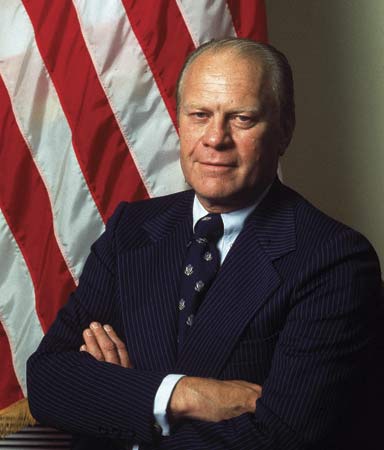
Gerald Ford’s pardon of Richard Nixon was more important and crucial than I realized then. It was only one gutsy and maybe prescient act in an otherwise short and undistinguished Presidency, but it delayed the current crisis for half a century.

The conventional wisdom is that Nixon would have been prosecuted for his Watergate involvement, and that the event would have been a divisive and traumatic spectacle that a nation just getting past the Vietnam debacle could ill afford. That wasn’t what was going to happen, though, I now realize. (And I have never read or heard anyone acknowledge this.)

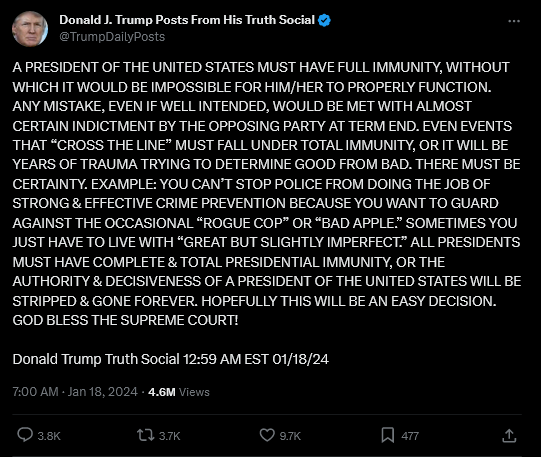
Had he been charged with any crime, Nixon would have immediately claimed immunity just as Trump is now. For the rest of his life, Nixon routinely said that “if the President does it, it’s not illegal.” What would the Supreme Court have ruled in 1975? Here is the Court then:

Chief Justice Warren Burger
William J. Brennan
Potter Stewart
Byron White
Thurgood Marshall
Harry Blackmun
Lewis F. Powell
William H. Rehnquist

The only two reliable liberals on the Court were Marshall and Brennan, but the conservatives were more moderate and less doctrinaire than today’s SCOTUS majority. I have no idea what that group would have done with the immunity issue, and I’m glad we didn’t have to find out.

Thanks, Jerry.

The Supreme Court, the “Suicide Pact,” and Ethics Zugzwang [Corrected]

I confess, I didn’t expect the U.S. Supreme Court to give Donald Trump’s Presidential immunity claim as serious a hearing as it did in last week’s oral arguments. Now that I read the transcript, however, I understand “what’s going on here,” to quote my own starting point for ethics analysis. Its focus, or at least the focus of the conservative members of the Court, is appropriate considering the current assault on our system of government by the totalitarian Left as it tries to use the criminal laws, the courts, and partisan prosecutors to prevent the public from throwing them out of office.

Naturally the Left is furious, and is attacking the justices. The attack isn’t based on legal reasoning, but the same tactic progressives and Democrats used to claim that SCOTUS had “stolen” the 2000 election by finally ruling that enough was enough, and that it was time to settle the identity of the leader of the nation and not paralyze the government fighting over an election with a filament thin edge within the margin of statistical error. The Bush v. Gore ruling was an example of one of the core functions of the Supreme Court as it has evolved: stepping in to guide the Constitution and the nation through unanticipated situations the Founders never considered or prepared for. But Democrats attacked Justice Scalia and the other conservative justices for defying their own guiding principles—“textualism” and “originalism,” the idea that the Constitution should not be extrapolated into new areas never anticipated or discussed in the original document. That judicial philosophy is a conservative bulwark against the arrogant and excessive “legislation from the bench” that marked the Warren Court in the Sixties, and to a lesser extent its predecessor in the Seventies, the Burger Court, the latter most infamously in the purely political Roe decision, finding a right to abortion in a document that didn’t hint of such a thing.

After hearing the oral argument in Trump v. U.S. and detecting signs that some of the Justices on the rightish side of the ideological spectrum agreed that some kind of Presidential immunity might be prudent and even essential, the Axis howled. “Two years ago, conservatives relied on a strict interpretation of the Constitution’s text and original meaning to overturn the federal right to abortion. But on Thursday, as they debated whether Trump can be prosecuted for his bid to subvert the 2020 election, they seemed content to engage in a free-form balancing exercise where they weighed competing interests and practical consequences,” whined Politico. “Some critics said the conservative justices — all of whom purport to adhere to an original understanding of the Constitution — appeared to be on the verge of fashioning a legal protection for former presidents based on the justices’ subjective assessment of what’s best for the country and not derived from the nation’s founding document.”

Translation: “The judges we support do this all the time and we think it’s wonderful, but these bad judges can’t do it no matter how much sense it makes because they have made it clear that they generally disapprove of the practice.”

Continue reading

“This is What Happens…”

Except that this was no shark attack, and it wasn’t a boating accident or Jack the Ripper. This is what happens when an entire political party decides that it will never give an elected official the minimal bi-partisan support required to make our three Branch system work, and will ignore, breach or distort basic, core essential democratic principles and traditions to destroy him for as long as it takes.

That arm belongs to Lady Liberty.

Yesterday, two of the terrible consequences of the Democratic mania to destroy Donald Trump, first as President, then as ex-President and Presidential candidate, became especially vivid. Let me say, because if I don’t blow my metaphorical horn no one else will, that Ethics Alarms warned about all of this, tirelessly and repetitiously.

WordPress shows me the 10 tags I have used most frequently since Ethics Alarms began in 2009. Nine are what you would expect on an ethics blog: fairness, ethics, responsibility, integrity, trust, respect, hypocrisy, honesty…and the 2016 Post Election Train Wreck. That tag originated in 2016 when Ethics Alarms first blew the metaphorical whistle on the Democrats’ (along with “the resistance” and the news media) destructive, divisive, unprecedented and totalitarian-tending reaction to the (greatly deserved) loss by Hillary Clinton in a presidential race they thought was a sure thing. I have said repeatedly that the 2016 Post-election Ethics Train Wreck is the most serious and important ethics story in the 21st Century, and one of the five or so worst in our nation’s history. We survived the others, but were lucky. There is a substantial chance that this time, our luck will run out.

Continue reading

Ethics Quote of the Month: D.C. Circuit Court of Appeals

“It would be a striking paradox if the President, who alone is vested with the constitutional duty to ‘take Care that the Laws be faithfully executed,’ were the sole officer capable of defying those laws with impunity…We cannot accept that the office of the Presidency places its former occupants above the law for all time thereafter.”

The D.C. Circuit Court of Appeals, rejecting former President Donald Trump’s bonkers claim that Presidents have absolute immunity from criminal prosecution for acts committed while in office.

The ruling is here.

Seldom has any court appeal in a high profile case had a more obvious and virtually assured resolution. The ethics alarms analysis of this issue was discussed in “Ethics Zugzwang In Trump’s Immunity Appeal,” and in this subsequent post. I hope it’s unnecessary to say that I agree with the D.C. Circuit’s ruling.

I wonder if Trump considered that if he won the appeal, President Biden could order that he and his MAGA supporters could be summarily shot as “clear and present dangers to democracy.” He could order the execution of the Republican contingent in the House, too, to forestall an impeachment.

What a great theory.

It was unethical for Trump and his lawyers to make the argument. If I had been his attorney—and before all the dust settles, Trump might eventually have to retain lawyers as inexperienced in litigation I am, and maybe even me—I would have withdrawn before I’d file such an irresponsible appeal.

Ethics Quiz: Presidential Immunity

Is there anybody out there who wants to argue that complete Presidential immunity from criminal prosecution is a safe, necessary, responsible and civically practical policy? Hello?

I’m not even going to ask the question in the usual quiz form, other than to wonder who would agree Trump’s theory this other than a former President facing multiple partisan prosecutions of varying legitimacy designed to take him out of the next election, or an aspiring leader who endorses near dictatorial powers in a republic.

George Washington made it quite clear that the U.S. President isn’t a king; indeed, this may have been George’s most important among his many precedent-setting and self-imposed embellishments on the office. There have been Presidents who believed in treading carefully within a carefully moderated set of powers; there have been others, like Jackson, Lincoln, the Roosevelts and Nixon, who took the office in the other direction, sometimes to the point of defying laws as well as exploiting areas of Constitutional ambiguity.

Continue reading

Ethics Zugzwang In Trump’s Immunity Appeal

It’s pretty obvious that Donald Trump is going to lose his case before the three judges on the US Court of Appeals for the District of Columbia Circuit panel. The former President is claiming that all former Presidents are absolutely immune from prosecution for crimes they may have committed while in office. It’s easy to knock that argument down as just bad policy, and the judges did just that at oral argument this week.

Judge Florence Y. Pan asked Trump’s attorney, D. John Sauer, demanding a yes or no answer,“Could a president who ordered SEAL Team 6 to assassinate a political rival, who was not impeached, would he be subject to criminal prosecution?”

Sauer answered that prosecution would only be permitted if the President were first impeached by the House and convicted by the Senate. Of course that can’t be right. It would mean that a President with a large majority in both Houses of Congress could do virtually anything without legal consequences. One might argue that such a clear “crime or misdemeanor” would always trigger a bi-partisan impeachment, but after seeing most Republicans refuse vote to eject certified rotter George Santos from the House and Democrats line up behind Rep. Bowman after he set off a fire alarm to disrupt a House vote and then lied about it, I am no longer sure.

Continue reading

Why Shouldn’t Baseball Star Jose Abreu Be Deported?

No,no,no! Not “passport to eating,” EATING A PASSPORT!

There was a trial, still ongoing,  in a Federal court in Miami last week, where sports agent Bartolo Hernandez and baseball trainer Julio Estrada were tried before a jury for alien smuggling and conspiracy. Prosecutors say they operated a ring that took Cuban players from the Castros’ island to other countries where they could established residency and sign lucrative Major League Baseball contracts.  The big surprise in the trial came when star Chicago White Sox first baseman Jose Abreu told a Miami federal jury Wednesday how he ate his fake passport while flying to the U.S. to cover up the fact that he was arriving illegally as a prime participant in the smuggling operation.

Abreu said he ordered a beer on an Air France flight from Haiti to Miami and used it to wash down the section of his passport showing a false name with  his photo. The reason the unique meal was urgent? Money. Abreu was about to  miss an October 2013 deadline that would forfeit the $68 million agreement he had in place withe White Sox.

“If I had not been there on that particular day, the deadline, then the contract would not be executed and would no longer be valid,” Abreu told jurors. “We had to be in Chicago to sign the contract.”

Ah. Then that’s all right, then!

Abreu the was American League Rookie of the Year in 2014. He  testified under a grant of limited immunity, meaning he wouldn’t be prosecuted if he told the truth on the witness stand.  Jurors learned that the slugger got the fake passport in Haiti, where he and his family had escaped to from Cuba by speedboat in August 2013. One of the associates of Hernandez and Estrada—naturally, the smugglers got a cut of Abreu’s contract—obtained the fake passport and booked the Air France flight, telling the ballplayer to destroy the document on the plane. .

He did not tell him to eat it. Continue reading

Trump, Master Of Rationalizations, Scores A Perfect #4 AND A Perfect #5!

Former District of Columbia Mayor Marion Barry attends a news conference on the steps of Washington's city hall Monday, July 6, 2009. At the news conference Barry's attorney Frederick Cooke said Barry vehemently denies the allegation by Donna Watts-Brighthaupt, and that he's confident the stalking charge will be dropped. Barry, 73, stood behind Cooke but said nothing. (AP Photo/Manuel Balce Ceneta)

Somewhere, Marion Berry is smiling…

This is juuuust the beginning…

I have noted before that our President Elect never expresses any ethical awareness, and uses rationalizations exclusively to explain and justify his conduct. This is typical of say, 12-year-olds, but is less common among professionals in responsible positions.

Trump just authored a classic example, following the expression of concerns about his conflicts of interest, which are massive, unavoidable, and which should have been addressed seriously long ago, like in a Presidential debate, and at length. Unfortunately, Hillary Clinton and various journalists felt it would be more helpful to their cause to spend time talking about what Trump had said about an over-weight Miss Universe and in a private conversation with Billy Bush. How did that work out for you, guys?

Now various lawyers and ethics experts are saying that Trump “must” sell off his business holdings because his company’s myriad business entanglements will cast many White House decisions under a cloud. The President Elect has a neat answer for them, to wit:

“The law’s totally on my side, meaning, the president can’t have a conflict of interest.”

— Donald Trump, interview with the New York Times, Nov. 22, 2016

Bravo! This is a perfect expression of Ethics Alarms Rationalizations #4, and #5

4. Marion Barry’s Misdirection, or “If it isn’t illegal, it’s ethical.”

The late D.C. Mayor and lovable rogue Marion Barry earned himself a place in the Ethics Distortion Hall of Fame with his defense of his giving his blatantly unqualified girlfriend a high-paying job with the DC government. Barry declared that since there was no law against using the public payroll as his own private gift service, there was nothing unethical about it. Once the law was passed (because of him), he then agreed that what he did would be wrong the next time he did it.

Ethics is far broader than law, which is a system of behavior enforced by the state with penalties for violations. Ethics is good conduct as determined by the values and customs of society. Professions promulgate codes of ethics precisely because the law cannot proscribe all inappropriate or harmful behavior. Much that is unethical is not illegal. Lying. Betrayal. Nepotism. Many other kinds of behavior as well, but that is just the factual error in the this rationalization.

The greater problem with it is that it omits the concept of ethics at all.  Ethical conduct is self-motivated, based on the individual’s values and the internalized desire to do the right thing. Barry’s construct assumes that people only behave ethically if there is a tangible, state-enforced penalty for not doing so, and that not incurring a penalty (that is, not breaking the law) is, by definition, ethical.

Nonsense, of course. It is wrong to intentionally muddle the ethical consciousness of the public, and Barry’s statement simply reinforces a misunderstanding of right and wrong.

Continue reading

So It Has Come To This: Criminalizing Burps In Middle School

At  Cleveland Middle School in Albuquerque, a persistent class clown, age 13, kept burping in class, followed by the usual titters from his classmates.

I was in class with one of these characters in the 8th grade, and I must admit, his burp was something: loud, long, low, and seemingly inexhaustible. He was yanked out of class, he was sent to detention, his parents were called, he was suspended, and eventually, without too much conflict, he learned to cut it out. (They never caught the guy who shouted “HOG!” in a raucous voice during study hall.) Apparently this method was beyond the abilities of the  Cleveland Middle School staff to execute.

The teacher, Ms. Mines-Hornbeck, called the police, who arrested and eventually cuffed the boy. Principal Susan LaBarge and Assistant Principal Ann Holmes  not only suspended him for the rest of the school year, but allowed the criminal justice process to proceed, with the boy being processed for the charge of  violating a New Mexico statute, N.M. Stat. Ann. § 30-20-13(D), that reads…

No person shall willfully interfere with the educational process of any public or private school by committing, threatening to commit or inciting others to commit any act which would disrupt, impair, interfere with or obstruct the lawful mission, processes, procedures or functions of a public or private school.

That’s right: arrest and criminal prosecution for burping in class.

None of the staff at the school, apparently, had an ethics alarm go off that induced them to point out that the year long suspension was an unethically harsh punishment, and the criminal charge was tantamount to child abuse. I remember that in the fourth grade at Parmenter School in Arlington, Mass, my friend Timmy Russell was moved to leap to his feet during a math lesson and do a ten second imitation of Elvis singing “Hound Dog.” Everyone laughed, including the teacher. Then, that burst of childish energy over, she went on with the lesson, because she was a confident professional.

In New Mexico, 2016, Timmy would have broken the law. Continue reading