Being Fair To Harry Reid: This Began With A Borking

Blame the first domino, not the last one..

Blame the first domino, not the last one..

I generally revile Senate Majority Leader Harry Reid for his hyper-partisan leadership of the Senate, his unethical statements and his manner of conducting himself.  Still, I am bound to take this rare opportunity to defend Sen. Reid, who is taking the brunt of  criticism from both Democrats and Republicans for weakening the filibuster last week. True: he didn’t have to take this course, and I think it will probably, as the talking head shows Sunday seemed to agree, make the toxic and dysfunctional politics in Washington worse, not better. Reid, however, is not the primary one at fault. He was doing his job as he saw it, dealing with circumstances that are now beyond his control.

What led to the so-called “nuclear option” becoming reality was an unplanned convergence of Machiavellian politics, breaches of professional duty, dishonesty, irresponsible legislating, lack of statesmanship, unfairness, disrespect, bad luck, incompetent leadership, and most of all, a cycle of revenge that is now only likely to continue. Most of this was out of Harry Reid’s hands.

History shows that U.S. Presidents were once virtually always given the benefit of the doubt regarding judicial appointments to the federal courts, except in the rare cases of serious ethical questions or dubious qualifications. It was a good system, and the right system, and both parties followed it, realizing that the ideological mix in the courts was fluid and cyclical, and that today’s new conservative judge would eventually be offset by the appointee of the next liberal President, and vice versa. Democrats destroyed that tradition and accord on judicial appointments when in 1987, the Senate Democrats blocked President Reagan’s nomination of Robert Bork, who had been selected by President Reagan to fill a vacancy on the U.S. Supreme Court. Continue reading

Ethics Dunces: 33% of the U.S. Public

Gumbies

Today’s headlines shout out that the public’s faith and trust in President Obama has turned sharply down.  From ABC:

“The president’s job approval rating has fallen to 42 percent in a new ABC News/Washington Post poll, down 13 percentage points this year and 6 points in the past month to match the lowest of his presidency. Fifty-five percent disapprove, a record. And 70 percent say the country’s headed seriously off on the wrong track – up 13 points since May to the most in two years.Other ratings of the president’s performance have tumbled as well. He’s at career lows for being a strong leader, understanding the problems of average Americans and being honest and trustworthy – numerically under water on each of these (a first for the latter two). His rating for strong leadership is down by 15 points this year and a vast 31 points below its peak shortly after he took office. In a new gauge, just 41 percent rate him as a good manager; 56 percent think not.”

Wow. Not only that, but a whopping 63% of the public—“by nearly 2-1, 63-33 percent”—disapprove of Obama’s handling of implementation of the new health care law! And…wait, what???

33% of the public approves of the implementation of Obamacare? Continue reading

Proposed PSA: “This Is Matthew, And He Is The Face Of The Tragedy Called Confirmation Bias. Please Help!”

PSA

It is so easy—and tempting—to dismantle Matthew Lynch’s  jaw-dropping essay on the Huffington Post titled “12 Reasons Why Obama Is One of the Best Presidents Ever” that it is unethical, like shooting fish in a barrel. Nearly everything about the post is snicker-worthy, beginning with its timing: this is the equivalent of writing a paean to JFK the morning after the Bay of Pigs.

I have no similar reticence about slamming the Huffington Post for running such an embarrassing screed. If it was intended as satire (and I still think this is a possibility), the piece is incompetent, because when satire is so close to reality that readers can’t tell it’s satire, then it becomes a hoax. There is a possibility, I suppose, that the editors published this because Lynch’s glossy-eyed, alternate reality ravings were entertainingly absurd (they are not: they are tragic), but this would be cruelty, the equivalent of Sean Hannity’s practice of allowing an ignorant, usually poor and uneducated liberal caller to make a fool of herself, slyly impugning the intelligence of the entire American Left. Yet the Huffington Post is largely Obama-friendly: his obeisant  media may finally be moving away from the President, but not that quickly. I think “12 Reasons…” was run because the editors believed the article had substantive merit, in which case, they should all be sent to the Home for Bewildered Editors. (It also may have been planted as link bait.)

If the post was run on its substance, then the editors failed their responsibilities in another respect: they didn’t check Lynch’s facts. His opinions and justifications for them may be Oz-worthy and his alone, but when he writes a flat-out misrepresentation like this… Continue reading

Can A Prostitute Be Raped?

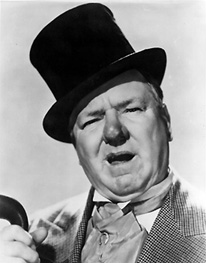
On Nov. 5, we'll find out if W.C. Fields' low opinion of Philadelphia was justified...

On Nov. 5, we’ll find out if W.C. Fields’ low opinion of Philadelphia was justified…

An unethical and incompetent judge in Philadelphia doesn’t think so, thus making a powerful argument against electing judges, being a prostitute, and living in Philadelphia.

Philadelphia Municipal Court judge Teresa Carr Deni ruled that the 2007 rape of a prostitute at gunpoint was merely “theft of services.”The  woman had agreed to meet a man have sex with him for the bargain fee of $150. He asked her if his friend could join in the fun for an additional $100, and she agreed. When these two sterling citizens arrived for the appointment, however, they held her at gunpoint and forced her to have sex with them free of charge.

If this isn’t rape when a prostitute is involved—forced, unconsented intercourse, through the threat of deadly force—then any prostitute can be raped at will, with the worst charge being “theft.” Selling sex doesn’t convert sexual battery into nothing, a non-crime, once consent for that sale is withdrawn. If you know someone is preparing to sell blood to a blood bank, and you attack him, subdue him, and drain his blood to sell yourself, is this merely theft, or a crime of violence? If he was going to be an organ donor, and you rip out his kidney, is that just theft? There is no route through law or reason that allows us to ignore the fact that a woman was forced to have sex with two men without her consent. Judge Deni clearly has a monstrous bias against prostitutes, and thus believes that they shouldn’t receive equal protection under the law. When criticized, her rationalization was that prosecuting the men for rape “minimizes true rape cases and demeans women who are really raped.” Continue reading

Ethics Quote Of The Week: Sportswriter Joe Posnanski

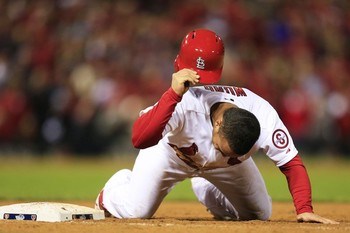
Picked off first, Kolton Wong curses the fates...

Picked off first, Kolten Wong curses the fates…

Just as baseball’s post season was starting, I wrote a post about how U.S. society’s flawed use of consequentialism to judge merit, wisdom and ethics is encouraged by our sporting events. The example I used was an old one, from the 1968 World Series, which I consider to be a classic and extreme example. This morning, the great sports essayist Joe Posnanski addressed the same issue, focusing on an event in last night’s weird World Series game, which ended like none other in post season history. With two outs and the potential tying run at the plate, Boston relief pitcher Koji Uehara picked off St.Louis pinch-runner Kolten Wong to end the game and stop the Cardinals’ most dangerous sluggers from batting with a chance to tie or win the game. Posnanski marvels at how what he considers a foolish decision to station the first baseman near the base for a pick-off throw had good results, and how hard it is for us to focus on process rather than results. He is, of course, talking about the appeal of consequentialism, and the way baseball encourages it. I beat him to it by almost a month, but Posnanski amplifies the point nicely. Here’s Joe: Continue reading

The Associated Press And The Scandal That Wasn’t

It was tough giving my dog the bad news that the AP had screwed up...

It was tough giving my dog the bad news that the AP had screwed up…

Over the local evening news came a stunning report: Terry McAuliffe the Democratic candidate for Governor of Virginia, where I vote and make my home, had been accused in federal documents of lying to investigators checking the facts behind a Rhode Island death benefits scheme. Confirmation bias being what it is, I had no trouble giving the report full credence ( I long ago concluded that McAuliffe is sleazy and will lie whenever there is a perceived up-side for him, though I never thought he was stupid), and informed my dog, Rugby, for whom I am organizing a write-in campaign, that his chances of being Governor were looking up. Then, less than two hours later, I was preparing to write about this latest development in the most ethics-free governor’s race in the country, and checked online for more details. I discovered only this:

RICHMOND, Va. (AP) The Associated Press has withdrawn its story about documents in a federal fraud case alleging that Virginia Democratic gubernatorial nominee Terry McAuliffe lied to a federal official investigating a death benefits scheme. The indictment did not identify McAuliffe as the “T.M.” who allegedly lied to investigators.

Wait…how could this happen? How could the Associated Press, the nation’s premiere news agency, essentially accuse a candidate for high office in a highly contested election of a felony less than a month before votes are cast, just in time for the story to be the lead story all over the state in question, and then withdraw it shortly thereafter? Don’t tell me about “mistakes”: the AP and the profession of journalism have standards and procedures of long-standing that, if followed diligently, ensure that this never happens. Facts must be checked and confirmed by reliable sources. Supposition must not be stated as truth. Here is the AP’s distillation of its ethical framework: Continue reading

Case Study In How Sports Encourages Consequentialism: The 1968 Detroit Tigers

Mickey Stanley in 1968: learning a new position in the World Series, making us dumber...

Mickey Stanley in 1968: learning a new position in the World Series, making us dumber…

Frequent readers here know that I often inveigh against consequentialism in its various forms, from labeling sound decisions “mistakes” when they don’t pan out due to uncontrollable factors, to pronouncing unethical conduct as ethical because it chanced to have some beneficent results. This particular hydra seems to be a tough one to kill, and one of the reasons is, I realize, the pervasiveness of sports in our culture.

Reflecting on sporting contests, particularly those involving teams, routinely generates hindsight bias on the part of fans and sports commentators….for one thing, it’s fun to second guess managers and coaches from the safety of an armschair or from behind a computer screen. Unfortunately, the practice endorses consequentialism. Decisions that result in a win are seldom criticized, no matter how moronic or misguided they may have been; tactics that ended in defeat are always called “mistakes,” or worse.

The baseball post-season began yesterday. We won’t see a World Series game until October is almost over, but there was a time, children, long ago, before divisions and the designated hitter, before steroids and ESPN, when in major league baseball, the World Series was the post season. This was the case 45 years ago, in 1968, when the Detroit Tigers, who had clobbered the American League competition on the way to a 103-59 record, including the last 30 game-winning season by any pitcher, turned in by Denny McLain. They were about to face the reigning baseball champions from 1967, the NL’s St. Louis Cardinals, led by future Hall of Famers Lou Brock, Orlando Cepeda, and Bob Gibson. Both were veteran teams and well-balanced; there was every reason to believe that each had a good chance at victory. Certainly, neither was in need of any last-minute overhaul.

Nonetheless, Tigers manager Mayo Smith decided to take a gamble. Continue reading

Rejecting Mob Justice Even When The Mob Is Right: Ethical And Necessary

The Taco Bell employee-to-be,

The Taco Bell employee-to-be,

Prediction: Those who don’t comprehend the George Zimmerman verdict will never understand this one. Yet it is absolutely right and necessary in every way.

Summary: The Montana Supreme Court blocked an incompetent judge from changing an offensive and inexcusably inadequate sentence for a serious crime, because he was trying to do so as the result of public criticism.

Background: Judge G. Todd Baugh, an elected district judge in Montana’s Yellowstone County, sentenced  former high school teacher Stacey Dean Rambold to 15 years in prison with all but 31 days suspended—that’s one lousy month, friends— for having sexual intercourse without consent, also known as rape, with a 14-year-old female student (the teacher was 49 at the time) who later committed suicide while the case was pending. The judge, who appears to be an idiot (he later said that he can’t imagine what came over him) explained his decision at the time by saying that the underaged victim of the statutory rape was “older than her chronological age” and had “as much control of the situation” as the teacher.

Beginning with the late student’s mother, who reacted to the absurd sentence by screaming “You suck!” at the judge (Excellent diagnosis, by the way) and storming out of the courtroom, the ridiculous verdict caused an overwhelming backlash of negative public sentiment that spread nationwide. There was so much wrong with the sentence and the way it was arrived at that the mind, and conscience, boggles: Continue reading

No, Mary, A Cure For Down Syndrome Isn’t Wrong, But Infecting Readers With Your Warped Ethical Reasoning Is

Let me know when Mary's gone and it safe to take my boot off.

Let me know when Mary’s gone and it’s safe to take the boot off.

The internet can carry the contagion of horrible reasoning with astounding speed, especially since so many of us have been slow to accept that being published no longer creates any likelihood that a writer has a coherent thought worth reading. Even knowing this, I was still taken aback by the startling ethics illiteracy on display in blogger Mary Fischer’s post  titled “Possible ‘Cure’ for Down Syndrome Seems So Wrong.” This is the kind of undisciplined, emotion-driven, bias and rationalization besotted thinking about life issues that Ethics Alarms was launched to combat, and yet reading Fischer’s sloppy substitute for thought, I still found myself wondering: How does someone get this way? How do they function in life if their method of determining right from wrong reaches conclusions like this? How many people read posts so devoid of anything resembling legitimate ethical analysis and  allow it to become part of their belief system?

I’m not even sure that I want to know the answers to these questions. Continue reading

Ethics Quiz: Playing Follow The Leader

To follow or not to follow?

To follow or not to follow?

I live in the Washington, D.C. area, and at this moment even the beginning of the NFL season, usually the one thing everyone here (except me) usually cares about, is being over-shadowed by the drama of the looming Congressional vote on Syria. What was assumed—why, I cannot imagine–to be a likely rubber stamp with only an insufficient number of Republicans providing opposition because, as we all have been told repeatedly, they will oppose the President on anything, has materialized as strong bi-partisan opposition. The Washington Post estimated last night that the votes in the House are currently running 3-1 against the symbolic-and-deadly-but-promised-to-be-non-committal missile strikes on pre-announced targets. This is the most encouraging development in the government since President Obama was elected, I am tempted to say. It shows that this is not a nation of lemmings, and that the separation of powers has its virtues after all. Nonetheless, interesting ethical arguments are arising in favor of votes both no and yes.

The no arguments are varied, and reach the same conclusion from different positions, some more ethical than others. The pacifist Left and the isolationist Right, both irresponsible and dedicated to ideology over reality, are on the same path here, and would be on that same path even if the President’s argument for missile strikes was strong. Others, including me, but also those who supported more extensive military action in the Bush administration, fault the plan because of its dubious results, its contradictory logic, and the feckless and troubling way the President brought us to where we are.

I just heard an interview with a Republican House member who announced that he reversed his initial support for the missile strike after hearing Obama’s remarks in Sweden. After hearing Obama appear to deny that he drew the red line—a rhetorical point that was too cute by half and clumsily stated—this Congressman decided that he couldn’t believe anything Obama said or promised regarding Syria, including his assurances that nothing would lead to “boots on the ground.” (I would argue that his assurances that nothing would lead to boots on the ground is, if not dishonest, frighteningly irresponsible.)

The yes arguments are more perplexing. Naturally, there are those who, against all logic, simply adopt the contradictory and militarily nonsensical arguments John Kerry was asked to present to the Senate (apparently because President Obama knows that he appointed an inarticulate—but loyal!!!—dim-bulb, Chuck Hagel, as Secretary of Defense—but that is another, though related, issue). Liberal columnist Eugene Robinson,  who has won an Affirmative Action Pulitzer Prize and who has proven that he will cheer whatever his fellow-African American in the White House does, even if he makes a decree like the South American rebel-leader-turned-dictator in Woody Allen’s “Bananas”...

“From this day on, the official language of San Marcos will be Swedish…In addition to that, all citizens will be required to change their underwear every half-hour. Underwear will be worn on the outside so we can check. Furthermore, all children under 16 years old are now… 16 years old!”

made this “argument”…

“The issue can’t be who wins that country’s civil war. It has to be whether the regime of Bashar al-Assad should be punished for using chemical weapons — and, if the answer is yes, whether there is any effective means of punishment other than a U.S. military strike…Let me clarify: I believe that a U.S. strike of the kind being discussed, involving cruise missiles and perhaps other air-power assets, can make it more likely that Assad loses. But I also believe that — absent a major commitment of American forces, which is out of the question — we cannot determine who wins.”

Gee, thanks for clarifying, Eugene!

Other, more coherent voices argue for endorsing Obama’s plan do sent a few missiles—not any that might hit Assad or his weapons, mind you– because they argue, even if the plan is weak, misguided, dangerous or certifiably bats, the President and, by extension, the United States will be dangerously weakened if a call to arms is rejected. This is essentially the argument of rational conservative James Taranto. Here is former Bush speechwriter Michael Gerson, this morning:

“…During the Syrian crisis, the Obama administration has generally waged a war of words and then used those words casually and clumsily. President Obama declared that Assad “must go” when his departure seemed inevitable — without a strategy, or even the intention, to achieve this goal when it became difficult. He drew a chemical-weapons “red line” that became a well-trodden thoroughfare. The Obama administration revealed details of an imminent military operation, which was promptly repudiated by the parliament of our closest ally, then abruptly postponed. The administration seemed to indicate that United Nations support for a military strike was needed — before declaring it unnecessary. It seemed to indicate that a congressional endorsement was superfluous — just before staking everything on securing it. Obama is inviting members of Congress to share responsibility for a Syrian policy that has achieved little to justify their confidence. In fact, he has undermined political support for the legislative outcome he seeks. For more than five years, Obama has argued that America is overcommitted in the Middle East and should refocus on domestic priorities. Now he asks other politicians to incur risks by endorsing an approach he has clearly resisted at every stage…”

Wait…this is how Gerson argues that Congress should vote yes? Indeed it is…

“Legislators are not arguing between preferred policy options, as they would on issues such as health care or welfare. They are deciding if they will send the chief executive into the world with his hands tied behind his back. This would be more than the repudiation of the current president; it would be the dangerous weakening of the presidency….even if this military action were wrong or pointless, it would have to be sufficiently dangerous to justify the gelding of the executive branch on a global stage. A limited military strike may be symbolic. But for Congress to block that strike would be more than symbolic. It would undermine a tangible element of American influence: the perception that the commander in chief is fully in command.”

This is a good time to stop and offer today’s Ethics Alarms Ethics Quiz, based on the reasoning of Gerson and others:

Are members of Congress ethically obligated, by loyalty and responsibility for the image and credibility of the U.S. abroad and to avoid weakening the institution of the presidency, to support the missile strikes on Syria, even if they and their constituents believe that to do so is wrong and misguided?

And here’s a poll:

Continue reading