Morning Ethics Warm-Up: 7/16/2017

http://www.youtube.com/watch?v=a1Tf5uuGvjs

 Isn’t it a lovely morning?

1. This isn’t the first post of the day: I woke up around 4 AM and couldn’t get back to sleep (“As My Guitar Gently Weeps” was playing over and over in my head, don’t ask me why, and images from the Red Sox 16 inning loss to the Yankees was giving me the night terrors), so I went to the office and wrote this post. Charlie Green, critic and friend, properly pointed out that my comment in passing that incorrectly alluded to rumors about Joseph P. Kennedy being a bootlegger was exactly what my  post was criticizing David Brooks for doing in his attack on the entire Trump family, going back generations, a truly ugly op-ed.

What I was sorely tempted to say was that I’m just an ethics blogger, trying to focus attention on ethics standards in a daily blog from which I receive no income and intangible professional benefits if any. I mange to get 2000-4000 words published every 24 hours, working in short bursts while I try to earn a living, run a business, do research and be as good a father and husband as I can be. I have no editors, no researchers (except generous volunteers) and my blog is not a “paper of record” for journalists, seen by millions and paid for by subscribers. Is it really fair to hold Ethics Alarms to the same standards as David Brooks and the New York Times?

Make no mistake: my own standards are that no typo, no misstated fact, no misleading argument, are acceptable on an ethics blog, or any blog, or anything published on the web. Charles was right: using an unproven accusation of long-standing (Until Charles flagged it, I thought the bootlegging charge was a matter of public record) undermines my case against Brooks. Nonetheless, Brooks has absolutely no excuse. This is all he does, he has all week to produce a column or two, and he has a staff.

I’ve also corrected my error within hours of making it. What are the chances that Brooks and the Times will ever admit that they intentionally impugned the character of Fred Trump using rumors and innuendo as part of their ongoing effort to demonize the President of the United States?

My guess: Zero.

2. The big story this morning appears to be O.J. Simpson’s parole hearing. Will he be paroled and released after serving just nine years of the three-decade sentence he received for his participation in a burglary? Assuming that it is true that O.J., now 70 and unlikely to stab any more ex-wives and innocent bystanders to death, has been a model prisoner, yes, that would be the ethical result. O.J. got away with a double murder—he will not be asked at the hearing, “Once you’re out, can we assume that you’ll renew your relentless hunt for the real killer?”—but he wasn’t put in prison for that crime. Officially, he’s innocent. His fellow burglars were all put on probation, while the judge threw the book at the former football star, presumably to exact a measure of societal revenge for Nicole and Ron. The sentence was unethical. I don’t feel sorry for O.J. at all; I’m glad he had to serve hard time, just as I would have been happy if he had been squashed by a meteor. Justice, however, demands that he go free.

The bastard. Continue reading

Morning Ethics Warm-Up: 6/16/17

1. It looks like Bill Cosby is going to be acquitted, and probably rightly so, though probably for the wrong reason: bias. The jury is deadlocked, and I’d bet my head that one or more hold-outs just can’t accept the fact that that nice Cliff Huxtable would do those horrible things unless the victim consented somehow. Cheat on his wife. maybe. But not that.

Celebrity defendants whose public images are benign begin criminal trials with automatic unreasonable doubt built-in; this is part of the reason O.J. and Robert Blake (“Baretta”) avoided murder convictions. Celebrities with less sterling reputations are not so fortunate: had Bill Cosby been the one who shot a woman he barely knew at his home under strange circumstances, he would have probably been acquitted. Unfortunately for Phil Spector, the pop record producer had a well-established reputation for being nuts. The reasons Cosby can be acquitted for just reasons is that the victim is on record calling and chatting with him dozens of times after she was drugged and sexually assaulted, and because only one of the 50 or so Cosby victims was allowed to testify to show a pattern of behavior. The standard of  proven  guilt beyond a reasonable doubt is intentionally difficult to meet. There is no doubt whatsoever in my mind that Cosby is guilty, and his eventual acquittal won’t change my certainty. Nonetheless, those attacking the verdict and the jurors will be wrong, just as they were with O.J. and Casey Anthony.

2. One more thing regarding Cosby: yesterday I heard a CNN anchor who was about to interview another Cosby victim describe the woman as someone who has accused Bill Cosby of “inappropriate conduct.” The host caught herself, sort of, by adding, after a pause, “to say the least.” The woman claimed she had been raped. Even the anchor couldn’t bring herself to attach to dear, funny, sweet Cos such a heinous crime, so she engaged in craven equivocation. “Inappropriate conduct”?  Belching at the dinner table is inappropriate conduct. Drugging trusting young women and raping them is entirely different.

This is CNN.

 I regard a broadcast news journalist stating that Bill Cosby has been accused of “inappropriate conduct” misleading, incompetent, and fake news. Continue reading

Aaron Hernandez And The Weird Legal Doctrine Of Abatement Ab Initio

The predator priest, the corrupt CEO, and the murderous Patriot, all innocent because they’re dead….

Massachusetts judge Judge E. Susan Garsh ruled that the state’s law required her to vacate the 2015 murder conviction of former New England Patriots star Aaron Hernandez. Because Hernandez’s appeal was pending when he committed suicide in his cell, she said,  the common law doctrine known as abatement ab initio applied: a defendant’s death before an appeal erases his conviction. Prosecutors argued that Hernandez’s purpose in hanging himself on April 19 was to to void his conviction, but Judge Garsh responded that she was bound to follow state law anyway, especially since Hernandez’s motives were unknown. She had presided at the trial in which a jury found Hernandez  guilty beyond a reasonable doubt of the murder of semi-professional football player Odin Lloyd.

The fact that some legal and ethical puzzles have proven unsolvable despite troubling lawyers, judges, legislators and scholars for decades (and sometimes centuries) is one of the best proofs I know for The Ethics Incompleteness Principle, which holds that no rule or principle makes sense in all circumstances, and that human beings are incapable of articulating perfect laws and rules that will work as intended in every case. Abatement ab initio is a classic example.

Abatement is the dismissal or discontinuance of a legal proceeding “for a reason unrelated to the merits of the claim.” It is available in both a civil and  criminal context. Traditionally, the death of a criminal defendant following conviction  but before an appeal can be made mandates abatement. The effect of  the doctrine is to discontinue all proceedings  and to dismiss the appeal as moot, overturn the conviction, and dismiss the indictment. The deceased defendant reverts back to his status before being charged. In the eyes of the law, he is innocent…again. Continue reading

New Jersey Tries An Ethics Experiment

bail-reform

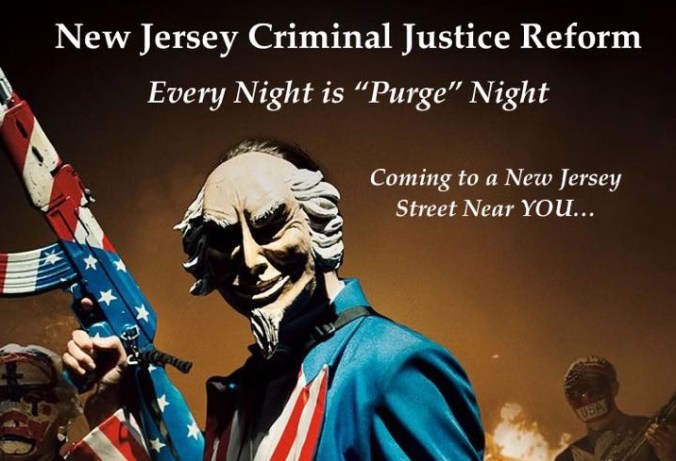
New Jersey, a state for which many would say ethics itself would be a novelty, has taken the lead in a truly revolutionary criminal justice experiment that resolves an ancient ethical dilemma in favor of mercy and compassion. Beginning on January 1 this year, New Jersey  judges are expected to release all but the most dangerous and untrustworthy defendants pending their trials, often with certain conditions, rather than  to require cash bail as a condition of avoiding jail.

In 2014, voters decided to amend New Jersey’s Constitution and virtually eliminate bail, responding to a national movement to reform a system that has always discriminated against poor defendants. Although bail requirements are usually modest for most offenses (a bail bondsman typically charges a defendant 10% to post the entire bond), many defendants are still unable to pay even small amounts. Then they wait in jail, often losing their jobs and causing hardship for their families. Continue reading

The Michael Slager Trial: When The Ethical Course Is To Not Exercise a Right

shooting_of_walter_scott

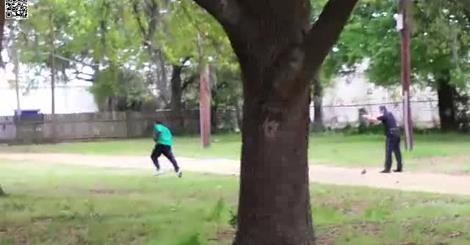
Michael Slager is the white North Charleston police officer who stopped African American Walter Scott for a taillight violation on April 4, 2015, and in the ensuing events, ended up fatally shooting Scott as he fled the scene, in the back, as recorded on a cell phone video. Of all the many police-involved shootings, this is the least equivocal. Slager is guilty of murder of one kind or another: in South Carolina, there is only one kind, and  mitigating circumstances are reflected in the sentence. He could receive life in prison, or much less time.

But every criminal defendant has the right to be tried by a jury of his peers before the law finds him guilty, and Slager is taking full advantage of the right. In doing so, he is forgoing his last clear chance at redemption. The former officer—he has already been fired for the episode and not just put on paid leave, as is usually the case—is understandably trying to avoid a conviction and jail time, even though, should he be acquitted by some miracle or act of mass hypnosis, it would be certain to provoke even more anger and distrust in the black community, and, I would hope, among non-African Americans as well. A justice system that finds, no matter how it reaches such a conclusion, that an officer who shoots a fleeing man dead like Slager did is not guilty needs to be blown up and seeded with salt. When Slager’s first lawyer saw the video, he quit.

Do you think an acquittal is impossible? Don’t. All that is needed is a jury full of people who “think,” and I use the word generously, like the signers of this petition. I’m pretty sure that there are more than twelve of them available. Continue reading

From The Ethics Alarms Law vs. Ethics Files: Yet Another Example Of How The Public’s Ignorance Of How Laws Work Imperils Us All

guilty

Because he just IS, that’s all. Everybody knows it. Come on. What’s the problem?

Well, I’m still waiting for the wave of op-eds and pundit pieces condemning the judge in the Dennis Hastert case for somehow turning the ex-Speaker’s trial for breaking banking laws into a trial for child molestation even though he couldn’t be charged with that crime.

I appear to be one of the very few people alarmed by this. Coming at a time when we have a Presidential candidate advocating the imprisonment of financial traders without any indications that they broke actual laws, this qualifies as a bona fide societal virus, and a potentially dangerous one.

Over at Popehat, habitual Ethics Hero Ken White flagged another outbreak that somehow I missed (I blame Fred).

It seems that an Oklahoma court rejected the prosecution of a teenage boy for engaging in oral sex with a teenage girl (she was, to be delicate, the oral recipient) who was passed out drunk, and the Court of Criminal Appeals agreed, ruling:

“Forcible sodomy cannot occur where a victim is so intoxicated as to be completely unconscious at the time of the sexual act of oral copulation. We will not, in order to justify prosecution of a person for an offense, enlarge a statute beyond the fair meaning of its language.”

Ken begins, tongue hard in cheek,

“Did you hear? Oklahoma said it’s legal to rape someone if they’re unconscious from drinking! They said it’s not rape at all! It’s classic victim-blaming! It’s outrageous! It’s rape culture! It’s just what you would expect from one of those states!”

He then examines the statutes involved. It turns out that the unimaginative legislature, when defining the crime of forcible sodomy which was what the boy was charged with, missed this set of potential facts. She wasn’t forcibly raped, because she wasn’t conscious. Continue reading

The Cheater’s Rationalizations

cheatingI was in Boston recently, and naturally the topic of Tom Brady and Deflategate came up often. I kept hearing the same defenses of Brady with a growing sense of déjà vu. Yes, many of the rationalizations on the Ethics Alarms Rationalizations List raised their ethically-muddled heads in Beantown, all-purpose classics like “Everybody does it,” “It’s a bad law/ stupid rule,” and “No harm, no foul,” but there were others that clearly came out of some secretly published “Cheater’s Handbook.”

These are going to enter the list as a group, like #6,The Biblical Rationalizations. They will be trotted out for other purposes, no doubt, but no set of excuses better defines the unethical mindset of a cheater’s defenders than these three.

59. The Cheater’s Rationalizations Continue reading

Indeed He Deserved All Of It, But Denny Hastert’s Sentencing Hearing Was A Legal And Ethical Travesty

Hastert sentencing

“I am deeply ashamed to be standing here,” former Speaker of the House Dennis Hastert  told a judge yesterday at his sentencing hearing.  “I know why I am here … I mistreated some of the athletes that I coached.”

Wait…what? That’s not why Hastert was in court at all. He was before a judge for one reason: he violated banking laws and lied to the F.B.I.. The fact that he was a sexual predator and molested members of the wrestling team he coached many years ago is not the reason he was in court. It couldn’t be. The statute of limitations on all of those crimes, horrible crimes all, had expired. Hastert couldn’t be charged, tried or convicted of any of them.

I don’t understand why this hasn’t been the focus of the coverage of Hastert’s ordeal yesterday. Why did the judge think it was appropriate to “angrily” lecture him about his crimes that in the eyes of the law he must be considered innocent of by the legal system, because he cannot be found guilty of these crimes any more?

“‘If Denny Hastert could do it, anyone could do it,'” U.S. District Judge Thomas M. Durkin said. “Nothing is more stunning than to have the words ‘serial child molester’ and ‘speaker of the House’ in the same sentence.” Well, that’s very interesting, Judge. If  the late Ted Kennedy had been before you to be sentenced for, say, just a wild hypothetical, a drunk driving charge, would you lecture him about letting Mary Jo Kopechne drown in his car?

I may have missed it, but when O.J. Simpson was sentenced for burglary, I don’t recall the judge asking him to confess to murdering Nicole and Ron…did that happen?

Earlier this month, the judge and prosecutors allowed the trial to become a proxy trial for a crime that wasn’t on the docket, with prosecutors hammering at graphic details about the sex-abuse, describing how Hastert would sit in a recliner in the locker room with a direct view of the showers. The victims, prosecutors said, were boys between 14 and 17. Hastert was in his 20s and 30s. This is relevant to the charges against Hastert how, exactly? Answer: They aren’t. Continue reading

Ask Ethics Alarms: “Why Is It Unethical For A Prosecutor To Say That A Witness Is telling The Truth?”

"Would I try to convict an innocent man?"

“Why would I try to convict an innocent man? He has to be guilty.”

The primary Ethics Alarms topic scout, the Amazing Fred, has posed a question about this case, in which a child pornography conviction was overturned because the government prosecutor repeatedly stated that his witnesses were stating the truth, and that the government doesn’t prosecute defendants who aren’t guilty.

Fred asks the question this way:

“A prosecutor told a jury that prosecution witnesses were credible…Isn’t a defense attorney allowed to discredit prosecution witnesses? Why shouldn’t a prosecutor be free to argue the opposite?

The problem isn’t arguing that prosecution witnesses are credible, but rather the prosecutor appearing to personally vouch for the witness. Lawyers aren’t witnesses, and their opinions aren’t testimony or evidence. A lawyer can tell a jury that a defendant is guilty or innocent, but a lawyer cannot say “I believe “ a witness or “I believe” the defendant is guilty. It doesn’t matter what the lawyers believe, and they prejudice the jury by making their own credibility part of the case. Lawyers don’t have to personally believe in the positions they argue. Continue reading

Hey! GOOD Answer, Hillary! Wait…Oh, Right. Never Mind.

guilty-until-proven-innocent1

Twice, Hillary Clinton has publicly made the astounding statement—especially for the supportive and enabling spouse of Bill Clinton, an accused rapist himself—that “every survivor of sexual assault” has “the the right to be believed.” Ethics Alarms noted this both times, here and here, and opined the last time, in November:

Is she that deluded? That convinced of her corrupted supporters’ willingness to believe anything she says, or to excuse every cynical, shameless maneuver?  Has she finally reached the point where she has issued so many, many lies that she can no longer keep them all straight, and now blunders into obvious contradictions? Or is she trying to sabotage her own campaign, taking her copious skeletons out of the closet and hanging them from the roof for all to see?

Words have consequences (though following Hillary’s rise, you wouldn’t know it), and as might have been predicted, a questioner at a campaign event in New Hampshire yesterday asked Hillary if believing all “survivors” meant believing Bill’s accusers as well, including Juanita Broaddrick, Kathleen Willey and Paula Jones. I have to hand it to Hillary; she was ready. She had thought about an answer, maybe even had a meeting with her advisors to craft the perfect response. Here is what she said:

“I would say that everybody should be believed at first until they are disbelieved based on evidence.”

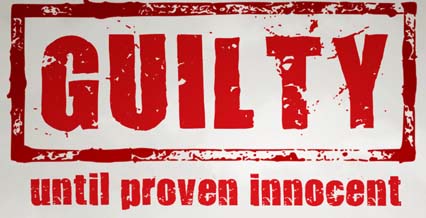
What is a lawyer and a candidate for the Presidency doing advocating the un-American principle of “guilty until proven innocent”?  OK, we know what: pandering to the Pro-Vagina vote. Nevertheless, Clinton knows this is not how the law works, so she is apparently advocating a significant and frightening change. Continue reading