Guess Who Invited Donald Trump to the White House Correspondents Association Dinner?

OK, who's the wiseguy that brought the skunk to the picnic?

I missed it, but the Washington Post of April 28 revealed who it was that invited Donald Trump, fresh from a month of trying to make the President’s citizenship a campaign issue while denigrating Obama’s integrity, legitimacy, and honesty, to the annual light-hearted White House Correspondents Association dinner, where the President is always a featured “performer.” It was buried in the gossipy Style section, but there was the culprit. Who invited him?

The Washington Post invited him, that who.

Inviting Trump to that event is in approximately the same good taste as inviting blogger Pamela Geller to a Park51 (a.k.a. “the Ground Zero Mosque”) controversy, or allowing a group of “Truthers” to crash a testimonial to Dick Cheney.

What could the Post have been thinking? “He’s a fascinating figure to Washington right now!” the Post’s representative breathlessly explained on the 28th. We are to assume, then, that if the dinner was being held this week and Osama bin Laden hadn’t been dispatched (most respectfully, of course) to Davy Jones’ Locker, the Post might have invited Osama’s bullet-riddled corpse to slump at its table.

The Post was stirring the pot, is what it was doing, and that is not the media’s proper of ethical role. If the intention was to set up Trump, who had been called everything from a joke to a fool to a thug to a racist by various Post writers only days before, to be insulted to his face by host Seth Myers and the President, that is taking sides in the news rather than reporting it. If it the intent was to position volatile elements together in the hopes of sparking a story, that is unethical  journalism too.

The paper got both results that it presumably desired: Trump was a sitting duck at the dinner, and then he embarrassed himself by later complaining about the skewering he so richly deserved. It also, not for the first time, showed how rusty those old ethics alarms are at the offices of Washington, D.C.’s most prestigious newspaper.

[Thanks to sharp-eyed Post reader Robert Sher.]

No, It Still Doesn’t Justify Torture

No.

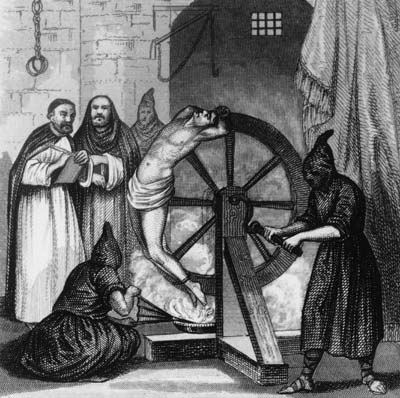
The news of how Osama bin Laden was finally tracked down and killed has caused a predictable outbreak of consequentialism. It appears that Khalid Sheikh Mohammed provided some of the key intelligence that led to the successful operation in Pakistan while he was undergoing “enhanced interrogation” in CIA prisons in Rumania and Poland. “See?” Dick Cheney’s fans are saying today. “Rendition and torture work. We wouldn’t have killed Bin Laden without them. So what do you think of those tactics now?” The opponents of torture who foolishly argued against it based on pragmatic considerations—“Torture doesn’t work!”—rather than ethical ones–-“It is absolutely wrong!“—set themselves up for this.  Now what should they say? Continue reading

Colorado’s Adultery Dilemma

Relax! It's OK...you're in Colorado!

In most states, adultery is one of the great examples of how something can be wrong and destructive without being illegal, a useful concept to have in mind when a corrupt politician or a crooked corporate executive  says “I didn’t break any laws!” It is also a good example of unethical conduct that is better controlled by ethics than law. A law against adultery is theoretically defensible as a deterrent of harmful social conduct, and the state definitely has an interest in preserving family stability. The problem is that regulating offenses triggered by love, lust and romance feels excessively intrusive to most of us. It has overtones of the Plymouth colony. For better of worse, minimizing adultery belongs in the realm of ethics, not the criminal law. Continue reading

Loop-Hole Ethics and The New York Times

The NYT’s website paywall plan floats in a sea of holes.

Ariel Kaminer, author of “The Ethicist” column in The New York Times Magazine, made an interesting assertion in her answer to a reader who asked about whether he could exploit several loop-holes in the Times’ new paywall plan for its website.

Noting that he was a struggling freelance journalist who visits the Times website often, he asked if it was unethical for him to use his parents’ free access to the content, since they are subscribers.  Then he Mused about other scenarios. “If I buy online access, can I share the password with my live-in girlfriend, even if I move to New York for the summer? What about our other housemates?” Continue reading

Ethics Hero: Attorney Paul Clement

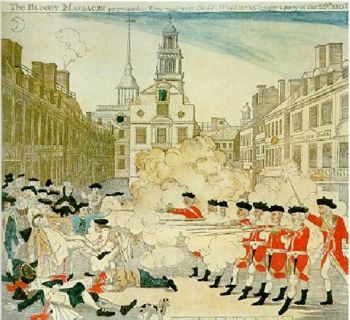
John Adams defended the guys in red, and Paul Clement understands why.

Law firm King & Spalding announced Monday that it would no longer represent congressional Republicans regarding the constitutionality of the Defense of Marriage Act (DOMA), the controversial 1996 legislation that defines marriage as being only between a man and a woman.. In response, the firm’s chief appellate lawyer, Paul Clement, who was handling the case, resigned from the firm.

In February, the Obama administration announced that its Justice Department would refuse to defend DOMA in a number of lawsuits, an unusual, controversial and troubling decision. It doesn’t take a lot of imagination to conceive of other federal laws another administration might decide to render dead letters by non-defense despite being duly passed by the people’s representatives. A government has an obligation to duly execute its laws or repeal them. The policy of the Administration regarding DOMA raised issues of governmental integrity quite separate from the provisions of the law itself. Continue reading

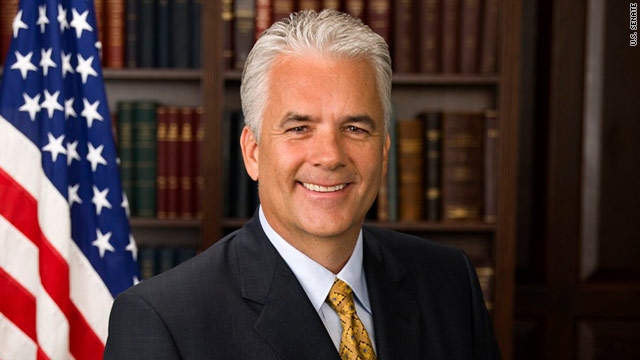
Unethical Quote of the Week: Sen. John Ensign

While I stand behind my firm belief that I have not violated any law, rule, or standard of conduct of the Senate, and I have fought to prove this publicly, I will not continue to subject my family, my constituents, or the Senate to any further rounds of investigation, depositions, drawn out proceedings, or especially public hearings.”

Sen. John Ensign (R-Nev.), announcing his resignation from the U.S. Senate about two years late. Ensign’s continuing service in the upper chamber has been a continuing embarrassment thanks to a 2009 sex scandal and sordid cover-up attempt. Interestingly, Ensign maintains that such conduct doesn’t violate any “standard of conduct” for him and his colleagues.

Sadly, perhaps he’s right.

“I didn’t violate any laws or rules” has been Ensign’s mantra since it came to light that he: Continue reading

Are Conviction Bonuses For Prosecutors Ethical?

Next, how about a bonus for confessions?

Sometimes a story starts the ethics alarms ringing so loudly that it is hard to think about anything else. It is rare, however, to have this occur when it is not entirely clear what is so unethical. An unusual bonus arrangement in Colorado is in this category.

Carol Chambers, the District Attorney for Colorado’s Eighteenth Judicial District, offers financial incentives for felony prosecutors who meet her office’s goals for convictions.  Plea bargains and mistrials don’t count in the incentive program; they have to be trial convictions.  The bonuses average $1,100, and Chambers says she gives them out to encourage prosecutors to bring her district’s rates in line with other jurisdictions in the state. No other Colorado DA gives out bonuses, or bases evaluations on conviction rates. Continue reading

The Professions Most Likely to Cheat on Their Taxes?

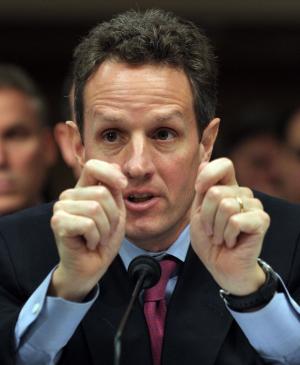
Gee, where do "Treasury Secretaries" fall on the list?

A study of I.R.S. data by a University of Chicago graduate student, now Doctor, Oscar Vela,  produced the following list of the professions most likely to file fraudulent tax returns, at least according to his analysis. Make of it what you will. The Time Magazine website blog post about the list is worth reading, first for the blogger’s highly questionable theories explaining, for example, why lawyers aren’t on it, but mostly to see conclusive proof that Time is hiring English-as-a-second-language night students, relatives of Ko-Ko the talking gorilla, or stroke victims to write their blogs. Sample sentence: “His conclusion was that as much as we would like to think so we pay taxes out of  the goodness of our hearts, or even because we are fearful of fines or worse.” Henry Luce just did a back-flip in his grave.

Dr. Vela’s theory is that the professions that are required to maintain a perception of integrity are less likely to cheat. Let us say that I am dubious. Why then are scientists so high on the list?

Here it is: Continue reading

Global Warming Advocates Flunk Ethics, and Credibility…Again

Never mind!

The evidence for global warming is pretty overwhelming, though still possessing some holes, and the likelihood is that much of the change is man-made. That’s about as far as the scientific evidence goes, however, without getting into serious controversy. The dire climate chance projections continue to be questionable at best, which poses problems for environmentalists who want to use climate change as a wedge to shut down industry, and alarmists who are frightened out of their wits by science they really don’t understand. Rather than demonstrate that the science is unbiased and credible by acknowledging the uncertainty, the global warming community, including elected officials with agendas, radical anti-industrialists, various research, political and advocacy groups and a depressing number of scientists who know better—and Al Gore…can’t forget Al!—have resorted to outrageous scare tactics and apocalyptic “projections.” Continue reading

Just So You Know The Legal Profession Is Trying…

The Massachusetts bar has suspended a lawyer for six months for running an advertisement on Craigslist offering to write  papers and essays for students to turn in as their own. The state Board of Bar Overseers of the state Supreme Judicial Court issued a memorandum April 1 announcing that lawyer Damian R. Bonazzoli was suspended from practice.  He also lost his job lost his job with the state Appeals Court.

Good. Continue reading