Jeanette Rankin, The Pearl Harbor Ethics Dunce

This post is a day late, I guess. A friend on Facebook posted the headline above, bringing the episode back to me.

Jeanette Rankin (1880-1973) is a feminist icon, and with good reason. She was the first woman to be elected to Congress (From Montana), even before women were  able to vote under the Constitution. [She also played a pivotal role in  the passing of the 19th Amendment, finally granting all women in the U.S. the right they should have had from the beginning. (Montana was one of the states that allowed full voting rights to woman before the 19th Amendment was passed.)

But Rankin voted against declaring war on Japan after its deadly sneak attack on Pearl Harbor, the only member of Congress to do so. In her case, the fact that the only woman in Congress also was the sole opposition to war was no coincidence.

As a trailblazing feminist,Rankin believed that feminism was a natural ally of pacificism. She believed that having women in power instead of men would mean fewer wars, and  less violence. By today’s standards, I would call her a bigot, and that particular brand of bigotry still lurks under the surface of the modern feminist argument that more women should be elected to positions of power just because of the inherent virtue attached to having only x-chromosomes. Continue reading

Morning Ethics Warm-Up, 12/5/2019: Post Impeachment Hearing Meltdown Edition

Good Morning!

Somehow a picture of the so-called “unicorn puppy,” appropriately named “Narwhal,” seems appropriate today. The Democratic Party/”resistance”/mainstream media has been pushing its corrupt impeachment plot on the assumption that sufficient Trump-haters would find it cute, but as of yesterday the undemocratic motives and ugliness of the effort stood out like a tail on a puppy’s face. You can’t hide it, and lots of people will convince themselves that it’s attractive. But rationally, the damn thing has to come off.

1. On the Stanford law professor’s joke about Barron Trump’s name. Oddly, perhaps the most harmless part of the otherwise embarrassing testimony of Stanford constitutional law professor Pamela S. Karlan yesterday became the most controversial. “While the president can name his son Barron, he can’t make him a baron,” she said.

HAHAHAHAHA! Good one, professor! Gratuitous and completely irrelevant to the issues at hand,  but hey, anything to throw fish to the seals! Based on the outrage around the conservative media, most of which only referenced this knee-slapper without quoting it, I assumed that she had actually insulted the teenager.  I kept reading about how this was one more example of the double standard: using Obama’s daughters for political warfare was off limits, but now this mean professor was getting laughs from Democrats by making fun of Barron Trump. Laura Ingraham tweeted that this joke was guaranteed to turn the public against the impeachment farce for good. (I don’t think so, Laura. You should get out more.) Naturally the First Lady piled on, tweeting at the professor, “A minor child deserves privacy and should be kept out of politics. Pamela Karlan, you should be ashamed of your very angry and obviously biased public pandering, and using a child to do it.” Trump 2020 national press secretary Kayleigh McEnany went even more overboard:

“Only in the minds of crazed liberals is it funny to drag a 13-year-old child into the impeachment nonsense,” she wrote. “Pamela Karlan thought she was being clever and going for laughs, but she instead reinforced for all Americans that Democrats have no boundaries when it comes to their hatred of everything related to President Trump. Hunter Biden is supposedly off-limits according to liberals, but a 13-year-old boy is fair game. Disgusting. Every Democrat in Congress should immediately repudiate Pamela Karlan and call on her to personally apologize to the president and the first lady for mocking their son on national TV.”

Oh come ON. Continue reading

In Sports, Discretion Is The Enemy Of Integrity

The Denver Bronchos last second win over the San Diego Chargers last weekend was one more game decided by a controversial pass interference call. That rule, with which the NFL has been tinkering and which is now complicated by a video review system, is becoming increasingly controversial this season. Wrote Times football columnist Ben Shpiegel,

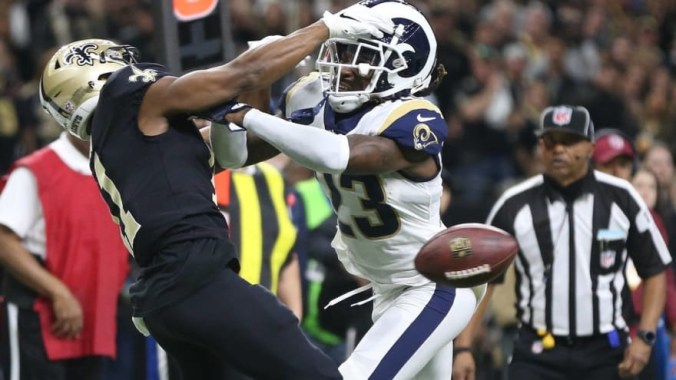
[E]very week across the N.F.L.’s vast empire one player interferes with another before a pass arrives — and goes unpunished for it. In these moments, when yellow penalty flags remain lodged in officials’ pockets, aggrieved coaches weigh emotion against reason: Do they challenge the non-call, hoping that by sheer luck it will be overruled by the new video review mechanism? Or do they stew on the sideline, red flag pocketed, and resign themselves to the unlikelihood of a reversal?…After 12 weeks of wasted challenges and lost timeouts, of inconsistency and obfuscation, the league’s erratic application of the defined standard for overturning an on-field decision — “clear and obvious visual evidence” — has made the football masses yearn for simpler times, such as when no one knew what constituted a catch. Over all, through Week 12, 15 of 77 reviews of pass interference were overturned, though nearly half of those reversals — seven of 15 — were initiated by the officials in the replay booth, who are responsible for challenges in the last two minutes of the half… The questionable calls have dented confidence in a mechanism ostensibly intended to restore it after a mess of an N.F.C. championship game, in which Rams cornerback Nickell Robey-Coleman, without consequence, walloped Saints receiver Tommylee Lewis before the ball arrived.

The dilemma isn’t restricted to football. In any sport where an official’s judgment plays a big role in game results, the interjection of technology and the universal broadcast of games has created an integrity crisis. Before multiple camera angles and the  possibility of replays, umpires and referees could blow a crucial call and nobody would be the wiser, or at least would be able to prove that the game was decided by a non-player’s botch. Now, bad calls are there, on a big screen, then the internet, for all to see over and over. The Luddite argument that missed calls are the “human element” and “part of the game” made sense when there was nothing to be done about it. It is ridiculous now. Continue reading

A Cautionary Tale: The Corruption Of Post Columnist Colbert King, Part II

Part I is here.

King refused to apply his usual ethics alarms to Obama, but continued to be a credible and objective analyst where the D.C. government was involved. He was an instant Donald Trump-hater, however. the second the 2016 results were known. I can understand reaction to the two-time runaway winner of the Ethics Alarms “Asshole of the Year” award. But King concluded Trump was a racist—his embrace of  birther accusations against his beloved Obama was enough to guarantee that—and once Trump was elected, King became the Post’s counterpart to Trump-deranged Times columnist Charles M. Blow, except that King at his worst is usually more endurable than Blow at his best.

King’s latest anti-Trump screed, however, shows how far a smart pundit can fall when the cognitive dissonance scale and confirmation bias work in tandem, especially when old age marches on and one is mired in both work and personal bubbles where a single bias dominates.

The column begins with one of my least varieties of fake news, future news, when a journalist sets out to push a negative view of a politician based on what he will do.  The headline is “It’s a good bet Trump pardons his felon allies. Here’s when that’s most likely.”

I don’t think it is a good bet, though it is certainly possible. King assumes it is a good bet, as his column makes clear (along with all of his previous columns relating to Trump) because he thinks of the President as a corrupt racketeer. King’s once nimble mind  is now incapable of imagining a justification for pardoning the “allies” in question, Roger Stone, Mike Flynn, and Paul Manafort. I can: arguably all three of them were indicted and convicted because of the “resistance”effort to try to drive Donald Trump from office, and to send a message to anyone who might be of value to his administration that they would instantly be in cross-hairs if they dared to try to support the President. President  Trump might feel responsible for their plight, and use his absolute clemency power to relieve their burdens. If so, it would not be an unprecedented political or personal use of the pardon and clemency power. King reallywas just using this question as a pretense to vent about the President, whom he detests, shredding his own credibility in the process. For example, Continue reading

A Cautionary Tale: The Corruption Of Post Columnist Colbert King, Part I

Colbert King is 80 now, but he is still a regular columnist with the Washington Post. As a recent column demonstrated, he has finally fallen prey to the Post culture and no longer is what he once was: the rare pundit, in his case, a liberal one, who could be counted upon for fairness and integrity regardless of the topic. The one-two punches of Barack Obama and Donald Trump showed how cognitive dissonance and confirmation bias can corrupt the best of us, and make no mistake about it, King was once one of the best.

Although he is an African-American, he stood out for decades among his corruption- enabling black colleagues in consistently calling out the D.C. government’s corrupt leadership—notably Marion Barry but many others—on their arrogantly dishonest, venal and untrustworthy practices and attitudes.

Then Barack Obama happened. I listened in surprise on a local Sunday talking head show as King defended Barack Obama’s quiet, decades long assent to the black liberation (that is, anti-white, anti-American rantings of Reverend Wright, Obama’s “spiritual mentor.” Were these rationalizations I heard Colbert King uttering? King reliably mocked rationalizations, and yet here he was using them, notably “Everybody does it,” to defend  a black Presidential candidate’s approval and association with a black racist and demagogue.

Once Obama was elected, King got worse. Not only could Obama do no wrong, but those who criticized were enemies in his eyes; worse, King treated Obama’s appointees and cronies with similar reverence, a complete reversal from his approach to the  parade of incompetent or criminal black politicians in D.C.  Notably, he defended Obama “wing man” Eric Holder, the racialist Attorney General, when he was refusing to comply with a legitimate Congressional inquiry into the Justice Department’s Fast and Furious fiasco. His excuses for Holder and his attacks on Republicans were so redolent of partisan hackery that in 2012 I was moved to write my one-time Ethics Hero the “Open Letter”: Continue reading

Fairness to Elizabeth Warren

Yes, even the 2020 Presidential race’s worst panderer and #1 demagogue deserves the same leave as any other lawyer, which is not to be held responsible for her client’s views and deeds. Every lawyer who ever runs for office or who comes within the cross-hairs of unethical pundits faces these attacks, which I have written about here repeatedly and pledged to address any time they come to my attention.Elizabeth Warren’s Days Defending Big Corporations” warns the Times, hinting at hypocrisy by noting,

“Ms. Warren has ascended toward the head of the Democratic presidential pack on the strength of her populist appeal and progressive plans, which include breaking up big technology companies, free public college and a wealth tax on the richest Americans…Against that backdrop, some of Ms. Warren’s critics have seized upon her bankruptcy work for LTV and other big corporations to question the depth of her progressive bona fides. How, they wonder, could someone whose reputation is built on consumer advocacy have represented a company seeking to avoid paying for retired miners’ health care?

Here’s how: a lawyer’s personal convictions, values and beliefs are completely irrelevant to her clients or choice of clients. Those who think otherwise don’t understand legal ethics, or lawyers, or their function in society. For the heaven-knows-how many-teenth time, here is critical Rule 1.2 b of the ABA Rules of Professional Conduct: Continue reading

Incompetent Elected Official, Unethical Quote Of The Week, And Ethics Dunce: Democrat Rep. Mike Quigley (IL) [UPDATED]

And let me add, 

KABOOM!

“And, if gets to closed primer on hearsay, I think the American public needs to be reminded that countless people have been convicted on hearsay because the courts have routinely allowed and created, needed exceptions to hearsay…Hearsay can be much better evidence than direct … and it’s certainly valid in this instance.”

—-Rep. Mike Quigley (D-IL), making an ass of himself, misinforming the public, but nicely illustrating the lack of integrity and honesty at the heart of the current Democratic impeachment inquiry.

And how proud Loyola Law School must be to have graduated this idiot!

The Honorable Rep. is trying, I assume, to slide by the fact that much of the testimony being presented against the President is hearsay, which means, “not valid evidence.” There is a good reason for that: when what someone else says is repeated by another party as evidence of the proof of the statement’s truth, it obviously cannot be given much weight. For one thing, the actual speaker cannot be cross-examined, making the admission of such a statement as evidence reversible error. A witness can testify to what he or she heard someone else say, but that’s not hearsay.  The testimony is good evidence that the statement was made, just not that the speaker was necessarily telling the truth.

However, nobody, and no legal authority, rationally believes that “hearsay can be much better evidence than direct.” The statement is ridiculous on its face. It literally means that it is better to have someone who heard a statement testify that the statement was true rather than have the individual who made the statement.

Nor do courts “routinely” create exceptions to the rule against hearsay. The exceptions are old and well-established, and have not changed or had additions in many decades.

Here is the list from the Federal Rules of Evidence: Continue reading

Morning Ethics Warm-Up, 10/30/2019: “Happy Birthday Little Sister!” Edition

Good Morning!

Today marks the birthday of my younger sister, whom I have referred to here frequently. Growing up with her and following her life and career imbued me with an early and ongoing appreciation of the effects of sexism and pro-male bias in society, and I’m indebted to her for that. She has always equaled or surpassed me in ability and enterprise, yet often watched me receive more credit or praise for the same things she could do and did without similar acclaim. I know she resented me for that (probably still does—she won’t read Ethics Alarms, for example), and it frequently bruised our relationship over the years. She also taught me about moral luck: in general, I have been persistently  lucky, and she has not, and the difference was so evident that I learned very early in life not to congratulate myself for how the dice fell. She is finally happy in retirement, is about to welcome the first grandchild for this generation of Marshalls, her two adult children are healthy and prospering, and her beloved Nationals just forced a Game 7 in the World Series. She will have a happy birthday. Good. She deserves it.

1. Tales of the double standard, and the imaginary double standard. MSNBC and much of the progressive noise machine has decided to paint Rep. Katie Hill as a victim of a “vast right wing conspiracy,” in Hillary’s immortal phrase, and a vicious husband. If he indeed was the one who shared the salacious photos of Hill involved in various sex acts,  vicious he certainly is. But how can anyone say, as lawyer Carrie Goldberg does, that  “Katie Hill was taken down by three things: an abusive ex, a misogynist far-right media apparatus, and a society that was gleeful about sexually humiliating a young woman in power…None of those elements would be here if it were a male victim. It is because she is female that this happened’? Nonsense, and deceptive nonsense.

Hill resigned because a House ethics investigation was underway regarding her admitted sexual affair with a Congressional staffer and an alleged affair with her legislative director. She was not going to be kicked out of Congress for either or both; she probably resigned in part because she knew the investigation was going to turn up more and worse. The Naked Congresswoman Principle also played a part, as I discussed here. Does anyone really believe that equivalent photos of a male member of Congress displaying his naughty bits in flagrante delicto (my late, great, law school roomie loved saying that phrase) with both sexes would be shrugged off by his constituents and the news media? Who are they kidding?

Hill was arrogant and reckless, and is paying the predictable price, though she was not smart enough to predict it. Trail-blazers—I’m not sure being the first openly bi-sexual member of Congress is much  of a trail to blaze, but never mind—are always under special scrutiny and have to avoid scandal at all costs. Did Hill ever hear of Jackie Robinson? Allowing those photos to come into existence showed terrible judgment; using her staff as a dating resource was hypocritical for a member of the  #MeToo party and workplace misconduct too.

The fact that she is being defended tells us all we need to know about the integrity of her  defenders. Continue reading

Saturday Ethics Pitch, 10/26/2019: Calvin Coolidge Was Right, Baseball is Wrong, And Other Revelations

Here it comes!

1. Oh-oh...I was worried about this. Early in the baseball post-season there were rumors flying that MLB had deadened its baseballs after a 2019 season that saw records shattered for homer frequency. I wrote (somewhere this month: I can’t find it) that if the sport really did mess with the balls at this point it would be a massive breach of ethics, changing the conditions of the game when the games mattered most.

So far, the conspiracy theorists have been bolstered by the statistics.

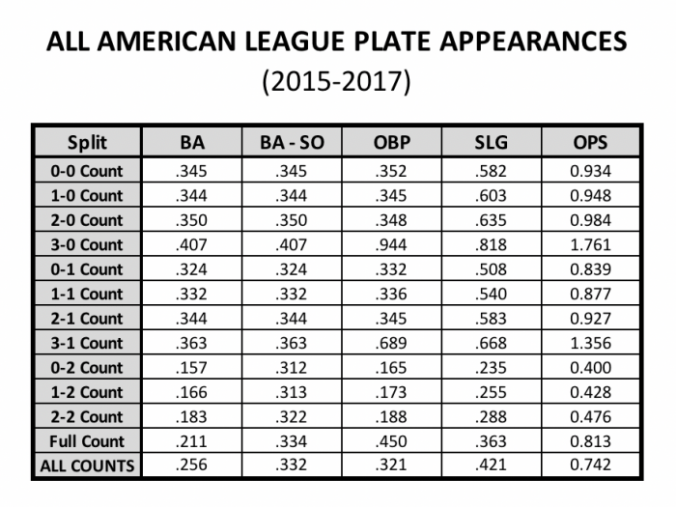
 Baseball researcher Rob Arthur revealed in a Baseball Prospectus report on October10 that after nearly 20 postseason games, home runs were occurring at at half the rate the 2019 season’s homer frequency would predict. Arthur allowed for the fact that better pitchers and hitters  made up  playoff teams, and still  concluded that the ball was not flying as far as it did during the regular season. “The probability that a random selection of games from the rest of the regular season would feature as much air resistance as we’ve seen so far in the postseason,” he wrote, “is about one in one thousand.” A follow-up report by Arthur again found significant variation in the flight of the ball this postseason.

This isn’t good.

2. It’s not even 2020, and the New York Times isn’t even pretending  to be objective. Two examples from today’s Times:

  • In a story about Tulsi Gabbard announcing that she would not run for re-election to the House, the Times spun for Hillary Clinton, writing, “Last Friday, Hillary Clinton suggested that Republicans were “grooming” her for “a third party run”, though Ms. Gabbard has denied any such plans.” What was notable about Clinton’s smear was that she said that Gabbard was “a favorite of the Russians. They have a bunch of sites and bots and other ways of supporting her so far.”  This is a variety of “fake news” that the Times excels at, telling only part of the story to manipulate public perception.
  • Headline (Print edition) : “Speaking at Black College, Trump Ridicules Obama For Effort on Racial Equity.”  Wow, what a racist! Attacking efforts at racial equity! In fact, the President criticized the paltry results of Obama’s efforts to advance racial equity. He in no way ridiculed Obama for making those efforts.  Again, the Times is now a master at playing to its anti-Trump readers confirmation bias.

Continue reading

Monday Morning Summary Of What Would Have Been In The Sunday Ethics Warm-Up That I Was Supposed To Post But….Aw, Forget It. Here’s Some Ethics Stuff…

Good morning.

Boy, am I glad THAT week is over.

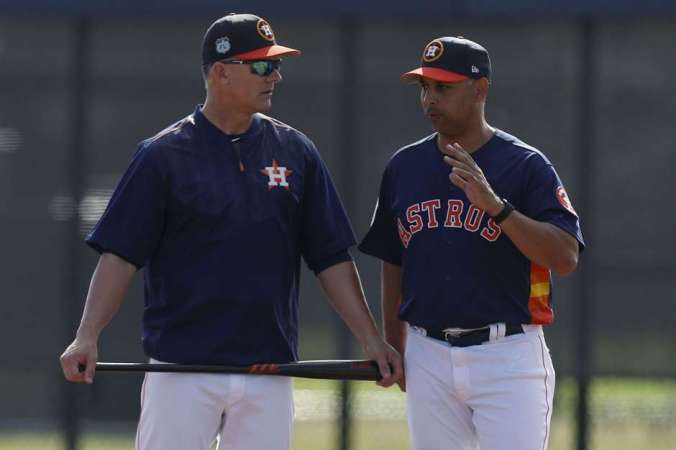
1. Moral luck saves the 2019 baseball post-season…for now. MLB missed a major disaster when an umpire missed a clear strike three (he ruled a foul) on Yankee slugger Gary Sanchez in a tied and crucial game between the Houston Astros and New York.  It was the 11th inning, meaning a tie-breaking run would mean a likely Yankee victory.  THAT would have meant that the Astros would have lost the first two games of a seven game series at home, a hole that very few teams in baseball history have been able to overcome.

Sanchez  struck out on the next pitch, and a Carlos Correia home run in the bottom of the inning sent the Astros to Yankee Staudium in a series tied 1-1. The botch was moot, and will soon be forgotten. But if he Sanchez hit a home run or otherwise led the Yankees to a decisive score, the ALCS might have been completely turned by a blown call captured on video for all to see.

http://www.youtube.com/watch?v=fS4YpElHG2c

And there would be no excuse: the rules allow no appeal on that kind of play, but there has to be.

Yes, it was “moral luck” again. The fact that the worst didn’t happen doesn’t change the seriousness of the fact that only luck saved the day and prevented a blot on the integrity of the whole 2019 post-season. Maybe it would have been better if the bad call had altered the game, the series, and the World Series. Maybe then baseball would stop waiting for the high-profile disaster caught on video that will force it to have ball and strikes called by technology. It took an umpire’s obvious blown safe call in what should have been the last out of a perfect game to make baseball go to replays, and anyone who watches many games knows how many times a reversal changes game outcomes. Continue reading