Ethics And The Joker’s Moustache

“The Joker,” opening this week and presenting Joaquin Phoenix’s portrayal of Batman’s arch-enemy as fitting the classic mass-shooter profile, has provoked all sorts of ethics- related debates. Is it responsible to release a film that may risk triggering the psychopathic loaners with access to guns we all know lurk in the shadows? Is the studio risking another Aurora-style theater shooting? Should such films be boycotted? Regulated?

These debates, which are retreads of the same old refrains the nation has been tortured by since dime novels through Warner Brothers gangster movies, EC comics, “The Untouchables” TV series, the Legion of Decency’s reign, Sam Peckinpah films and “A Clockwork Orange,” are all appeals to censorship using “Think of the Children!” rationalizations, and are essentially attacks on free speech. The contrived debate is alarming but not difficult to call: the would-be censors are wrong, motivated by emotion, and that’s that.

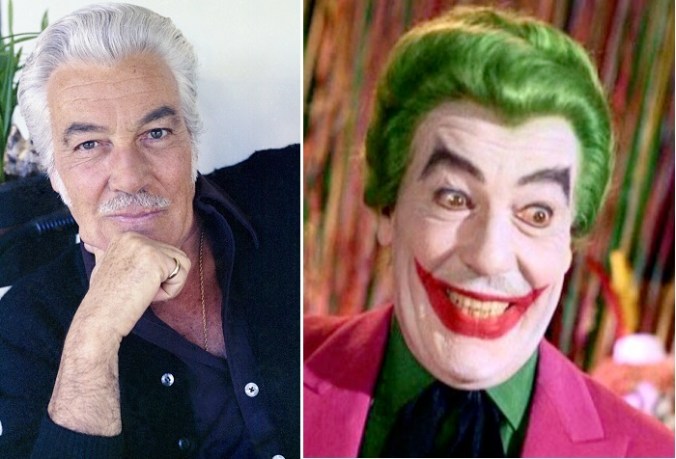
No, the really interesting ethics debate the new movie has revived is another old one: Was it ethical for actor Cesar Romero to keep his moustache when he played the Joker?

Cesar  Romero  (February 15, 1907 – January 1, 1994) is now largely forgotten, but he was a familiar presence in films, radio, and television for almost 60 years. Sort of a Grade B Riccardo Montalban, Romero had a rather narrow range, with his portrayal of dashing Latin lovers, historical figures in costume dramas, and characters in light  comedies all looking and behaving similarly. Romero’s trademark was his moustache, especially in the post-Errol Flynn era when leading men seldom wore them.

When the 1966 camp TV show Batman became a brief sensation in 1966, the casting of Romero as the Joker was a shock. He had never played any role remotely like it, nor was broad, silly comedy his typical milieu. Most shocking of all, when the Joker finally made his appearance on the show  it was obvious that Romero hadn’t shaved his upper lip. Reportedly the actor refused to eliminate  his moustache for the role, and so the supervillain’s white face makeup was thickly smeared over it throughout the series’ three-year run and for Romero’s co-starring appearance in the 1966 film. Continue reading

Baseball Ethics: Integrity, Records, And The “Juiced Ball”


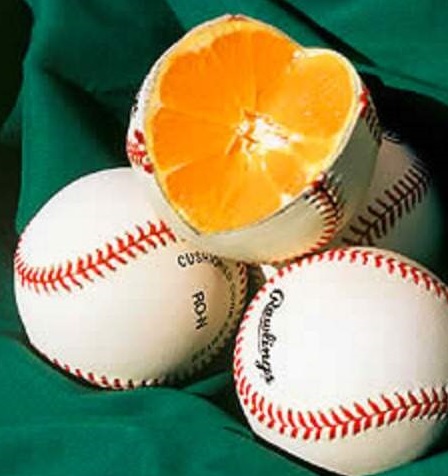
The Boston Red Sox didn’t make the play-offs (and made me physically ill in the process), but that doesn’t mean I won’t find some baseball ethics to write about during October, which will cover the play-offs and World Series involving  five teams from each league. Some weeks ago commenter JutGory asked about the ethics implications of the so-called juiced baseball. and I was not in a mood to think that seriously about baseball, since the Red Sox were engaged in the final throes of an epic, inexplicable, season-long choke that, among other bad things, soured my wife on the game, undoing years of careful nurturing by me. I’m OK now, and Jut was right, the juiced ball does raise ethics issues.

Early on in the 2019 season, it was obvious that the ball was different somehow. The very first month had more home runs than is normal in the spring, and the phenomenon only got more extreme as the weather got warmer. Pitchers like Houston Astros ace (and likely Cy Young winner as the AL’s best pitcher) Justin Verlander and former Cy Young winner David Price called out MLB management directly, accusing them of messing with the ball to help the hitters. Baseball’s brass denied it initially, but eventually they had to admit that something was weird about the balls.

Researchers  confirmed  that the 2019 ball was traveling farther when hit with the same amount of force than the balls in seasons past. The change was determined to be that the balls’ seams were flatter, less raised, than they had been before. This reduced the drag when they were flying through the air, resulting in longer distances.

How and why this happened is  a mystery. Major League Baseball swears it was an accident,  but nonetheless the sport is completely in in control of the manufacturing of baseballs. It owns the company that makes them. The current theory is that this was a quality control issue or, perhaps, a quirk in which eliminating a flaw in the balls made them too uniform, too exact.

Among the ball’s many specifications, the degree to  which the stitches were raised had never been included. Continue reading

Contract Cheating: One More Reason College Is A Massive Scam On Our Society

A disturbing article from several perspectives appeared last week in the Times. Titled Cheating, Inc.: How Writing Papers for American College Students Has Become a Lucrative Profession Overseas,”  it contained one ethically troubling paragraph and factoid after another, such as…

  • “Finally, a friend offered to help her break into “academic writing,” a lucrative industry in Kenya that involves doing school assignments online for college students in the United States, Britain and Australia. Ms. Mbugua felt conflicted.”

    “This is cheating,” she said. “But do you have a choice? We have to make money. We have to make a living.”

  • “Cheating in college is nothing new, but the internet now makes it possible on a global, industrial scale. Sleek websites — with names like Ace-MyHomework and EssayShark — have sprung up that allow people in developing countries to bid on and complete American homework assignments.

    “Although such businesses have existed for more than a decade, experts say demand has grown in recent years as the sites have become more sophisticated, with customer service hotlines and money-back guarantees. The result? Millions of essays ordered annually in a vast, worldwide industry that provides enough income for some writers to make it a full-time job.”

  • “A Facebook group for academic writers in Kenya has over 50,000 members…

“…It is not clear how widely sites for paid-to-order essays, known as “contract cheating” in higher education circles, are used. A 2005 study of students in North America found that 7 percent of undergraduates admitted to turning in papers written by someone else, while 3 percent admitted to obtaining essays from essay mills. Cath Ellis, a leading researcher on the topic, said millions of essays are ordered online every year worldwide.”

Yes, I’d say that the statistics cited in the article make the 7% and 3% findings risible.  What do you think are the real numbers? 15%? 20%? If that large a segment of graduating college students have cheated to get by, why is a diploma trusted as a credential? Would you want to be operated on by a doctor with a 20% chance that he or she cheated to graduate from medical school? Continue reading

Comments Of The Day: “Open Forum, Or ‘I Guess I Picked The Wrong Time To Start Driving All Over Virginia!’” (“Profession Of Journalism” Thread)

Today we have a rare tag team Comment of the Day: JutGory raised the provocative ethics issue of what constitutes a profession and whether journalism qualifies, and Rich in Ct, who has been on fire of late, responded with a sharp analysis.

This was all especially propitious, since the I had a dispute with my legal ethics teaching partner during our (very well-received) “Crossfire”-style seminars last week on just this question. He maintains that it is a a myth to pretend that a profession like the the law is called such for any reason other than the fact lawyers engage in it for compensation. Well, he’s wrong. Professions are not merely occupations, but pursuits one undertakes for the good of society. That is why the hallmark of professionals is that they are trusted and trustworthy, and why their compensation is of secondary priority. The desire for profit undermines professionalism by creating conflicts of interest.

My answer to the question posed by JutGory is that journalism must be a profession, because the public must be able to trust journalists for journalism to benefit society. However presents day journalists are driven by motivations far removed from the public good: their personal political agendas, the pursuit of fame and power, and the love of money. It can be a professiona, and should be a profession, but as currently practiced, it isn’t a profession.

Here are JutGory’s and Rich in Ct.’s  Comments of the Day on the “profession of journalism” thread in the post, “Open Forum, Or ‘I Guess I Picked The Wrong Time To Start Driving All Over Virginia!’”

First, here’s JutGory…

Can journalism be a profession?

My profession, law, has a set of ethical rules. It is a club, and it is self-regulating. Is it self-regulating? Yeah. My state gets about 1000 complaints per year, and about 10 percent each year get disciplined. Every year, you get a handful of disbarments. Not overbearing but I know a lawyer who got a 60-day suspension for a “non-legal” infraction and basically threw in the towel. I can empathize. It is like being accused of a crime; it can be hard to deal with. And, you are held to standards.

The press? You can’t be de-pressed? Dis-presses? Unimpressed?

In a free society, with a free press, can you have a profession where there is no way to regulate its participants.

A shorter way to ask the question: can the press be a true profession if Dan Rather can’t be barred from the profession?

Similar question for teaching. The wrinkle with teaching: can a profession governed by labor unions really enforce ethical standards and discipline?

Rich in Ct’s response… Continue reading

Horse Racing Ethics: Justify Was A Fake Triple Crown Winner. Now What?

The term “horse racing ethics” is justly regarded as an oxymoron, and the stunning scandal revealed yesterday shows why.

The U.S. Thoroughbred Racing Triple Crown is one of the most prestigious achievements in all of sports. The three races that make up the Triple Crown, all competed in by three-year-old horses, are the Kentucky Derby, run over the 1 1⁄4-mile dirt track at Churchill Downs in Louisville, Kentucky; the Preakness Stakes, run over the 1 3⁄16-mile (1.9 km) dirt track at Pimlico Race Course in Baltimore, Maryland; and the Belmont Stakes, run over the 1 1⁄2-mile (2.4 km) dirt track (the longest in U.S. thoroughbred racing) at Belmont Park in Belmont, New York.

The first Triple Crown winner was Sir Barton in 1919, and there have been only twelve since, among them the most fabled names in the sport: War Admiral, Count Fleet, Whirlaway, Secretariat, Affirmed. Winning the Triple Crown is a bonanza for the sport as well as the owner of the victorious horse, which will eventually demand huge stud fees. After Affirmed won the Triple Crown in 1978, no horse achieved that pinnacle for 37 years. Then, finally, American Pharaoh  broke the drought in 2015. A filly out of that Triple Crown winner recently sold for a record $8.2 million. The Triple Crown is a big deal; in thoroughbred racing, there is no bigger deal.

The thoroughbred racing world only had to wait three years for another super-champion this time: Justify won the Triple Crown in 2018. Now we know, however,  that the horse was an illicit competitor, and should have been disqualified. This is approximately the horse racing equivalent of  gamblers rigging baseball’s World Series in 1919, a scandal that almost destroyed the sport.

This week we learned, courtesy of a New York Times investigation, that  Justify had tested positive for the banned drug scopolamine after winning the Santa Anita Derby on April 7, 2018. That win qualified the horse to run in the Kentucky Derby, one month later, in which he would be a likely favorite to win. Behind closed doors, the California Horse Racing Board first stalled on acting, then decided to dismiss the case after the colt went on to win the Triple Crown. Continue reading

Joe Biden’s Eye

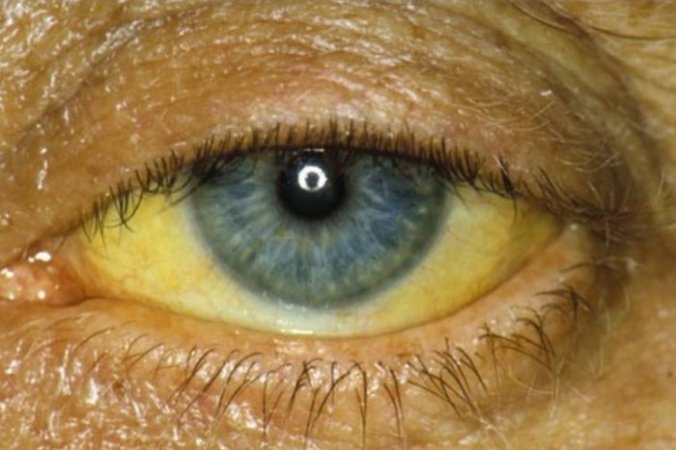
“Joe Biden’s eye just started bleeding? This isn’t a joke what in the hell just happened,” tweeted one individual who for some reason had nothing better to do than to watch CNN’s “climate change town meeting.” Indeed it had, and in some universes, like social media, this was the big story of the night. The Washington Times and Washington Examiner reported it; so did Fox News and The New York Post.  If you couldn’t figure it out from those clues, it was the conservative news media that thought this was an event worth knowing about. In the parallel an corrupt universe of the mainstream news media—you know, the ones determined to  influence the election so Donald Trump is a one-term President? That one?—it was “Eye? What eye?”

The New York Times hasn’t mentioned it yet. On Memeorandum, the useful news aggregator that I thought was non-partisan but now I’m wondering, didn’t have a single link about it. Even CNN, which hosted the debate, ignored the moment. I couldn’t believe it, so I searched for “eye” in the debate coverage  on the CNN website, and got only “At times, candidates waged a bidding war to show liberal activists their plan was the most audacious — and even expensive. But with an eye on November 2020, others warned against throwing the economy out of the window.” The story was headlined “What happened during CNN’s climate town hall and what it means for 2020,” so as far as CNN is concerned, nothing happened. Politico, the left-leaning website, at least alluded to the eye by joking, “Even the shallow matter of what we now call “optics” went badly for Biden. He chose to sit through his appearance—Harris, Sanders, and Warren all stood—and by the end of it, a burst blood vessel in his left eye was noticeable.” Optics, get it? AOL, which I would call anti-Trump, distingished itself by importing coverage from the Wrap headlined, “Biden’s mysterious bloody eye overshadows CNN climate town hall.”

Wait: how could something “overshadow” the event, and simultaneously not be worthy of news coverage? Continue reading

Sad Saturday Ethics Distraction, 8/24/2019: The Let Sean Spicer Make A Fool of Himself If He Wants To Edition

I hope you are feeling much happier than I am today.

I just returned from a memorial gathering for a very dear friend’s wife of 37 years, who died suddenly, painfully, and based on what I have heard, unnecessarily at the end of July. One positive take-away from the event: People really aren’t so bad. My friend was stunned and touched beyond measure by the turn-out, with nearly 200 people attending just to say good-bye to her and express their love and support for him. Some traveled great distances,  interrupted vacations, or made it despite illness and handicaps.  I saw friends, former colleagues and acquaintances that had been out of this region for decades, but all it took was an email informing them that their friend, who  is one of those rare people who is always there to render help and support, now needed their support himself.

Gee, those endings of “It’s A Wonderful Life” and “Easter Parade” aren’t as corny as I thought...

1. What a surprise! Only 35% of those polled support impeaching a President who has done nothing impeachable! Choose: Either the Democrats and the resistance have been lying about there being real and substantive high crimes and misdemeanors in order to sabotage the elected President, or there are such offenses, and they don’t have the guts to do their Constitutional duty and act to remove a President who is the existential threat to the nation they have claimed he is since, uh, before he was sworn in, somehow.

The same poll says that 57% would prefer someone else as President. That number is astoundingly low. The Someone Else dude is terrific! What a great President he’d be; I can’t fathom why he’s never made it! I know I sure wish he was President;  I’ve wished he were President ever since Ike left the White House.

Today’s quote from a “someone else” who I would rather set my face on fire than see have any power whatsoever: Bernie Sanders, who, while bloviating that “Climate change is an existential threat to the entire country and the entire world and we must be extraordinarily aggressive,” proposed an impossible, bankrupting, irresponsible 16 trillion dollar plan to “fix” what he doesn’t personally understand, couldn’t explain with a gun to his head, cannot say with certainty how it can be addressed effectively, and could be stumped by a cross examination by any climate change skeptic with a science degree. Bernie doesn’t even understand political science, and that was his college major. Proposing spending trillions of dollars on something you don’t understand is unethical. Isn’t that obvious? Continue reading

A Futile Call For Fairness And Integrity From Senator McConnell

I know this is a waste of time and words, but here goes nothin’…

Yesterday we got the news that Justice Ruth Bader Ginsberg, 86 and already being treated for enough maladies to kill a normal human being  half her age, has pancreatic cancer. Treatment is going well, we are told, and Ginsberg isn’t even cutting back on her schedule.

Nonetheless, the proverbial writing is on the wall. Sheer will only can accomplish so much. If I participated in “dead pools,” Justice Ginsberg would be at the top of my list, even ahead of soon to be 103-year-old Kirk Douglas. Though she is apparently determined to hang on to her SCOTUS seat if it means that she will finish her tenure in a box that signals “yes” and “no” like  poor Captain Pike in that “Star Trek” episode, I would be stunned if there isn’t a vacancy on the court in the near future. That will mean that President Trump will have an opportunity to appoint a conservative justice to replace the most liberal voice on the current court, a result that will spark panic from the Left and delirious joy from the Right. If this happens after January, 2020, it will also create an integrity test for Mitch McConnell.

That is, it should.

When Antonin Scalia died on February 16, 2016, President Obama appointed moderate liberal judge Merrick Garland to replace him. McConnell, however, the GOP Senate Majority Leader, announced that the Senate would not consider the nomination, debate it, or vote on it. He concocted a rule that when a Supreme Court vacancy occurs in the last year of a Presidential term, it should not be filled until after the November Presidential election. The supposed justification for this was that SenatorJ oe Biden had once made a similar suggestion. Basing any policy or rationale on what Joe Biden says is like using the spontaneous utterances of Tourettes sufferers as life guidance, but never mind: Mitch was gambling that a SCOTUS vacancy would bring more Republicans to the polls than Democrats, and that the Garland nomination would eventually be moot.

The gambit was legal but unethical, but then, that’s Mitch. It was also stupid: Garland was no Scalia, but he was far more moderate than some of Obama’s other options, and if Hillary Clinton had won, as looked like a sure thing in January, she was likely to nominate a far more extreme progressive judge. But in the manner that has hooked suckers and created gambling addicts for centuries, Mitch’s long-shot bet paid off. Trump won; Neil Gorsuch replaced Scalia, and Merrick Garland joined Samual Tilden in the “What If?” Hall of Fame.

If RBG leaves the Court or this vale of tears in 2020, however, Mitch should find himself hoisted by his own petard. By his own words, that new opening on the Court should not be filled by President Trump’s choice unless Trump  is re-elected in November; the public should have the opportunity to include the composition of the Supreme in their calculations regarding who to vote for. So declareth Mitchi n 2016, as progressives and Democrats screamed and ripped their garments,

Having created a principle and a precedent, Senator McConnell should stick to it. The problem wasn’t that his theory in 2016 was indefensible in theory–it is.  The problem just that it was disingenuous. Mitch wasn’t interested in fairness or democracy, just expedient politics. Thus it comes as no surprise that McConnell has told his party members that if there is a Supreme Court vacancy, he will move to confirm a conservative nominee so fast it will break the sound barrier.

He should not, however. Doing so may be good old fashioned hard-ball politics, but it will also be a lost opportunity to start repairing a broken legislative branch that McConnell played a major part in breaking. Such a cynical reversal of his own stated “principles” will also make the public less trusting than they already are of the motives, honesty and integrity, not just of Mitch, but of the their elected officials and government. Our democracy can’t take much more distrust and cyncism. Democracy breathes trust.

Who knows? Maybe Mitch will hit the jackpot a second time. Maybe the delay will backfire, with more outraged Democrats being attracted to the polls than activated conservatives. Nevertheless, Mitch McConnell has an ethical obligation to treat the next SCOTUS vacancy during the final year of a Presidential term exactly like he did the last one, in the name of integrity, fairness, process, consistency, trust, and the health of our Constitutional system.

Joe Biden, The Double Standard Candidate

The fact that Joe Biden is even taken seriously as a Democratic candidate for President is an indictment of his party, as well as evidence that  progressive principles are instantly alterable, optional or ready for deep freeze any time they become inconvenient.

The ethics value issue, of course, is integrity. If the Democratic Party cared about it, Joe Biden would be looking forward to spending his Golden Years playing with his grandchildren and copping feels with their baby-sitters.

That’s the threshold hypocrisy, as we know. Joe is a serial and unapologetic sexual harasser. There are many photographs online, and probably many more to be found, of him hugging, sniffing, and fondling women of all ages while they seem approximately as comfortable as if Joe were a rabid octopus. The conduct displayed is the equivalent or worse  of behavior that has caused hundreds of executives and  many  high-profile leaders in a wide range of sectors to be removed from their jobs. The Democratic Party styles itself as the party of women and #MeToo, but has been flagrant about applying double and even triple standards: witness Virginia Lieutenant Governor Justin Fairfax, still in office with the support of his party despite both a credible rape accusation and an allegation of sexual assault, both more serious than any of the accusations made against Senator Al Franken, a Democrat, who was forced to resign. None of the Republicans or Democrats who have been pilloried for sexual harassment carry the photographic evidence that indicts Biden, and yet there he is, topping the polls.

The Democratic Party’s hypocrisy goes far beyond harassment where Joe is concerned, however, as a recent Times article called Joe Biden Knows He Says the Wrong Thing,” itself a naked rationalization to excuse incompetence. Hmmmmm...Is this rationalization  on the Ethics Alarms list? Give me half a minute while I check…

NO!

Incredibly, Joe’s excuse, “I know I’m doing it,” has so far escaped the definitive rationalizations list! That will be remedied shortly.

Joe and his defenders regularly employ other rationalizations for his groping problem (and others), among them, #1. The Golden Rationalization, or “Everybody does it” variations “Everybody is used to it.,” “Everybody accepts it,”“Nobody’s complained before” and “It’s too late to change now,” #8. The Trivial Trap (“No harm no foul!”),#13A The Road To Hell, or “I meant well,” #19A The Insidious Confession, or “It wasn’t the best choice,’  #21A. The Criminal’s Redemption, or “It’s just a small part of what I am!,”#22. The Comparative Virtue Excuse: “There are worse things.,” #41 A. Popeye’s Excuse, or “I am what I am,”  #42. The Hillary Inoculation, or “If he/she doesn’t care, why should anyone else?,” 43. Vin’s Punchline, or “We’ve never had a problem with it!,” and #64A. Bluto’s Mistake or “I said I was sorry!.”

Sorry for the digression. Back to the Times article: I seriously considered posting the whole piece with Donald Trump’s name replacing Biden’s. How could the Times reporters write this, or anyone read it, without noticing that all the habits and tendencies being cited as Joe’s problems are the exact same proclivities that Democrats claim should disqualify Trump for high office, and all of the defenses on behalf of Joe echo the arguments of Trump defenders? Here are some quotes: Continue reading

Amnesty International Forfeits The Right To Be Taken Seriously Thanks To It’s Anti-American Hackery

I swear, I thought this was the Babylon Bee:

Not that it is the first time this organization has allowed its political agenda to distort its stated mission, but this is especially outrageous.  Here’s another highlight:

“Depending on the traveler’s gender identity, race, country of origin, ethnic background, or sexual orientation, they may be at higher risk of being targeted with gun violence, and should plan accordingly.”

Read the whole thing: Amnesty International doesn’t like the Second Amendment.

Now we can firmly deposit another once-respectable  organization in the dark box containing teh sullied reputations of once beneficial non-profits that have disgraced themselves by being co-opted by partisan politics and/or anti-American agendas. Keeping Amnesty International company will be the ACLU, the Southern Poverty Law Center, the Nobel Peace Prize, the American Bar Association,  the NAACP, and the United Nations, among other lesser lights.

It is increasingly clear to me that under the category of trust, the most crucial ethical value is integrity. Tragically, that appears to be the single value organizations today seem most incapable of maintaining.