Case Study In How Bias Rots Integrity: Washington Post Columnist Harold Meyerson

You see, Harold, this is your brain on bias. Yes, I know it looks yummy...

You see, Harold, this is your integrity on bias. Yes, I know it looks yummy…

Back in the run-up to the Iraq invasion, I exchanged some e-mails with Harold Meyerson, the left-est of the Post’s op-ed liberals. He had been condemning the Bush administration’s decision to go to war against Iraq—we were technically still at war with Iraq, since no peace terms had ever been agreed upon from the previous war, and Saddam was blatantly violating the terms of a cease-fire, but never mind—saying, among other things, that this was the first time in American history that the nation had embarked on a “war of choice” rather than necessity. This was a popular, and ignorant, “talking point” used by the anti-war critics at the time, and I was thoroughly sick of it being shouted in CNN debates without any objective participant protesting that it was a lie. I pointed out to the columnist that this was historical fantasy clothed as fact, and that he owed his readers better.

Most U.S. wars have been “wars of choice,” I wrote, and presumably Meyerson knew this. Arguably only the War of 1812, World War II and Afghanistan didn’t fit that description. The Revolution wasn’t a “war of choice”? Of course it was….most of the country would have been happy to stay subjects of the Crown. The Mexican War was not merely a “war of choice” but a war of “let’s trump up a reason to take away all this land belonging to Mexico” war.  Lincoln certainly didn’t have to oppose the secession of the Southern states and start the Civil War; indeed, the best Constitutional analysis is that he was acting beyond his authority to do so.The Spanish-American War? World War 1? Korea? Vietnam? Granada? Desert Storm? What country was Meyerson talking about?

To my surprise, Meyerson replied, politely and, I thought, a bit sheepishly. Yes, he said, of course you are right, but this war is more of a war of choice than those were. Translation:I oppose this war, and the party of this President, so I’ll say whatever is necessary to get people to agree with me, and I’ll convince myself in the process.” I’ve never taken a Meyerson column seriously since. His reasoning process, like so many on the ends of either side of the political spectrum, is to frame reality in the way that most comfortably supports his ideological objective, and then to allow that warped reality to become part of his own world view. I think this kind of thought process by confirmation bias should disqualify any infected media pundits from commentary, as much as habitual dishonesty, dementia or insanity.

Today, Meyerson once again shows how his biases rot his reasoning and integrity. Continue reading


Addendum: James Taranto And The Consequences Of Unethical Presidential Leadership

red line

Today, at his press conference in Stockholm, President Obama raised many a hackle by saying,

“First of all, I didn’t set a red line,” Barack Obama said today at a press conference in Stockholm. “The world set a red line. The world set a red line when governments representing 98% of the world’s population said the use of chemical weapons are [sic] abhorrent and passed a treaty forbidding their use, even when countries are engaged in war.”

The President’s critics take this as yet another of his habitual accountability dodges, even though, for once, he didn’t blame George W. Bush. I will give the President the benefit of the doubt here, as he was speaking extemporaneously and is infamously imprecise when he is not delivering a prepared speech. He is saying that the bright line prohibition on chemical and germ warfare was not devised by him, that it is a matter of international law of long-standing, and that his red-line statement only re-affirmed the United States’ pre-existing obligation, in his view, to take action when such a line is crossed. I have no problem with that; the problem is, as this episode has shown, that President Obama did not and does not mean what he said, and the consequences he has devised for the crossing of that red line by the Assad government manage to be weak, insignificant, inadequate, cynical, cruel, dangerous, misdirected, ill-timed and illegal (under international law) all at the same time. That’s quite an accomplishment, but not one I’d want my mother to hand on the fridge.

The Wall Street Journal’s James Taranto, who, at his best, delivers a clarity of ethical analysis and a precision of language that are unsurpassed in U.S. punditry, moved on from mocking the latest red line clarification to an excellent discussion of why the credibility of the American President, and leaders generally, is so important. Credibility is the practical result of integrity: that is the ethical virtue President Obama’s handling of this matter betrayed.

You should read his whole commentary here. This is the key passage: Continue reading

War, Syria, Leadership and Ethics

Indecisiveness and narcissism makes great drama, bad leaders, and gets people killed , too.

Indecisiveness and narcissism makes great drama, bad leaders, and gets people killed , too.

I try to think about the ethics of war as little as possible, much less write about it. It is too frustrating, and ultimately a waste of time: the same debates and philosophical arguments have been made, eloquently and passionately, for not just hundreds but thousands of years, and only the mechanics of warfare have changed.

My father, a war hero and a man who would have loved to have devoted his life to the military if his wounds hadn’t prevented it, used to say that war was the stupidest of all human activities. “There is nothing good about war,” Dad said. “Yet it is sometimes necessary and unavoidable. And don’t ask me to reconcile those statements: I can’t. Nobody can.” I remember asking him about General Patton, who led my father and his comrades during the Battle of the Bulge. “Patton supposedly loved war,” I said. “He did,” my father replied. “He was insane.” He loathed Patton.

The Syria crisis has triggered all the same arguments again, and I want no part of them. Ethical analysis doesn’t work where warfare is concerned. The conduct of ritualized killing combatants and innocents is, at best, an extreme utilitarian act that always creeps into  ethically indefensible “the ends justify the means” territory before the end of hostilities. So many invalid rationalizations are used to justify killing—“It’s for a good cause,” or the Saint’s Excuse, prime among them, with “They started it!” following close behind—that it is useless to tote them up. The war most often cited as a “moral war,” World War II, still involved the killing of innocent non-combatants by the Allies. ( My father remained amazed at the efforts at “limited war” in Iraq, noting that Allied soldiers were expected to accept civilian deaths as unavoidable and not a matter of concern. He also felt that the current dedication to half-measures just guaranteed longer wars, more deaths, and less satisfactory results. “It’s war,” he said. “You can’t make it humane or sensible; you can only make it shorter. Telling the military that it has to waste time and military personnel to avoid civilian deaths makes no sense. There is no such thing as a humane war.” Naturally, he approved of Truman’s decision to drop the atom bomb, in part, he admitted, because he was slated to be in the Japanese mainland invasion force that was likely to sustain up to a million casualties.) The Allies engaged in atrocities too, such as the fire-bombing of Dresden.

You want to talk about the problem of supporting terrible people and factions to defeat another? World War II is the champion on that score. The U.S. partnered with Stalin, who was a greater mass murderer than Hitler, and defeated Japan, the enemy of China, allowing Mao, a greater mass murderer than Stalin and Hitler combined, to enslave a billion people. The peace negotiated after the Second World War was only slightly less destructive than the one that ended the First World War (and led directly to the Second): The U.S. handed over half of Europe to Communism, laying the seeds of the Cold War that only avoided ending humanity in a nuclear holocaust by pure moral luck. The fact that WWII is the “best” war powerfully makes the case: ethics and war have nothing to do with each other. Each renders the other useless and incoherent. Continue reading

Sugardaddies, Pregnancy Tests and Nigeria, or “If U.S. Culture Is More Ethical Than The Rest Of The World, The Rest Of The World Is In Big Trouble”

Our surprisingly ethical U.S. culture on display...

Our surprisingly ethical U.S. culture on display…

Aniruddh Khachaturi an is from Mumbai, India, and has been in the U.S. for the past two years, studying  computer science at Carnegie Mellon. For some reason his observations about what surprises him about American culture are newsworthy, according to Investors Daily, as opposed to, say, anyone else. They are thought-provoking, however, especially this : he is impressed with the nation’s “strong ethics”:

“…everyone has a lot of integrity. If someone cannot submit their completed assignment in time, they will turn in the assignment incomplete rather than asking for answers at the last minute. People take pride in their hard work and usually do not cheat. This is different from students from India and China as well as back home in India, where everyone collaborates to the extent that it can be categorized as cheating.”

I happen to think he is right, and that this is probably the reaction of most foreigners who spend much time here. Compared to almost everywhere else on the planet, the population of the U.S. is more ethical, and the U.S. culture is more concerned with ethical values, as one should expect in the only nation expressly founded as the expression of ethical ideals.

Nonetheless, our culture has shown alarming signs of growing more tolerant and even accepting of unethical conduct, and that is worthy of more than merely academic concern. Continue reading

Hustle

Diligence. Integrity. Responsibility. Reliability. Trustworthiness

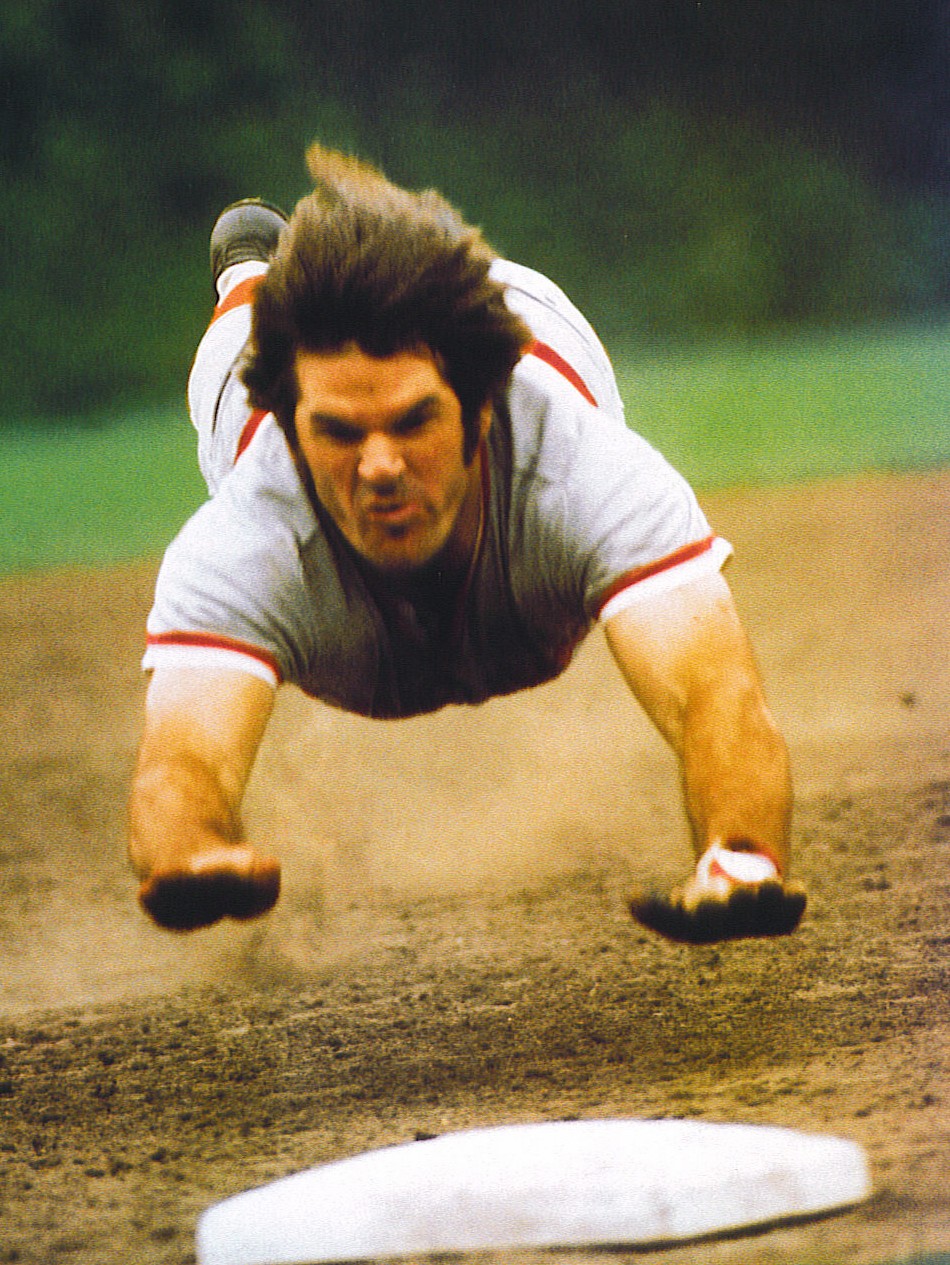
Pete Rose may have been a fool who  gambled on baseball, but he never, ever, failed to run hard to first base.

Pete Rose may have been a fool who gambled on baseball, but he never, ever, failed to run hard to first base.

The Washington Nationals’ blossoming star outfielder Bryce Harper provided a graphic lesson in the importance of these ethical values in the breach of them last night, when his lapse of character on the field contributed to a loss D.C.’s struggling major league baseball team could ill-afford.

The Nats have been one of the baseball season’s greatest disappointments. A team that had the best record of all last season and was widely favored to be a World Series contender, it has barely won more games than it has lost, and is hopelessly trailing the Atlanta Braves for the National League East championship. A wild card berth in this season’s play-offs also looked like a futile hope, until a recent winning streak and a flash of 2012 brilliance allowed fans to dream of a thrilling late-season comeback. It is possible, but time is running out, and every game counts. To have any chance, the Nats have to win games like last night’s against the sub-par Mets.

With the Mets leading 3-2, Washington had mounted a two-out rally, and had runners on first and second base. Harper, the team’s youngest, most exciting and most talented player was up at bat,  but he bounced an easy ground ball to the Mets second baseman. Clearly disgusted with his failure to come though in the clutch, Harper merely jogged to first base. If he had run hard, which was his trademark last season when Harper’s energy and enthusiasm made him an instant fan favorite, he would have reached first base safely, loading the bases, for the fielder unexpectedly booted the ball. But because Harper was loafing, the second baseman had time to recover and throw to first for the out. It was the last chance the Nationals had to tie the score, and they lost a game that the team needed to win. Continue reading

Al Gore, Hustler

Gore Hustler

Al, as he is portrayed by the climate change skeptic community. He has no one to blame but himself.

I have mixed feelings about Al Gore. On one hand, I have great compassion for the man, as one of two Presidential candidates in our history to win more popular votes than his adversary, still lose the Presidency, and fail to take the office in a subsequent attempt. I know that would make me angry, bitter and perhaps a little crazy, and in that respect, Al has handled his misfortune well.

On the other hand, I wouldn’t trust Al Gore to deliver a birthday card to John Edwards. Back when I was running a struggling national health care promotion and education non-profit, Senator Gore was the organization’s patron saint, giving us endorsements, opening doors to corporate contributors, and generally bolstering our efforts. I was warned, though, by one of his staffers, not to get too dependent on Gore’s passion. “The Senator likes to find the hot issue and lead it,” she told me. “But he’s been on health care for a while now, and if history is any measure, he’ll move on to something else soon. Don’t rely on his support.” Sure enough, Gore became the herald of “the information super-highway,” later known as the internet, shortly thereafter, and dropped my organization and the health promotion issue flat, without a warning or a good-bye. He just stopped answering our calls.

Gore finally found his perfect hot issue, literally in this case, as the front man for global warming. He has made millions from the issue and the notoriety it brought him, which is fine; he also greatly contributed to public awareness of the issue, which is a good thing: any public awareness of any real public policy issue is an improvement. On the minus side, Gore failed to follow through on his responsibilities and obligations as a spokesperson for climate change policies. He never educated himself on the science of climate change sufficiently to avoid making embarrassing gaffes, and he has continued to over-hype the topic, making apocalyptic pronouncements, treating projections and models as more conclusive than they are, making irresponsible and factually misleading statements,  and generally imitating the technique of the Bush Administration regarding Iraq’s “weapons of mass destruction.”

He was at it again this week, conclusively affirming that he has crossed the line from advocate to hustler. Continue reading

Ethics Dunce: ARod-Plunking Red Sox Pitcher Ryan Dempster

I’ll admit it: I came thiiiiis close to designating Red Sox pitcher Ryan Dempster an Ethics Hero. Right after he intentionally threw a fastball  into Alex Rodriguez’s ribs on what would have been ball four, I was ready to write the post. Good for Dempster, I thought, making a statement for all the players who deplore steroids and the cheats who use them and for all the fans who feel that sociopathic, lying, greedy players who have debased the greatest game on earth with their use of PEDs. I continued to think that even after the Red Sox lost last night’s game against the Yankees, in no small part because Dempster put the Yankee third baseman, who continues to play while he appeals Major League Baseball’s suspension of him for this season and next, on base.

I was not, however, thinking clearly or ethically at the time.

Now, I am. Continue reading

Now THAT’S An Untrustworthy Legal Secretary!


"Hey! That's Barbara! See you at wok, Monday, Barbara!"

“Hey! That’s Barbara! See you at work, Monday, Barbara!”

The Connecticut Law Tribune reports that Barbara Kalpin, a former legal secretary at the Waterbury law firm of Grady & Riley,  has been charged with stealing more than $1 million while forging dozens of checks and documents.

She was, the story says, “a longtime and trusted employee at the firm.” It seems the firm’s trust was misplaced.  Investigators have discovered that she spent about $500,000 over the last few years at an off-track betting venue in New Haven for horse and dog racing. According to police, she wrote 93 checks from a client fund that she managed, among other things using the money to pay credit card bills and to finance multiple mortgages on her home. Kalpin is facing two counts of first-degree larceny and 112 counts of second-degree forgery, and is awaiting arraignment next week.

Connecticut’s bar, like every that of every other state, imposes a strict obligation on attorneys to supervise non-lawyers who are placed in positions of assisting in legal work and the handling of client matters: Continue reading

Ethics Quote of the Week: Charles Geyh and Stephen Gillers

“Codes of ethics for judges fortify the administration of justice. They tell judges their ethical responsibilities and articulate high standards of conduct to which they should aspire. They assure litigants that a judge before whom they appear is committed to fairness and impartiality. They require judges to conduct their personal and professional lives in a manner that fosters respect for the courts.”

—–Law professors  Charles Geyh and Stephen Gillers, arguing in Politico for the U.S. Supreme Court to adopt a Code of Ethics.

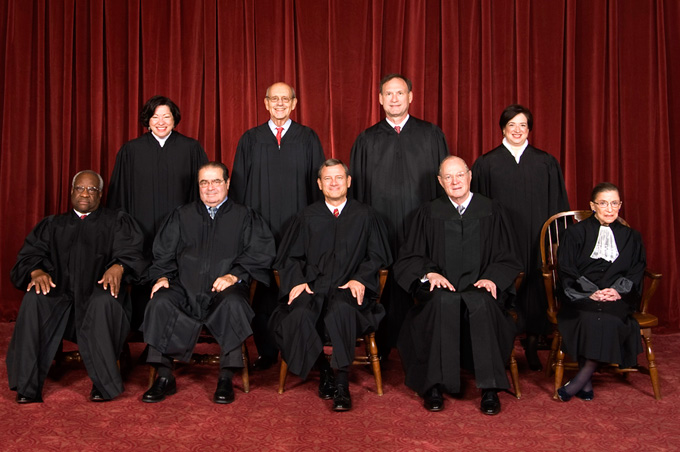
SCOTUS

“Codes of ethics? We don’ need no stinkin’ codes of ethics!”

The U.S. Supreme Court, it might surprise you to know, is the only court in the U.S. without a formal Code of Ethics that its judges are required to follow. The idea appears to be that if one has risen to the tippity-top of the judicial tree, one’s ethics must be impeccable as matter of course.

Right.

On Politico, Charles Geyh and Stephen Gillers make a convincing argument that SCOTUS should not only hold itself to high ethical standards, but also make it clear to all what those standards are.

You can read the entire post here.

________________________

Pointer: Legal Ethics Forum


Ethics Corrupter: Yankee Third Baseman Alex Rodriquez; Ethics Dunce: Yankee Manager Joe Girardi; Disgraced: The New York Yankees

Corrupted!

Corrupted!

Today, Major League Baseball announced that it was suspending Alex Rodriquez, the New York Yankees aging superstar, for the remainder of the 2013 season and the 2014 season for  using banned performance enhancing drugs, and impeding baseball’s investigation of his cheating. This was the climax (but not the end) of a long, drawn out, messy process and investigation involving a sleazy Miami drug lab, called Biogenesis, now closed down, which had records indicating that many professional baseball players had obtained banned substances.

Former National League MVP Ryan Braun (who I keep calling “Steve”) has already been banned for the rest of the year by the evidence obtained from Biogenesis records. The process has been marred by serial leaks from MLB  (unfair to the players involved, including Rodriquez) and ugly maneuvering between Rodriguez, who has been recovering from a serious hip issue, and the Yankees, who owe him approximately a gazillion dollars (thanks to an idiotic career contract signed in 2007 after he had already admitted to using steroids once), would like nothing more than for him to vanish in a puff of smoke and sulfur.

To explain the baroque ins and outs of baseball’s steroid wars, its player union relations, and the various intersecting agreements, special clauses and other things that have an impact on Rodriquez’s suspension would take too long here and would even bore the baseball fans. What you need to know now is this: Continue reading