Rubin-Jackson Revisited: Gibbs’ Rules #6 and The Harmful Apology

Sam Rubin is no Jethro Gibbs. Unfortunately.

Sam Rubin is no Jethro Gibbs. Unfortunately.

Samuel Jackson’s reckless and unjustified attack on KTLA entertainment reporter Sam Rubin (which, incredibly, continues to be misrepresented by most of the news media, internet and social media) is an excellent example of how relatively trivial incidents can teach important ethics lessons. One of those lessons I did not discuss in the previous post about this episode involves the phenomenon of the gratuitous or needless apology.

To briefly recap: Rubin’s celebrity guest, Samuel L. Jackson, falsely and obnoxiously accused Rubin of confusing him with another black actor, Laurence Fishburne, thus asserting that Rubin 1) thought all blacks looked alike 2) was impliedly a bigot or racist as a result, 3) was  unprepared  for the interview, and 4) was unprofessional and should lose his job. Rubin apologized twice, first during Jackson’s unprovoked rant (for Rubin had not confused him with Fishburne, and it was Jackson who was confused and unprepared for the interview), and later, to everyone else, after headlines that his “racist mistake” had justly provoked Jackson were being repeated everywhere. Rubin said:

“We start right now with the beauty and the occasional pain of live television. First and foremost, I do know who Samuel L. Jackson is. I’ve interviewed him several times over the years, but never quite like the conversation we just had. I indicated to Samuel that I’d seen him during the Super Bowl, and he thought that I had confused him with the commercial Laurence Fishburne had done for a car company. Of course a “Captain America” ad had also run during the Super Bowl, but I immediately felt so dumb, I didn’t bring that up — and he gave me the shellacking that was well deserved. I pride myself on the fact — that unlike a lot of people who do this kind of work — more often than not, I really do know what I’m talking about. But I didn’t 30 minutes ago, and I’m really embarrassed about it, and I very much apologize to Samuel L. Jackson and anyone else who was offended for what was a very amateur mistake.”

This kind of apology, a coerced, false apology for conduct that warrants no apology, regret or forgiveness at all, does not appear on the Ethics Alarms Apology Scale, because while it looks and sounds like an apology, it is something else entirely. The Apology Scale ranks the intent, sincerity, honesty and effectiveness of apologies for actual wrongdoing or harm. The coerced and false apology is wrongdoing that causes harm, and is the product of wrongdoing itself. Continue reading

If I Say Rep. Michael Grimm (R-NY) Behaved Like A Thug, Does That Mean I’m Claiming He’s Black?

To be clear from the start: Rep. Michael Grimm threatened a reporter last night for doing his job. He behaved like a thug, which is to say that he behaved as a “ruffian, hooligan, vandal, hoodlum, gangster, villain, or criminal” might behave, which is unacceptable for any law-abiding citizen, and outrageous for an elected representative. NY1 political reporter Michael Scotto had the audacity to ask the Congressman a direct question at the State of the Union address relating not to the speech, but to the Congressman’s fundraising, which is the object of an FBI probe. Grimm refused to answer the question, then cornered the reporter (on camera, though he did not know it, and said ominously , in an excellent soto voce imitation of Michael Corleone telling Fredo that he knows he betrayed him…

“Let me be clear to you, you ever do that to me again I’ll throw you off this f***ing balcony.'”

As the shocked reporter tried to sputter out a defense, Michael…that’s Grimm, not Corleone…continued,

“No, no, you’re not man enough, you’re not man enough. I’ll break you in half. Like a boy.” Continue reading

What Do You Do With The Racist Frat House?

Arizona frat party

Tau Kappa Epsilon fraternity at the University of Arizona decided that hosting an African-American stereotype party on Martin Luther King Day was a cool idea, and soon thereafter posted photos of the bash on various social media, showing drunk students posing like rappers,wearing baggy pants around their knees and drinking liquor out of watermelon cups.  The college community was appropriately horrified, and many are calling for the fraternity to be expelled for the incident and the students who attended the party punished. The Detroit Free Press story about the incident is headlined, “Racism or Free Speech”? This is the equivalent of a headline saying “Stupidity or Freedom of the Press?” It’s both. That’s the conundrum. Continue reading

Ethics Dunce: Sen. Rand Paul (R-Ky)

dunce-capSenators should not intentionally set out to make the American public stupid, or to validate invalid ethical constructs. Thus this explanation of his current proposal from Sen. Rand Paul needs to be derided, and should also cause concern for anyone who thinks it’s important for the Republican party to find some leaders who are trustworthy. Paul, in the course of pushing his stillborn, grandstanding plan to use a constitutional amendment to require government bigwigs to live with the same health care laws they impose on the rest of us, said this to The Daily Caller:

“My amendment says basically that everybody including Justice Roberts — who seems to be such a fan of Obamacare — gets it too. See, right now, Justice Roberts is still continuing to have federal employee health insurance subsidized by the taxpayer. And if he likes Obamacare so much, I’m going to give him an amendment that gives Obamacare to Justice Roberts.”

See, the fact that U.S. Supreme Court Chief Justice John Roberts refused to declare the Affordable Care Act unconstitutional using a highly-controversial legal distinction in no way suggests that he personally “likes” it, and anyone who thinks that is what judicial opinions, especially Supreme Court Opinions, mean is shockingly ignorant of the judicial system, the legal system, the law, the role of judges in society, the Constitution, and by extension, pretty much most of the principles that give government, management and leadership any integrity or competence. The fact that such an anyone has risen to the level of U.S. Senator goes beyond shocking to terrifying. Continue reading

The Persecution of Paul Ogden, The Justin Carter Of Legal Ethics

When you become a lawyer, Justin, don't do it in Indiana. Ask Paul Ogden why.

When you become a lawyer, Justin, don’t do it in Indiana. Ask Paul Ogden why.

He hasn’t been jailed like his teenaged, online-gaming counterpart, but Indiana attorney Paul Ogden is also facing government sanctions for what was an unequivocal First Amendment communication. In Ogden’s case, he may lose his right to practice law. His offense is insulting a judge…in a private e-mail.

Ogden represented a client before Superior Court Judge David H. Coleman, and was not happy with Coleman’s handling of the case. Neither were Coleman’s supervisors, who removed Coleman from the case for failing to act within an appropriate period of time, under the so-called “lazy judge” act.  Attorney Ogden, who also blogs about politics, commented to a fellow attorney in a private email that Coleman “should be turned in to the disciplinary commission for how he handled this case. If this case would have been in Marion County with a real probate court with a real judge, the stuff that went on with this case never would have happened.” 

Somebody, perhaps the original recipient of the e-mail, forwarded it to the judge (lawyers can be a back-stabbing bunch), and the judge, insulted, demanded an apology. Ogden refused (lawyers can also be stubborn and have a tendency to stand on principle even when it is going to get them in trouble). Because Ogden declined to grovel, Judge Coleman invoked Indiana Rule of Professional Conduct 8.2 and filed a grievance against him to the Indiana Attorney Disciplinary Commission. The Rule, which is essentially identical to the American Bar Association version, prohibits a lawyer from… Continue reading

Ethics Dunce: Pop Star Katy Perry

When is a sincere apology unethical? Here’s a good example.

Abused and Abuser. Someone please tell Katy Perry which is which.

Abused and Abuser. Someone please tell Katy Perry which is which.

Pop singing star Katy Perry registered an ethically responsible objection via Twitter regarding the Chief Keef song “Hate Being Sober.” She wrote,

“Just heard a new song on the radio called ‘I hate being sober’ I now have serious doubt for the world.”

Me too, Katy.  The artist responsible for this paean to intoxication, however, took offense, and decided to rebut Katy’s tweet with an obscene, abusive, misogynist attack:

“Dat bitch Katy Perry Can Suck Skin Off Of my Dick Ill Smack The Shit out her”

Thus chastened (or intimidated?), Perry apologized to him, writing that she really liked the song, and wasn’t “a hater”: Continue reading

Ethics Quiz: The Case Of The Creepy Student

Muse and Artist, Victim and Harasser, or Censor and Victim?

Muse and Artist, Victim and Harasser, or Censor and Victim?

Joseph Corlett’s essay, though I have not found the full text of it,  is undoubtedly creepy.

In fall 2011, the 56-year-old countertop refinisher was taking a writing course at the Oakland University in Rochester, Michigan. His teacher, Pamela Mitzelfeld, gave the class an open writing assignment for their journals, and, Corlett says, assured them that any topic was acceptable, with no-holds barred.  She said, Corlett’s lawsuit now asserts, that she wanted “the raw stuff.”

That’s just what she got. Corlett wrote an essay called “Hot for Teacher,’ inspired by a Van Halen song by the same name, describing how his sexual attraction to Mitzelfield was irresistible. “Tall, blonde, stacked, smart and articulate…” he described her in his daybook. “Are you kidding me? I should drop right now. There is no way I’ll concentrate in class especially with that sexy little mole on her upper lip beckoning with every accented word. And that smile.”

Mitzelfield alerted university officials, saying that Corlett’s essay frightened and upset her, and that she refused to teach him any further. Moreover, she insisted that either he be ejected from the campus, or she would quit herself. He was escorted out of Mitzelfeld’s class a few days later by the Oakland University Police. A sexual harassment charge was dropped, but a hearing by university officials found Corlett guilty of intimidation and he was expelled for the rest of the semester. University officials allegedly told him that he would be arrested if he returned to the campus. His suspension lasts for  three semesters, and he must go through sensitivity counseling before he can reapply.

Aided by The Fire, Corlett is now suing for over two million dollars in damages, maintaining that his First Amendment rights have been infringed. “The university has essentially issued a straightjacket to every writing student to protect the delicate sensibilities of faculty and staff,” says Greg Lukianoff, FIRE advocate. The legal issues look pretty clear: Oakland University has a terrible case. “Write anything” means write anything, and certainly cannot mean “write anything except something the instructor will freak out over, in which case we’ll fix you good.” If it is true, as Corlett alleges in his lawsuit, that Mitzelfield made no objection to other sexually themed compositions by him that referred to her, his treatment by the school is indefensible. That’s not the ethical question, however. That question is your Ethics Alarms Quiz for the day, and goes like this: Conceding that Oakland University mishandled the episode…

Was Corlett’s essay ethical and blameless?  Continue reading

“Being White In Philly” And Mayor Nutter’s Unethical Attack

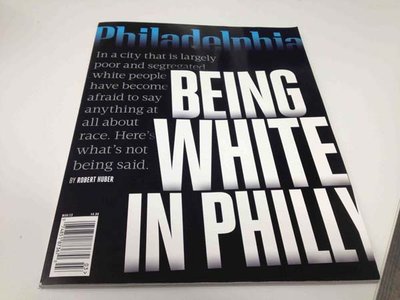
phillymagcoverPhiladelphia Magazine published an article this month titled “Being White in Philly.” Written by Robert Huber, who includes his personal reflections as well as interviews with white Philadelphians, the piece raises troubling and real problems in current U.S. race relations in an open and fearless way that does not usually characterize the media’s handling of the topic. The letters from readers, which you can also read at the link provided above, demonstrate that the article drilled directly into a nerve, and exposed feelings by white citizens, not just in Philadelphia but elsewhere in America, that need to be considered, analyzed, and dealt with whether or not one believes that they are justified or fair. Huber uncovered some of the most stubborn obstacles to a post-racial U.S., and they persist because we remain reluctant to discuss them

It’s an excellent piece of journalism that reminded me of my late roommate in law school, a young, Irish Catholic ex-Marine from the “rough” parts of Philly, who opened my eyes about racial attitudes like no one else I have ever known. He was intelligent, observant, and beyond any question, a racist, and openly admitted it. He also vividly describe the Philadelphia experiences that he felt justified his racism. I could see his handsome smile as I read Huber’s piece. The article itself, however, is not racist in any way.

Mayor Michael Nutter, however, either out of careless reading, racial identification, foolishness or willful blindness, decided to attack the article and the magazine for running it.  He wrote a furious letter of protest to Philadelphia Magazine, a letter which, as I will shortly demonstrate, crossed bright lines of ethical reasoning and appropriate conduct by a government official. Philadelphia Magazine’s editor, Tom McGrath responded perfectly:

“I applaud the mayor for asking for an inquiry into the state of racial issues in Philadelphia. The need to have a deeper discussion about race in Philadelphia is exactly why we ran our story in the first place. Like any reader, the mayor is entitled to think and say what he wants about the story. That said, his sophomoric statements about the magazine and mischaracterization of the piece make me wonder if he’s more interested in scoring political points than having a serious conversation about the issues. Furthermore, his call for a “rebuke” of the magazine by the PHRC is rich with irony. This is the same mayor who just yesterday was shouted down by an unruly mob in City Council; now he himself wants shut down conversation about an important issue in our city. In short, the mayor loves the First Amendment–as long as he and the government can control what gets said.”

Now let’s consider, piece by piece, Nutter’s letter to the magazine, and why it deserved McGrath’s criticism, and more. My comments will be in bold. Continue reading

Biden’s Apology For Abusing the Press: Not Accepted!

"Sorry!"

“Sorry!”

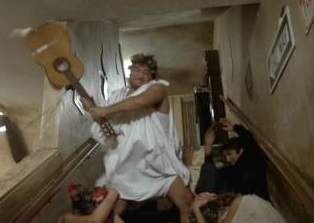
In a classic scene from the “Animal House” toga party, the chaotic Bluto, played by John Belushi, encounters a pompous student strumming his guitar and singing a sappy folk song as co-eds swoon. Bluto suddenly seizes the guitar and smashes it to smithereens. “Sorry,” he shrugs.

This is about the level of effectiveness and sincerity achieved by Vice President Joe Biden’s office, as it apologized after taking a student photographer’s photographs of the Veep and destroying them.

From Poynter:

“Jeremy Barr, a reporter with the University of Maryland’s Capital News Service, was seated in a non-press section for the event, at which the vice president announced an anti-domestic violence initiative. Biden staffer Dana Rosenzweig approached Barr after the event and ordered him to delete photos.

“She said, ‘I need to see your camera right now.’” Barr said. The staffer called Barr’s presence in the non-press area an “unfair advantage” over the other members of the media at the event. The staffer then requested to watch as Barr deleted the photos from his camera to ensure his compliance, Barr said. After deleting the photos from the camera, the staffer asked Barr to show her his iPhone to make sure no photos were saved. Barr complied.” Continue reading

UPDATE: Spinning The Woodward-White House Dispute

Here's a question, Gene: What the hell is going on???

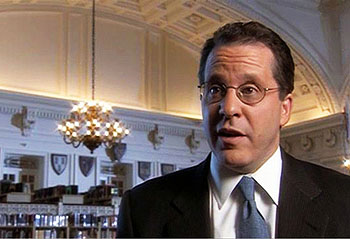
Here’s a question, Gene: What the hell is going on???

Now that the e-mail that apparently caused Washington Post icon Bob Woodward to feel he was being threatened has been released, several new questions and observations arise:

1. In the e-mail, at least, the senior official, now confirmed to be economic advisor Gene Sperling, never denies the central point of the Woodward column at issue: that President Obama, not congressional Republicans, was the first to propose the sequester, contrary to the statements of Jack Lew and the President himself, in contradiction to the blame narrative being pushed by the White House. This means that either the White House concedes its obfuscation, or that it chose to muddy the waters and undermine Woodward’s credibility by focusing on another aspect of his analysis where it was subject to legitimate challenge.

2. Why did Woodward feel threatened by this ostensibly “friendly” message? He is a veteran of such exchanges and presumably adept at translating Washington-speak and reading between the lines. I yield to his reporter instincts, but frankly, I don’t see it. I presume the threats in his phone argument with Sperling were more overt. I don’t know that, however. Continue reading