Ethics Mystery: What Was So Wrong With Curt Schilling’s Muslim Tweet?

schilling-tweet

ESPN pulled former baseball pitching star Curt Schilling from its Little League broadcast team yesterday after becoming aware of his tweet above, saying in a statement:

“Curt’s tweet was completely unacceptable, and in no way represents our company’s perspective. We made that point very strongly to Curt and have removed him from his current Little League assignment pending further consideration.”

Schilling then tweeted this apology: “I understand and accept my suspension. 100% my fault. Bad choices have bad consequences and this was a bad decision in every way on my part.” This appears to be a #1 on the Ethics Alarms Apology Scale...“An apology motivated by the realization that one’s past conduct was unjust, unfair, and wrong, constituting an unequivocal admission of wrongdoing as well as regret, remorse and contrition, as part of a sincere effort to make amends and seek forgiveness.” 

If I had delivered it, however, it might have been a #7: “A forced or compelled version of 1-4, in which the individual (or organization) apologizing may not sincerely believe that an apology is appropriate, but chooses to show the victim or victims of the act inspiring it that the individual responsible is humbling himself and being forced to admit wrongdoing by the society, the culture, legal authority, or an organization or group that the individual’s actions reflect upon or represent.”

What was it exactly that Schilling’s tweet showed, implied, suggested or stated that was” completely unacceptable,  in no way represent ESPN’s  perspective, and that justified his employer’s action? Curt Schilling is an inquisitive, politically active and opinionated man, and has always annoyed sportswriters because 1) he’s openly conservative 2) he’s a devout Christian, and isn’t shy about talking about it, 3) he can write and speak coherently and was capable, while playing, of challenging their criticism, and 4) he’s a lot smarter than most of them. I am assuming in this inquiry that nothing in Schilling’s contract or agreement with ESPN restricted his right to express non-sports opinions on his own time.

Here are some possibilities: Continue reading
“The Longest Day,” Darryl F. Zanuck, D-Day, And Us

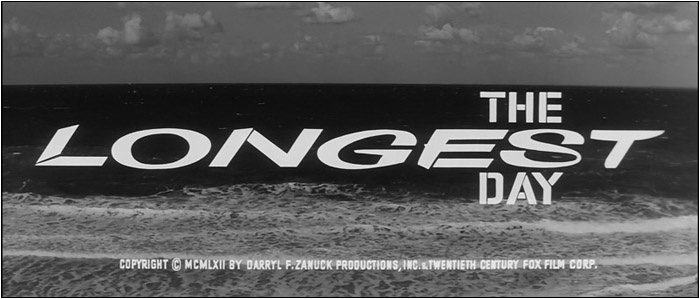
title_longest_day_bluray

Today is June 6, the anniversary of the Allies’ invasion of Normandy, the audacious military strike that changed the course of history. I’ll be interested in seeing how it’s commemorated this year, 71 years later, especially by the news media. A lot of Americans under the age of 40 know almost nothing about it, or worse, the values it represents to the United States.

Fortunately, there is an easy and entertaining way to teach a young American about what happened on this day 71 years ago. That is to have him or her watch “The Longest Day,” producer Darryl F. Zanuck’s epic film based closely on historian (and sole credited screenwriter) Cornelius Ryan’s 1959 book. (You can get it at Amazon, here.)I usually find understanding military battles nearly impossible; written accounts completely confound me, and few movies about any battle make a serious effort to explain the tactics and strategy without reducing the facts to pablum. (I remember how much my father, who fought in the Battle of the Bulge, detested the big budget movie of the same name, which he found outrageously sloppy, and which he summarized as “Henry Fonda won the war.”)

Not “The Longest Day,” however. Since seeing the movie with my father as a kid, I have learned a lot about what was left out, but the movie is remarkably clear and accurate about what happened and why without being either too detailed or too simplistic. It’s also just a great, inspiring movie.

That we have “The Longest Day” is entirely due to the courage of one of Hollywood’s most dynamic, flamboyant and successful studio moguls, Darryl F. Zanuck. The original producer of the adaptation of Ryan’s book (which is terrific ) gave up on the project when 20th Century Fox refused to allow him an adequate budget. Zanuck, who was still producing films but no longer ran the studio he had built,  bought the rights, and was determined to do the story, the event, and the men who fought the battle justice by mounting a production almost as ambitious as the invasion itself. Continue reading

For You, Dad.

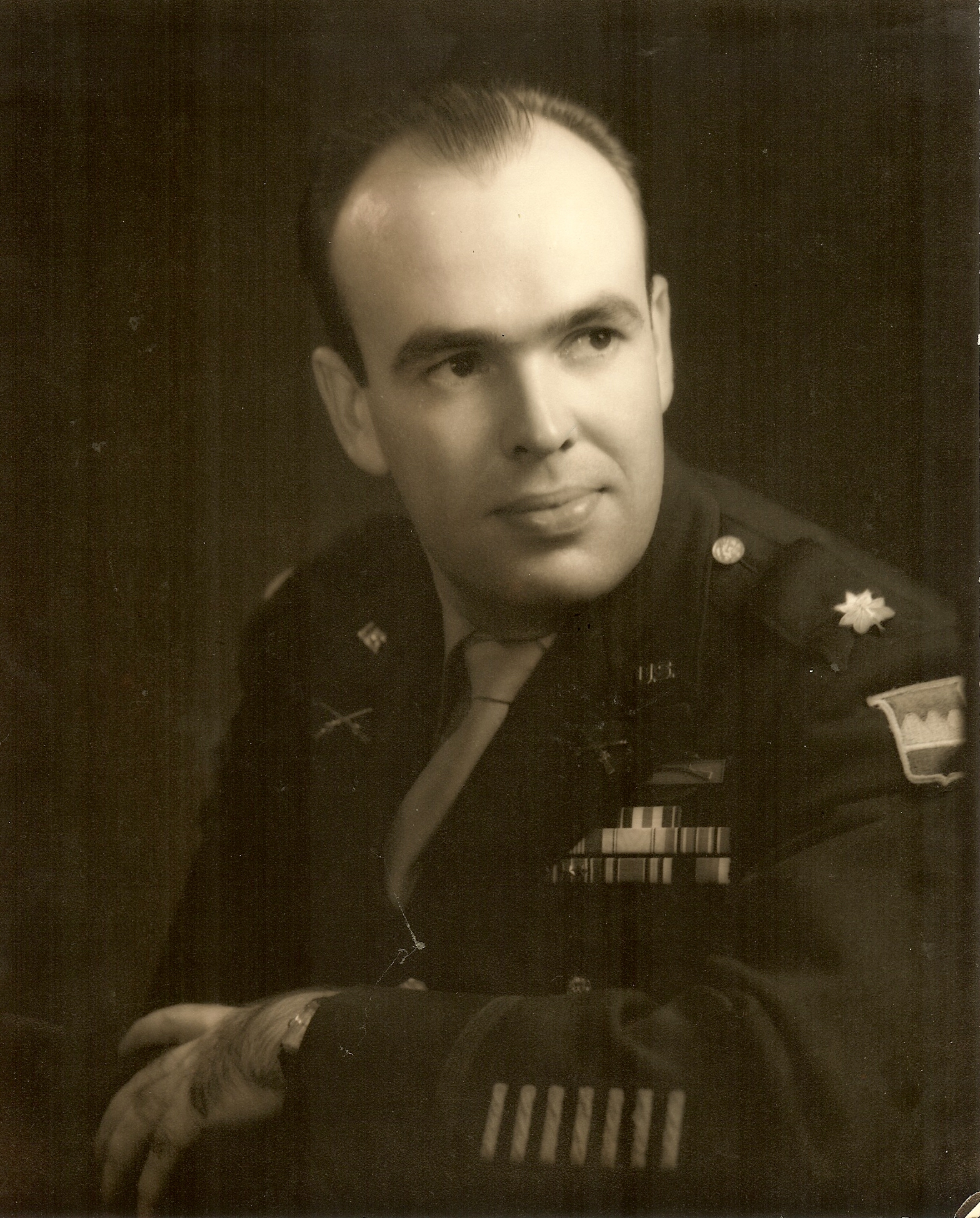
Jack Marshall Sr Army portraitI lost my dad, Jack Marshall, Sr., five years ago today, and for some reason the loss feels especially sharp right now. This has been another miserable birthday, but not so miserable as that one, and I found myself once again revisiting my father’s favorite poem, which was a personnel credo for him and which has often served me well in hard times too. It is linked in the “Inspiration” section on the  Ethics Alarms home page, as well as quoted in my post here on the day my father was buried in Arlington National Cemetery.

Nonetheless, I am going to post Rudyard Kipling’s “If” once again. My father’s favorite line was…

If you can meet with Triumph and Disaster
    And treat those two impostors just the same;   
That was Dad to the core. He never looked back, never cursed his luck, never thought too highly of himself (or anyone else), always believed in tomorrow, and that no victory was final, and no defeat was forever. And I know he was right, though it doesn’t often feel like it. So this is for you, Dad. Thanks for everything.

“If”

If you can keep your head when all about you

Are losing theirs, and blaming it on you,

If you can trust yourself when all men doubt you,

But make allowance for their doubting too;

If you can wait, and not be tired by waiting,

Or being lied about, don’t deal in lies,

Or being hated, don’t give way to hating,

And yet, don’t look too good, nor talk too wise:

If you can dream – and not make dreams your master;

If you can think – and not make thoughts your aim;

If you can meet with Triumph and Disaster

And treat those two imposters just the same;

If you can bear to hear the truth you’ve spoken

Twisted by knaves, to make a trap for fools,

Or watch the things you gave your life to, broken,

And stoop, and build ’em up, with worn-out tools:

If you can make one heap of all your winnings

And risk it on one turn of pitch-and-toss,

And lose, and start again at your beginnings

And never breathe a word about your loss;

If you can force your heart and nerve and sinew

To serve your turn, long after they are gone,

And so hold on when there is nothing in you

Except the Will which says to them: “Hold on!”

If you can talk with crowds and keep your virtue,

Or walk with Kings – nor lose the common touch,

If neither foes nor loving friends can hurt you,

If all men count with you, but none too much;

If you can fill the unforgiving minute

With sixty seconds’ worth of distance run,

Yours is the Earth and everything that’s in it,

And—which is more—

You’ll be a Man, my son!


June 6, 1944

D-Day-facts-Landing-on-Beach

If a Terminator wanted to get rid of me and Ethics Alarms, all he would have had to do, perhaps, would be to go back to June 2, 1944, and throw himself on the hand grenade that exploded and blew a hole in Jack Marshall, Sr.’s foot that day. The wound kept my dad in an Army hospital when he was scheduled to hit the beaches at Normandy, 7o years ago today. (He recuperated sufficiently to request a return to active duty, and ended up in the middle of the Battle of the Bulge.)

Thus it is that I have special appreciation and reverence for the American, Canadian* and British soldiers who risked, and in many cases lost, their lives winning a crucial battle in a war about freedom and human rights on June 6, 1944, and empathize with all the sons and daughters, and grandsons and grand-daughters, whose chances at existence were ended that day, while mine, by the sheerest luck, was not.

And I find myself wondering, as America retreats from its traditional ideal as the nation that stands up to evil, chaos, persecution and tyranny in the world, and as our government devalues “hero” and “service with honor” to the status of gratuitous application to a soldier who voluntarily abandoned his comrades on the field of battle, if our culture, our young, and our increasingly self-absorbed society would support the equivalent of a Normandy invasion today.  If not, the world is in greater peril than it knows.

I’m an optimist, and a firm, though shaken, believer in the unique cultural values of the United States of America. I believe that we are one admirable, wise, courageous leader of character away from getting back on the ennobling course charted by Washington, Lincoln, Roosevelt, Kennedy and Reagan.

I just wish that I could see, even faintly, such a leader coming over the horizon. I wish he…or she…would hurry the hell up.

* I stupidly omitted mentioning our Canadian allies when I first posted this, and was properly corrected. No slight intended. My apologies.

War, Syria, Leadership and Ethics

Indecisiveness and narcissism makes great drama, bad leaders, and gets people killed , too.

Indecisiveness and narcissism makes great drama, bad leaders, and gets people killed , too.

I try to think about the ethics of war as little as possible, much less write about it. It is too frustrating, and ultimately a waste of time: the same debates and philosophical arguments have been made, eloquently and passionately, for not just hundreds but thousands of years, and only the mechanics of warfare have changed.

My father, a war hero and a man who would have loved to have devoted his life to the military if his wounds hadn’t prevented it, used to say that war was the stupidest of all human activities. “There is nothing good about war,” Dad said. “Yet it is sometimes necessary and unavoidable. And don’t ask me to reconcile those statements: I can’t. Nobody can.” I remember asking him about General Patton, who led my father and his comrades during the Battle of the Bulge. “Patton supposedly loved war,” I said. “He did,” my father replied. “He was insane.” He loathed Patton.

The Syria crisis has triggered all the same arguments again, and I want no part of them. Ethical analysis doesn’t work where warfare is concerned. The conduct of ritualized killing combatants and innocents is, at best, an extreme utilitarian act that always creeps into  ethically indefensible “the ends justify the means” territory before the end of hostilities. So many invalid rationalizations are used to justify killing—“It’s for a good cause,” or the Saint’s Excuse, prime among them, with “They started it!” following close behind—that it is useless to tote them up. The war most often cited as a “moral war,” World War II, still involved the killing of innocent non-combatants by the Allies. ( My father remained amazed at the efforts at “limited war” in Iraq, noting that Allied soldiers were expected to accept civilian deaths as unavoidable and not a matter of concern. He also felt that the current dedication to half-measures just guaranteed longer wars, more deaths, and less satisfactory results. “It’s war,” he said. “You can’t make it humane or sensible; you can only make it shorter. Telling the military that it has to waste time and military personnel to avoid civilian deaths makes no sense. There is no such thing as a humane war.” Naturally, he approved of Truman’s decision to drop the atom bomb, in part, he admitted, because he was slated to be in the Japanese mainland invasion force that was likely to sustain up to a million casualties.) The Allies engaged in atrocities too, such as the fire-bombing of Dresden.

You want to talk about the problem of supporting terrible people and factions to defeat another? World War II is the champion on that score. The U.S. partnered with Stalin, who was a greater mass murderer than Hitler, and defeated Japan, the enemy of China, allowing Mao, a greater mass murderer than Stalin and Hitler combined, to enslave a billion people. The peace negotiated after the Second World War was only slightly less destructive than the one that ended the First World War (and led directly to the Second): The U.S. handed over half of Europe to Communism, laying the seeds of the Cold War that only avoided ending humanity in a nuclear holocaust by pure moral luck. The fact that WWII is the “best” war powerfully makes the case: ethics and war have nothing to do with each other. Each renders the other useless and incoherent. Continue reading

The Julie Principle

The combination of Memorial Day reflections on my late father’s character and a letter to relentlessly ethical advice columnist Carolyn Hax leads me to expound on what we will henceforth call the “Julie Principle.”

Hax’s non-religious correspondent wanted to know what she should do about a good but annoyingly Evangelical friend, who would not cease inviting her to attend church, despite knowing that such an activity held no appeal whatsoever. Hax’s answer, which you can read here, touched on many approaches to the problem. To my dad, the answer was simple. Continue reading

My Father, Memorial Day, and Reflections

Jack Marshall Sr Army portrait

[In the last few years of his life, my father used to take my sister and me on a pilgrimage to Arlington National Cemetery on the Sunday of Memorial Day Weekend. He was always strangely jolly about it, though appropriately reverent. We always visited the oddly inadequate Battle of the Bulge memorial, where my dad would usually tell us one new story of his horrible experiences in that conflict that he had previously suppressed. We always paid our respects to the humble grave of Audie Murphy, World War II’s most decorated American soldier. We did NOT visit the grave of my dad’s own father, whose betrayal of his mother he would never forgive, though my grandfather, a veteran of the First World War, was also buried at Arlington. Mostly we just walked around the beautiful surroundings, with Dad periodically admiring some grand monument and suggesting, tongue in cheek, that he wouldn’t mind being under something like that some day. Continue reading

The Last Birthday Gift

blown out candles on a birthday cakeThis is my birthday. It’s also the third anniversary of my father’s death, as the two dates collided for all time when I found him dead, as if asleep, in his favorite chair when I went to my parents condo to meet him for a late birthday dinner, December 1, 2009.

I feel no more in the mood to celebrate my birth this day than I did that one, and seriously doubt if I ever will again. I miss my father terribly, every day really, and yet I recall that moment when I realized he was gone with mixed emotions. I knew that the old soldier, 89, fighting cancer, a heart condition and old war wounds, was facing a sharp down-turn in his quality of life; I knew that this was the way he always said he wanted to go out—quickly, without drama, humiliation or excessive expense—and I knew that among the members of his immediate family, I was the one whom he would have wanted to find his abandoned body. I never felt closer to my father, who, like so many of his gender and generation, had trouble expressing affection and intimacy directly, than I did in those last moments before the EMT’s arrived, as I stroked his thin, gray hair and said good-bye.

I have also come to believe that he gave me a great gift three years ago, probably unconsciously, but with my father, you never know.  He detested and rejected all forms of score-keeping, including regrets, accolades, praise and bucket lists. He was proud of many things in his life, especially his military service and his family, but he never felt superior to another human being based on what had happened in the past. My father believed that what mattered in life was going forward—doing one’s duty, helping others, setting a good example, and making every minute of your life count by trying to leave the world, even if it is only your small corner of it, better than it was before you got there. And when you’re done, you’re done. There is nothing to be sad about, or to be afraid of, or to regret; no recriminations for what didn’t happen, what couldn’t be completed, or mistakes made along the way. Just do your best, as you have learned to do it, for as long as you can. It’s not a competition, and you shouldn’t judge yourself by anyone’s standard but your own.

My father’s death reminded me that there is nothing special about being born. Everybody is born. It is how we use whatever time we have, when we use it well, that is truly worth celebrating, and even then, past achievements never justify resting on our laurels as long as we are still capable of doing some good, and have time left to do it.

On the day he died, my father spent loving hours with my mother in her hospital room, gave some needed advice and encouragement to my sister, wished his son a happy birthday, and made him laugh one last time. Good work, right to the end. If the timing of his finale changed for all time the meaning of my birthday for me, it also made vivid the life lessons that were the essence of Jack A. Marshall, Sr. Care about others. Be responsible.  Be fair. Do the best you can for as long as you can. Keep trying to be better. Never give up. Don’t be afraid. If you do all of that, you don’t need celebrations to prove your life has meaning. It just does.

It is true that “Happy Birthday” will never sound right to me again. Still, my father’s life and his way of leaving it gave me ideals good and true to celebrate on every December 1,  the wisdom to cherish whatever birthdays I have remaining, and the sense to never waste precious time regretting what is past and beyond changing. In many ways, his last birthday gift to me was the best one of all.

Memorial Day Ethics Dunce: MSNBC Host Chris Hayes

My hero.

Yesterday, the day before Memorial Day, MSNBC host Chris Hayes said this:

“Thinking today and observing Memorial Day, that’ll be happening tomorrow.  Just talked with Lt. Col. Steve Burke , who was a casualty officer with the Marines and had to tell people [inaudible].  Um, I, I, ah, back sorry, um, I think it’s interesting because I think it is very difficult to talk about the war dead and the fallen without invoking valor, without invoking the words “heroes.” Um, and, ah, ah, why do I feel so comfortable  about the word “hero”?  I feel comfortable, ah, uncomfortable, about the word because it seems to me that it is so rhetorically proximate to justifications for more war. Um, and, I don’t want to obviously desecrate or disrespect memory of anyone that’s fallen, and obviously there are individual circumstances in which there is genuine, tremendous heroism: hail of gunfire, rescuing fellow soldiers and things like that. But it seems to me that we marshal this word in a way that is problematic. But maybe I’m wrong about that.”

   Well, yes, Chris, you’re wrong about quite a lot.

Chris was wrong, for example—as well as disingenuous—to say that “you don’t want to obviously desecrate or disrespect memory of anyone that’s fallen” and then come out with this insulting and fatuous gibberish that disrespect the memories of the fallen. And to do it on the very weekend when millions of families across the nation are honoring their fallen, or, in the case of my family, a father who braved combat in World War II, was wounded, decorated, and regarded his service in defense of his country the greatest achievement of his life.

Hayes was also wrong, as well as incompetent and unprofessional, to utter such a half-baked and incoherent opinion without having the respect to think it through carefully, express it articulately, and in general without meeting his obligations as a broadcaster to be worth listening to. If a commentator is going to make a statement that he knows will offend and upset grieving families, he should at least know what he wants to say and have the skill and courage to say it clearly. As it was, all he managed to do was to make a gratuitous slur against patriots who put their lives at risk because their nation asked them to, instead of taking morally craven positions from the security of a TV studio that only exists because of the sacrifices such heroes made. Continue reading