For My Father

The better Jack Marshall

My father’s birthday is coming up; oddly, I remember the date now that he’s gone, when I never managed to so while he was alive. It is May 2, and by lucky happenstance, Eugene Volokh chose to post another of my father’s favorite Rudyard Kipling poems on his blog today. I had completely forgotten about it, so this is a gift to me, especially since it helps my dad’s memory burn even brighter, always a boon when I feel the walls closing in.  He loved Kipling’s poems, books and stories, and he was a man whom Rudyard would have admired. Like most Kipling, this poem is about ethics, as well many other things, some of which readers must figure out for themselves.

For you, Dad. And all of you, too:

The Gods of the Copybook Headings

By Rudyard Kipling (1865-1936) Continue reading
Don Cornelius, Suicide…and Ethics Hero?

“Soul Train” creator and pop culture icon Don Cornelius took his own life at 75 yesterday, using a gunshot to the head to do it. Suicide always conjures up feelings of special sadness for the deceased, sometimes mixed with anger. The act can be cruel and devastating to family members and friends; often it leaves behind crushing problems, financial and otherwise, that the living have to deal with. Suicide is stigmatized in our culture as a coward’s way out of earthly problems; many religions consider it a sin, and many legal systems consider suicide a crime. Yet it may be that American culture will have to undergo a major cultural transformation in the matter of taking one’s own life. While morality tends to ossify, ethics is fluid and adaptable. Changing conditions and new realities can, in rare circumstances, cause societies to conclude that what was once considered right is really wrong, and what was once condemned as wrong is in society’s best interests. I think we may reach that point with suicide. Continue reading

Integrity, Politics, and Medal of Honor Ethics

The Medal of Honor

Rep. Duncan Hunter of California, a Marine veteran who sits on the House Armed Services Committee, is leading an effort to loosen the standards being applied to the awarding of the Medal of Honor for combat in Afghanistan and Iraq.  In an Oct. 4 letter to Defense Secretary Leon Panetta, Hunter argued that Medals of Honor are being denied in cases where they appear to be well-deserved and that the process of approving awards takes too long. He asked the Defense Department to conduct a review of hundreds of such cases. “Properly recognizing these actions through the awards process is not just important to the individuals involved, but it is also essential to upholding the tradition of the armed forces and inspiring others to step forward,” Hunter wrote.

Great: now we have an advocate for heroism inflation. Continue reading

Mother’s Day Reflections On A Wonderful Mother With Flawed Ethics

My mom and Ma Barker had some things in common.

I am spending this Mothers Day in mourning, as today is the first time I have had to experience the holiday without a mother. My mom died earlier this year, as I mentioned here at the time, and she has been buried for less than a month. My mother used to be a regular feature of my ethics seminars, as I would reference her whenever I talked about the so-called “Mom Test,” one of the three famous ethics tests that are useful to set off sluggish ethics alarms, the other two being the Gut Test (“Does this feel wrong?”) and the New York Times Test (“Would I be willing to see my conduct on the front page of the New York Times?”). The “Mom Test” is whether you could tell your mother about your ethically-dubious conduct without hesitation or shame, and I often told my classes that with some mothers, like my own, this test didn’t work very well. “My mother,” I would explain, “has the ethics of Ma Barker.” I was only partially kidding. Continue reading

The Prince, The Sex Offender, and the Ethics of Friendship

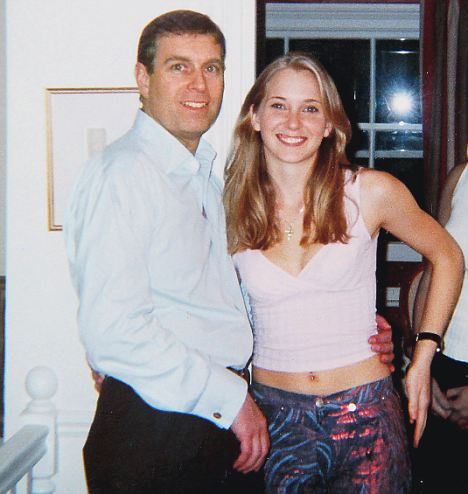
Prince Andrew with one of his friend's victims in 2001

The ethics of friendship is complicated.

President Bush claimed to be friends with Vladimir Putin. F.D.R. once said that Josef Stalin was his friend. President Obama was famously friendly with dubious characters like Rev. Wright and William Ayres.

History is full of heroes and near-heroes who had infamous friends, though the extent of the often friendship is difficult to know. Sammy Davis, Jr. and Elvis were supposedly buddies with Richard Nixon. Bill and Hillary Clinton were close friends with Dick Morris. Wyatt Earp was a life-long friend of “Doc” Holliday; Andrew Jackson may have been friends with pirate Jean Lafitte, who helped him win the Battle of New Orleans. We simultaneously celebrate loyal friends, and yet we also judge people by the company they keep. Should we condemn individuals who have friends with serious character flaws or a history of unsavory acts? Or should we admire them for sticking with their friends when everyone else is turning against them? Continue reading

Comment of the Day: “Ethics Quote of the Week: Blogger Jeff Jarvis”

Karl Penny calls me to task here for yielding to another commenter’s premise (but not his conclusion from it) that celebrities lead more interesting lives than their typical fans. Since “interesting” has various meanings—in Charlie Sheen’s case, the ironic Chinese definition (as in “may you live in interesting times”) comes to mind, and I could argue that celebrities by definition lead lives that their fans find more interesting than their own, hence the fact that they are celebrities. Nonetheless, Karl’s point is critical, and I thank him for making it so eloquently. And Karl’s would have been the Comment of the Day even if he hadn’t mentioned my dad—but it didn’t hurt. Here is Karl on “Ethics Quote of the Week: Blogger Jeff Jarvis”:

“Now, Jack: “Nobody denies that rich stars have more interesting lives than their fans,…” Nobody? Hey, what am I? Chopped liver? But, seriously I do deny that celebrities lead more interesting lives than the rest of us. In my experience—and these days, I hear a lot from others about the details of their lives—everyone has a story to tell. Indeed, they have a narrative, and one that is way more interesting, and far more uplifting, than those of the celebrities whose stories are broadcast at us. Continue reading

The Ethics Final: Ending My Mother’s Life Today

Some of our most important ethical decisions are made with the least analysis. At least that was the way it was for me this morning at 10:34, when my sister and I directed that my 89-year-old mom, Eleanor Coulouris Marshall, be taken off of life support. Continue reading

Free Speech or Theft? The Law and Ethics of Stolen Valor

The U.S. District Court in Colorado ruling in the case of  US v. Strandloff, has found the “Stolen Valor Act,” 18 U.S.C. § 704(b) & (d), to be an unconstitutional infringement of free speech.  Rick Strandloff represented himself as a wounded decorated Iraq War veteran in order to rally support for veterans and opposition to the war. The original Stolen Valor Act of 2005 criminalized the wearing of military medals an individual was never awarded; later, it was expanded to included the crime of falsely saying or writing that one has been given military honors for valor. The Act says, in part, that it is a crime to…

…falsely represent [oneself], verbally or in writing, to have been awarded any decoration or medal authorized by Congress for the Armed Forces of the United States, any of the service medals or badges awarded to the members of such forces, the ribbon, button, or rosette of any such badge, decoration, or medal, or any colorable imitation of such item …

Deciding an issue like this inevitably comes down to both law and ethics. Not all speech is protected by the First Amendment, and deciding how many kinds of speech we can sensibly and reasonably prohibit requires a court and a culture to think about just how bad—how wrong–certain kinds of speech may be, based on their actual and potential harm. Continue reading

What Rudyard Kipling Taught My Father

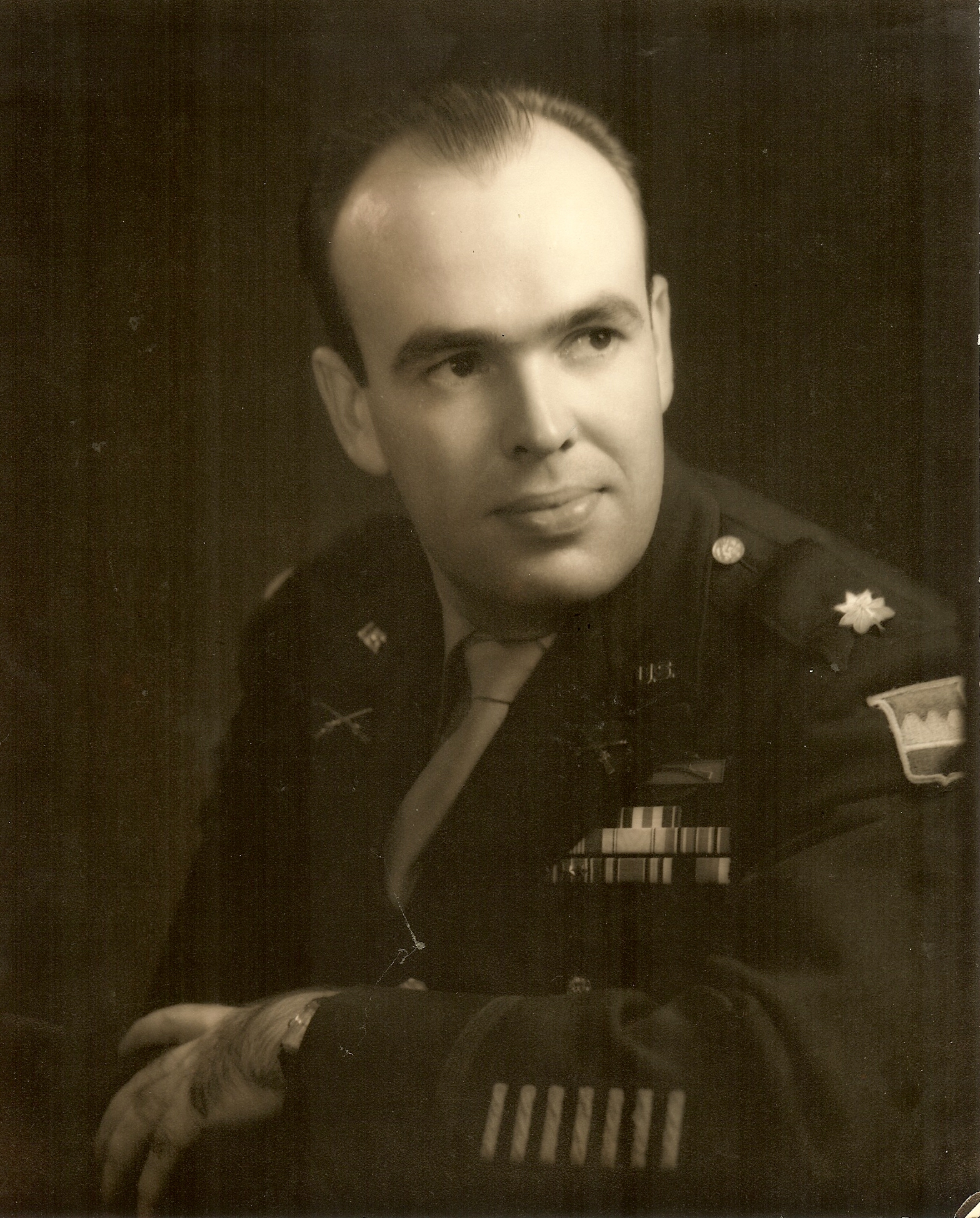
Jack Marshall Sr Army portrait

Today the Army buried my father, Major Jack Marshall, Sr., with full military honors. He had earned them, for he was a hero in World War II. Let me correct that: every soldier who serves in battle is a hero, but my Dad had a few special distinctions, like a Silver Star and a Bronze Star to go with his Purple Heart.  He  sustained a crippling wound to his foot from a hand-grenade, healed enough to jam what was left of it into a boot, and went on to fight in the Battle of the Bulge.

Under the clearest of blue skies, with the cemetery covered in snow, a caisson drawn by black horses, one without a rider, carried my father to a gravesite ceremony where the American flag draping his casket was carefully folded by six soldiers and given to my mother, following a 21-gun salute. My father was a hero off the battlefield as well, a profoundly ethical and courageous man throughout his life, and how he got that way is worth examining. Continue reading

Tiger Woods Ethics, Part II: Yes. It Matters

There are two main strains among the culturally corrosive arguments in support of Tiger Woods. One, discussed in Part I, is the “great athletes don’t need to be great human beings,” a contention that chooses to ignore the inescapable fact that they are paid to behave like great human beings, whether they are or not. While this argument is mostly obtuse, the second strain is the more ethically offensive. Washington Post columnist Michael Wilbon embraced it with both arms in his defense of Woods entitled, “Some context on Tiger.” Its thesis: virtually all big-time athletes cheat on their wives, and if you had the opportunities and temptations they do, you’d cheat too. Translation: “It’s no big deal”: Continue reading