On Immigration, Speech Suppression, War, Terrorism, Police and More, It’s Cultural Death By Compassion Poisoning

Think of the children!Compassion is a wonderful thing. A nation cannot govern or even survive, however, using compassion as its guiding ethical principle. The United States currently seems hell bent on disproving this fact, and is well on the way to confirming it. It is too bad that this is true, and we should all agree that it’s  a damn shame that you can’t run a successful democracy without periodically inflicting pain, creating suffering and harming some human beings in order that many more can live in peace and pursue their lawful ambitions and desires. Nonetheless, that is an immutable fact of existence. Government policy that attempts to deny it is not merely incompetent and naive, but ultimately suicidal. A culture that elevates compassion above all other values like responsibility, accountability, prudence, process and proportion is betting everything on the inherent goodness and rationality of humanity. History tells us it’s a losing bet.

When I woke up to the horrible news of the Paris attacks, and after I had finished simultaneous laughing and crying about the fact that President Obama picked yesterday to proclaim that the threat of ISIS had been “contained,” it suddenly occurred to me that the majority of the crises this nation struggles with today are  linked by the same cultural and leadership malady. The United States increasingly is unwilling to accept the reality that governance is utilitarian, and that punishment, deterrence, sacrifice, pain, retaliation and accountability are indispensable tools that must be used and used unapologetically. The alternative is chaos, and chaos is what we are facing.

An impressive number of these crises have been in the news this week: Continue reading
10 Ethics Observations On The CNBC Republican Presidential Candidates Debate

cnbc_moderatorsnew

The transcipt is here.

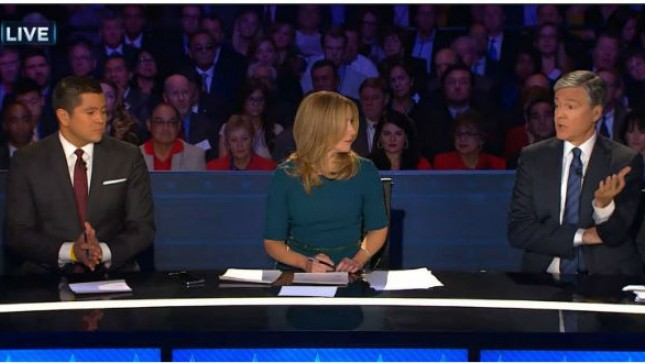
1. Seldom are the  verdicts on a presidential debate as near unanimous as those on last night’s CNBC affair, in which Gov. John Kasich, Mike Huckabee, Carly Fiorina, Gov. Chris Christie, Jeb Bush, Donald Trump, Dr. Ben Carson, Sen. Marco Rubio, Sen.Ted Cruz, and Sen. Rand Paul took loaded questions from the CNBC panel of Becky Quick, John Harwood, and Carl Quintanilla. The questions and interjections from the moderators were so hostile, so disrespectful, so obviously concocted from a biased perspective, that the criticism came from all sides of the political spectrum.

Mostly the work of the CNBC trio was just unprofessional. The rules seemed arbitrary, the three talked over each other, they neither commanded nor deserved the participant’s cooperation. It was, correctly, called the smoking gun of news media bias, and a terrific honesty, fairness and integrity test for anyone watching. If you did and still say that it didn’t stench of a hostile exercise in media bias, then you lack all three. It was an embarrassment for CNBC and journalism.

2. Ironically, though the moderators were terrible, it arguably was the best debate yet for the Republicans. The hapless trio actually gave Sen. Ted Cruz a chance to show that you tangle with him at your peril, and to display his impressive mind and speaking ability. He said…

“Let me say something at the outset. The questions asked in this debate illustrate why the American people don’t trust the media. This is not a cage match. And you look at the questions — Donald Trump, are you a comic book villain? Ben Carson, can you do math? John Kasich, will you insult two people over here? Marco Rubio, why don’t you resign? Jeb Bush, why have your numbers fallen? How about talking about the substantive issues? The contrast with the Democratic debate, where every thought and question from the media was, which of you is more handsome and why? Let me be clear: The men and women on this stage have more ideas, more experience, more common sense, than every participant in the Democratic debate. That debate reflected a debate between the Bolsheviks and the Mensheviks. Nobody believes that the moderators have any intention of voting in a Republican primary. The questions being asked shouldn’t be trying to get people to tear into each other, it should be what are your substantive solutions to people at home.”

Bingo. Cruz’s perfectly delivered reprimand is being sloughed off by many in the press as a repeat of Newt Gingrich’s trick, in the 2012 debates, of routinely beating up on moderators regardless of what they asked. This, in contrast, was fair, accurate, as perfectly delivered as it was impressive. I had followed the debate closely, and I wouldn’t have been able to run down the list of hostile questions like that without checking notes. Cruz is probably the smartest candidate in the race. Too bad he’s a rigid ideologue and a demagogue with the charisma of a chain saw.

3. CNN’s comment on the Cruz slap-down: “Here’s an attack all Republicans can love.” This means, I suppose, that only Republicans care about having a news media that isn’t trying to manipulate national elections. That conclusion should offend all Democrats—unless, of course, it is true. The desire to have an unbiased and competent news media should not be a partisan issue. Continue reading

Joe Biden, The Republicans, And The Lawn Chair Test

lawn chairs

I’m not exactly disappointed that Biden passed on challenging Clinton and Sanders for the Democratic nomination, in part because if I ended up having to vote for him next November, I might have gone directly from the voting booth to the bridge. Still, ol’ Lunchbucket Joe would have offered some hope that a presidential candidate would emerge in this election cycle that it wouldn’t be historically irresponsible to vote for.

Conservative pundits keep writing that Biden would be identical to Obama, his third term. In our history, do you know how often that assumption has proven accurate.? Never. Van Buren was supposed to be Andy Jackson’s third term; Taft was Teddy’s, Bush was Reagan’s. The only difference now, and it is significant, is that in those three instances, the previous POTUS was strong and effective. Obama, on the other hand, has been weak, ineffective, destructive and incompetent. It is difficult to imagine how Biden could be worse.

Forget about Obama, though: why would Biden have been preferable to the Democrats who are serious candidates? Chafee and O’Malley aren’t worth discussing; they aren’t going to be on the ballot. As for the rest… Continue reading

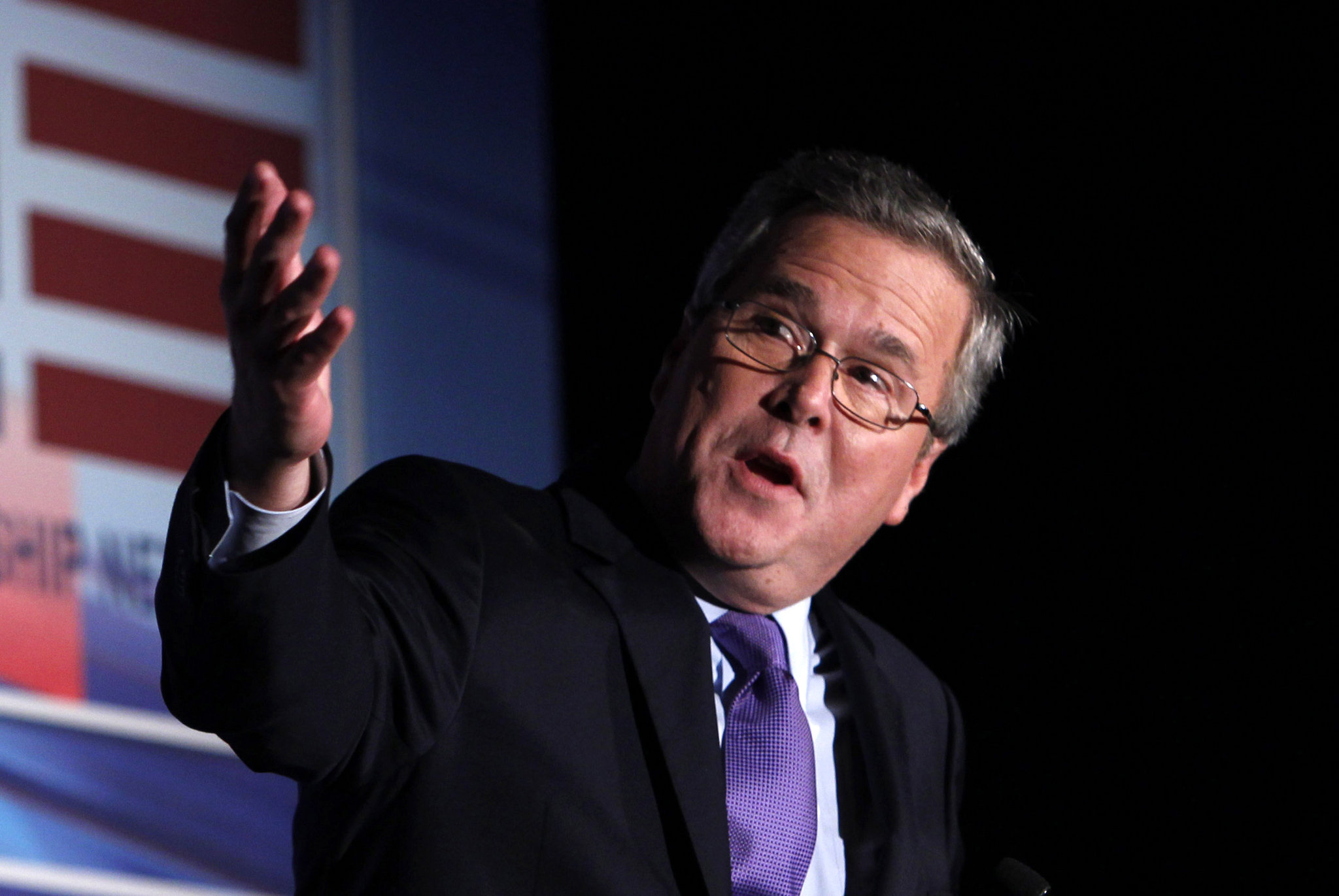
JEB! Cheater! Unethical! DISQUALIFIED

The plant, overacting...

The plant, overacting…

Donald Trump was speaking  at a Jon Huntsman / The Hill “No Labels” event, a female audience member later identified as Lauren Batchelder posed as a feminist Trump antagonist. You can see the exchange in the video below…

But she was not a typical audience member; she is a paid staffer of a  GOP Senator and a volunteer for the Jeb Bush campaign, as a recent tweet demonstrated.

NH 6

The news media, looking desperately for someone to embarrass Trump, began framing the narrative an a pro-choice audience member who “Trumped Trump.”

A little research, however, showed that Lauren Batchelder is a current staffer for pro-life Senator Kelly Ayotte (R-NH),  and is currently also working in New Hampshire as a volunteer for the Jeb Bush campiagn.  In other words, she was a plant, she was misrepresenting herself, and this was a contrived cheat to mislead the American people while undermining Trump for the benefit of Jeb Bush.  Batchelder, like any good conspirator, tried to cover up,  deleting her tracks on social media.   The Last Refuge, however, preserved some:

[LinkedIn Profile HERE] [Twitter HERE] [Instagram HERE] [ FaceBook HERE]

The Bush fallback position, not surprisingly, is that she was a rogue staffer, acting on her own. The campaign’s words, however, were more focused on changing the subject. Allie Brandenburger, a spokeswoman for Bush’s campaign, said Batchelder is not a paid staff member ( OK, she’s a volunteer, a distinction without a difference) and attended the convention on her own (or so he claimed), but then immediately tried to change the subject, saying  in an e-mail,  “We can’t help but notice Mr. Trump does seem to be very sensitive about being challenged by women.”

Yes, we understand; That’s why you set this up. This was obviously a talking point, since Tim Miller, Bush’s spokesman, tweeted nearly the exact same thing, saying, “For what its worth, Lauren is not a Jeb staffer but the Jeb staff is amused by how sensitive Donald is to being challenged by women.”

Funny, I’m not amused. At best, Bush, Ayotte and the Republican establishment failed to properly train and supervise a staffer and volunteer sufficiently. More likely, she was given signals, like the IRS was in its illegal sabotage of Tea Party groups, that encouraged her to engage in unethical conduct. Most likely, it was a Nixonian dirty trick by a desperate, flailing, failing candidate. Unless Bush can prove that it was a case of negligent management on his part, and that proof cannot consist of Batchelder falling on her sword, and apologize appropriately to Trump and the public, then we must assume that the worst explanation is the right one.

As before, I consider making Donald Trump appear to be a victim an irresponsible  and incompetent act. As of now, I consider Jeb Bush to be desperate, untrustworthy, and foolish. He has no credibility as a leader, a campaigner, or a potential President.

_________________________

Sources: Washington PostLast Refuge

Further Notes On “Stuff Happens,” “DO SOMETHING!!!” And The Dishonest, Hysterical And/Or Delusional Anti-Gun “Position”

1) In the clip above, the National Review’s Charles C. W. Cooke asks MSNBC analyst Mark Halperin and “Morning Joe” house progressive Mika Brzezinski to explain what kind of measures would satisfy the hysterical calls of a Morning Joe panel to “DO SOMETHING!!!” about gun violence. Cooke referenced the President’s angry (irresponsible, partisan, useless) attack on Congress’s failure almost immediately after the mass shooting at Umpqua Community College in Roseburg, Oregon, and accused ant-gun forces of acting as if they had solutions to gun violence (that don’t involve trashing the Bill of Rights) when they don’t. [I pointed out in yesterday’s post that they don’t because there aren’t any.] He said to Halperin:

“Joe Biden doesn’t know how to fix this problem. I don’t know how to fix this problem. I think it’s fair to say you don’t know how to fix this problem. It’s a very complex question in a country with 300 to 350 million guns on the street. The way they talk is as if they have the answer and there are these recalcitrant forces in the country that say ‘no, no, no,’ even though deep down they know their legislation will work. That’s simply not the case. It’s far more complicated than that.”

As you will see, Halperin had no actual proposals, ducking the issue by saying that he’s “not an expert in the field.” But he said that he wanted leaders to “have a thirst and hunger and passion to try to come up with solutions.”

I will accept this as a legitimate argument as soon as I hear any plausible solution that does not involve banning guns, making it excessively difficult for law abiding citizens from arming themselves, or engaging in pre-crime measures against citizens who have had episodes of mental illness or who are suspected of having such episodes. The proposals I have heard are incremental and will not accomplish the goal, ergo more obtrusive measures will be proposed and pushed by identical arguments and hysteria, until…we end up banning guns, making it excessively difficult for law abiding citizens from arming themselves, or engaging in pre-crime measures against citizens who have had episodes of mental illness or who are suspected of having such episodes.

Either anti-gun “DO SOMETHING!” advocates like the President, Mika and Halperin know this, intend it and are not being honest about it, or they are naive.

2) Jeb Bush responsibly addressed the impulse to stampede support for ill-considered solutions in the wake of tragedy…

The text:

“Yeah it’s a — we’re in a difficult time in our country, and I don’t think more government is necessarily the answer to this. I think we need to reconnect ourselves with everybody else. It’s just, it’s very sad to see. But I resist the notion, I had this challenge as governor, because, look, stuff happens, there’s always a crisis. And the impulse is always to do something, and it’s not necessarily the right thing to do.”

You will note that Bush did not shrug off the Oregon shooting by saying “stuff happens.” Nonetheless, the completely principle-free Debbie Wasserman Schultz mischaracterized what Bush said with a fatuous tweet:

“A message for Jeb Bush: 380 Americans have been killed in 294 mass shootings in 2015 alone. “Stuff” doesn’t just “happen.” Inaction happens.”

Inaction regarding what, you shameless hack? What action are you proposing that would actually prevent a shooting like this week’s? Or the Norfolk shooting of the TV reporter? Bush is absolutely correct: bad stuff happens, and that does not mean that the government can or should rush to “DO SOMETHING!” Continue reading

Ethics Observations On The Republican Presidential Candidates Debates

GOP debate

[I have another three hour legal ethics seminar (fifth seminar in six days, in four cities) to handle this morning, then I drive to Boston and fly to D.C. Getting up all the posts on the runway will be a challenge: wish me luck. I began the day at Ethics Alarms getting this nice message from a new commenter, a Mr. S M Tenneshaw, who wrote, “You’re not a joke, you’re a worthless piece of shit” in response to this controversial post from 2013. Ah, how exhilarating for that sentiment to be the day’s first contact with human life!]

Here are my comments on the marathon debate last night:

  • Jake Tapper did an extraordinary job at  being a fair, organized, efficient and firm moderator. I was in awe. I was less impressed with his  late innings resort to questions reminiscent of Barbara Walters’ infamous question to Katherine Hepburn, “If you were a tree, what kind would you be?’ [ NOTE: In the original post,, I incorrectly attributed this to Barbara’s Jimmy Carter interview, which was also cloying. Always got those two mixed up…] Later, after the debate, Tapper complained that there were some important questions he didn’t get to ask. If that’s true, Jake, why ask such silly ones as “What woman would you place on the ten dollar bill?,” and “What would your code name be as POTUS?” Some of the answers were inexplicable  (I had to have someone explain to me why Carly Fiorina said “Secretariat” as her code name. She was referencing her humble beginnings, not the Triple Crown winner…), some were alarming (Chris Christie wants to put the ADDAMS FAMILY on a bill? Oh, right, Abigail. ONE ‘D’. Good answer.) and some were pathetic pandering (Dr. Carson: “One Nation”? As the code name for the President? Uh, Ben, what are you doing?)

“Do we want someone with that kind of character, that kind of careless language to be negotiating with Putin? Do we want someone like that to be negotiating with Iran? I think really there is a sophomoric quality that is entertaining about Mr. Trump, but I am worried. I’m very concerned about having him in charge of the nuclear weapons because I think his response, his real response to attack people on their appearance, short, tall, fat, ugly. My goodness, that happened in junior high. Are we not way above that? Would we not all be worried to have someone like that in charge of the nuclear arsenal?”

Obviously nobody with any historical knowledge, theatrical sense and rhetorical skill coached Paul, who is apparently too arrogant to watch YouTube. First, a Welch retort has to be delivered with withering contempt, not snotty combativeness. Second, the deliverer has to talk directly to the target; this is key. Not “he,” Senator. “YOU.” Third, whether or not the question was about the temperament of the man with his finger on the button, the danger of having a leader who behaves like Trump goes far beyond that.

  • Still, Welch’s tactic worked a bit. Trump’s rejoinder, essentially “You’re ugly, too!” got what sounded like awkward laughter, and Donald Trump, who is an entertainer, and who, like most experienced performers, can sense what an audience is feeling, was very subdued the rest of the debate.

Continue reading

Defending Trump: “Anchor Baby” Is Accurate. It Is Only Offensive To Those Who Want To Change The Subject

Anchor babyABC reporter Tom Llamas confronted Donald Trump this week over his use of the term “anchor baby,” saying it was an offensive slur.

“That’s an offensive term! People find that hurtful,” he said.

“You mean it’s not politically correct, and yet everybody uses it,”replied Trump, who apparently must include at least one unethical rationalization in every sentence.

The fact, you idiot, that “everybody uses it” doesn’t make it right.

“Look it up in the dictionary,” Llamas yelled. “It’s offensive!” Gee, I’m sorry, Tom, I don’t let the dictionary tell me how I can express myself, and neither should Trump. The dictionaries reflect the fact that pro-illegal immigration forces have warped the use of language. I assume pretty soon the dictionary will declare any term for illegal immigrants that distinguishes them from law-abiding, wait-in-line, pay-the-fees,  legal immigrants is similarly “offensive.”

“I’ll use the word anchor baby. Excuse me! I’ll use the word anchor baby!” Trump said.

So will I.

Anchor baby. Continue reading

A Lesson In Moral Luck And Consequentialism

car-key

If I accomplish nothing more through Ethics Alarms than to cure some intelligent readers of the seductive fallacy of consequentialism and the insideous influences of moral luck, then the long, aimless trail of squandered opportunities, under-achievement, diffuse focus, quixotic quests, Pyrrhic victories and lost causes I call my life will not have been entirely in vain.

Last week I was again in the throes of consequentialism hate. The Boston Red Sox, in the midst of a terrible start to their season, brought up minor league prospect Eduardo Rodriguez for a spot start. He was spectacular, allowing no runs and looking like the team ace Boston has been searching for all season. Immediately after the game, articles popped up in the baseball media excoriating the team for not bringing him up from the minor leagues long before. It was obvious back in Spring Training, said unnamed scouts, that he should be with the big club. It was negligence and stupidity, said other pundits, that it had taken this long to promote him. Strangely, there had been no published arguments to this effect before his impressive debut. And would any of these “I could have told you so” pieces have been written if Rodriguez had been bombed out of the game in the early innings, as literally any starting pitcher may be in a given game?

No. That’s the marvel of hindsight bias, the human tendency to presume that what could have been known should have been known after it is known.  Consequentialism is its more destructive cousin. These same analysts will conclude that the decision to bring up the pitcher was a brilliant one, if tardy, because he performed well. If he had done badly, the decision would have been, in all likelihood, decreed ” a mistake.” This was the fallacy that Jeb Bush was recently pilloried for not embracing regarding his brother’s decision to invade Iraq.

And moral luck? That’s the phenomenon that makes hypocrites and fools of us all, pointing us to the suffocating arms of Dame Consequentialism. If two decision-makers take exactly the same course in exactly equivalent circumstances, the one who is the beneficiary of good fortune—moral luck—will be hailed as a genius. The unlucky soul whose identical plans are derailed by unpredictable misfortune will be handed the mantle of an incompetent failure.

Situations where reasonable decisions and actions are declared “mistakes,” or, as is more germane here, “unethical” according to how uncontrollable events and contingencies occur subsequent to the conduct itself are legion. I am always looking for the counter example, where wrongful conduct has a good result, and is there for forgiven, ignored, or even praised. Well, I found one, and it just happened to me.

I had an important though brief client meeting scheduled this morning, and I had managed to forget the exact time. It was either at 10:45 or 11:00, and I had to be on time, because he was on a tight schedule. My wife was annoyed at me for my scheduling, since she had to use the car to get to a long scheduled appointment of her own at noon and my meeting was 30 minutes away. To make things worse, I couldn’t reach my meeting partner to determine the right time ( a postponement was impossible). To complete the fiasco, I misplaced the car keys, delaying my departure until after 10:30. I was informed, as I left the house with my newly discovered keys (never mind where they were; it is too embarrassing), that if I didn’t have the car back by 11:45, I was dead.

I assumed I would be dead. Continue reading

Note To The News Media: Stop Encouraging Consequentialism!

Marco Rubio gallantly stood up to Fox’s Chris Wallace as the news anchor repeatedly asked him whether “knowing what we know now,” it was a mistake to invade Iraq in 2001. The previous version of the question that inexplicably tripped up Jeb Bush was self-answering: knowing how badly it would work out, no sane leader would make that decision, but since nobody can see into the future, it is like asking if we should have recruited Superman to help out U.S. troops if, you know, he was real. Wallace’s question, if possible, is worse. It validates the ethics rotting principle of consequentialism, in which we judge an action by its unpredictable results.

An decision is only a mistake if it was badly reasoned based on the information the decision-maker had at the time the decision was made. It does not become a mistake based on subsequent, unknowable events. Similarly, an action doesn’t become ethical just because it worked out well, or unethical because it didn’t. This misconception is rampant among the public, and leads to bad policy, bad decision-making, bad leadership, bad lots of things. It is bad.

Hectored by Wallace, Sen. Rubio, who does understand that “mistake” doesn’t mean what Wallace was implying it does, kept saying, “No, it was not a mistake, because it was the right decision based on what we knew at the time.” Now, you can argue that the decision was the wrong one based on that information, but that’s not what Wallace was asking…and asking, and asking. He obviously thinks “mistake” is defined as a decision that doesn’t work out the way the decision-maker hoped. Wrong.

Chris Wallace was making his audience dumber and less ethically astute. We judge actions and decisions based on the quality of the choice when it is made, which includes a rational, well-reasoned analysis of its likely results. By Wallace’s logic, driving home from the Christmas party smashed is only a mistake if you crash, kill someone, or get arrested.  The sober party goer who gets killed by a drunk driver as he drives home, in Wallace’s reasoning, made a mistake going to the party at all. The lesson, apparently, is that its a mistake to go to parties.

This is how incompetent and arrogant journalists made us dumber, and our leaders so risk averse that they are incompetent.

By the way, on CNN this morning, the gang is making fun of Rubio, like he’s the idiot. Of course. After all, he’s a Republican.

The Jeb Bush “Gotcha!”: Unfair Question, Dumb Answers

Enough about Iraq, Jeb: When did you stop beating your wife?

Enough about Iraq, Jeb: When did you stop beating your wife?

In the vast history of unfair questions, even including such immortals as “When did you stop beating your wife?,”none is more unanswerable in a substantive way than the question Jeb Bush was asked on Fox News—yes, that’s the same Fox News that supposedly lobs softballs for any Republican. The question: “Knowing what we know now” would he have authorized the Iraq war?

What possible use is that question, other than as an exercise in complete hindsight bias? If the answer is no, it appears to validate the dishonest criticism of the war decades ago, by those who attributed new knowledge about the infamous WMD’s to the original decision, which wasn’t about weapons of mass destruction in the first place. If it is yes, it is evidence of insanity.

Now we know that the invasion would be botched, the U.N. would cravenly and irresponsibly withhold support for enforcing its own resolutions, that our hillbilly soldiers would torture Iraqi prisoners and take photos of it, that the new Iraqi government would be incompetent and corrupt, that the news media would assist Democrats in re-writing the history of the decision, and most of all, that even after the situation in Iraq had finally been stabilized, an incompetent President would prematurely pull out our troops, causing the government to implode and ISIS to thrive.

George W. Bush had even said when he was President that if he had known that no WMD’s were there, he would not have invaded Iraq. That was also a dumb answer at the time, and I believe a dishonest one. But today, W. would give the same answer, and knowing what we know now, it would be both correct and honest. That’s if he were silly enough not to say, as his younger brother was too dim to say, this:

“I’m not answering that. It’s pointless. Would Lee have ordered Pickett’s Charge, knowing how it would turn out? Would I have left the dock as captain of the Titanic, knowing that it would hit an iceberg? Would I have approved the Space Shuttle program, knowing that two shuttles would meet with disaster? “Would you still go to see ‘Our American Cousin,’ Mrs Lincoln?” A decision can only be judged based on what the known situation is at the time. It cannot be fairly judged based on the results of the decision, immediately or years later. That’s consequentialism; it’s a logical fallacy.

and

“Nor can I answer the question of what I would have decided in my brother’s place, because I do know how things worked out, and he, of course, could not know. So asking that question is unfair to me, and answering it would be unfair to him. “

But Jeb was too dim to say that. So first he answered… Continue reading