Smearing John Kerry

Quick---Who is this man, and why should his problems be news?

Guilt by association isn’t always an unethical suggestion. If all of your closest companions are members of the Mafia, I think it’s fair for me to question your values and taste in friends, if not to assume that you might leave a horse head in my bed. More often than not, however, guilt by association is unethically used for character assassination by applying the unfair presumption that an adversary’s associates’ misdeeds can reasonably be attributed to the adversary as well.

You will seldom see as pure and despicable an example of this than the current effort by some on the political Right to smear Sen. John Kerry based on recent revelations about Wade Sanders, like Kerry a Silver Star awardee, who introduced the Massachusetts Senator at the 2004 Democratic Convention.  Sanders knew Kerry when they both were Swiftboat commanders in Vietnam, and  when the Swiftboat Veterans for Truth questioned the legitimacy of Kerry’s record of heroism during that war in their infamous series of attack ads, Sanders led the counterattack. Now Wade Sanders is in Federal prison, serving a 37-month sentence for possessing child pornography, and the Navy Times reports that Secretary of the Navy has revoked Sanders’ Silver Star due to “subsequently determined facts and evidence surrounding both the incident for which the award was made and the processing of the award itself.”

What does any of this tell us about John Kerry? Absolutely nothing. Continue reading

Cheater’s Remorse: ABC News Gets Ethical Without Knowing What “Ethical” Means

"Right now, cheating doesn't pay, so we're committed to ethics."

If you think ABC News is going to get any credit here for officially (sort of) banning the practice of paying so-called “licensing fees” to get exclusive interviews, I’m going to disappoint you. For there is nothing admirable about….

1….. engaging in the discredited practice of paying big money to central figures in news stories in order to gain access to them, and

2….disguising the practice by technically paying them inflated fees for the rights to photographs, even though the real reason for the pay-off is #1 above, then…

3….rejecting the practice when it leads to questions about how the network got an interview when it didn’t pay “licensing fees,” but…

4…noting that it might still go back to the unethical practice “perhaps once every couple of years,” since…

5….the other networks do it.

Yuck, pooie, ichhhh, petah!  ABC’s decision, outlined in a report by media watchdog Howard Kurtz, tells you everything you need to know about the state of ethics in broadcast journalism in general and ABC in particular, and I have seen prettier sights floating in an unflushed toilet bowl. Continue reading

James O’Keefe—Still Faking, Still Recording, Still Unethical

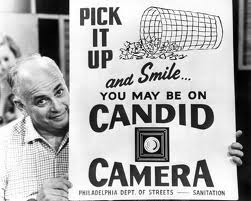
This is all your fault, Allen Funt!

The latest James O’Keefe Candid Camera stunt is supposed to show corruption in the Medicaid system. As in his earlier video hit-jobs on ACORN and NPR, O’Keefe’s colorful crew of community theater rejects pose as outrageous and unsavory stereotypes—this time, drug-smuggling Russians with the worst accents since “Rocky and Bullwinkle,” who are pimping out their “sisters” for sex. The O’Keefe Players manage to find a jolly, badly-trained, none-too-swift Ohio Medicaid worker who giggles away their confessions of wanting to defraud Medicaid and dealing illegal drugs. The video of the dumb encounter—dumb charade, dumber government employee—has been posted on YouTube. More of the same, presumably, is on the way.

If you’re as bored with this as I am, please tell O’Keefe to stop. Of course his act is as unethical as his “Russians'” accents are embarrassing: Continue reading

Wanted, Desperately Needed, and Lacking: Professionals, Adults and Values in the Media

What? Is there something wrong?

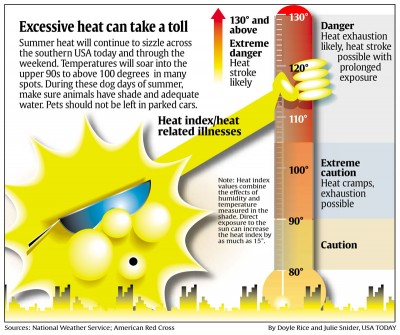
There is not a lot to say about the graphic above, other than:

  1. It is crude.
  2. It is funny.
  3. It is intentional.
  4. It is inappropriate for a general audience newspaper
  5. A competent editor should have caught it, and
  6. The graphic artist needs a warning and a reprimand.

The media, its staff, celebrities and assorted vulgarians and boors seem to be determined to make public square America as uncivil as a locker room, as crude as a peep show, and as juvenile as a junior high school farting contest. Professionals, including USA Today editors and publishers, can either do their duty and discourage this intentional rudeness in their products and services, or shrug it away. Similarly, our culture needs to decide if we are going to just define our deviancy down some more, and accept gratuitous sexual innuendo that will gradually make the whole population into a bunch of snickering Beavises. Continue reading

Attention FCC: What the News of the World Scandal Reveals About Rupert Murdoch

Rupert Murdoch

Concluding that the News of the World scandal in Great Britain shows that Rupert Murdoch has less than a sufficient reverence for ethics, journalistic or otherwise, is an intellectual achievement well within the powers of Forrest Gump.  Concerns about the integrity of the Australian media magnate have been voiced since he first stuck his kangaroo’s nose in the American media tent. As is too often the case here, legitimate points were minimized by their linkage to political bias: was Murdoch bad for American journalism because he was unethical, or because he was conservative? His most vocal critics, being from the Left, regard the two as the same, which allowed Murdoch to accumulate defenders on the political right who should have been just as wary of his methods and ethical deficit.

Now his flagship tabloid, The News of the World, has folded in the midst of a still-unfolding scandal. You can read details here; the important thing to know is that the tabloid was essentially lawless. Continue reading

Comment of the Day: “The Washington Post Flunks Integrity, Conflicts, and Trustworthiness”

I do want to hold the line on featuring Comments of the Day that I think exemplify awful ethical reasoning, as opposed to those that are provocative and enlightening, to a minimum. This one, however, is too rich to ignore. It is the defense of an apparent journalist for the ethics-busting behavior of the Washington Post in the recent Jose Antonio Vargas incident using a dizzying array of alibis and rationalizations, including “they’re better than most,” “people don’t care,” “you have to cheat to stay in business,” “they are better than the alternative,” and others. It also resorts to the time-honored “who are you to judge?” and “you couldn’t do a better job.”

If this is typical of how journalists view their profession’s ethical obligations—and I think it is—the comment explains a lot. You can read my lin-by-line response after the original post. Here is the Comment of the Day, by okonheim: Continue reading

Group Bigotry: Is This The Way It’s Going To Be? AGAIN?

I'm a fan of women's curves, but I expected their learning curve to be better than this.

I already covered this topic when Christiane Amanpour held an unrestrained “males are inferior managers because all the blood rushes to their penises” session on ABC’s “This Week” a few Sundays ago, but since it is becoming clear that the outbreak of gender bigotry in the media is more widespread than ABC, a second alarm is warranted.

This week’s Time magazine has a column by Meredith Melnick entitled “Why Women Are Better at Everything.” Among its contents:

•    “Recently in the Wall Street Journal, MarketWatch columnist David Weidner noted that women ‘do almost everything better’ than men — from politics to corporate management to investing.”

•    “What’s the problem with men? ‘There’s been a lot of academic research suggesting that men think they know what they’re doing, even when they really don’t know what they’re doing,’ John Ameriks, the author of the Vanguard study, told the New York Times.”

•    “Women, who have only 10% of the testosterone that men have, seem inured to the phenomenon, according to Coates.”

•    “So, basically, the more women around, the better, as the Journal’s Wiedner said. His column referred to a recent book by Dan Abrams called Man Down: Proof Beyond a Reasonable Doubt That Women Are Better Cops, Drivers, Gamblers, Spies, World Leaders, Beer Tasters, Hedge Fund Managers, and Just About Everything Else.”

•    “…women are better soldiers because they complain about pain less. They’re less likely to be hit by lightning because they’re not stupid enough to stand outside in a storm. They remember words and faces better. They’re better spies because they’re better at getting people to talk candidly.”

•    “Of course, to most women none of this is much of a revelation.” Continue reading

The Washington Post Flunks Integrity, Conflicts, and Trustworthiness

Newspaper...Heal Thyself!

The incidents of blatantly untrustworthy conduct by supposedly prestigious news organizations have become so numerous that they are almost no longer newsworthy themselves. Journalists failing their core ethical standards when maintaining them would be inconvenient? That’s not news. That’s the status quo.

Patrick B. Pexton, the Washington Posts’s ombudsman, had to write about the strange case of Jose Antonio Vargas, the celebrated journalist, once employed by the Post, who admitted last week that he was an illegal alien.  In particular, he had to write about 1) why a Post editor, Peter Perl, continued to employ Vargas and hid his immigration status for eight years after learning that he was in the country illegally and 2) why Vargas’s 4000 word piece about his deception (and the Post’s complicity in it) was killed by another Post editor, resulting in its being picked up and published by the New York Times. So the in-house ethics watchdog wrote about it, and concluded—nothing.  Continue reading

An O. Henry Story Comes To Life

James Verone, a.k.a. " the Rosa Parks of health care," a.k.a. "Soapy"

The media thoroughly disgraced itself by hyping the stupid story of James Verone, an out-of-work 59-year-old man with health problems who robbed a bank in Gastonia, N.C., for $1,  and then  waited patiently for the cops to arrest him.“When you receive this a bank robbery will have been committed by me. This robbery is being committed by me for one dollar. I am of sound mind but not so much sound body,”read the note that Verone handed the bank clerk.

Verone grabbed his 15 minutes of fame with gusto, telling the local TV station that he became a thief out of sheer desperation. He needed health care, he said, and had no other way to get it than through the free care provided in jail. The problem with this is that he had plenty of better options than turning to intentionally unsuccessful crime. A hospital in Gastonia, Gaston Memorial Hospital, offers discounts up to 100% to low-income patients. There is also a free health clinic five miles from the bank Verone robbed, and more in nearby Charlotte. Or Verone could have received treatment from of the state-of-the-art medical facilities at the University of North Carolina, whose mandate is to provide “medically necessary health care to the citizens of North Carolina, regardless of their ability to pay.”

Naturally, few of the media reports, calculated to use this idiot’s stunt to shill for government-financed health care, bothered to report any of this. Continue reading

Sorrell v. IMS Health: Legal, Ethical, and Unjust

The case of Sorrell v. IMS Health, which the Supreme Court decided yesterday, sharply focuses the philosophical disagreement over the role of the courts in public policy. The legal question was rather straightforward; the ethical issues are complex. Is it the Court’s duty to make bad—but constitutional— laws work, or is its duty to follow the laws, and leave it to the legislature to fix their flaws?

This was a case about incompetent  lawmaking. Gladys Mensing and Julie Demahy had sued Pliva and other generic drug manufacturers in  Louisiana and Minnesota over the labels for metoclopramide, the generic version of Reglan. The drug, used to treat acid reflux, had caused them to develop a neurological movement disorder called tardive dyskinesia. None of the generic drug’s manufacturers and distributors included warnings on the labels about the danger of extended use of the medication, even though the risk was known to them. Neither did the manufacturers of the brand-name drug. The problem was that the state statutes required generic drug manufacturers to included warnings about dangerous side effects, while federal regulations required generic drugs to carry the exact same label information as their brand name equivalent.  Continue reading