Ethics Quote of the Week: Justice Sonia Sotamayor

Sonia_Sotomayor

“Race matters. Race matters in part because of the long history of racial minorities’ being denied access to the political process…Race also matters because of persistent racial inequality in society…And race matters for reasons that really are only skin deep, that cannot be discussed any other way, and that cannot be wished away. Race matters to a young man’s view of society when he spends his teenage years watching others tense up as he passes, no matter the neighborhood where he grew up. Race matters to a young woman’s sense of self when she states her hometown, and then is pressed, “No, where are you really from?”, regardless of how many generations her family has been in the country. Race matters to a young person addressed by a stranger in a foreign language, which he does not understand because only English was spoken at home. Race matters because of the slights, the snickers, the silent judgments that reinforce that most crippling of thoughts: “I do not belong here.” In my colleagues’ view, examining the racial impact of legislation only perpetuates racial discrimination. This refusal to accept the stark reality that race matters is regrettable.”

—-Supreme Court Justice Sonia Sotamayor, dissenting in the case of Schuette v. Coalition to Defend Affirmative, Integration and Immigration and Fight for Equality by Any Means Necessary, in which a 6-2 majority ruled that Michigan voters could ban race-based preferences at universities without violating the Constitution.

This screed was remarkably unprofessional for a Supreme Court Justice, an emotional recitation of unsupported assertions, perceptions and complaints with no constitutional relevance. Sotamayor, you may recall, was nominated by the President in the midst of a public debate regarding the importance of “empathy” on the bench, code for “we need more women.” But the Constitution is supposed to be interpreted by principles of law and legal reasoning, not from “the heart.” Well, we clearly got the empathetic Justice he wanted, for better or worse. Continue reading
John Paul Stevens’ Gilbertian Nonsense


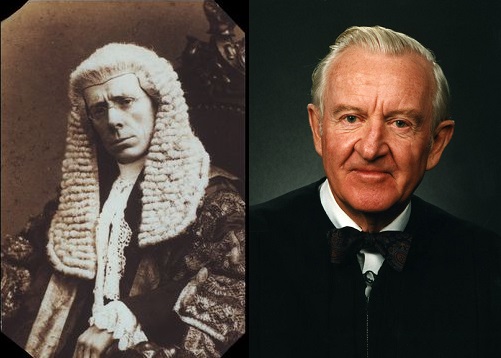
The Lord Chancellor-Stevens

A rather long preface is in order. Bear with me, please…

In the great, underperformed Gilbert and Sullivan operetta “Iolanthe,” W.S. Gilbert, a lawyer by training, devised a satirical judicial solution to a dire turn in the plot. Iolanthe, a fairy, violated Fairy Law by marrying a mortal, who happened to be the Lord Chancellor of England (he never noticed her wings, apparently.) The transgression commands the death penalty, but Iolanthe received a pardon on the condition that she allow her husband to think her dead, which she does for a couple of decades, much of which she spends doing penance at the bottom of a froggy stream, on her head.…but I digress.

When she learns, however, that her husband of yore is about to marry the sweetheart of her half-fairy son, who, though the Lord Chancellor doesn’t know it, is also his son, Iolanthe reveals herself and the paternity to the Lord Chancellor, who is duly stunned. This again triggers the death penalty and just minutes away from the finale, it looks like Iolanthe is going to end up like Carlo in “The Godfather,” as the fairy equivalent of Clemenza waddles on to the stage. (That’s how I would stage it, anyway.) Then this happens: Continue reading

KABOOM! Does Everyone Upset About The “Affluenza” Sentence Feel Better Now?

Top: Morris. Bottom: Me.

Top: Morris. Bottom: Me.

Today we travel cross the pond for a head explosion-prompting episode. A charming young woman and mother named Loren Morris, now 21, began having sexual intercourse  with an 8-year-old boy five years ago, and continued for two years until he was ten years old, involving about 50 forced sexual acts.

The boy, now 14, was overheard bragging about his premature sex life at school, and that led to his molester’s arrest and trial. This week a judge today gave Morris a two-year prison sentence at Worcester Crown Court. She will be eligible for release on parole after only a year.

This case is relevant to a couple of recent Ethics Alarms controversies. Presumably Morris is being sentenced leniently on the basis of her horrific crime being committed while she was a juvenile, even though she is an adult now. As I asserted in the stateside case of the juvenile assault ripening into a murder, I think a juvenile whose crime is only discovered and proven after he or she enters adulthood should be tried and punished as an adult. Continue reading

Ethics Hero: Dick Masten—When Ethics Trumps Law

A heroic and ethical snack...

A heroic and ethical snack…

One way I can always start an argument on Ethics Alarms is to state my position that willfully breaking the law is per se unethical as a breach of citizenship. Like all rules, however, this one has exceptions. Dick Masten, the Director of Miami-Dade Crime Stoppers, recently demonstrated one of them.

The former police chief was ordered by Judge Victoria Brennan to reveal the name of a tipster in a cocaine possession case, State vs. Lissette Alvarez. Alvarez was arrested in 2013 and charged with cocaine possession. Brennan called for Masten to come into court and confer with her in chambers regarding the case. Miami-Dade Crime Stoppers sparked the eventual arrest after getting information from a tipster who was assured anonymity. Alvarez’s attorney insists that the tipster’s information is part of the evidence against his client, saying, “Ms. Alvarez, in this case, has every right to confront her accusers. But more particularly in this case, it’s not the accuser, but the evidence that the State will use against her.”

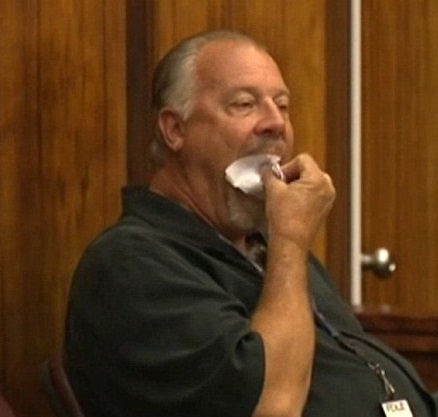
Ordered by the judge to reveal the name of the tipster, Masten, insisted that he couldn’t divulge information to be reviewed in closed court that might be discoverable as evidence. “There is a possibility that looking at certain documents, a defendant could work that case backwards and put the tipster at peril, and I’m not gonna let that happen,” he said. In a dramatic touch, Masten swallowed  a slip of paper that held the tipster’s name. “What is personal to me, is the promise,” Masten said before his ethical snack. “Some of these tipsters could end up dead. Not on my watch.” Continue reading

Legal Ethics Quiz: The Bean Bag Tossing Defense Lawyer

" I swear, you can do this in court. I saw it on "Ally McBeal"...

” I swear, you can do this in court. I saw it on “Ally McBeal”…

Holy crap! Here is a courtroom stunt you don’t see everyday…or ever.

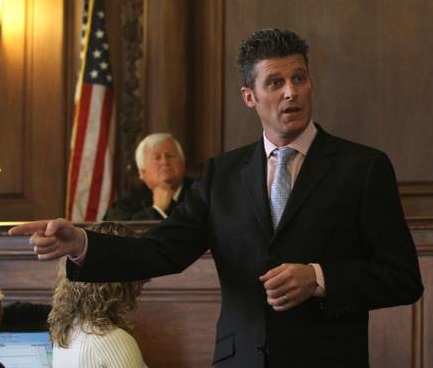
The dramatic bribery trial of Rhode Island defense lawyer Donna Uhlmann and co-defendant Jamaal Dublin took a hard left turn into “Boston Legal” territory and beyond with the, well, creative closing argument of Dublin’s lawyer, Christopher T. Millea. It was so creative, he was nearly held in contempt of court.

“You see, all of this has to do with the throwing of feces,” said Millea, cleverly reminding the jury of the bizarre conduct of a key state witness who once threw his own excrement at a prison guard.  “The state wants to throw as much against the wall to see what sticks, just like Michael Drepaul throwing his feces …”

With that introduction, Millea took two bean bags out of a box he had placed in front of the jury, and threw them at the courtroom door. Then he retrieved the turd stand-ins and placed them in another box near the door, and placed that box next to the one in front of the jury, which, it was later discovered, read “Reasonable doubt,” though only the jury could see the words. The first box was labelled, “State’s case.” Continue reading

Signature Significance Lesson: Pazuzu, The Judge And The Racist Email

"Your Honor, uh, you're not quite yourself today.."

“Your Honor, uh, you’re not quite yourself today..”

How many racist e-mails does one have to send out before it proves one is a racist? At Above the Law, legal affairs blogger Ellie Mystal says the answer is one, and I agree. Mystal writes:

“If you send one horribly racist email that actually manages to leak out into public discourse, it’s probably not your only one. Seeing a racist email from someone is like seeing a mouse in your apartment: there’s never just one. I believe in temporary insanity, but I don’t believe in sudden onset racism that magically appears once and only once and then disappears forever. Of course, whenever anybody gets caught in a racist email scandal, they always say that it’s the only one. It’s always “Whoops, that email was racist, but I’m not racist.” The racist email is always allegedly “out of character,” and the person always claims to have shown “poor judgment.” And that person always has some apologists, as if sending one or two racist emails is just something that “happens” in the normal course of business to non-racist people.”

The “out of character” nonsense is what Ethics Alarms refers to as the “Pazuzu Excuse,” as when someone explains that his or her full-throated expression of a vile nature “just wasn’t me” and “doesn’t express how I feel,” as if their being was suddenly possessed by the evil demon that made Linda Blair spit pea soup in “The Exorcist.” People try that excuse—and absurdly often are allowed to get away with it—because, at their core, they realize that signature significance is persuasive when judging character. Non-racists simply don’t send out racist e-mails ever, even once, and one such episode, all by itself, is convincing evidence that the sender is, in fact, a racist.

The racist under discussion by Mystal was retired federal judge Richard F. Cebull, appointed chief judge for the District of Montana by President George W. Bush in 2001. In 2012, Cebull got in trouble when he sent the following e-mail to seven acquaintances: Continue reading

The Good News: For Once, A False Rape Accuser Was Sent To Jail. The Bad: The Sentence Is Ridiculous

And while we are on the topic of offensively lenient sentences to horrible and dangerous criminals:

 "The Flaying of Marsyas" by Titian

“The Flaying of Marsyas” by Titian

In Michigan, St. Clair County Judge Daniel Kelly sentenced Sara Ylen to at least five years in prison Friday for falsely accusing two men of rape. She’s a vicious serial liar: a few days earlier, she pleaded no contest to a cancer scam in a separate case.

Thirty-eight-year-old Ylen had accused a construction company owner and a mental health worker of invading her home and raping her after she drove her children to school in 2012. To help frame them, she went to the extreme of  using makeup to create what looked like bruises and carving an epithet in her arm. They would have been charged, too, except that both men had airtight alibis.  While working to ruin the lives of the innocent pair (they went to the same church as her ex-husband), Ylen also accepted thousands of dollars from supporters while claiming to have end-stage cervical cancer that had spread throughout her body.

At trial her attorney, David Heyboer, argued (zealously, as is his duty) that she was obviously disturbed, and that a single year in the local jail was sufficient punishment, even though this was her second set of false rape accusations. He made this argument without laughing, too. That’s a professional. Continue reading

The Quality Of Mercy Is Not Strain’d, But It Is Sometimes Infuriating

"Murdered toddler...price? Oh, I think 5 years is about right."

“Murdered toddler…price? Oh, I think 5 years is about right.”

I find this story, from Virginia, harder to accept than the infamous “affluenza” case:

MANASSAS — A judge has sentenced a Manassas baby sitter to five years in prison for the murder of a toddler she had been watching, leaving the child’s family outraged by the light sentence.Twenty-two-year-old Jessica Fraraccio pleaded guilty last year to killing 23-month-old Elijah Nealey after he wouldn’t stop crying.Fraraccio had initially said Elijah slipped in the tub, but months later admitted pulling a chair out from under him and smothering him.

Why? 1) The murder was intentional. 2) Fraraccio was in a position of trust. 3) She, unlike Ethan Couch, the teenaged drunk driver in the “affluenza” vehicular homicide case, was an adult. 4) As bad as killing someone accidentally while driving drunk (and without a license, and speeding) is, killing a helpless infant intentionally is worse.

Worse also than the lenient judge’s rationale in the Ethan Couch case—she believes the boy can be rehabilitated—is the utterly indefensible theory of the judge who sentenced Fraraccio. From the Washington Post: Continue reading

Ethics Hero: Former Brooklyn Judge Frank J. Barbaro (Zimmerman Furies: Is This Your Future?)

We can hope.

From the NY Times...

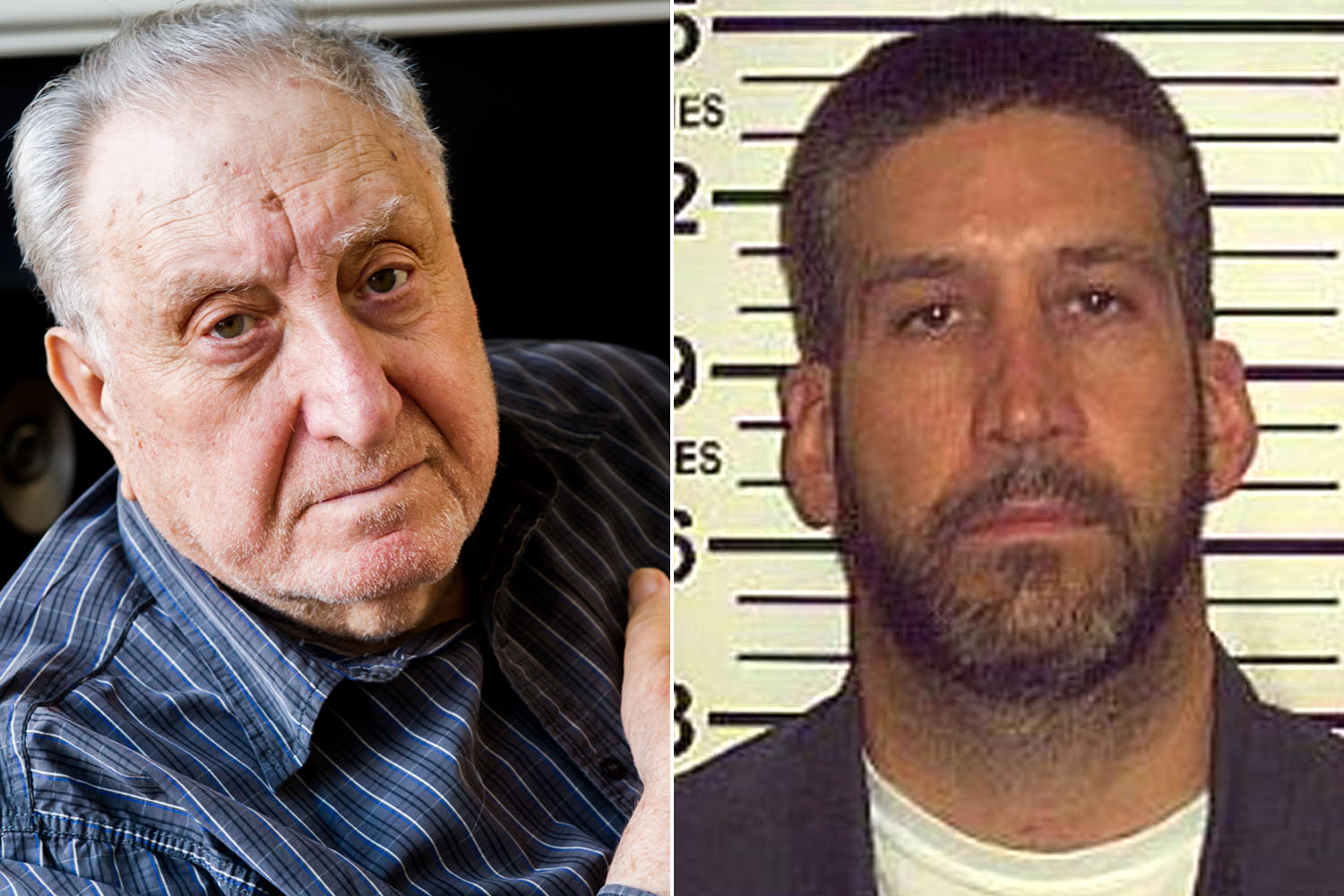
 The judge’s conscience gnawed at him a little more every year after he retired from the bench. With every news article he read about a wrongful conviction, Frank J. Barbaro, the former Brooklyn judge and assemblyman, would return to a particular murder case in 1999, and question whether he had made the right decision to send a man to prison for 15 years to life. Not long ago, Mr. Barbaro, 85, decided to contact the lawyer for the man, Donald Kagan. He got a transcript of the trial, during which Mr. Kagan had waived his right to a jury and put his fate in Judge Barbaro’s hands.

“As I read it, I couldn’t believe my eyes,” the former judge said in an interview. “It was so obvious I had made a mistake. I got sick. Physically sick.”

Mr. Barbaro’s change of heart led to a highly unusual spectacle this week in a Brooklyn courtroom: He took the witness stand in State Supreme Court to testify at a hearing that his own verdict should be set aside. His reason was even more unusual: As a die-hard liberal who had fought as a politician against racism in Brooklyn and weathered the race conflicts in Bensonhurst, he said he had been biased against Mr. Kagan because he was white and the shooting victim, Wavell Wint, was black.

“I believe now that I was seeing this young white fellow as a bigot, as someone who assassinated an African-American,” Mr. Barbaro testified on Wednesday before Justice ShawnDya L. Simpson. He added: “I was prejudiced during the trial.” Continue reading

What Do You Do With The Drunken Judge? Media Distortion And Judge Gisele Pollack

Broward County (Florida) Judge Gisele Pollack, a recovering alcoholic, showed all the signs of suffering a relapse during her session on the bench two weeks ago, when she abruptly ended the day’s proceedings after an hour and a half that featured the judge slurring her words and acting erratically. She presides over misdemeanor drug court, a program she established shortly after being elected as a county judge.  Her program offenders to have their charges dismissed and their drug records erased after six months of treatment.

After staying away from work for a day, Judge Pollack returned to the bench in the late afternoon, and presided over a courtroom packed with about a hundred drug offenders, along with  their friends and their families. The event marked the completion of rehab for dozens of offenders and the dismissal of their misdemeanor marijuana charges.“You’ve got to remain vigilant,” she told the graduates, emphasizing that they had to work hard to avoid relapses that would  place them back in front of her, and perhaps in jail.

After court, she acknowledged her own health crisis and announced that she was going into an outpatient rehab program. An attorney retained by the judge in the wake of her conduct attributed her relapse to personal issues, telling reporters that she has  “had some severe personal tragedy in her life. Her mother recently passed away, and they were very close. It’s been really devastating for her.” Apparently her son is also suffering from a serious illness. Broward Public Defender Howard Finkelstein, a longtime friend, told reporters, 

“If this causes the people to not have faith and not have trust in what goes on in that drug courtroom, then she will have to step aside,’ he said. ‘My hope is is people will wrap their ever-loving arms around Judge Pollack just as she has wrapped her arms around thousands of people.”

What’s going on here? I think it’s pretty obvious: a recovering alcoholic in a critical position of public trust suffered a relapse, as alcoholics are wont to do. If one is an alcoholic, this is a symptom of a very persistent, pernicious and incurable disease that kills many Americans every year, does horrific damage to families, businesses, governments and the economy, and that is incurable. Being an alcoholic is not an ethical violation for a judge or a lawyer, nor is having a relapse. Allowing that relapse to affect the competent performance of one’s duties, however, is an ethical violation that calls into question a legal professional’s ability to do her job. It could trigger professional sanctions; it certainly should trigger an official inquiry. A Florida judge appearing drunk on the bench, just once, is still a massive ethical breach. It arguably violates the first five Canons of Judicial Ethics a Florida judge is bound to follow… Continue reading